Updated:September 23, 2026

14 min
14 min

2026 is a year of opportunity for traders. Traders are capitalizing on the huge price movements of stocks using disruptive technologies, such as AI, quantum computing, and automation tools. They have access to data, research, and tools that traders of the past could only dream of.

Author
President Trump’s tariff negotiations have added another element of volatility, and volatility is good for traders with a plan! With that in mind, keep reading to learn how successful traders capitalize on market moves and take advantage of the big-money opportunities 2025 is offering.
Expert traders approach the markets with finely-tuned strategies. Each trade taken is based on a methodical approach that includes defined entries, exits, risk management, position size, and market conditions. Successful traders often follow a daily structure, such as having a pre-trade routine, following checklists that remind them of important details during the trading day, and then having a post-trade review where they note what was done well, what could be improved, and make notes for the following day.
The structure, routines, and strategy build consistency, helping the trader thrive in good times, and take minimal damage during the turbulent times that inevitably occur.
Other traders can learn from this, reducing routines and strategies down to their best elements and avoiding trades simply for boredom or entertainment.
Let’s look at three different pro traders and their approaches to the market.
Saqib Iqbal, Cory Mitchell, and Joel Lim are traders whose insights can be found right here on Trading.biz. Each has a unique trading approach, utilizing their own strategies, time frames, and markets. Aspiring traders could try to replicate their methods as a basis and develop their own personalized trading techniques.
Saqib Iqbal fuses fundamental and macroeconomic research with technical analysis. For example, he will consider how geopolitical uncertainty could affect the price of gold, what stocks could rally under a Trump administration, or what technologies are creating big gains in stocks (quantum computing and AI, recently, to name a few).
Trades based on fundamental and macroeconomic factors can take time to materialize. Therefore, Saqib’s approach may involve holding trades for weeks or months.
Cory Mitchell is a day trader and swing trader focused on stocks and forex. His techniques are primarily based on price action, such as trading specific chart patterns in specific conditions.
Cory day trades the EUR/USD for about an hour before the stock market opens, then switches to day trading stocks for the first hour of the day. He trades on a 1-minute chart.
Swing trades are found and managed only in the evening after the stock market has closed. The approach is to look for specific patterns in individual stocks when overall stock market conditions are bullish.
This routine works for Cory because each style of trading is compartmentalized. Swing trading doesn’t merge with day trading; they occur at different times of the day. The same methods are used to day trade the EUR/USD and stocks. It provides a great quality of life, with no trading in the afternoons.
View Cory’s market strategies.
Joel Lim trades binary options, cryptocurrencies, and stocks. As with the other analysts, his interest is not limited to just one thing. That said, most traders start with only trading one asset class and trading style, and then eventually branch out to trade other assets, time frames, and styles. Joel Lim is no different.
Now you’ll see Joel discussing swing trades or position trades in stocks, the top strategies for trading binary options, or where Bitcoin is headed next.
Trading decisions are based on technical analysis, fundamental analysis, and hot or emerging trends.
Explore Joel’s crypto guides for more information on his approach.
Certain trading patterns have stood the test of time because they are based on people’s emotions. What does change is how trades can be placed and managed. Automation and technology allow traders to test, define, and fine-tune their trading approaches more thoroughly.
Automated trading has become easy to access and use, even by retail traders. Trading platforms, such as MetaTrader and Ninja Trader, allow users to create or download trading robots that will trade for them based on defined rules.
Here are some of the pros and cons of automated trading:
Technical analysis involves studying price movements to find repeating patterns. While mastering technical analysis is often thought of as forecasting future price moves, it is not a crystal ball. Rather, certain patterns present good risk/reward opportunities. For example, when buying a stock during a pullback, you may set your stop loss 5% below your entry point to limit risk. At the same time, you could set your profit target 15% above your entry point, so the potential profit is three times the size of the potential loss.
Even winning 40% of trades, which many would consider an inaccurate “forecast,” produces a sizable profit over 10 trades.
Here are some technical methods to research further.
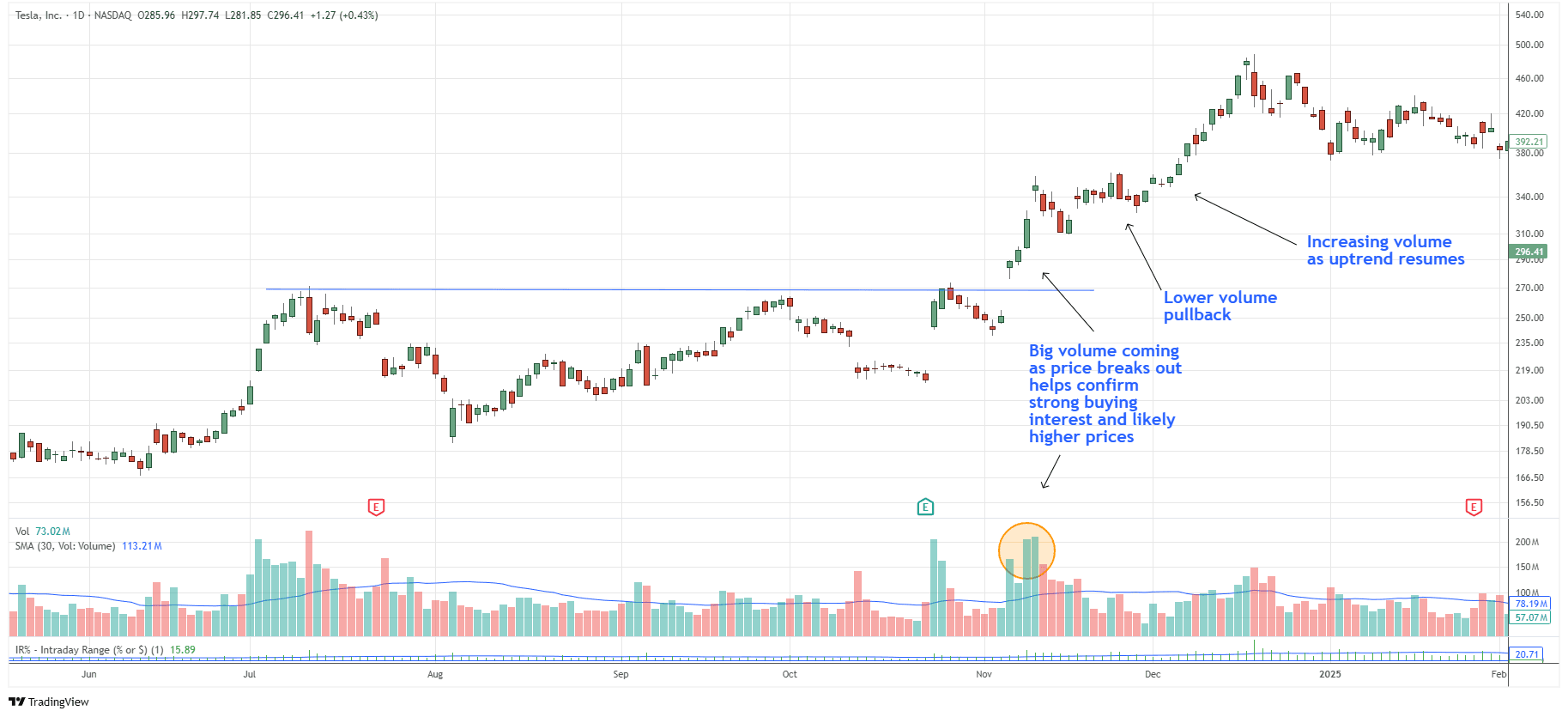
Volume is the fuel, and price is the car. Volume fuels the direction and speed of movements.
Volume increase at certain times, such as when the price breaks out, helps to confirm that the breakout direction is more likely to continue. Breakouts on low volume are more prone to failure and a price reversal. Low volume is a positive sign of pullbacks within the trend, with volume moving up when the trend direction first starts moving up again.
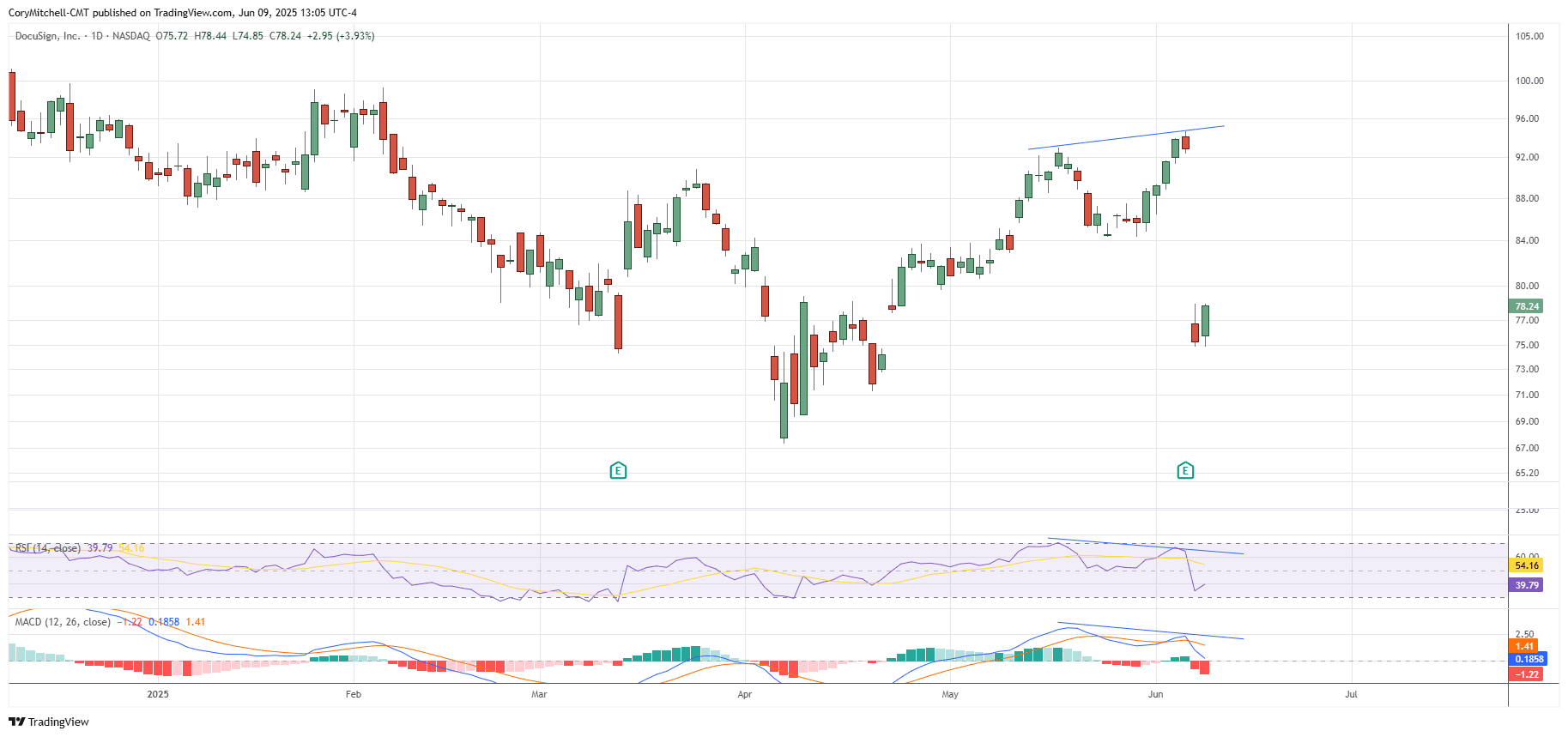
Divergence is when something, often a technical indicator, doesn’t confirm a price movement. Divergences occur on momentum indicators such as the RSI and MACD. If the price is making higher swing highs, but the RSI or MACD is making lower swing highs, that is a bearish divergence and could indicate that the price is running out of steam.
On the chart below, both the MACD and RSI were diverging with the recent move up, even before the big drop based on earnings.
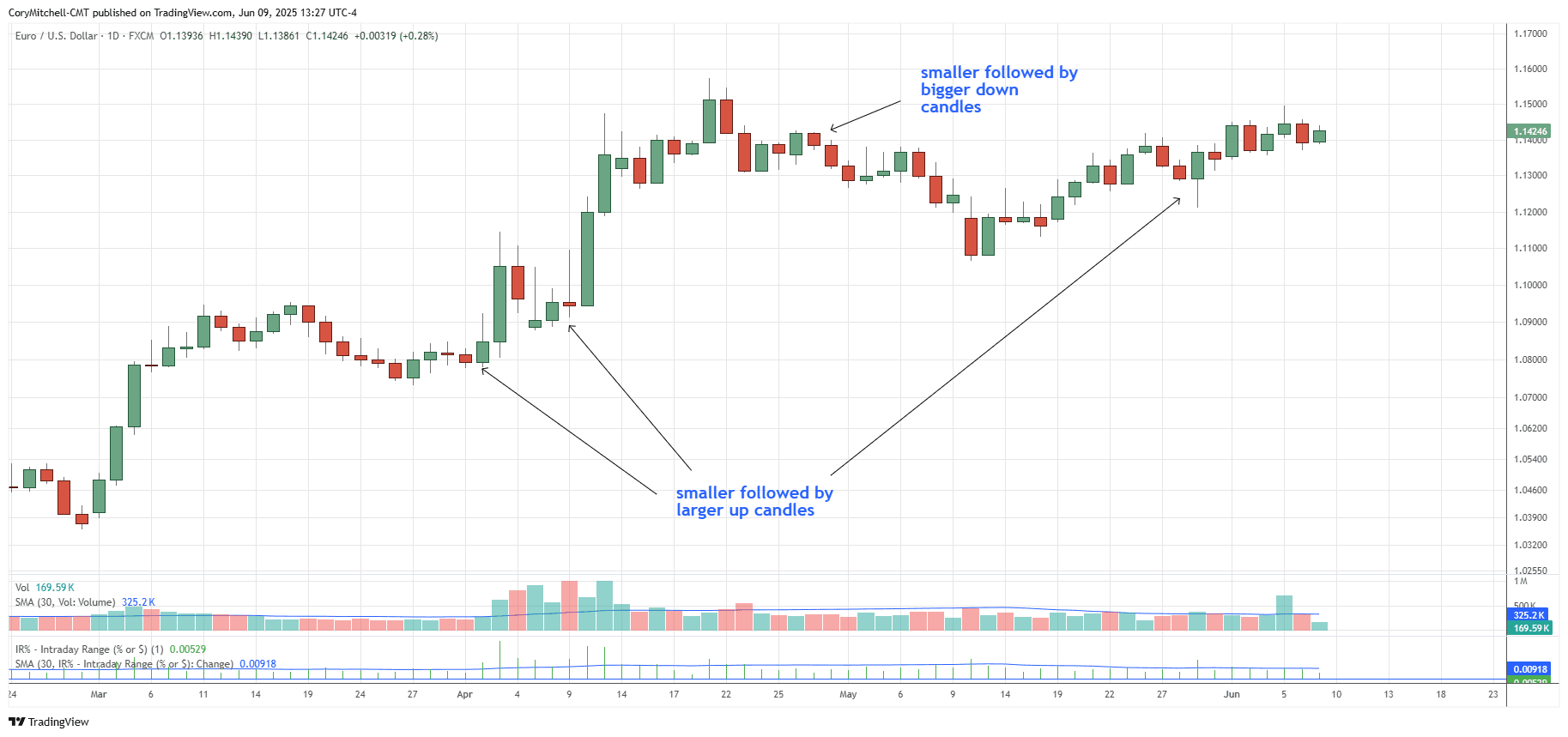
Candlestick patterns highlight short-term tendencies in price. There are many different types of candlestick patterns and ways candlesticks can look.
To master candlestick patterns, start by learning just a few patterns. Note tendencies, such as if there is a tiny candlestick, followed by a big candlestick, what does the next candlestick tend to do?
Noting such patterns can provide entry points and create trading strategies. Note how, during pullbacks within the EUR/USD uptrend, if a small candle is followed by a larger candle that moved up, the uptrend tends to resume. Nothing works every time, but if there is a tendency with the chance for a decent risk/reward, that is what matters over many trades.
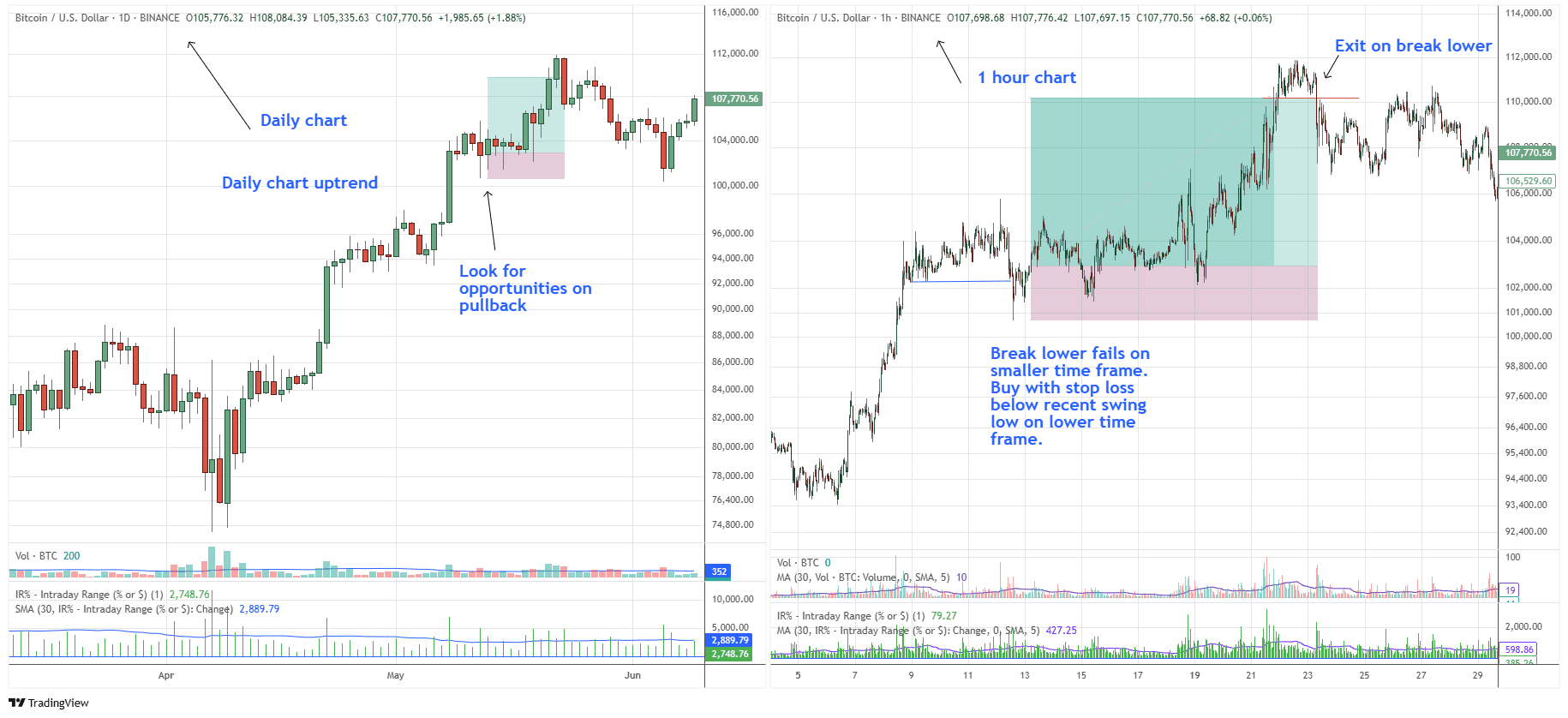
As a general rule, short-term time frame trading can provide higher returns than longer-term trading since returns can be compounded daily. However, short-term trading is more time-intensive and requires greater focus and reflexes.
With that in mind, here are several different trading styles and tools to help on the trading journey.
Different trading models suit different personalities and goals. Scalping, day trading, swing trading, position trading, and copy trading — each caters to a certain niche. There is no best trading model; it comes down to what is best for the individual.
Scalping is a high-frequency trading style where the number of trades per day could range from a few trades to hundreds or even thousands. A person manually placing trades may take a few scalps per day, using a relatively large position size to profit (or lose) from small price moves. Scalping requires enough capital to make the profits worthwhile since the moves being captured are small.
Trades typically last seconds to a few minutes.
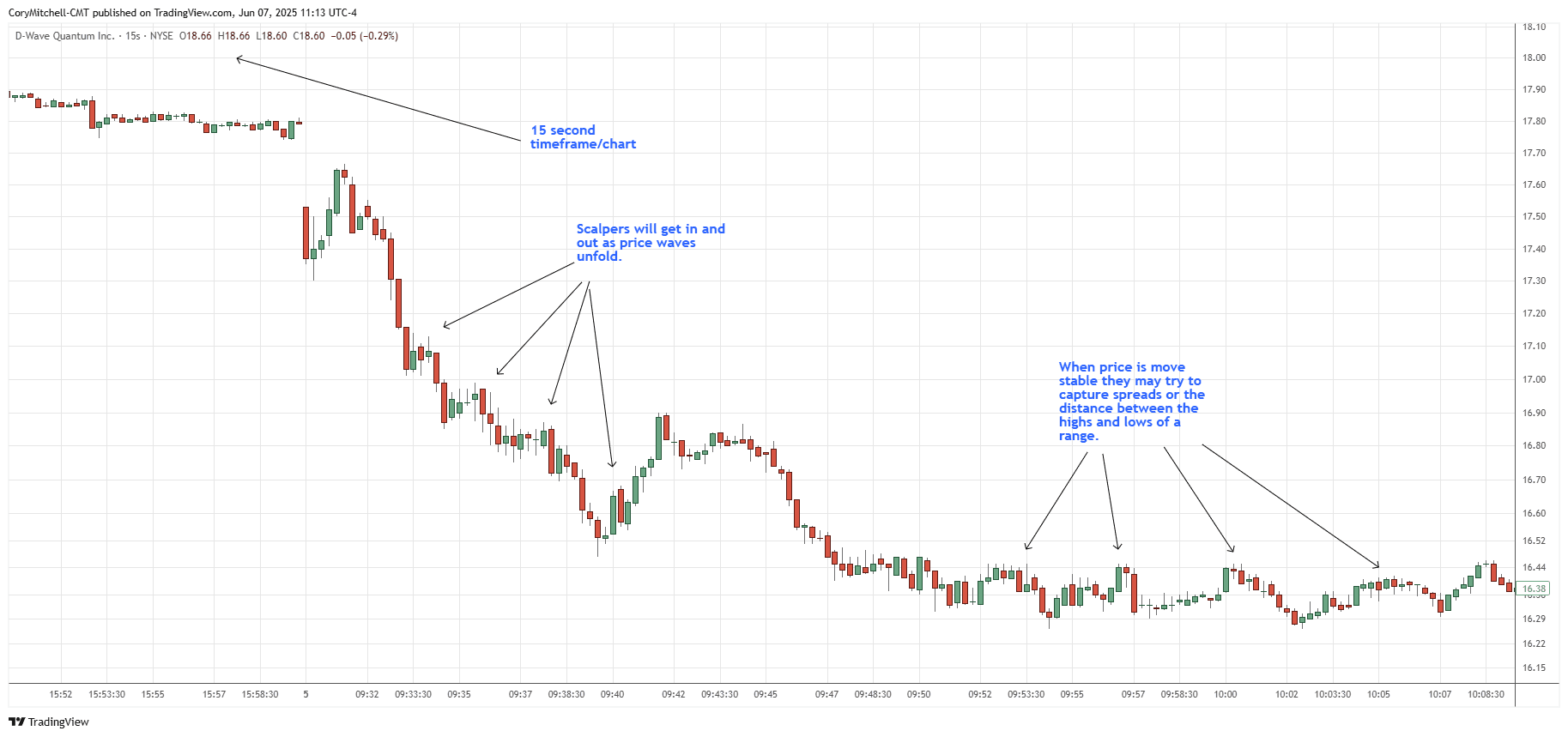
Scalping requires fast execution speeds and often automated tools. Low spreads may be used to minimize costs, but some scalpers will try to make the spread — getting filled both at the bid and offer — effectively taking on the role of a market maker.
Scalping suits highly disciplined traders with quick decision-making skills, intense focus, and access to reliable platforms. Since position sizes are often large, risk management is key to capturing small price movements because taking a large loss could wipe out profits from many small winning trades.
Day trading entails entering and exiting positions within the same trading day. Day traders may use technical analysis, price action, order flow, news, price momentum, or statistics. Here’s one of Cory Mitchell’s day trading screenshots of the EUR/USD in the early US session.
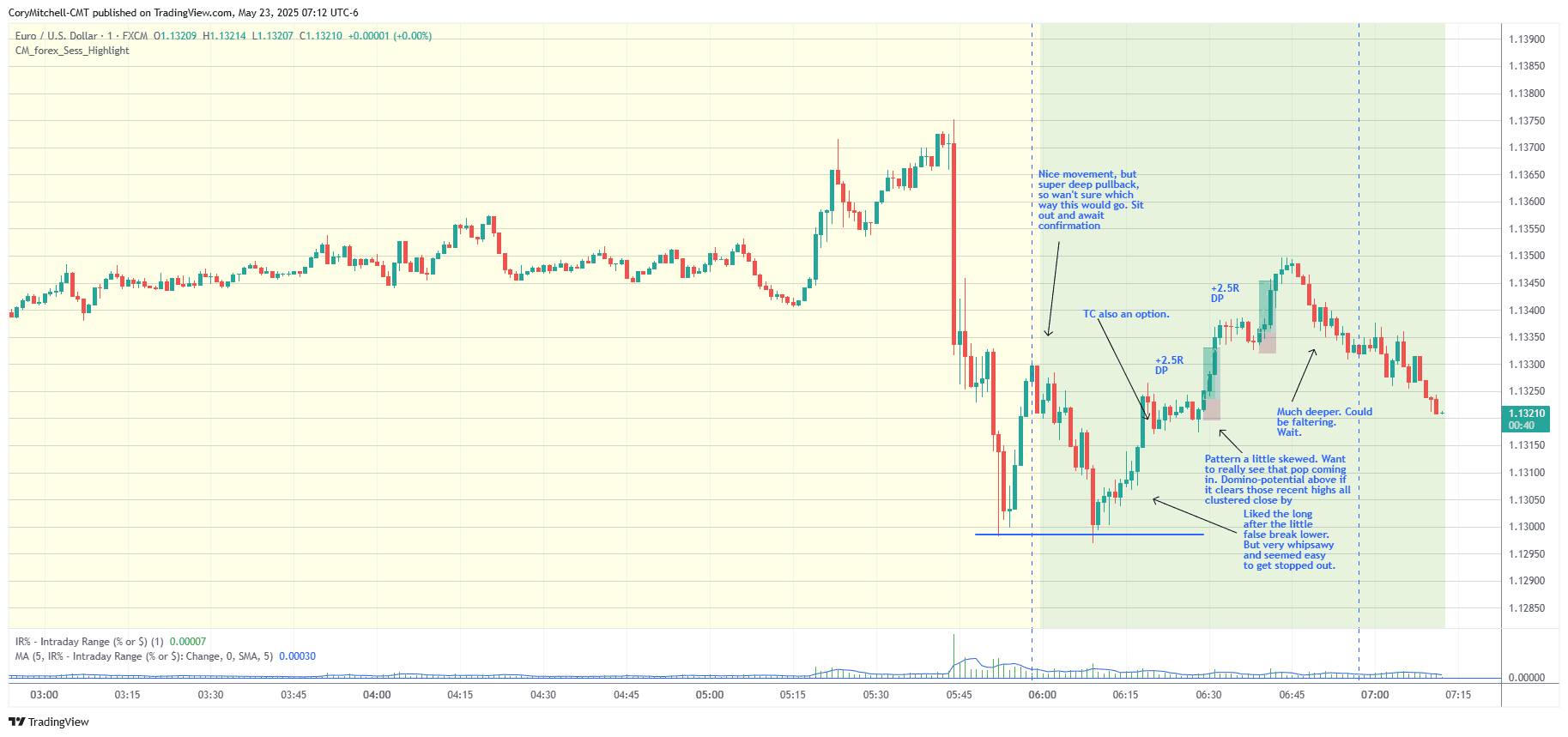
Day traders typically put in 30 minutes to several hours of trading time per day. Like scalping, a fast internet connection and trading platform is required to capitalize on fast-moving market conditions. As is a strong focus and sound risk management.
Almost any amount of capital can be day traded, but higher amounts are required to make it worthwhile.
Swing trading involves holding positions overnight. Trades last days to months. The idea is to capture short-term bursts of momentum or a chunk of a trend. Exit, and then do it again.
Swing trading requires less screen time than day trading or scalping since trades can be left to run with stop-loss and profit target orders attached. The chart shows a swing trade example.
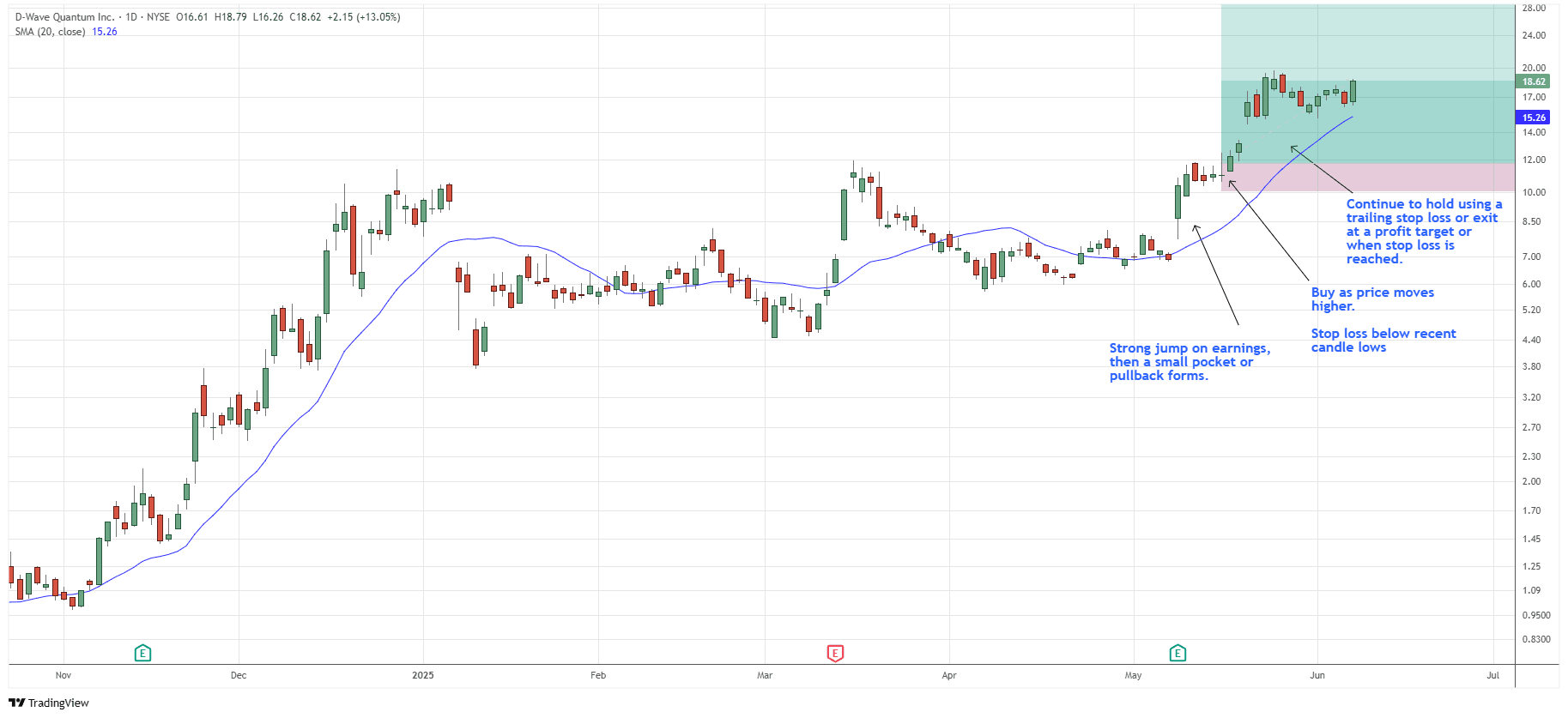
Technical analysis, as well as fundamental analysis, statistics, price action, news catalysts, and earnings analysis, are all common swing trading inputs.
Focus is required when analyzing and playing trades, but it is less mentally intensive than day trading since the periods of concentration are more intermittent.
Any amount of capital can be used to get started. With small amounts, it will take a significant amount of time to build the account.
Position trading is holding positions for several months or longer; people who hold trades for years are called investors.
Position trading takes up less time than swing trading due to the longer-term focus. The challenge or mindset here is to let the big-picture scenarios play out. This often requires analyzing fundamental data and the overall stock market, since most stocks move in the same direction as the indices.
Fundamental, technical, and statistical analysis are all common inputs into trading decisions, as well as seasonality, news themes, and earnings.
Here’s a position trade example in Apple (AAPL). It fell along with most stocks during the COVID-19 pandemic but then rallied back above its 100-day moving average (MA). A position trader could have taken advantage of that, holding the stock while it remained above the MA. The trade lasted 10.5 months with a profit of over 80%.
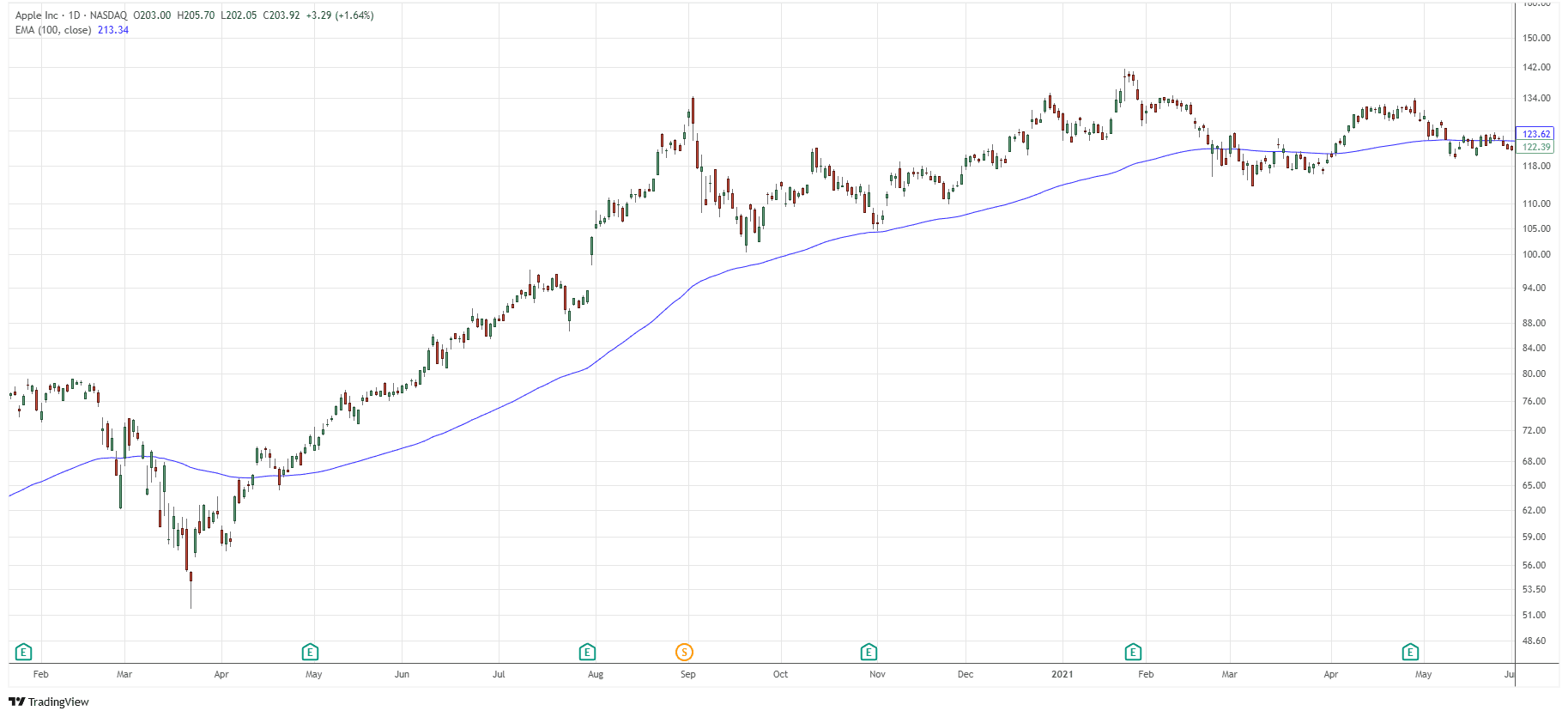
Start position trading with any amount of capital. There is minimal time investment, so profits and deposits/savings can be added to the account over time.
Copy trading allows people to duplicate someone else’s trades automatically. It requires software provided by certain brokers, permission from both sides, and then the broker recreates the trader’s trades in each of the copier accounts.
Copy trading is an option for people who don’t want to trade themselves, want to learn through seeing trades, or have limited time to trade.
On the surface, copy trading seems simple, but it requires mental fortitude. Decisions need to be made whether to stick with a trader who is losing money or switch to someone else. All traders have drawdowns, so determining when someone is on a normal losing streak versus having a meltdown is important, although not always easy to determine. Compare recent performance with past performance to see if the current slump is normal, and thus likely not an issue, or if it falls outside normal and may be cause for concern.
Copy traders may also override the trades in their account or turn the copying feature off and on, which will affect results.
Figuring out the best strategies for 2025 also means using the correct tools. Trading tools help make better trading decisions, provide information, or confirm calculations. Here are several useful tools available on Trading.biz.
Position sizing is a key component of risk management. Put too much into a trade, and the account could be decimated by an adverse move. Put too little — and capital isn’t being utilized effectively.
The position size tool calculates the ideal position for any trade, based on the account size and entry and stop-loss prices.
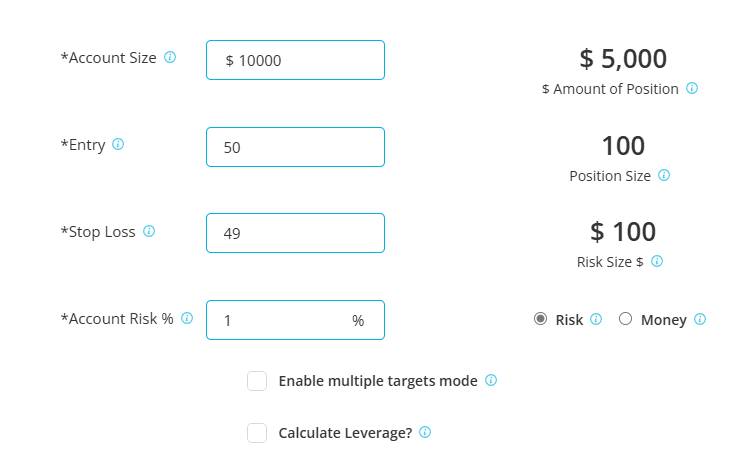
In the example above, the trader has a $10,000 account, and they are willing to risk 1% of the account on a trade. They are buying a stock (or other asset) at $50 and are going to place a stop loss at $49.
The calculator says to buy 100 shares, which results in a $100 risk, which is 1% of 10,000. 100 shares of a $50 stock costs $5,000, so the trader still has $5,000 to use for other trades.
The profitability calculator shows how much a trade is making, or it can be used to calculate theoretical profits on historical trades. It includes rollover for forex trades and commission costs.
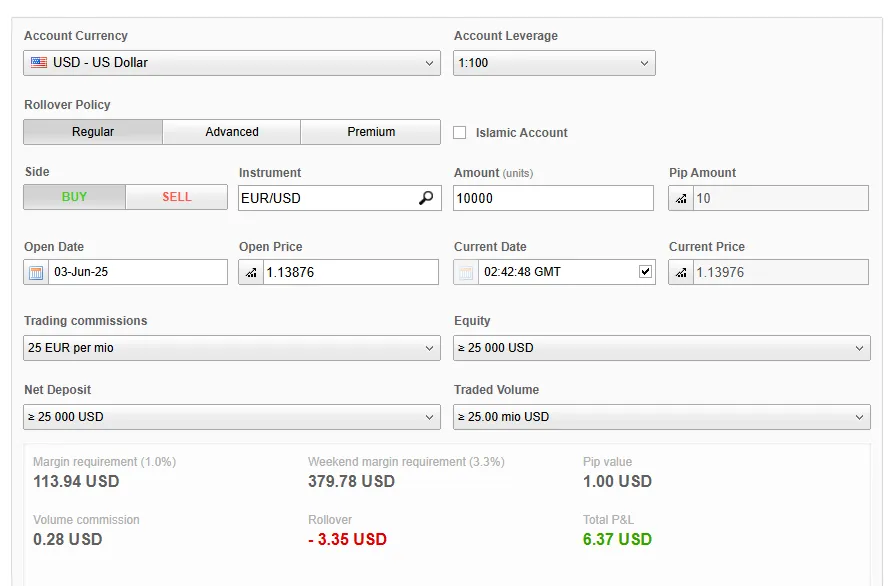
In the example above, a trader purchased 10,000 units of the EUR/USD at 1.13876. The current price is 1.13976, which is 10 pips higher than the purchase price. This is a $10 profit, but accounting for rollover and commissions, the actual profit is $6.37.
Forex traders will find the tool highly useful for calculating the impact of rollover on profits or losses on multi-day (or longer) trades.
A technical summary box is a snapshot of various markets, such as stock indices, futures, bonds, and forex.
At a glance, it shows how these assets are performing over different time frames, which aids traders in making trading decisions. If all the major indices are positive on the day, then most stocks will be moving up, and long positions are favored. If the indices are all selling off, short positions in stocks are favored.
If certain forex pairs are really strong, favor longs. In the really weak ones, favor shorts. The technical summary box can provide an overall directional bias for trades at a glance.
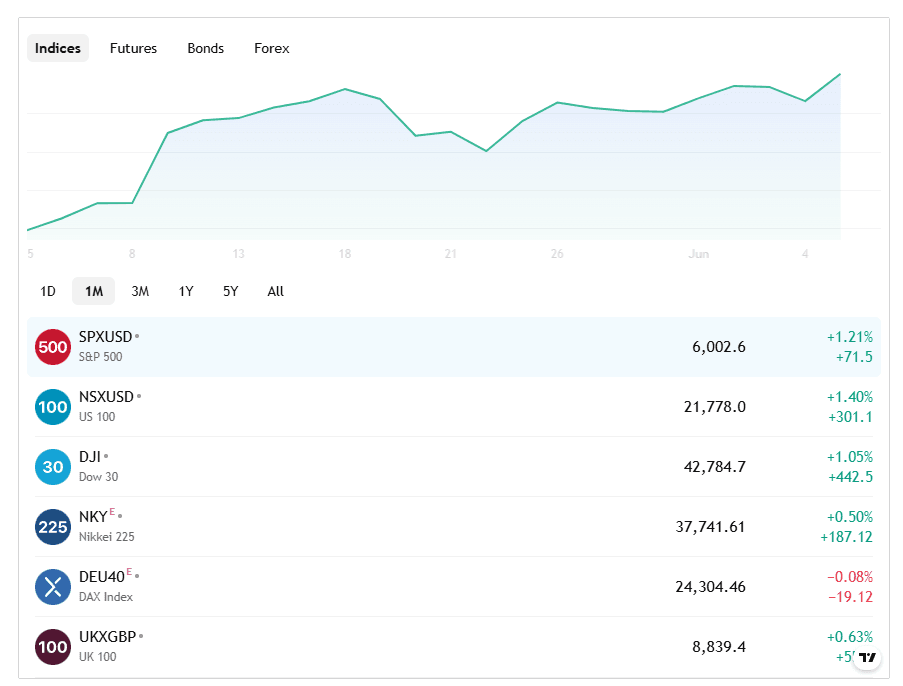
For the day above, US indices (SPX, NSX, and DJI) were all strongly positive, and the monthly chart also shows a nice uptrend. This would have been a good day to favor long positions if day trading stocks.
The currencies heat map shows which currencies are performing best and worst on a given day.
From a quick glance, forex traders can see where the action is, as well as form a direction bias.
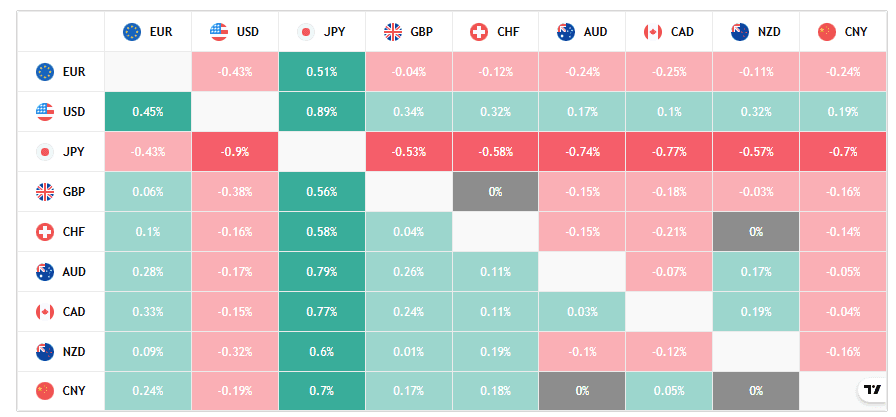
On the day above, all currencies are up versus the JPY. But the USD is up the most. Therefore, it would make sense to consider longs in USD/JPY on this day.
2025 is shaping up to be an incredible year for traders. Volatility and disruptive technology stocks are producing big price movements to capitalize on. Automated trading is available to all traders with AI coding advancements.
Look through the approaches discussed and decide on a plan for how to trade. Test your method and if profitable, begin trading with gradually increasing position sizes as the account grows (slowly increasing risk to 1% or 2% of the account per trade). Use the tools provided on Trading.biz to stay on track and avoid mistakes.
If missteps occur, or more information is needed, check back with our experts for their latest insights on the Trading.biz blog.
Find Your Perfect Broker: Explore Our List Now!
Choose the best with our expert-selected options

Find Your Perfect Broker: Explore Our List Now!
Choose the best with our expert-selected options
Discover top binary options brokers tailored to your region. Browse our curated lists by country:
3045