Updated:October 13, 2026

10 min
10 min

Day trading is a popular way for people to use their capital to make quick returns. But it is not without risks, especially for those starting out. While the idea is to make quick gains, trading in and out of the market can also mean quick losses.

Author

By understanding day trading, you’re more likely to put yourself in the winner’s circle, like I have. I’ve been a day trader since 2005. Continue reading our guide to find out what day trading is, the rules that apply to day trading, the best markets for day trading, how to practice, tools you’ll need, managing your risk, and strategies you can use.
Day trading is a style of trading in financial markets where the trader buys and sells a financial instrument, such as stocks, options, futures, or currencies, within the same trading day.
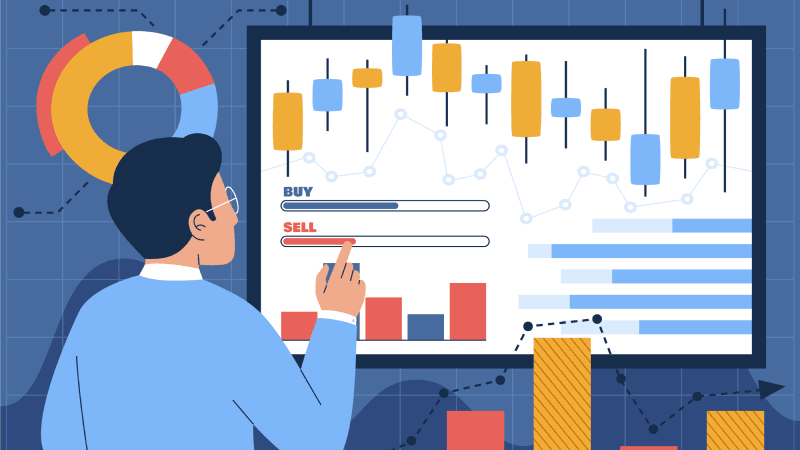
The goal of day trading is to make profits by taking advantage of short-term price movements in the markets. Day traders typically close out all of their positions by the end of the trading day and do not hold any overnight positions.
Day traders generally trade in both directions, going both long and short. Going “long” means buying if they think something will go up. Shorting means profiting if the price falls. For example, there are many opportunities to gain by shorting Bitcoin during trading days due to Bitcoin volatility.
The pattern day trading rule only applies to day traders in the USA who are trading stocks. It does not apply to other markets or countries. That said, certain countries may have their own rules or limitations on day trading.
If you are not the in the US, or not day trading stocks, then you can skip to the next section. If you want to day trade stocks in the US, you’ll need to understand this rule. The pattern day trading (PDT) rule is a regulation enforced by the US Securities and Exchange Commission (SEC) that applies to traders in the United States who engage in pattern day trading.
A pattern day trader is defined as someone who executes four or more day trades within a five-business-day period using a margin account (I’ll discuss accounts later on). Under the PDT rule, a pattern day trader is required to maintain a minimum account balance of $25,000 in order to continue day trading.
If the account balance falls below $25,000, the trader will be restricted from day trading until the balance is restored to the $25,000 (or more) level. It’s important to note that the PDT rule applies only to margin accounts and does not apply to cash accounts. Additionally, the PDT rule applies only to traders in the United States and may not apply in other countries.
So if you want to day trade stocks in the US, you will need at least $25,000. If that’s too high for your purposes, you can trade other markets in the US using less than that. If you are outside the US, you can day trade with any amount you wish (assuming no local restrictions).
Popular day trading markets include stocks, futures, forex, and options. All are viable for day trading.

Each market is good for day trading — that’s why people trade them. One isn’t better than another. That said, trading each market may require different amounts of capital, which may make one more suitable for you.
Therefore, a $0.05 option requires $5 in capital, plus fees and commissions. To trade in a risk-controlled way would require at least $500, and ideally $1000 or more to consider options trading.
Many brokers don’t allow clients to trade options unless they have at least $2000 in the account. You’ll also need to specify that you want to open an options account when going through the account opening process.
One market isn’t better than another, but your basic knowledge or the amount of capital you have may steer you towards one market over another.
Depending on which market you trade, you may need additional tools to help you analyze trades, or you may need to use a specific account type.
Since each market is a bit different and may require different tools or accounts, let’s go through them one by one.
Once you have your account opened, the broker will provide you with the ability to place options orders. Once again, you will likely need to pay for a data feed if it is not provided for free by the broker.
In all cases, your broker will generally provide you with the basic tools you need. However, it’s possible that as you progress, you may find that the broker’s tools aren’t to your liking. There is always the choice to make trades through your broker while using third-party tools for your analysis.
You may wish to use nicer charts, such as those offered by TradingView or Trend Spider, or you may want to use a stock screener like Finviz, or you may want a whole different trading platform, such as NinjaTrader.
The basic tools you need are a trading platform to place trades, charts to analyze, and a data feed for what you are trading. Beyond that, there are plenty of tools available online to help make trading decisions.
Demo trading is a great way to practice and get used to trading before you put real money on the line.
Demo trading, also known as paper trading, is a process of simulating trades using a demo account with virtual money. It allows traders to practice and refine their trading strategies without risking real money. Here are some reasons why demo trading is beneficial before starting day trading:
Overall, demo trading can help traders develop the skills and confidence needed to be successful in day trading, while minimizing the risk of financial loss.
Managing risk while day trading is first and foremost. Only by managing risks will the rewards come.

Risk must be controlled. Otherwise, the account will be eroded by bad days, lots of tiny losses, or a few big losses.
You may also want to set a weekly or monthly loss maximum. If you lose this amount, stop trading for the rest of the week or month. Go back to practice in the demo account.
With the risk defined, you can start thinking about making money. Profits are a function of risk/reward, win rate, and the number of trades. If you take a trade, make sure you’re getting at least double the profit versus your risk.
For example, you buy a stock at $50 and put a stop loss at $49 ($1 of risk per share), put your target at $52 ($2 profit per share) or higher. This way, even if you only win 40% of your trades, you will still make a small profit. If your win rate is higher, your profits will be higher.
You could also go for larger profits (3 or more times larger than the risk). But since these are short-term trades, make sure the target is within reasonable proximity to the current price as you ideally want the price to reach that target within minutes or hours (at most). Look at how far the price typically moves to determine if your target is reasonable and provides a good risk/reward.
“Risk is when there are multiple possible future states and the probabilities of those different future states occurring are known.” – George Soros
A day trading strategy defines when you enter and exit trades. Here are some day trading strategies for you to consider.
The following Trading.biz articles will help you define a day trading strategy for yourself.
These are just a few examples of trading strategies. You can find many more on the blog.
Find Your Perfect Broker: Explore Our List Now!
Choose the best with our expert-selected options

Find Your Perfect Broker: Explore Our List Now!
Choose the best with our expert-selected options
Discover top binary options brokers tailored to your region. Browse our curated lists by country:
2077