
Top-rated crypto brokers and platforms
Crypto is one of the buzzwords nowadays. As the size of the crypto market expands, you have more options than ever before. You have plenty of crypto brokers and exchanges to choose from. So, in this guide, we’ll tell you what the best crypto exchanges are.
Updated October 23, 2026
(UNBIASED REVIEWS)
Before the list, one distinction that decides which half of it is even relevant to you. Exchanges hold your coins and match your orders. Brokers give you leveraged price exposure without you owning anything. Bot services are neither: they connect to an exchange account you already have and charge a subscription for running strategies on it.
All three appear below, and a spot buyer and a futures trader are not choosing from the same shortlist. Work out which group you belong to first, then compare inside it.
What is a crypto exchange?
Before I tell you the juicy stuff, I want to explain something. I know some of you are here for the first time. So, I want you to have a relaxing experience reading this.
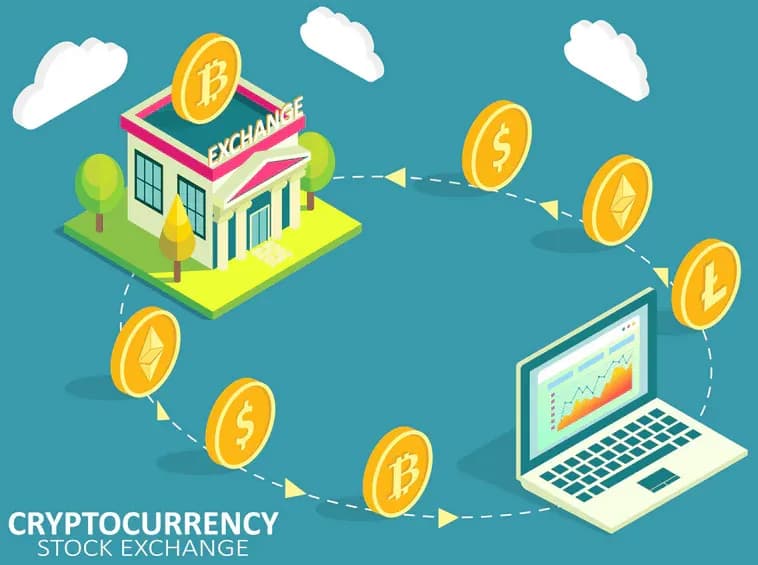
how-crypto-exchange-works-1.webp
First, let’s talk about what a crypto exchange is. Crypto exchanges allow traders to buy, sell, and convert various cryptocurrencies. They are required for cryptocurrencies to be traded at the current scale.
Some exchanges give the most competitive pricing. In comparison, others specialize in native platforms. Now you may be wondering why these specific exchanges provide crypto trading. Many brokers or financial organizations don’t offer crypto trading. Why?
Because of the crypto market’s decentralized nature. So, here comes the exchanges. They are the most important part of the crypto world. Without exchanges, you’d have to find another individual ready to trade cryptocurrency.
And you agree on an exchange rate. The coins would then have to be sent directly to each other’s wallets. Hearing this may have made your head spin, as this is a complex process. So, we have crypto exchanges that help us make crypto trading easier.
How does a crypto exchange work?
Now that you know what a crypto exchange is, here’s another important question:
“How does a crypto exchange work”? There aren’t any complex readings in this. So, bear with me:
The platform determines how cryptocurrency exchanges operate. Most crypto trading platforms are centralized exchanges that operate as brokers.
They function as middlemen between buyers and sellers. You can deposit funds into exchanges to buy cryptocurrencies. Or, you can deposit another cryptocurrency to trade.
It’s a practice known as crypto-to-crypto spot trading. You can expect to pay a charge when converting one cryptocurrency to another. Think of when you exchange one currency for another.
How to choose a crypto exchange
Here’s another question many new traders search for: “How to choose a crypto exchange”? Thankfully, we have covered it (but more on that later).
You need to remember some factors. The primary factors to consider are functionality and security measures. Your preferred exchange should contain the majority, if not all, of the services you want. list of crypto brokers.
Whether you can trade fiat-to-crypto trading
Liquidity
Particular coins you wish to trade (I wanted to trade ApeCoin, but couldn’t).
It should also provide extra layers of security against hackers, such as two-factor authentication.
Another thing to consider is the ease of use.
It is especially important for novice traders who struggle to get familiar with the platform.
It is also necessary to consider geography; not all exchanges will be available in your country.
One addition to that checklist, because it is the cost people actually pay. The headline trading fee is rarely the biggest number. Card purchase markups of 3 to 7 percent, instant-buy spreads, withdrawal fees and wire minimums dwarf a 0.1 percent difference in maker fees for anyone trading modest size. Work out your total round trip, funding plus trading plus withdrawal, on the amount you really intend to move.
The list: 32 crypto brokers and platforms
With important questions answered, let’s move to the juicy part. I’m sure you must be waiting for it.
But I had to explain to some of the new audiences. So without further ado, let’s cut to the chase.
1. Binance
For a good reason, Binance is one of the most popular cryptocurrency exchanges globally. Its low costs and diverse selection of cryptocurrencies appeal to traders of all stripes.
Product Range
Low costs, access to hundreds of coins, and complex features for experienced investors distinguish the world’s foremost cryptocurrency exchanges.
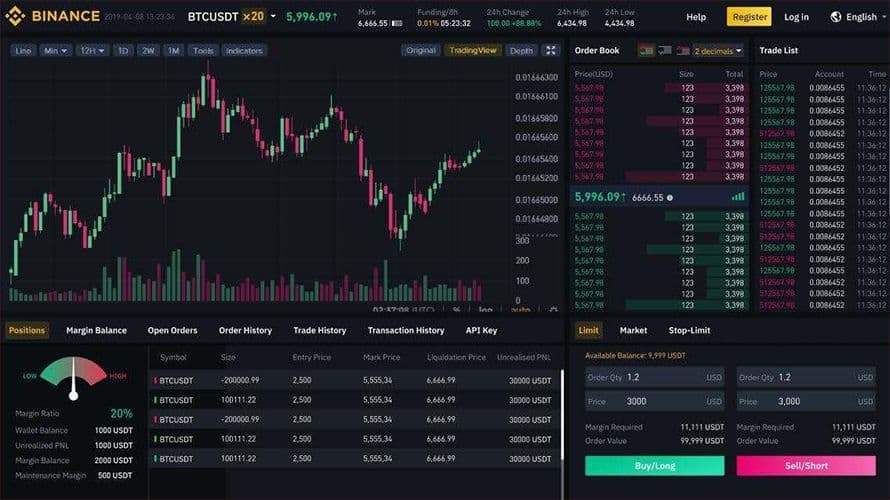
binance-trading-platform.jpg
Pros Cons About 50 different cryptocurrencies are accessible. Seven states in the United States have banned it. Low transaction costs. Not beginner-friendly.
Trading costs, leverage and sizes
Spot trading fee 0.1 percent 0.5 percent for instant buy/sell of more than 50 cryptocurrencies.
Pros Cons About 50 diffPeer-to-peer trading has three levels: basic, advanced, and over-the-counter.erent cryptocurrencies are accessible. Email is the only way to contact Binance customer service. Low transaction costs.The minimum trading amount is $10. The disparity between the purchase and sell prices is charged to users. The firm compensates users in full for any losses.
Withdrawals and Deposits
Binance offers the lowest trading costs. Payment options are bank transfer, debit card, and peer-to-peer.
Pros Cons Fees for non-immediate and instant purchases are both low. Account verification issues. The coin selection is enormous. The corporate structure is opaque.
Reputation and Regulation
Binance trades more than its competitors, Coinbase and FTX. However, It faces regulatory and legal difficulties in the US, the EU, and China.
Pros Cons It has quickly taken off in several countries worldwide. Regulators have scrutinized it.
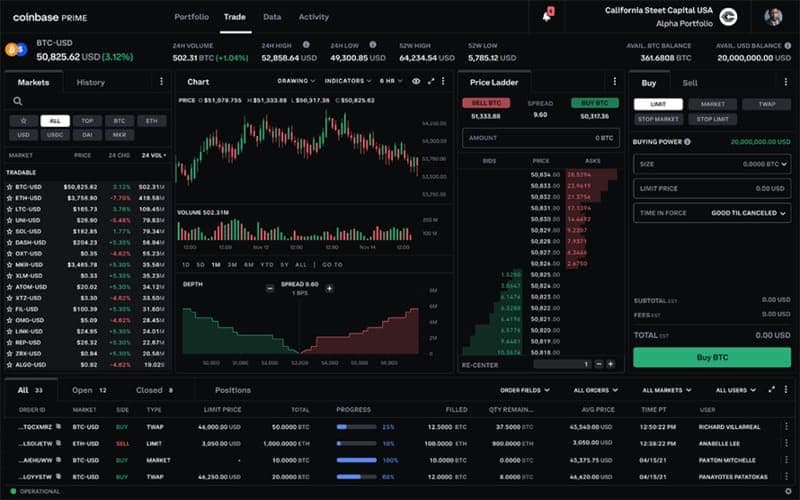
2. Coinbase
People new to cryptocurrencies will enjoy how simple it is to buy cryptocurrencies with Coinbase. However, beginners may consider the cost of such ease.
Coinbase allows traders to purchase, trade, and exchange over 100 tradable cryptocurrencies, including Bitcoin, Ethereum, and Dogecoin.
Pros Cons A considerable variety of cryptocurrencies are supported. Higher fees than other cryptocurrency exchanges. Lower pricing is available with Coinbase Pro. No access to trade many altcoins. Great user interface. A limited number of fiat currencies.
The firm operates two platforms: Coinbase and Coinbase Pro. Each lets you buy, sell, and exchange cryptocurrencies, but each has its own features.
Pros Cons Users of Coinbase may trade on a variety of platforms. Coinbase charges a more significant fee. It operates in more than 100 countries. Limit and stop orders are unavailable. Advanced trading platform. Complex fee structure
Pros Cons Crypto wallets for safe crypto storage. Not for users who want external storage wallets crafted by personal wallet companies. You can also send cryptocurrency from your Coinbase account to your wallet. They’re limited in the payment methods they accept. You can withdraw your money from Coinbase back to your bank. Withdrawal fees for most withdrawal methods.
Pros Cons Coinbase employs industry-leading security measures to safeguard customer money and assets. They can have better KYC and legal norms for more countries to serve. High-quality educational materials.
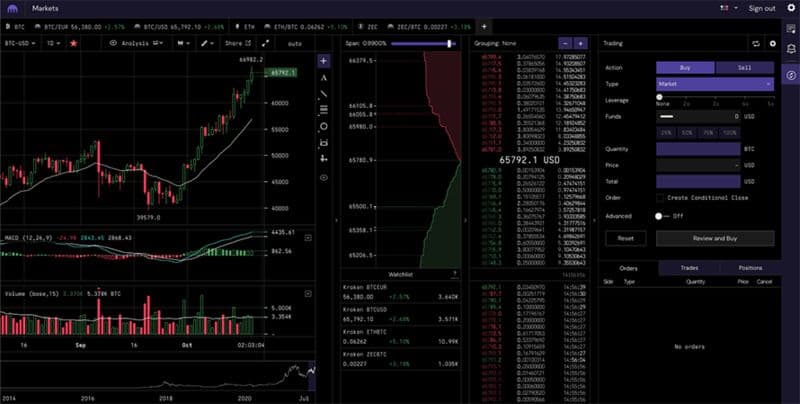
3. Kraken
Kraken, founded in 2011 and debuted in 2013, is one of the world’s largest and oldest crypto exchanges. It is also one of the few US crypto exchanges that offer advanced trading features like margin.
coinbase-trading-platform.jpg
Kraken is an excellent all-around exchange since it’s easy to use for novices and supports over 65 cryptocurrencies. Kraken accepts more than 120 currencies, including Bitcoin, Ethereum, Cardano, Solana, and Dogecoin.
Pros Cons A large number of digital assets are available. Account financing possibilities are limited. Fees for advanced traders are low. Not all states in the United States have it. Offer advanced trading features.
Kraken provides customers with margin accounts and futures trading, riskier products beneficial for particular trading techniques, and buying and selling bitcoin at market prices.
Pros Cons Up to 5x leverage. The trading fee is high. Advanced API access. High minimum deposit. Professional trading interface.
Pros Cons Low withdrawal fee. Withdrawals via cash, credit and debit cards, or third-party payment processors are not available. No deposit fee. Limits on deposits and withdrawals are necessary. Global availability. High minimum withdrawals.
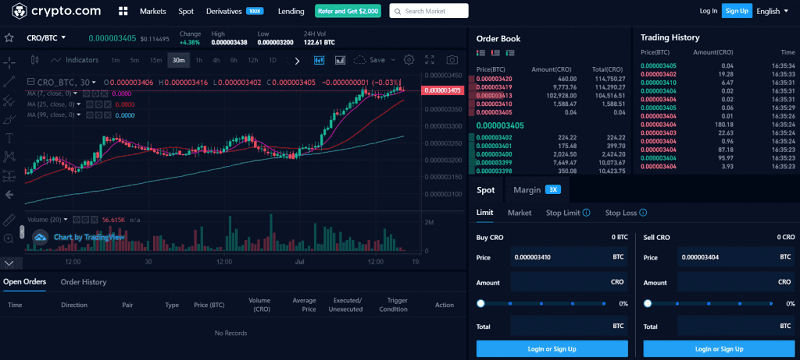
4. Crypto.com
Crypto.com, founded in 2016, is one of the best crypto exchanges out there that provides traders to buy and sell cryptocurrencies.
Crypto.com provides trading experience in more than 250 currency pairs, on-spot trading facilities, cryptocurrency, stocks, and metals. A wide range of crypto coins such as Ethereum (ETH), Bitcoin (BTC), and Cardano (ADA) are also available for trade on the platform. NFTs and ETFs are also traded on Crypto.com.
Pros Cons A wide range of cryptocurrency coins (over 90). Limited crypto-related offers. On-spot trading services. Variety of great assets.
The maximum amount of up to 100X leverage is provided to the traders. The amount also depends on the total ground exposure to Crypto.com. The initial margin rate of Crypto.com starts at 1%, and the maintenance margin rate is 60%. 0.04% to 0.4% are the maker fees, and around 0.1% to 0.4% are the taker’s fee, plus a total of 2.99% is charged for the credit card purchases.
Pros Cons No commission fee is charged. Non-standard trade sizes. Low minimum deposit limit. Larger minimum trade sizes for certain assets.
There is no fee and no limit for depositing any amount on Crypto.com. The withdrawal process on Crypto.com Exchange is based on the on-chain transaction of transferring crypto to an altogether external cryptocurrency address. A withdrawal fee is charged when doing a transaction using Crypto.com.
Pros Cons 2-4 hour deposit and withdrawal process No Fiat withdrawals. Affordable deposit fee. Sometimes it takes additional time to deposit.
Crypto.com uses various security measures to ensure traders’ better and more secure systems. Multi-factor authentication systems and whitelisting mechanisms keep customer accounts safe. Crypto.com works with local US banks to provide about $250,000 in FDIZ insurance policies.
Pros Cons Have US regulations. No regulations in Europe. Customer deposits are also stored offline.
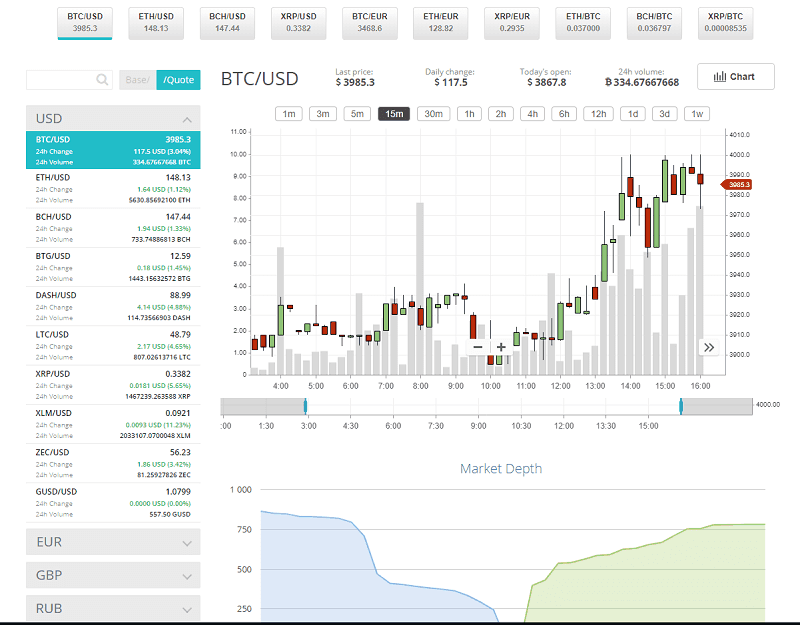
5. CEX.IO
Cex.io was one of the first cryptocurrency exchanges to accept card payments and bank transfers.
Cex.io is a well-regulated cryptocurrency exchange online platform. It allows traders to trade in various assets, such as cryptocurrency coins, currency pairs, stocks, ETFs, tokens, on-spot trading, and digital trading platforms. Cex.io also provides a trading platform for Bitcoin (BTC), Litecoin (LTC), and Ethereum (ETH). It is available in 99% of the countries and 48 states of the United States.
Pros Cons 100 different digital currencies. Asset availability depends on the location. Organized cryptocurrency lists.
Cex.io provide traders with leverage of 10X on Bitcoin (BTC), Litecoin (LTC), and Ethereum (ETH). A high trading fee of about 0.25% is charged on every transaction. Cex.io offers simple, instant buy options to traders. It charges about 7% of the total amount for the instant buy feature. Cex.io also charges a minimal commission fee of 1% to 2%.
Pros Cons Traders can earn rewards by crypto staking. Complicated fee structure. Low spot trading fee.
Withdrawal and deposit fees are charged accordingly to the amount of trade. Around 3% plus $1.25 of the total amount if the trader uses a Visa debit or credit card for the transaction. A minimum of $20 is allowed for traders to deposit on the Cex.io platform.
Pros Cons Low minimum deposit. Minimum crypto funding. Multiple funding channels. Low to zero withdrawal charges.
Cex.io holds most of the trader’s funds in a cold wallet for a secure and regulated trader’s security, while some are in hot wallets. The exchange done on Cex.io is regulated and licensed in all the countries where it is operated. In the United States, it is regulated under FinCEN under Money Services Businesses (MSB).
Pros Cons Well regulated. Conflict of interests. Positive ratings.
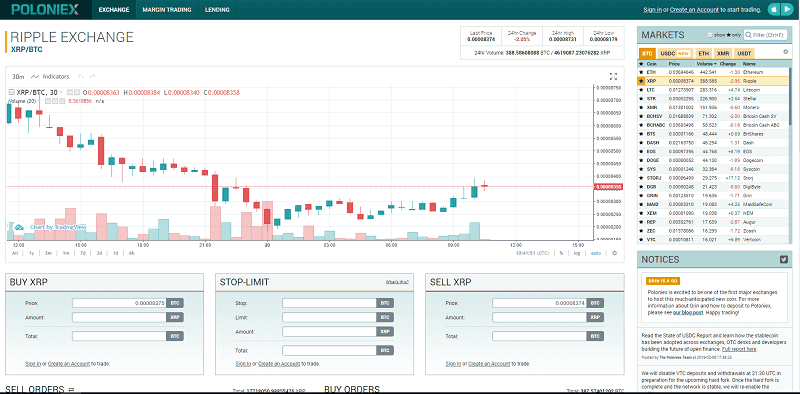
6. Poloniex
Poloniex offers a wide selection of cryptocurrencies and some of the lowest trading costs of any exchange.
Over 350 coins and tokens like Bitcoin, Ethereum, Solana, Stellar, Dogecoin, Shiba Inu, and other notable currencies are supported by Poloniex. Traders can also trade volatile currencies such as Baby Dogecoin, Dogelon, and Dogs of Elon.
Pros Cons Poloniex offers its customers or traders a pool of majority cryptocurrencies from which to pick. There is no support for fiat currency. Buy orders, sell orders, and stop-limit orders are all supported trading orders. You can either offer or demand a loan at a specified interest rate at the lending option.
Poloniex accounts have a withdrawal cost of around 0.0005 BTC each BTC withdrawal, which is much less than the typical industry withdrawal fee.
Pros Cons Margin and futures trading. No advanced order types. The fee for large and small exchanges is fixed. Low commissions.
Pros Cons Can make deposits using cryptocurrencies. Sometimes they have delays in the deposits. Deposits and withdrawals are free of charge. Poloniex does not have its digital money wallet.
Pros Cons It allows access to more than 150 countries. The website is a bit slow. It has a strong market reputation for security. Not available in the US. User-friendly platform.
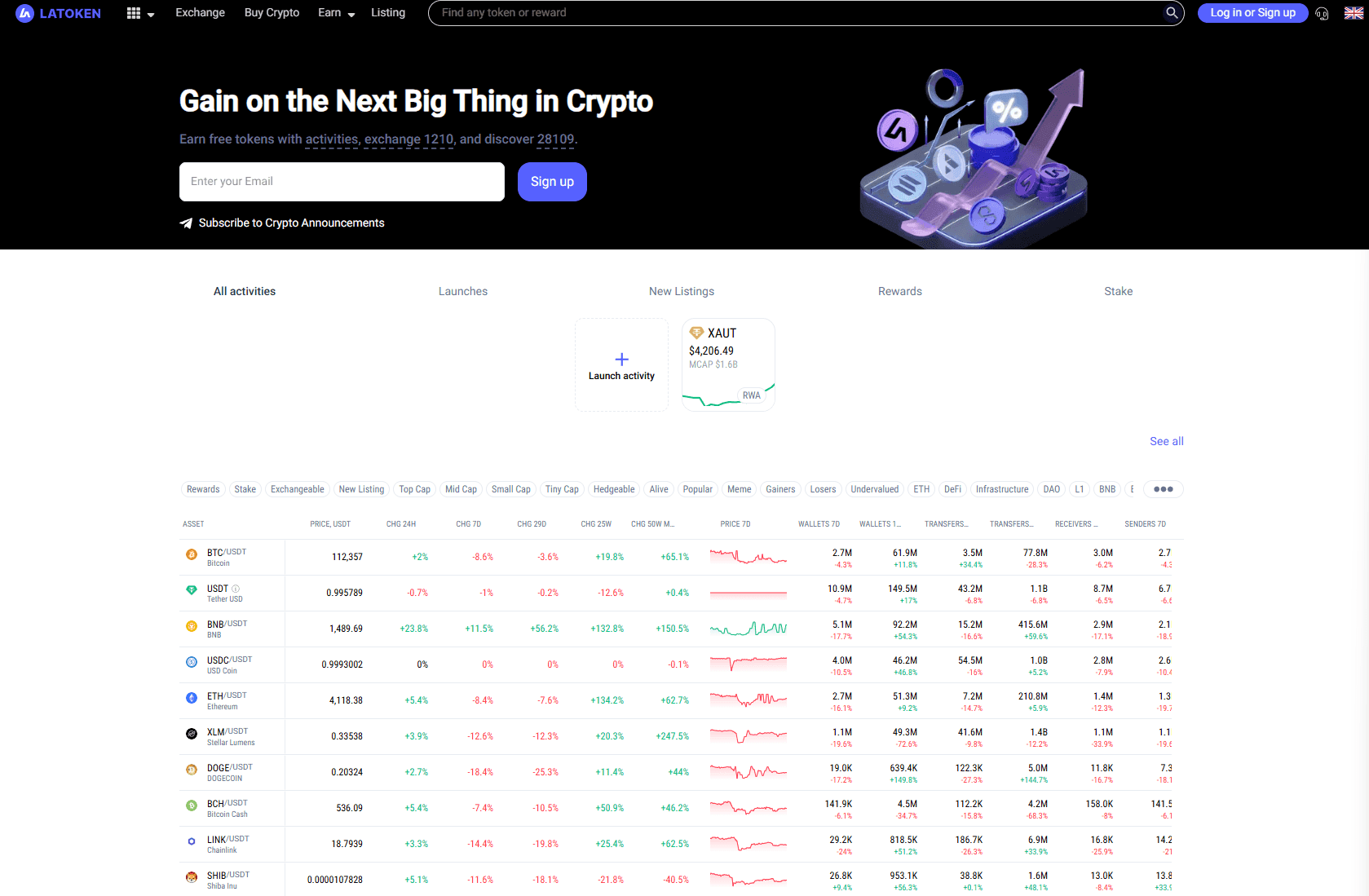
7. LATOKEN
LATOKEN runs out of Estonia and lists more or less everything: 500+ coins, an IEO launchpad, an NFT marketplace, staking. It reaches over 190 countries, all under full KYC. The draw is early access to listings the big exchanges have not picked up yet, and that is a specific reason to be here rather than a general one.
Pros Cons Supports 500+ cryptocurrencies. Some users report withdrawal issues. Intuitive web and mobile interfaces. Mixed customer reviews about reliability. Offers IEO launchpad and NFT marketplace. Not available in the U.S., North Korea, or Afghanistan. Staking and earning programs available. Requires KYC verification for full functionality. Regular addition of new trading pairs. Unclear transparency on company operations.
LATOKEN applies a maker fee of 0.49% and a taker fee of 0.49%, with higher-tier pairs reaching 0.98%. Fees can be reduced through volume trading or staking LA tokens (LATOKEN’s native asset).
Pros Cons Trading discounts for LA token holders. Fees are relatively high compared to major exchanges. Zero maker fees for users trading over $20M monthly. Complex tier system may confuse beginners. Transparent maker/taker structure. Certain pairs carry additional costs. Over 500 asset pairs for diversification. No margin or futures trading options.
Pros Cons Supports deposits in USD, EUR, GBP, SGD, and IDR. Fiat access restricted to verified users. Crypto deposits for BTC, ETH, TRX, USDT, and USDC are free. 1% deposit fee for non-premium tokens. Daily withdrawal limits scale with KYC level. Level 1 capped at $9,999 per day. Instant crypto deposits and flexible limits. Network withdrawal fees apply per transaction.
Pros Cons Operates globally in 190+ countries. Unregulated exchange - lacks major oversight. Established platform with active community. Limited corporate transparency. Adheres to AML/KYC standards. History of inconsistent user feedback. 24/7 live chat and ticket support available. Some reports of delayed issue resolution.
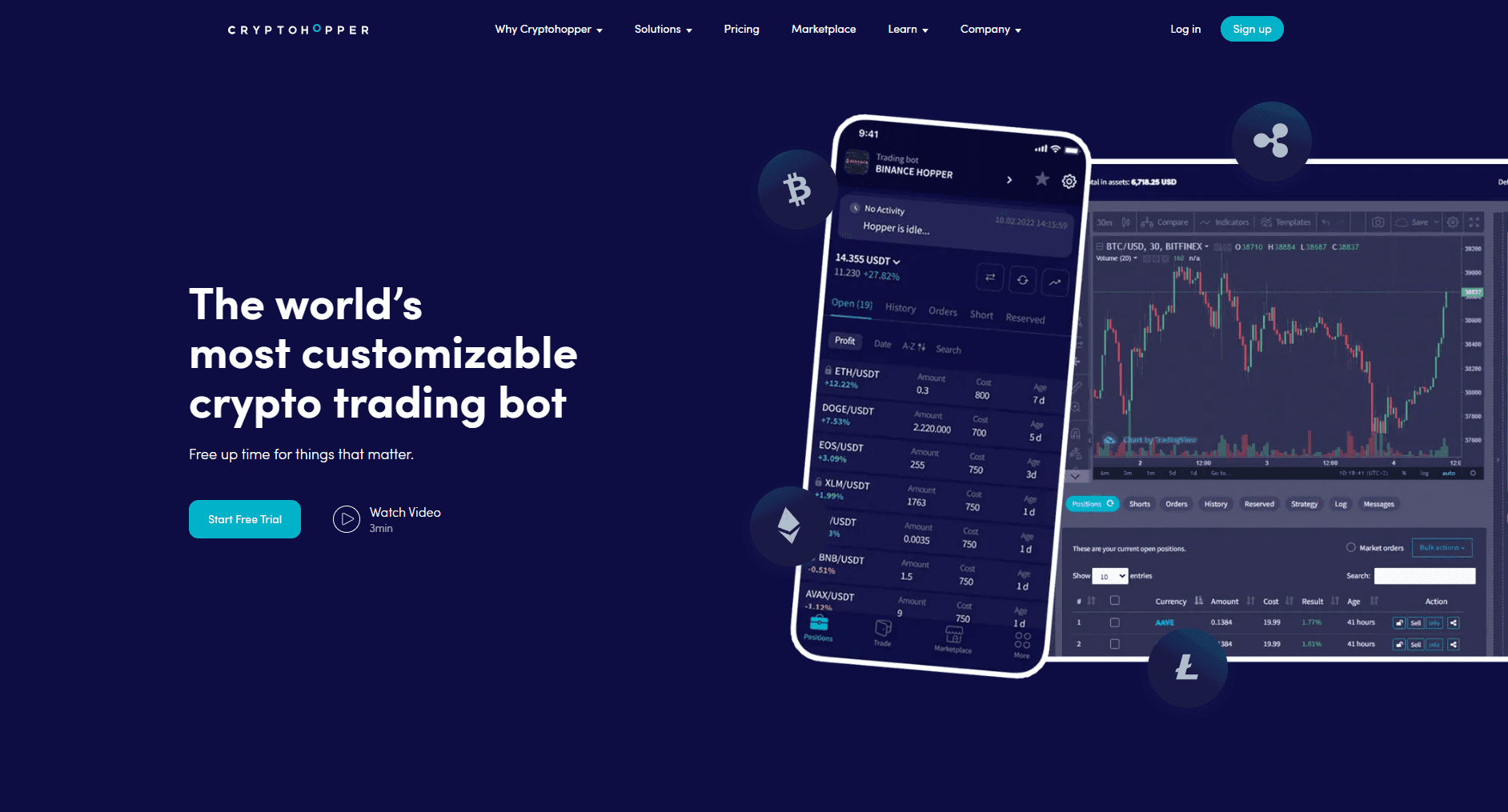
8. Cryptohopper
Cryptohopper is not an exchange. You plug your exchange account in over API and let bots trade it, either on your own rules or on strategies bought from its marketplace, with copy-trading and backtesting alongside.
kraken-trading-platform.jpg
Worth being blunt about what that means: a bot executes a strategy, it does not invent one. Marketplace strategies with glorious historical curves have usually been fitted to past data, and the backtesting tool is there precisely so you can find that out before funding anything.
Pros Cons Allows fully automated trading via bots. Requires technical setup and understanding. Strategy marketplace & copy-trading options. Bots can’t account for news/fundamental events. Backtesting and simulated trading support. Free tier is very limited. Integrates with many exchanges. Interface and settings only in English.
Cryptohopper doesn’t deal in leverage or margin itself - bots execute trades on linked exchanges. Costs come from subscription plans, marketplace items, and possibly exchange fees.
Pros Cons Flat subscription fees allow predictability. Subscription + strategy costs add up. Some marketplace items are free or low cost. Hidden costs in strategy purchases. No direct trading commission by Cryptohopper itself. Bots’ performance depends heavily on setup. Flexible plan tiers for different users. Higher tiers may be unaffordable for small traders.
Pros Cons No risk of Cryptohopper holding your funds. Deposits/withdrawals done via exchange, not by Cryptohopper. Zero deposit/withdrawal fees via Cryptohopper itself. You are bound by exchange’s deposit/withdrawal limits and fees. You maintain full control of keys and custody. No fiat deposit methods built into Cryptohopper.
Pros Cons Has been operating since 2017; decent track record. Not licensed or regulated by financial watchdogs. No known major hack of the platform itself. Many user complaints about non-performing bots and no refunds. Uses 2FA / security best practices for user accounts Strategy authors may push low-quality or losing bots. Transparent team info and Dutch registration help credibility. English-only UI restricts usability for non-English speakers.
9. Yobit
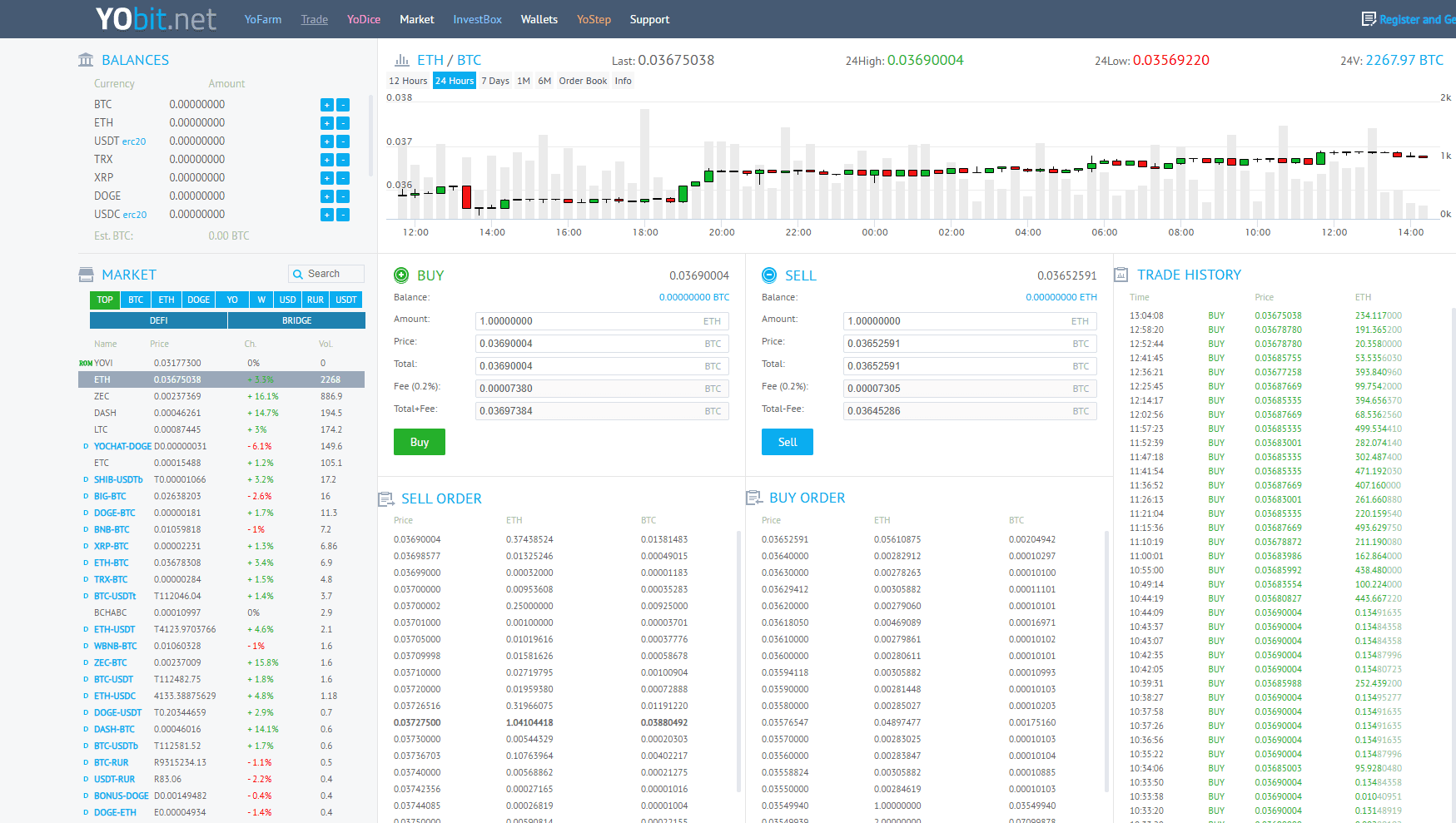
YoBit has been around since 2014, which in this market counts as ancient. Spot trading across hundreds of coins and thousands of pairs, plus side attractions like InvestBox and YoFarm, all wrapped in an interface that has not changed much either. No DeFi, no derivatives.
Anonymity is the reason people use it, and it is also the reason to think carefully about how much you leave sitting there.
Pros Cons Supports 520+ cryptocurrencies and nearly 3,000 pairs. No leveraged or futures trading available. Anonymous registration with no KYC requirement. Interface is outdated and unintuitive for beginners. Offers built-in mini-apps: InvestBox, Dice, and YoFarm. Limited fiat support - mainly USD and RUB. Low entry barrier - $1 minimum deposit. Poor transparency about company ownership.
YoBit applies a flat 0.2% fee for both makers and takers, which is above average for modern exchanges. It doesn’t offer leverage or advanced trading tools, focusing entirely on spot crypto swaps.
Pros Cons Flat and simple 0.2% maker/taker structure. No leverage, ETFs, or advanced order types. No deposit fees for most cryptocurrencies. Spreads can widen significantly on illiquid pairs. Clear commission model for all pairs. Lacks transparency on internal liquidity sources. Basic trading experience suitable for small users. Not competitive for active or high-volume traders.
Pros Cons Supports crypto deposits and withdrawals across 500+ coins. Numerous reports of delayed or blocked withdrawals. Low minimum deposit threshold ($1). Withdrawal fees vary widely and are often high. Accepts Payeer and AdvCash for fiat transactions. No debit/credit card deposits available. Simple wallet management system. Many fiat options are unavailable outside CIS countries.
Pros Cons One of the oldest still-operating exchanges. Completely unregulated and anonymous ownership. Some users value its no-KYC privacy model. Frequent complaints about frozen accounts and lost funds. Has maintained uptime for years with no major hacks. Customer support is largely non-existent. Provides some transparency in public coin listings. Poor Trustpilot and community ratings.
10. Bitsgap
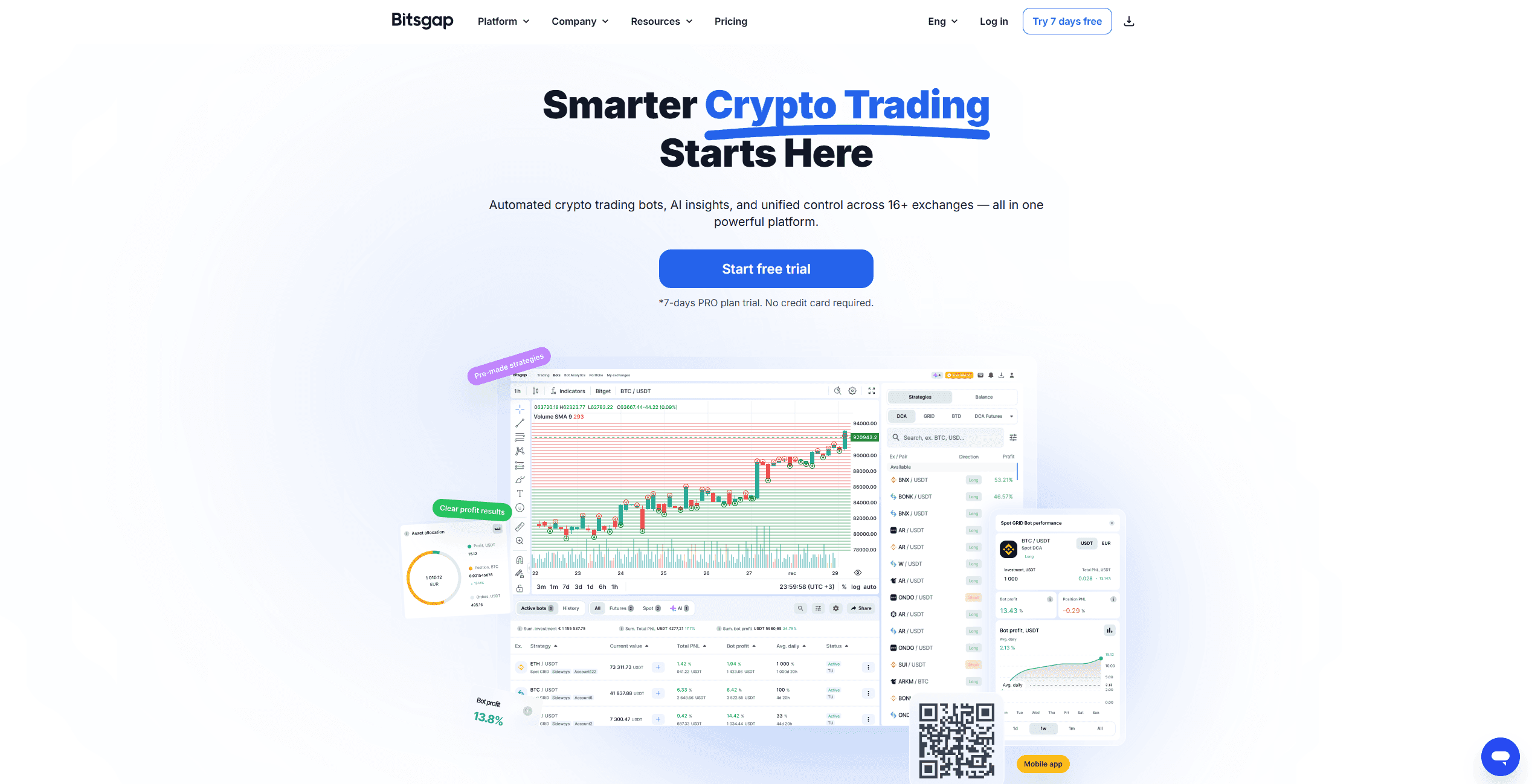
Bitsgap is the other bot platform on this list. Connect exchange accounts over API, run Grid or DCA strategies, backtest them, track the portfolio in one place.
Use the demo mode before anything else. Grid bots do well in ranging markets and badly in trending ones, and a few weeks of watching that in simulation teaches you more than any description of the strategy will.
Pros Cons Access to many trading bots and strategies. Bots may not perform well in volatile trends. Demo & backtesting features to test before real money. No leverage or futures; limited to spot/bot operations. Aggregates multiple exchanges into single interface. Requires setup and understanding of bots and API permissions.
Bitsgap is not itself an exchange - costs come via subscription plans or strategy purchases. It doesn’t offer leverage.
Pros Cons Fixed subscription pricing makes costs predictable. High subscription fees for advanced plans. Basic plan supports small monthly limits. Additional cost for advanced features (bots, strategies) No commission on trades by Bitsgap itself (you pay exchange fees). Performance and profit depend heavily on bot settings.
Pros Cons No risk of Bitsgap holding your funds. You depend entirely on exchange withdrawal infrastructure. No deposit/withdrawal fees charged by Bitsgap itself. Fiat deposit/withdrawal features are limited or must be handled on exchange side. Instant crypto communication via API (no token transfers via Bitsgap). Disruptions in API connection can interrupt operations.
Pros Cons No known public security breaches reported. Not regulated by major financial bodies. Strong security measures claimed (2FA, RSA-2048, API-only mode). Some user complaints: poor support, lag, bot underperformance. Long-running operation, integrated with major exchanges. Reputation issues: harassment claims, refund disputes.
11. Bitcoin.com
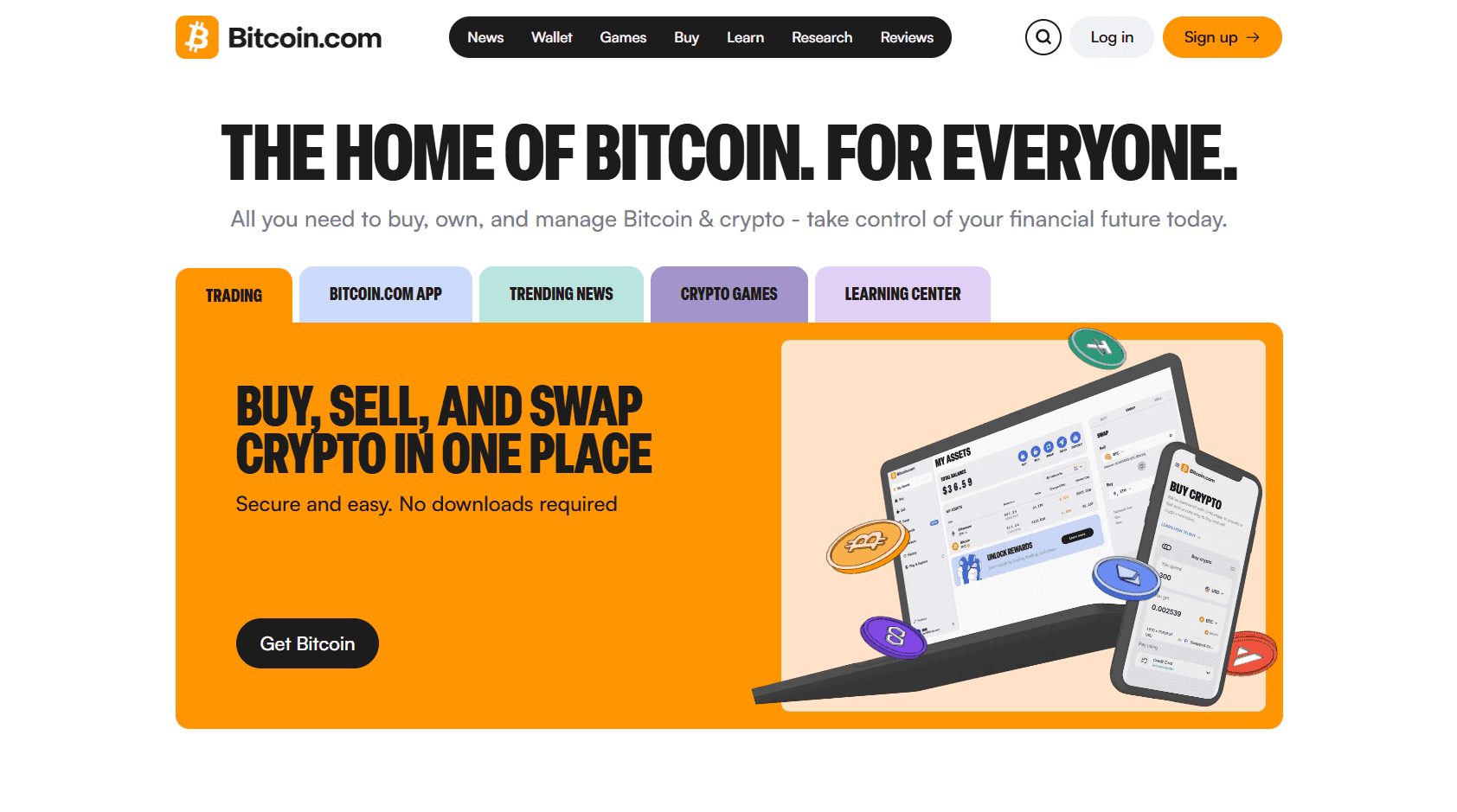
Bitcoin.com is an all-in-one crypto platform that combines an exchange, wallet, and educational portal. Users can buy, sell, send, and swap assets like BTC, BCH, ETH, USDT, and USDC. It also links to the decentralized ecosystem (DeFi, DApps, NFT marketplaces, Verse token ecosystem).
Pros Cons Broad multi-service ecosystem (wallet + exchange + DeFi access). No spot or futures trading features. Supports over 100+ cryptocurrencies. No passive income or referral programs. Non-custodial wallet with full key control. Limited as a trading platform; mainly for buying and swapping. Simple and beginner-friendly interface. Controversial brand history and past reputation issues.
The platform does not charge fees for buying, selling, or swapping crypto internally. Users only pay network (gas) fees. It supports up to 12x leverage for margin trades through integrated services but has no derivatives or advanced order tools.
Pros Cons Zero deposit and withdrawal fees. No spot or futures trading, limited instruments. Margin trading available with up to 12x leverage. Customizable gas fees can delay transactions. Transparent and straightforward fee model. No traditional trading tools or analytics. User-friendly and low-cost on-ramping. Unsuitable for active traders.
Pros Cons Accepts fiat via cards and bank transfer. No PayPal or regional e-wallet integrations. Crypto and fiat withdrawals processed quickly. Occasional transaction delays due to external payment partners. No deposit or withdrawal fees from Bitcoin.com side. Limited fiat currency support (USD/EUR). Non-custodial model ensures user control of funds. No instant SEPA/ACH banking options.
Pros Cons 75% of reviews on Trustpilot are 5-star. Not licensed by any financial regulator. Strong educational ecosystem and transparency. Past controversies linked to Bitcoin Cash promotion. Active community and developer support. No live customer support. Long-term reliability since 2015. No official compliance disclosures.
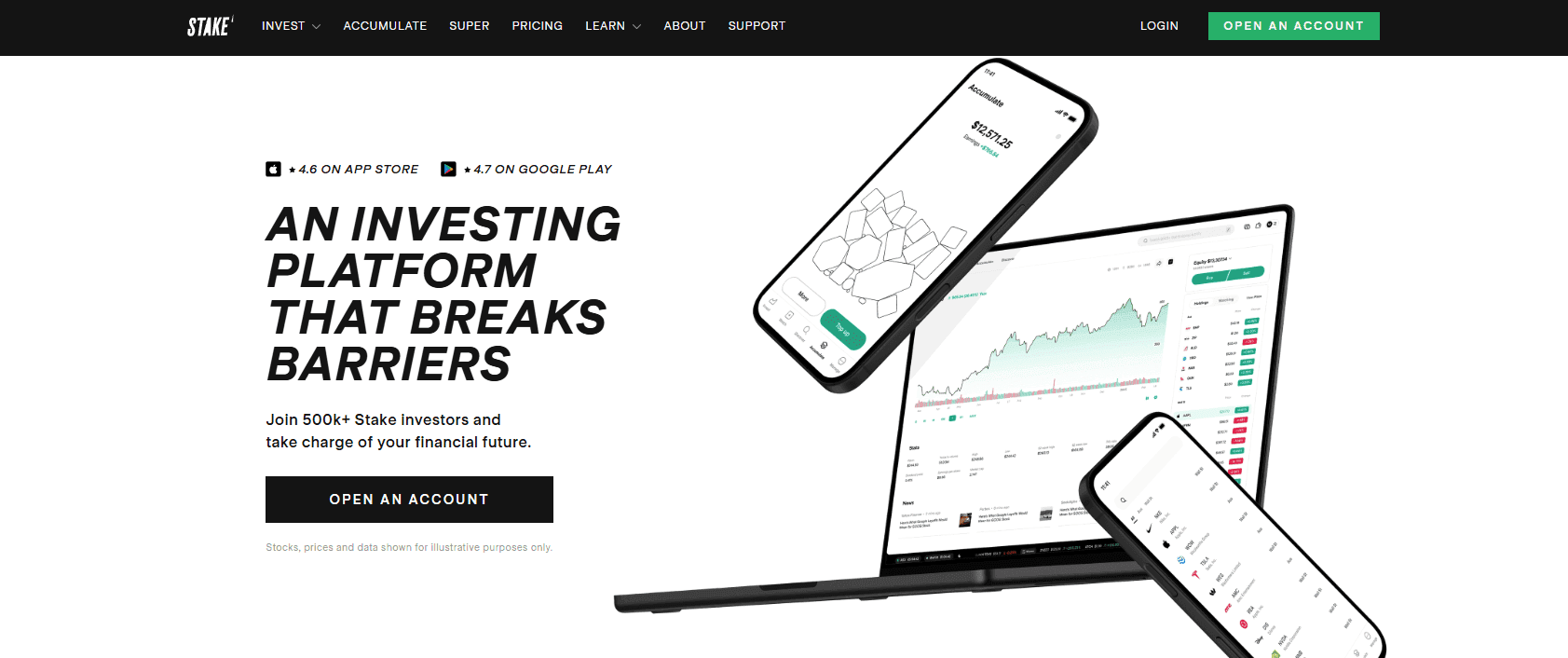
12. Stake
Stake is an Australian-based trading platform founded in 2017. It provides commission-free access to over 3,500 U.S. and Australian stocks and ETFs. The service targets retail investors in Australia, the UK, and New Zealand. Stake offers fractional investing, extended trading hours, and a premium “Stake Black” tier for additional tools and data access.
crypto-com.png
Pros Cons Access to 3,500+ U.S. and Australian stocks and ETFs. Limited to Australia, the UK, and New Zealand. Fractional trading and extended hours available. No options, futures, or CFD trading. Simple onboarding and clean mobile interface. Mobile app can be glitchy at times. CHESS-sponsored investing ensures ownership of shares. Very limited market diversity (only U.S. and AU).
Stake uses a flat $3 fee per U.S. trade up to $30,000, and 0.01% for larger trades. There’s a 0.7% FX conversion fee on deposits and withdrawals for U.S. markets. The platform offers no leverage or margin trading, and charges $20/month for the “Stake Black” premium account.
Pros Cons Transparent and simple $3-per-trade pricing. 0.7% FX fee both ways increases total cost. No hidden commissions or account maintenance fees. No leverage or margin options. Stake Black plan offers faster fund access and analyst insights. High-frequency or day trading limited without Stake Black. Competitive vs. major Australian brokers. FX conversion effectively doubles on deposits + withdrawals.
Pros Cons No Stake-side deposit or withdrawal fees. FX conversion fees apply both ways (0.7%). Bank transfer and card support available. Some reports of slow withdrawals. Smooth KYC and verification process. Limited to users in AU, UK, and NZ. Secure, CHESS-sponsored share ownership. No PayPal or e-wallet funding options.
Pros Cons Licensed under ASIC and FCA. Poor customer support ratings (2.7/5). Transparent ownership and verified offices. Complaints of long withdrawal times. Survived 2017-2024 market volatility without incidents. Limited geographic reach and slow support response. Highly rated for simplicity and beginner usability. Lacks standout advanced trading features.
13. BingX
BingX is a global crypto exchange founded in 2018 in Singapore, supporting 700+ cryptocurrencies and 600+ trading pairs. It offers spot, derivatives, copy trading, grid bots, and staking, combining social and professional trading in one interface. As of 2025, it serves over 10 million users worldwide.
Pros Cons Supports 700+ coins and 600 pairs. Limited number of fiat currencies supported. Offers spot, futures, copy, and grid trading. Cloud copy trading sometimes lags under high load. Includes demo trading and staking. Requires KYC for fiat deposits/withdrawals. Active global community and social-trading tools. Customer support limited to email/live chat only.
BingX offers one of the lowest fee structures among top exchanges - maker/taker fees start at 0.02% / 0.04% on futures and around 0.1% on spot. Leverage varies by pair - up to 150x on BTC/USDT and 100x on ETH/USDT. There are no deposit fees, while withdrawal and funding rates depend on the instrument.
Pros Cons Extremely low trading fees (average spread ≈ 0.004%). High withdrawal fees on small transactions. Up to 150x leverage on major pairs. No customizable margin tiers for advanced traders. Transparent fee list and rebate system. Overnight funding fees vary by coin and time. Discount for BGB token holders. Futures exposure limited for some altcoins.
Pros Cons Supports both fiat and crypto deposits. Fiat deposits can take up to 3 days. Fast crypto withdrawals (< 1 hour). Processing fees up to 5 % for card payments. Multi-currency support (USD, EUR, NGN, etc.). Requires KYC verification for fiat gateways. Stable network uptime for transfers. Some fiat channels temporarily unavailable by region.
Pros Cons FSA-licensed for digital-asset operations. Not regulated by Tier-1 bodies (FCA, ASIC, CySEC). Over 10 million verified global users. Some negative Trustpilot feedback on withdrawals. Public proof-of-reserve audits published in 2024. Sparse detail on ownership structure. Active transparency updates via social channels. Marketing through influencers draws skepticism.
14. Gate.io
Gate.io, founded in 2013, is one of the oldest global crypto exchanges, known for its wide asset selection (1,700+ coins and 2,800+ pairs) and advanced trading ecosystem. It offers spot, futures, margin, copy trading, lending, staking, and IEOs. The platform also supports GateChain and its native GT token, which provides discounts and utility across the ecosystem.
Pros Cons 1,700+ cryptocurrencies and 2,800 trading pairs. Overwhelming interface for beginners. Wide range of products - spot, margin, futures, IEOs, staking. Not fully regulated under Tier-1 financial authorities. GateChain and GT token provide ecosystem benefits. Regional restrictions in the U.S., Canada, and parts of Europe. Advanced order types and automated trading tools. Occasional lag during peak trading volumes.
Gate.io applies 0.2% taker and 0.15% maker fees for spot trading. Futures and margin markets offer up to 100x leverage, with fees starting from 0.015% (maker) and 0.05% (taker). GT token holders receive up to 25% trading fee discounts. The exchange has no deposit fees, while withdrawals incur standard network costs.
Pros Cons Competitive trading fees with GT token discounts. High leverage amplifies liquidation risk. Up to 100x leverage on select futures pairs. Margin funding rates fluctuate significantly. Transparent and easy-to-calculate fee schedule. Some advanced trading tools locked to KYC accounts. No hidden platform fees or inactivity charges. Fee discounts depend on GT token balance.
Pros Cons Supports both fiat and crypto deposits. Fiat gateways charge external processing fees (1-5%). Quick crypto withdrawals with strong uptime. KYC mandatory for fiat transactions. 24/7 deposit and withdrawal support. Limited fiat currencies accepted. Simple funding dashboard for multiple assets. Withdrawal network selection may confuse new users.
Pros Cons Over a decade of operation with strong security record. Not licensed by major Tier-1 regulators like FCA or ASIC. Holds Lithuanian FIU VASP license. Occasional KYC delays and slow manual reviews. Public proof-of-reserve data verified via Merkle Tree. Mixed user reviews on customer support. Transparent ecosystem with GT token and GateChain. Regional access limitations persist.
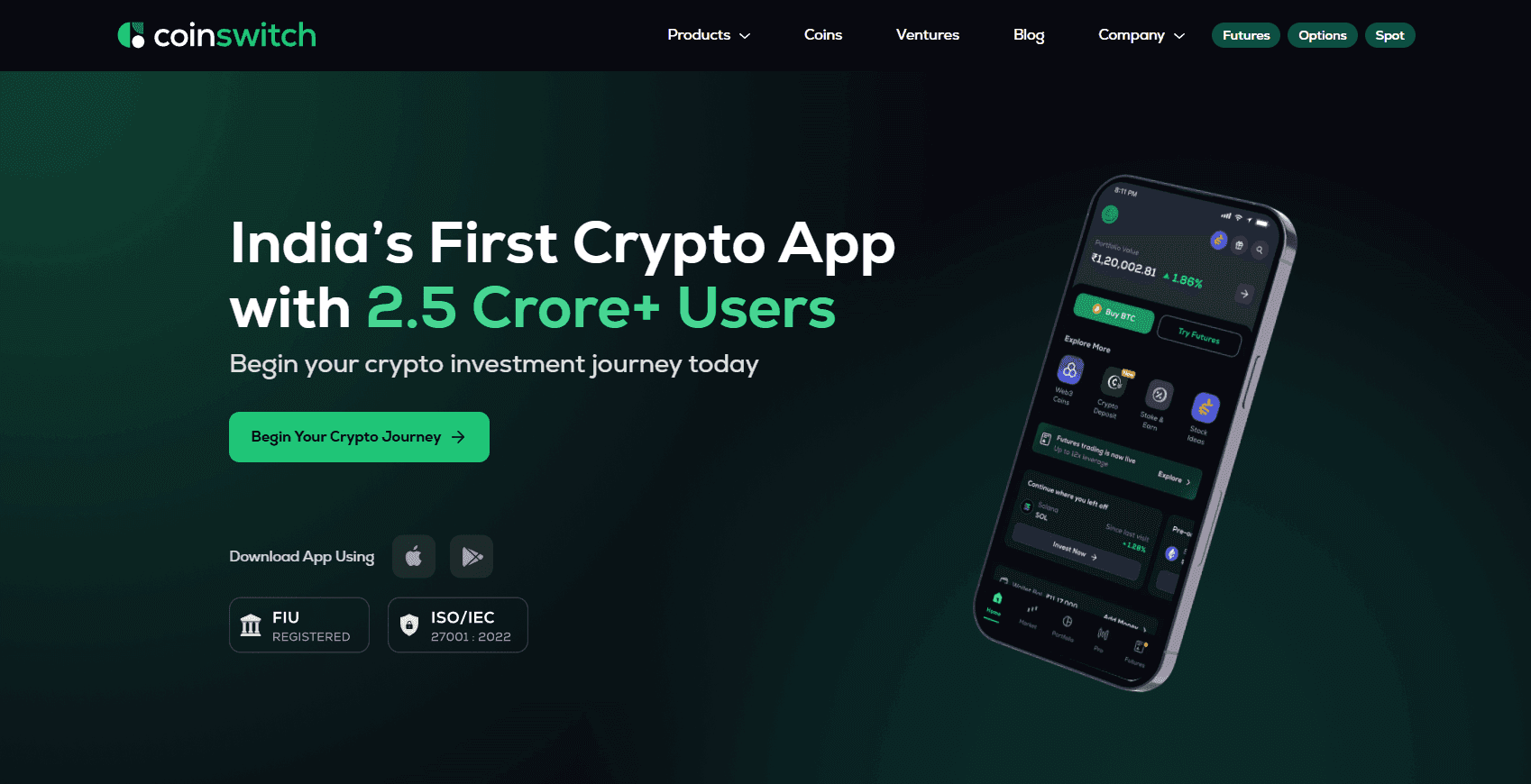
15. CoinSwitch
CoinSwitch (formerly CoinSwitch Kuber) is an India-based crypto exchange and broker founded in 2017 by Ashish Singhal, Govind Soni, and Vimal Sagar Tiwari. Initially acting as a liquidity aggregator, it evolved into a full exchange offering 100+ crypto assets, SIP investments, a mobile trading app, and CoinSwitch Pro for advanced users.
Pros Cons 100+ listed cryptocurrencies, INR pairs only. No crypto deposits or withdrawals supported. Native mobile app with Pro and Learn sections. No derivatives, margin, or futures trading. SIP feature for recurring crypto purchases. Limited fiat channels (bank transfer only). Proprietary Crypto Rupee Index (CRE8).
CoinSwitch keeps pricing simple - fees range from 0% to 0.49%, depending on the asset. The first 100 days of trading are fee-free for new users. There are no deposit or withdrawal fees, and the minimum trade starts at 100 INR. Leverage is not available, as the platform focuses on spot trading.
Pros Cons Transparent and low fee structure. No leverage or margin options. No hidden costs or funding fees. Limited advanced order types. Zero deposit/withdrawal fees. Execution prices can suffer from slippage. SIP feature allows automated recurring buys. INR-only market limits liquidity.
Pros Cons No deposit or withdrawal fees. Bank transfers only - no cards or UPI. Instant withdrawals in most cases. No crypto deposit/withdrawal support. INR wallet integrated directly into the app. Daily withdrawal limits apply. Seamless KYC and banking link process. Reliant on banking uptime.
Pros Cons Backed by top global investors (a16z, Sequoia, Tiger Global). Unregulated by SEBI or global Tier-1 bodies. Over 18 million verified Indian users. Low Trustpilot rating (1.4/5). Transparent KYC and data-handling policies. No user-controlled wallets (custodial only). Active education initiatives via blog and YouTube. Limited customer support availability.
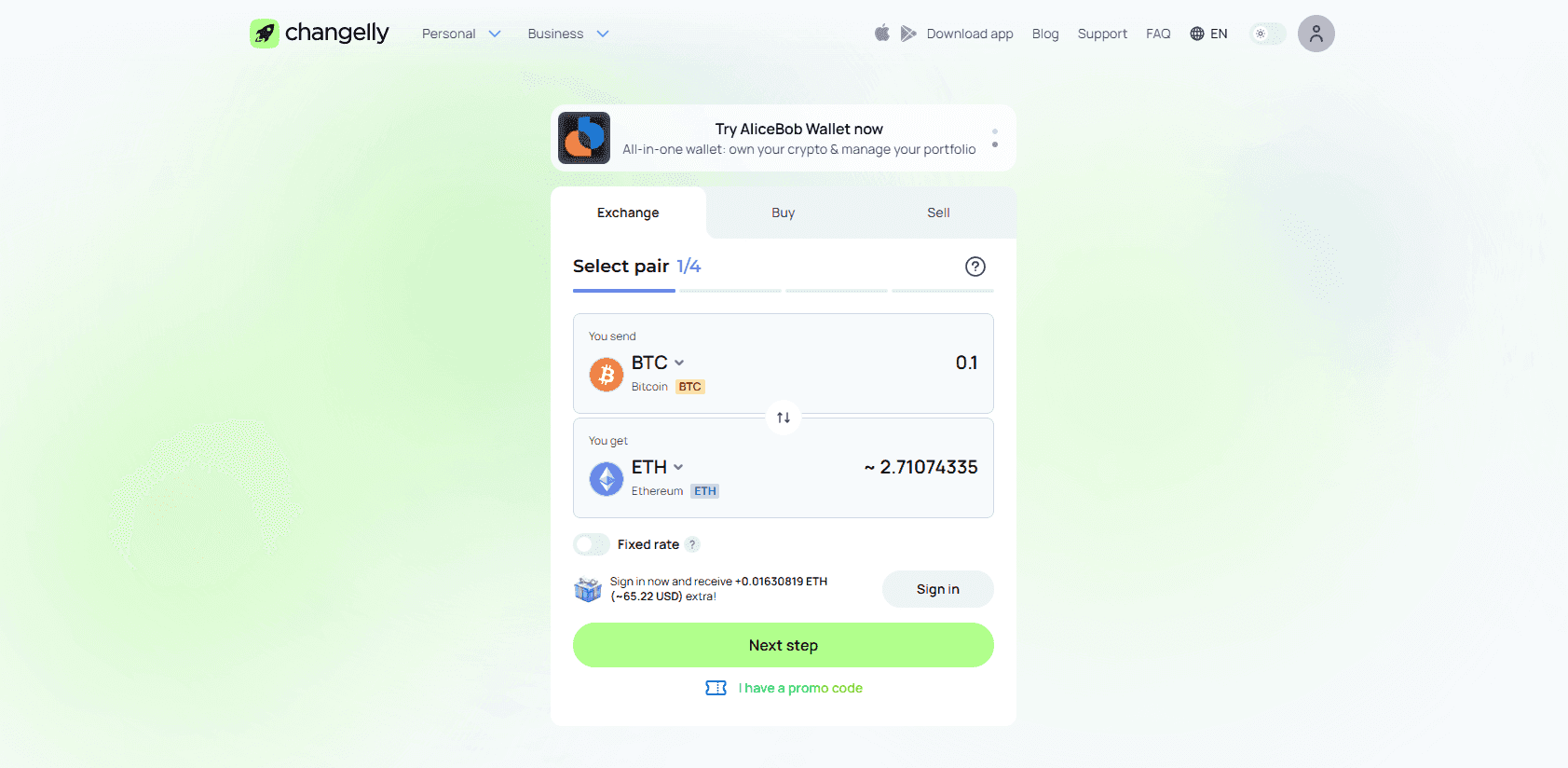
16. Changelly
Changelly, launched in 2015, operates as a non-custodial crypto broker and exchange aggregator. It allows users to swap over 500 cryptocurrencies instantly without storing funds on its platform. It also runs Changelly Pro, offering spot and margin trading with deeper functionality. The platform is available in 195 countries and supports integration with major wallets like Ledger, Exodus, and Trezor.
Pros Cons Supports 500+ cryptos with instant swaps. No direct fiat-to-fiat conversion. Works with external wallets like Ledger. U.S. residents not supported. Fast and simple exchange interface. High minimum transaction thresholds. Multi-platform access (web, Android, iOS). Lacks advanced trading tools for Pro users.
Changelly applies a 0.25% floating fee for crypto-to-crypto swaps. For fiat purchases via card (Visa, Mastercard, Apple Pay, Google Pay), third-party processors charge between 4% and 7%. Changelly Pro introduces tiered maker/taker fees starting at 0.1%, with up to 10x leverage for spot margin trading. The minimum swap amount is around $20-25 equivalent per transaction.
Pros Cons Transparent 0.25% swap fee. High third-party fiat fees (4-7%). No hidden commissions. No uniform pricing for fiat gateways. Low spot fees on Changelly Pro (0.1%). Leverage capped at 10x. High liquidity via exchange aggregation. Rates vary slightly by provider.
Pros Cons No custody risk - users retain wallet control. No fiat withdrawals supported. Instant crypto swaps with fast processing times. Reliant on third-party processors for fiat on-ramps. Simple integration with wallets and exchanges. No SEPA or bank wire options. Transparent network fee display. Delay possible during network congestion.
Pros Cons Longstanding market presence since 2015. Unregulated, limited legal oversight. Strategic partnerships with major crypto firms. Mixed Trustpilot feedback on pricing. Strong data privacy policy, 2FA, and encrypted operations. Occasional regional restrictions (US, OFAC nations). High brand credibility and media coverage. Customer support only via email.
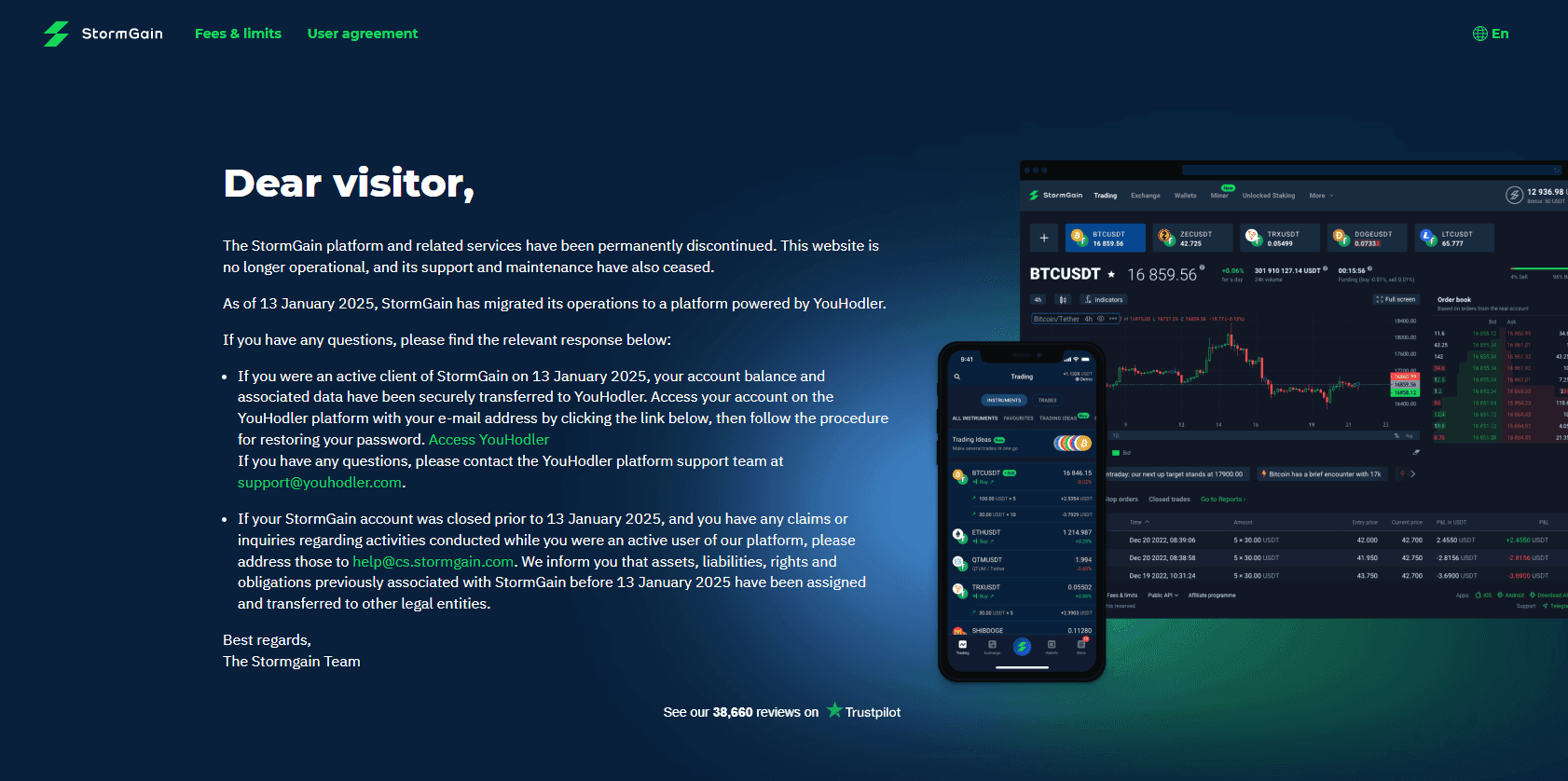
17. StormGain
StormGain is a crypto trading and exchange platform offering margin, futures, and spot trading along with integrated cloud mining and staking tools. The platform targets users looking for leveraged exposure to major cryptocurrencies through both web and mobile apps.
cex-io.png
Pros Cons Supports spot, margin, and futures trading in one platform. Limited number of supported assets (≈60). Offers integrated cloud mining and staking features. Cloud mining profitability is extremely low. Easy-to-use app with TradingView chart integration. Not available in the U.S. or several EU countries. Demo account and built-in educational resources. Lacks transparency on company registration and team.
StormGain offers leverage up to 500x for BTC/USDT futures and lower for altcoins. Spreads and commissions vary by pair. The platform charges a 0.095% trading fee and 0.25% swap rate for overnight positions. There are no deposit fees, but withdrawals incur network fees.
Pros Cons Leverage up to 500x on BTC/USDT and 200x on ETH/USDT. High funding rates on leveraged positions. Transparent commission model. Wide spreads during high volatility. No hidden fees for deposits or account maintenance. No traditional stop-loss insurance. Customizable trade sizes and built-in risk calculator. Very risky leverage for inexperienced traders.
Pros Cons Crypto deposits are free of platform fees. No direct bank withdrawals or deposits. Fast withdrawal processing (<2 hours). Network fees may vary per coin. Supports Visa/MasterCard fiat on-ramp through third parties. High card processing fees (up to 5%). Simple mobile wallet interface. No integration with PayPal, SEPA, or ACH.
Pros Cons 12M+ registered users worldwide. Operates without major financial regulation. Good UX and security practices (2FA, cold storage). Mixed trust level - withdrawal complaints persist. Active social presence and continuous updates. No verified license under FCA, CySEC, or ASIC. Transparent fee model and educational content. Cloud mining rewards often unrealistic.
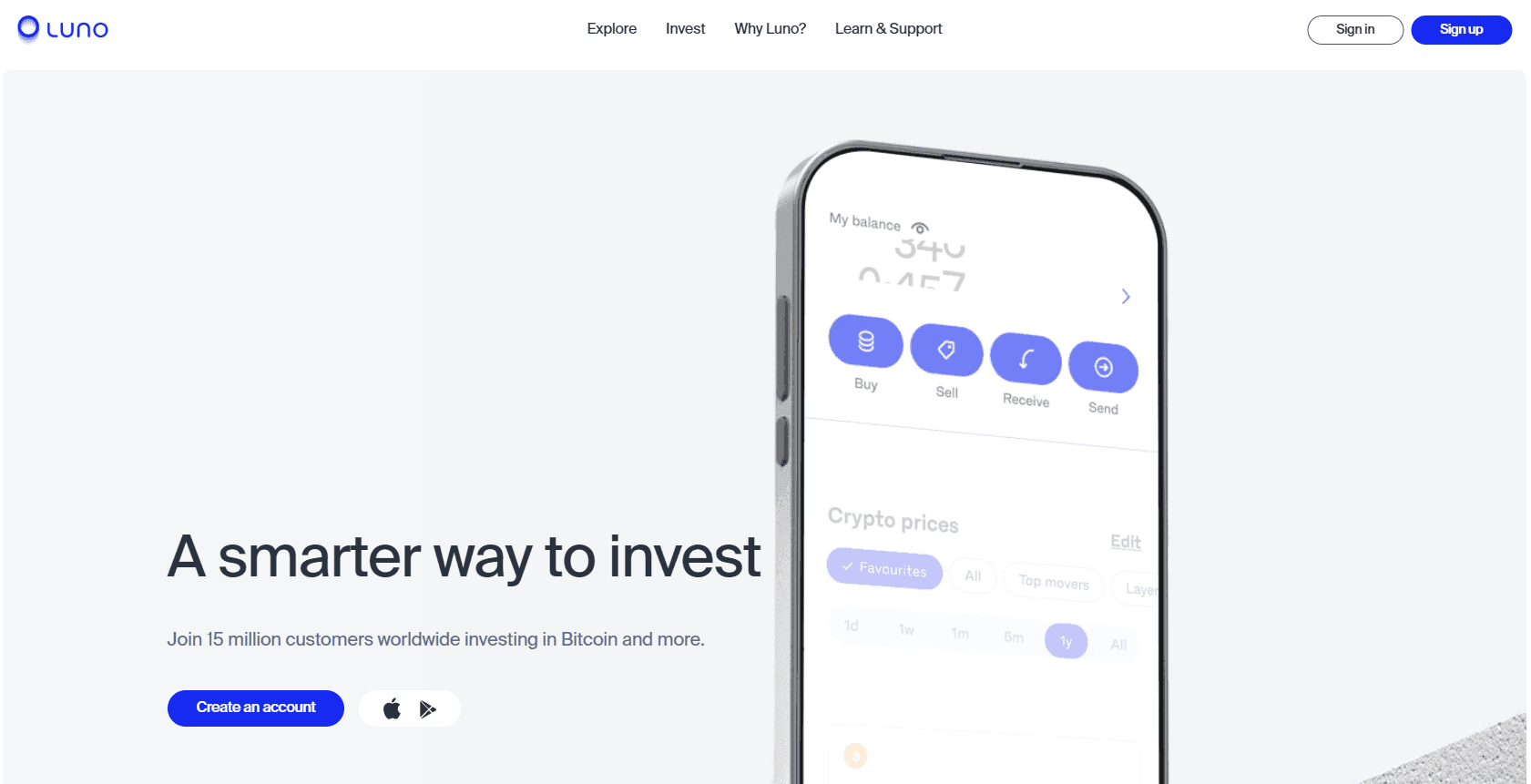
18. Luno
Luno is a UK-based crypto exchange originally launched in 2013 as BitX and rebranded to Luno in 2016. It provides crypto trading, wallet services, and limited staking options. The platform targets emerging markets in Africa and Southeast Asia but also operates in the UK and parts of Europe.
Pros Cons Simple UI for beginners. Only 19 supported cryptocurrencies. Active in 40+ countries across Europe, Asia, and Africa. No derivatives or advanced trading features. Multisig wallets with strong encryption. No DeFi or NFT integrations. Mobile apps for iOS and Android. Platform availability varies by region.
Luno’s spot trading fees are based on a 30-day trading volume. Maker fees start at 0%, while taker fees range from 0.10% to 0.75% depending on region. Fiat deposits are generally free, but card payments can include processing fees up to 3.5%. There’s no leverage or margin trading, and an inactivity fee of $2/month applies if fiat funds stay idle for over 90 days.
Pros Cons Transparent tiered fee model. Higher than average taker fees. Free crypto deposits. No leverage or margin. Narrow spreads on BTC and ETH pairs. FX/card fees can reach 3.5%. Local fiat pairs in key regions (GBP, MYR, NGN, ZAR). Inactivity fees for unused fiat wallets.
Pros Cons Fast regional deposits via bank and card. No instant withdrawals. No platform-side withdrawal fees. Bank-specific charges may apply. Simple KYC process and transparent limits. Some users report regional outages (e.g., Nigeria). Strong compliance with AML/KYC regulations. No PayPal or SEPA Instant support.
Pros Cons Backed by DCG, one of crypto’s largest groups. Complaints about delayed withdrawals. FCA-registered for AML/KYC. Limited customer support response time. Over 10M global users, 10+ years of operation. No full trading license (not a regulated exchange). Good app stability and verified offices in London, Johannesburg, Sydney, and Jakarta. Support quality inconsistent across regions.
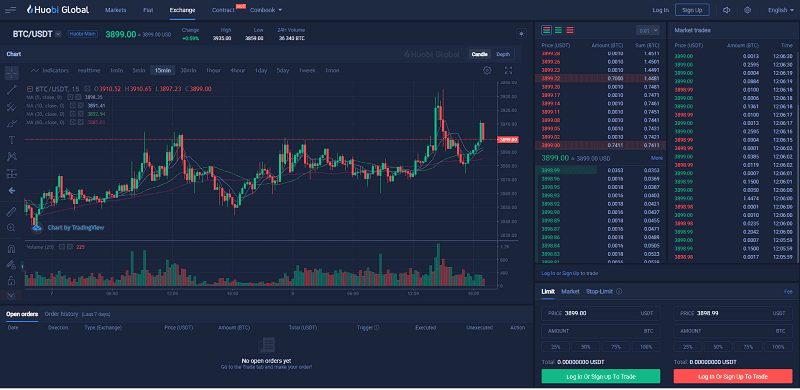
19. Huobi
Huobi Global is a cryptocurrency exchange that provides professional trading tools. It offers approximately 350 cryptocurrencies for trading.
Huobi presently lists over 380 crypto assets and 200 currencies. Ethereum (ETH 2.0), 1 Inch (1INCH), Binance Coin (BNB), Ripple (XRP), Quant (QNT), HUSD (HUSD), eCash (XEC), NEM (XEM), Verge (XVG), and Symbol are among the coins featured (XYM).
Pros Cons Excellent user interface. Deposits and withdrawals in fiat currency are not supported. Over 300 coins and tokens are supported on the primary exchange. The verification procedure takes some time. High-level cyber security methods are used.
There are low costs for trading cryptocurrency and higher fees for purchasing cryptocurrency via credit or debit card. Deposits in fiat currency are free, but users must pay trading fees. Perpetual swaps allow for 1x, 2x, 3x, and greater leverage, with the maximum leverage allowing for 200x.
Pros Cons Cheap cost for trading. There are no MetaTrader platforms. Users can purchase insurance coverage to protect their assets kept in the exchange. New consumers have no leverage.
It requires a minimum of $100 with an international wire transfer fee of 1% of your total deposit. The exchange restricts users who have not completed ID verification from withdrawing more than 0.06 BTC. The daily withdrawal limit has been doubled to 200 BTC for verified individuals.
Pros Cons Faster payments. It limits withdrawals for unverified customers. SWIFT international transfer. Not beginner-friendly. Bank transfers and credit/debit card payments.
Huobi is operating an unauthorized organization in Seychelles, which has resulted in a long list of nations where the exchange is prohibited from doing business.
Pros Cons High-level cyber security methods are used. Generally unregulated. The customer service team responds quickly.
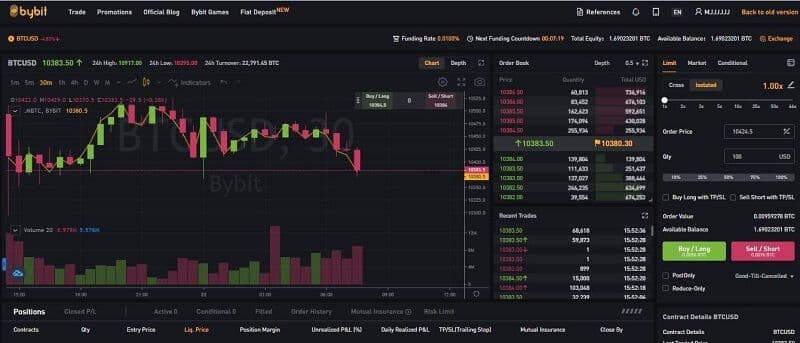
20. Bybit
Bybit provides a comprehensive set of advanced trading tools. It provides excellent security and a no-downtime guarantee.
About USD, you can trade perpetual crypto derivative contracts in Bitcoin, Ethereum, EOS, and Ripple.
Pros Cons It offers 15 currencies, depending on the type of trade you wish to perform. USDT, BTC, and ETH are the only cryptocurrencies available. Futures and perpetual contracts trade at the same time. Traditional cryptocurrency has a nearly underdeveloped mechanism. There is a minimum entrance requirement. A BTC/USD futures contract costs one dollar.
Pros Cons Deposit fees are not charged, although all transfers are subject to a miner’s fee. Leverage may enhance the risk. Trading commissions are moderate. Runs on a “maker-taker” fee structure.
Pros Cons It does not charge a fee to deposit cryptocurrencies. Deposits are only accepted in Bitcoin. Users of the platform have nearly unlimited trading and withdrawal options. It does not accept any fiat money deposits. Withdrawals are handled three times a day.
Pros Cons It is a trustworthy cryptocurrency exchange. There is no system in place to defend traders’ interests in the case of a dispute. Although it has no insurance, it keeps a reserve fund. Bybit has created a mutual insurance feature, a risk management tool that allows customers to protect themselves against market fluctuations.
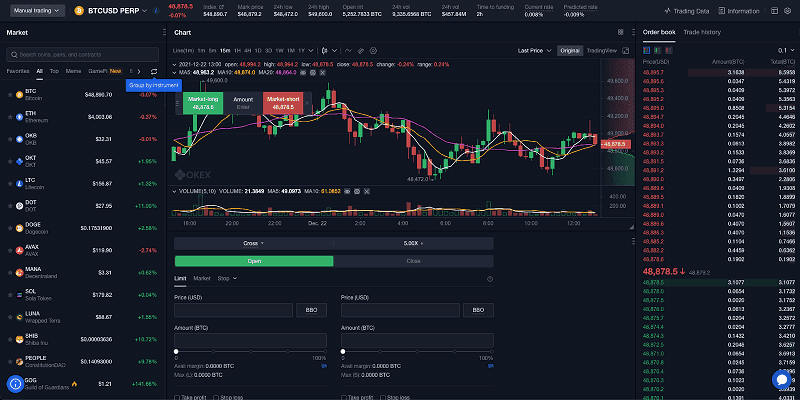
21. OKX
OKEx is a cryptocurrency exchange that uses blockchain technology to provide superior financial services to traders worldwide.
Pros Cons Fiat is accepted for deposits, withdrawals, and peer-to-peer trading. There are no trading pairs with fiat currencies. Almost all crypto assets are available. Fiat currency is immediately transformed into cryptocurrency. The assets have been neatly organized.
Pros Cons Fees are categorized into asset classes (there are three main classes). Whether a trader is a market maker or a market taker determines the structure. Fees are reduced when trading volumes are high. Trading volumes are recorded every day, so there’s no need to wait until the next month to save money.
Pros Cons Deposits and withdrawals can be made in fiat currency. Substantial lags are owing to the system’s workload. Cryptocurrency deposits are free. Only in the event of full or partial verification is it possible to withdraw. It features a minimal withdrawal charge of 0.0005 BTC for bitcoin, 0.01 for Ethereum, and 0.15 for Ripple.
Pros Cons OKEx is a VFAA-compliant trading platform registered in Hong Kong and Malta. Not regulated in the US. The exchange’s management is concerned about the security of its client’s funds. A sophisticated fund password for trading and withdrawals.
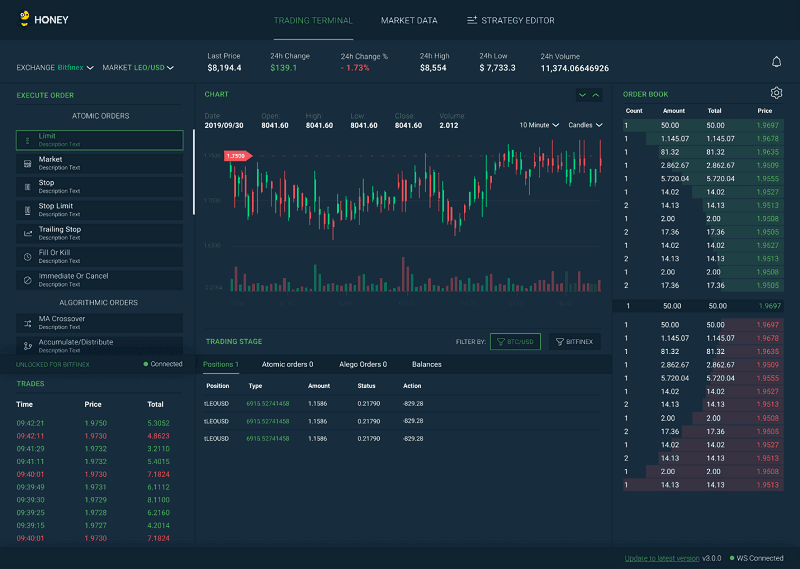
22. Bitfinex
Bitfinex is a well-known cryptocurrency exchange for experienced traders. The exchange has various innovative features, low costs, and supports around 250 supported coins.
poloniex-platform.png
Pros Cons Bitfinex provides traders with a wide range of assets Market risks related to security are involved while trading through Bitfinex. It has an extensive cryptocurrency range. It has exceptional currency and stock assets.
The Bitfinex trading platform charges a minimum standard trading fee of $0.10 to $0.20. It charges a wire fee of around 0.100% of the total wired amount (minimum of 60$). Bitfinex offers leverage of up to 100x. It charges the traders a minimum trading fee of 0.2% for each trade.
Pros Cons High leverage ratio. Trading conditions and costs are not correct all the time. Competitive spreads. Minimum trading fee.
On Bitfinex, stable coin and crypto deposits are completely free. For withdrawal, Bitfinex charges a fee of 0.1% of the total amount.
Pros Cons Relatively low withdrawal and deposit fees. Fiat currency withdrawals typically take up to ten days. Easy withdrawal and deposit process. It takes a lot of time for deposits and withdrawals.
Bitfinex is regulated by the CFTC’s firm regulatory body, which has the power to regulate all commodities in the United States. Bitfinex provides traders with a full back-end security confirmation, like DDoS protection and the real-time backup data option.
Pros Cons Well regulated. The company has been hacked several times.
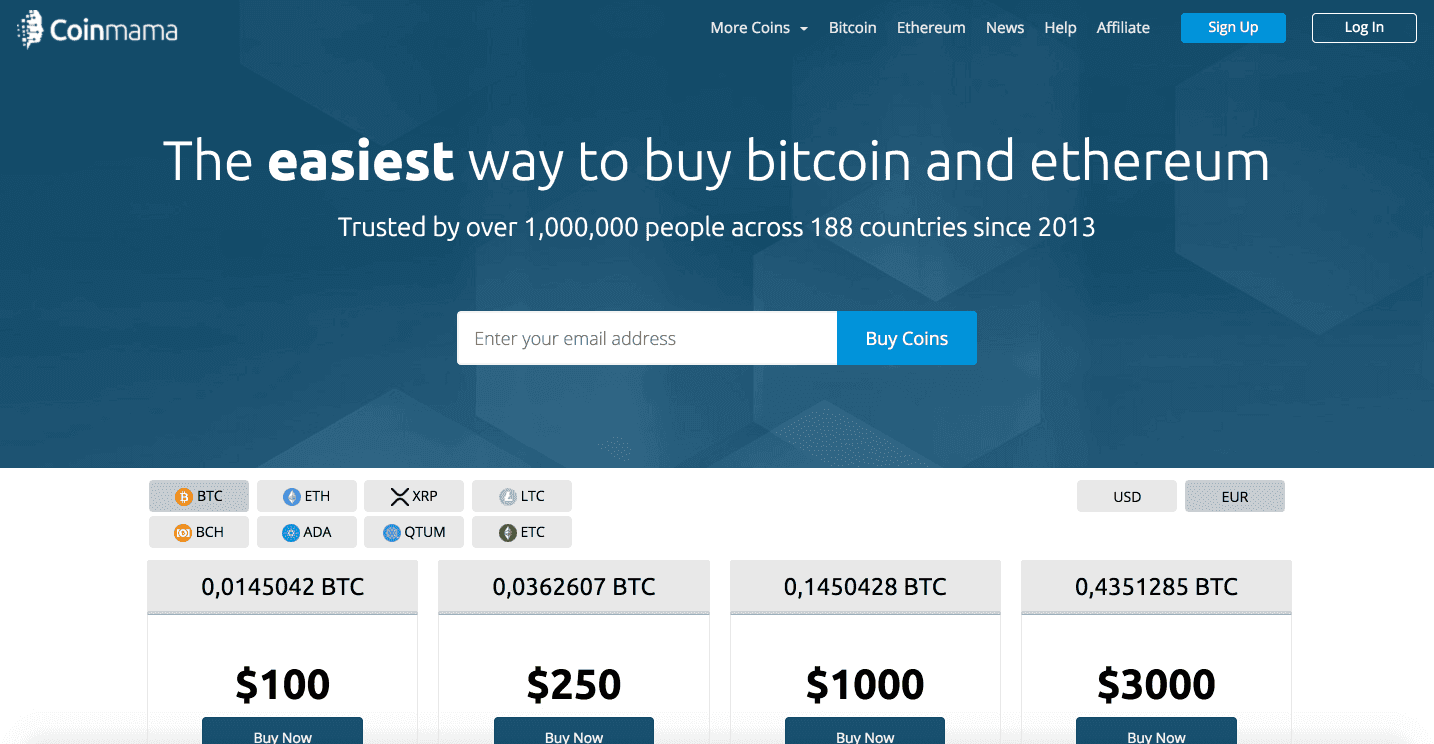
23. Coinmama
Coinmama is a cryptocurrency exchange which was founded in 2013. It calls itself the “friendliest exchange.” You can buy and sell crypto with fiat currencies. It offers a limited self-custody wallet and charges a hefty fee to trade.
Pros Cons Simple fiat-to-crypto interface for beginners. Very limited cryptocurrency selection. Option to use a self-custody wallet for BTC and ETH. No custodial wallet for easy access and storage. Available in over 190 countries. Not a trading platform - only buy/sell transactions.
Coinmama doesn’t offer leverage or trading pairs. It applies relatively high transaction fees and adds its own markup to prices, though loyalty tiers can slightly reduce costs.
Pros Cons Transparent loyalty program helps lower fees. Fees range from 0.99% to 3.9%, plus hidden markups. Fixed pricing makes transactions easy to understand. Prices are often higher than market averages. Fast order confirmation once payment clears. No margin, spot, or active trading options.
Coinmama supports credit cards, bank transfers, and online payment providers. It does not hold user funds - crypto is sent directly to your personal wallet.
Pros Cons Multiple payment options including cards and bank transfers. Only crypto withdrawals supported - fiat returns to your bank or card. Quick crypto delivery after payment confirmation. $30 minimum for the first order, $50 for subsequent ones. 0% additional fee for bank transfers. Extra charges apply for card and online payments.
Founded in 2013, Coinmama is known for strong security and responsive customer support. It operates transparently but isn’t a fully regulated trading platform.
Pros Cons Advanced encryption for secure data transfers. Not licensed under major financial regulators. Responsive and helpful customer support. No insurance or fund protection policies. Educational resources via Coinmama Academy. High fees make it less appealing for regular traders.
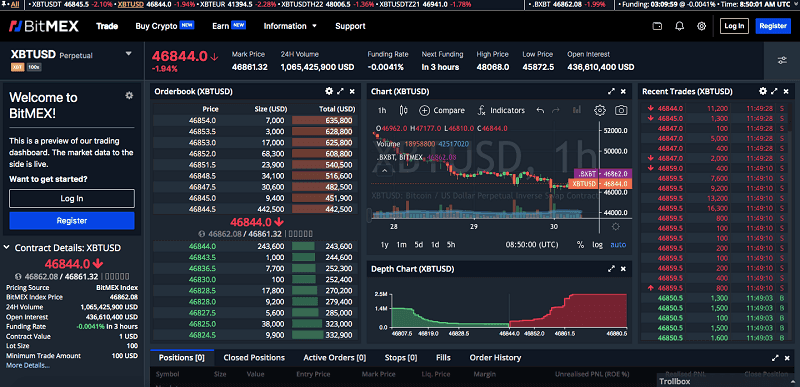
24. BitMEX
BitMEX is a trading platform built for experienced margin and leverage traders. The platform is used to create perpetual contracts based on margin trading.
Bitmex is a margin trading and leveraged trading platform. It is an advanced system for peer-to-peer lending. Other services include expanded perpetual swaps with improved trading system security.
Pros Cons It’s a Bitcoin derivatives platform for trading by professionals. Bitmex exclusively accepts Bitcoin and associated coins. You can trade currency immediately using the Bitmex trade engine. Users in the United States are not eligible. It contributes to the value creation of Bitcoin and other crypto coins.
Pros Cons Trading commissions are minimal The possibility of significant losses as a result of excessive leverage. 1:100 leverage is available while trading Bitcoin. Bitmex has some of the most affordable fees in the cryptocurrency trading world.
Pros Cons Bitcoin deposit and withdrawal fees are not charged by Bitmex. This is a platform for trading crypto to crypto that does not accept fiat deposits. It’s also free to deposit Tether USD.
Pros Cons Bitmex was permitted to exist without trying to authenticate its identity or needing licensing due to exchange in Seychelles. It doesn’t have any reputable regulations.
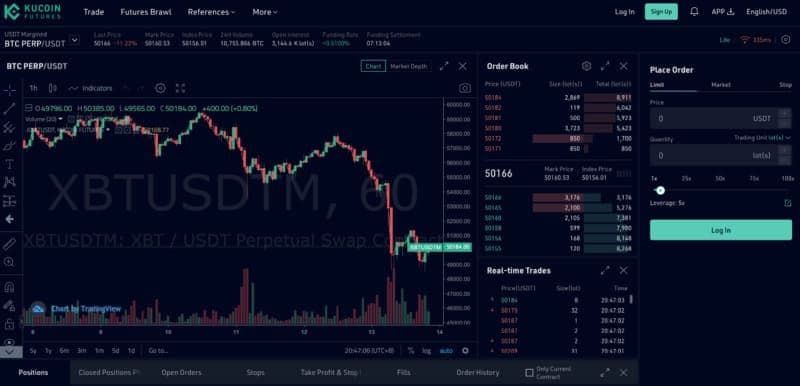
25. KuCoin
KuCoin’s extensive features, lower fees, and a wide choice of coins can benefit experienced cryptocurrency traders the most.
KuCoin users can check the markets and buy and sell cryptos. Margins, futures, and peer-to-peer trading are also offered.
Pros Cons Users can purchase, sell, and trade more than 600 cryptocurrencies on KuCoin. You can buy Bitcoin using fiat money, but you’ll have to use a third-party app. You can directly store your crypto assets on an exchange or connect third-party wallets. KuCoin’s asset list is difficult to navigate if you’re new to cryptocurrencies. Trading bots, leverage, and margins are all available.
Pros Cons You can trade currencies with 5x leverage. There are high fees when buying cryptocurrency with fiat currency, i.e., 3-12%. Depending on your tiers, the trading costs on KuCoin range from 0.0125 percent to 0.1 percent.
Pros Cons The costs for withdrawals differ by cryptocurrency. Fiat withdrawals are not supported. KuCoin has no fees for deposits.
Pros Cons Internal risk management teams monitor all activity regularly. KuCoin is not governed by any respectable regulatory body. Certain critics praise KuCoin’s minimal costs, and a wide variety of cryptocurrencies are praised by certain critics. KuCoin has KYC authentication and security protocols that are industry-standard.
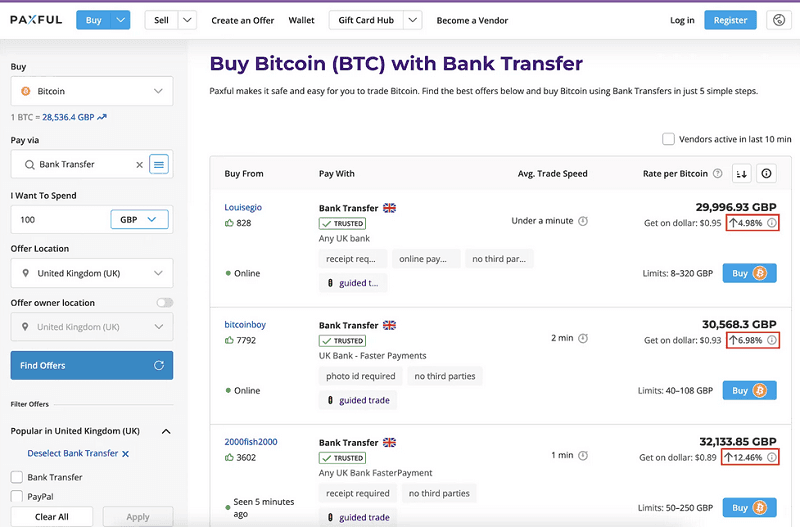
26. Paxful
If you’re seeking a peer-to-peer crypto exchange, Paxful could be a good alternative.
Paxful is available in around 190+ different countries. It provides traders with the trading facilities of cryptocurrencies, currency pairs, peer-to-peer trade facilities, ETFs, bonds, and stocks.
Pros Cons Peer-to-peer trade. Very few cryptocurrencies are available for trade. All products are available in all countries.
Compared to other cryptocurrency sites, Paxful has a low fee format. A 1% service fee is charged on the total amount for processing transactions. There is no transaction fee for buying or selling Bitcoin on Paxful. Most of the time, this fee varies between 0.1-5%.
Pros Cons No commission costs except for the share price. Low leverage. No fee is charged on buying cryptocurrency coins.
A withdrawal fee of $5 is charged on each transaction. Traders are expected to pay a 1% (0.0005 BTC) fee of the total withdrawal amount. The deposit fee is dependent on the total amount deposited and varies from time to time.
Pros Cons Peer-to-peer transactions. Less crypto funding options. Minimal fee. Extensive range of funding options.
The Paxful crypto website is provided by BitGo, which supports multi-signature wallets.
Pros Cons It gives the user a safe and secure alternative. Not regulated by any reputable authority. Multiple insurance companies and sites secure this peer-to-peer exchange.
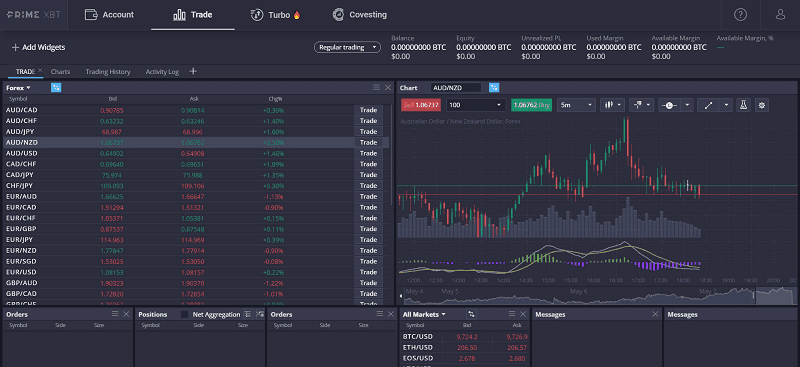
27. PrimeXBT
Latoken-hero.png
PrimeXBT is a one-stop trading platform that allows you to trade cryptocurrencies and the majority of major stock indices, commodities, and forex.
Pros Cons Both digital options and binary options are offered on PrimeXBT. Few trading pairs are available for the trade. Plenty of tradeable products.
Pros Cons Leverage up to 1:1000 for all the assets. No trade on spot facility. The commission starts at 0.0001% and gradually increases throughout.
Pros Cons The withdrawal and deposit processes are straightforward. PrimeXBT charges the traders an overnight finance fee. The minimum deposit limit is $1. It charges the traders a 0.0005 BTC fee for withdrawing their funds.
Pros Cons PrimeXBT is secured with 2FA account security and prevents unauthorized access to the user’s account. PrimeXBT is not available in several countries. PrimeXBT uses Cloudflare to mitigate potential distributed denial of service for attacks.
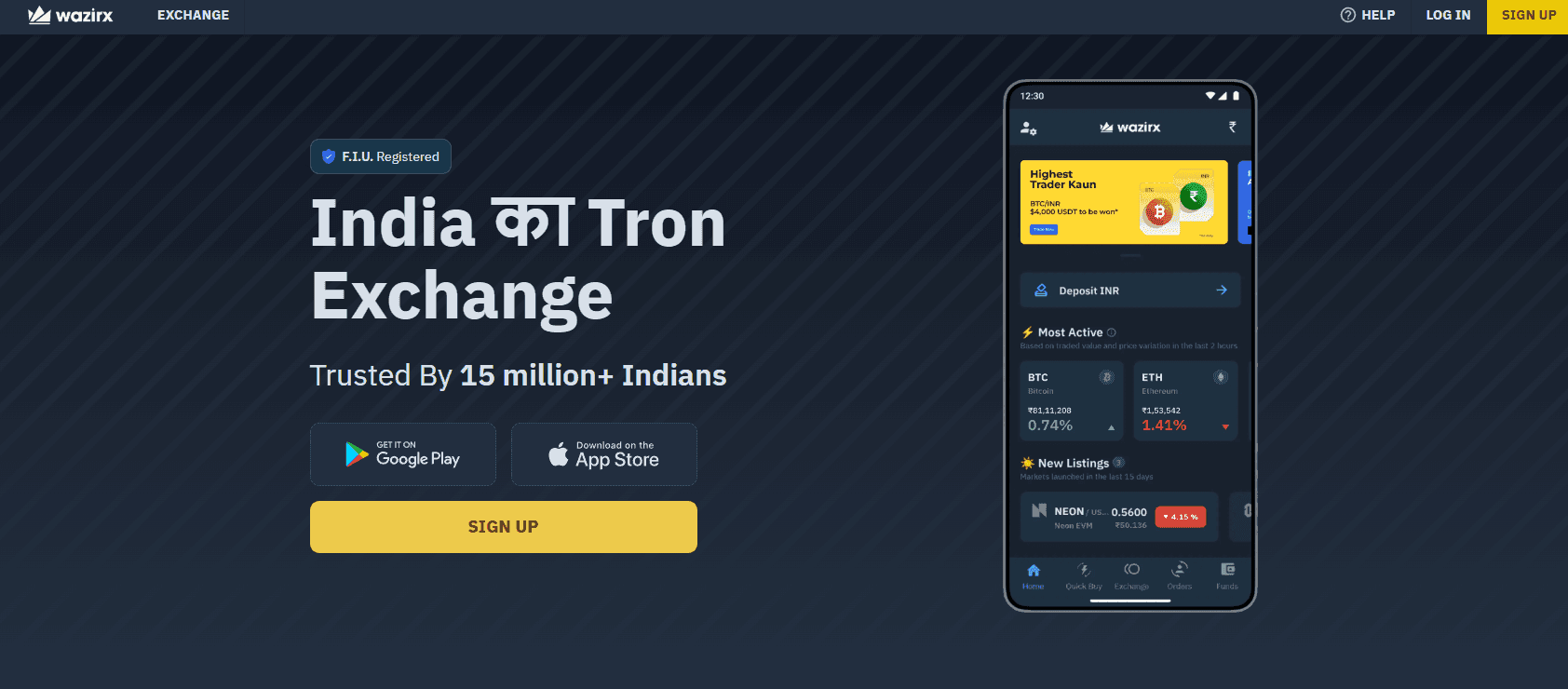
28. WazirX
WazirX, launched in 2018 and owned by Binance, is one of India’s largest crypto exchanges. It supports 275+ cryptocurrencies and over 450 trading pairs, including INR, USDT, BTC, and WRX (its native token). The platform also includes a P2P marketplace, NFT marketplace, and auto-matching engine for peer-to-peer trades.
Pros Cons 275+ cryptos and 450+ trading pairs. No derivatives or futures trading. P2P marketplace for INR conversion. Limited professional-grade tools. NFT marketplace and WRX utility token. Occasional network congestion during market spikes. Cross-platform support (web, Android, iOS). Interface cluttered for beginners.
WazirX applies a flat 0.1%-0.4% trading fee, depending on the user’s WRX balance and monthly volume. There is no leverage or margin trading, and the platform focuses on spot markets only. The minimum trade size is ₹100 (~$1.20). Fees are reduced by 25% when paid with WRX tokens.
Pros Cons Transparent and simple fee model. No margin or futures markets. Fee discounts for WRX token holders. Higher withdrawal costs for certain assets. Zero deposit fees for INR via bank transfer. Not ideal for high-frequency traders. Fixed taker/maker rates ensure clarity.Fixed taker/maker rates ensure clarity. No advanced fee tiers for volume traders.
WazirX supports INR deposits and withdrawals through bank transfers, UPI, and IMPS/NEFT, in addition to crypto deposits. Deposits are free, while fiat withdrawals incur small fixed banking fees. Crypto withdrawals depend on network gas costs. P2P transactions allow instant, zero-fee INR conversions between users.
Pros Cons INR deposits via UPI, IMPS, and NEFT. Occasional withdrawal delays reported. Free deposits and fast KYC verification. Withdrawal fees vary by network. P2P marketplace with no commission. No fiat card deposits or international payments. Multi-layer security for wallet operations. Processing windows limited to Indian banking hours.
Pros Cons Backed by Binance, ensuring liquidity and reliability. 1.3/5 Trustpilot score. FIU-IND registered and compliant with KYC norms. History of regulatory investigations. 6M+ verified users and strong market presence. Customer support response can be slow. Transparent ownership structure (Binance + Zanmai). Limited global reach outside India.
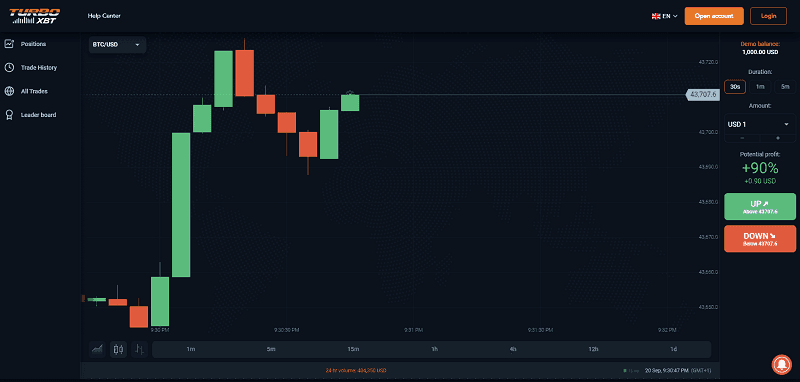
30. TurboXBT
TurboXBT is a cryptocurrency trading platform that allows you to exchange digital currencies.
You can trade bitcoin stock indices, forex pairs, trading pairs, fiat currencies, crude oil, coins, precious metals, other commodities, and underlying assets.
Pros Cons Beginner-friendly trading platform for short-term traders. Need necessary documents for verification. Demo trading accounts. No long-term trading. Withdrawals requested by users are always entertained and cleared soon. Not available in the US, Canada, Japan, or Russia.
TurboXBT provides access to the NASDAQ, S&P 500, and GER30’s most popular stocks. TurboXBT does not impose fees on trades.
Pros Cons Up to 90% instant profits depending on the chosen instrument.Up to 90% instant profits depending on the chosen instrument. On successful transactions, TurboXBT levies a 10% premium. Traders may open a new account with a minimum deposit of $1. Before trading, an upfront deposit is required.
Pros Cons Credit card issuers are exempted from processing fees. Only cryptocurrencies can be deposits and withdrawals. It doesn’t charge a commission on trades. Withdrawals take more time. Convenient deposit methods. The speed of the withdrawal depends on the network.
Pros Cons TurboXBT offers an advanced security infrastructure. TurboXBT is less capable of providing exceptional service. TurboXBT’s crew examines withdrawal requests for evidence of fraud. Assisting with fraudulent activities is not guaranteed. Easy to use for all users.
31. EXMO
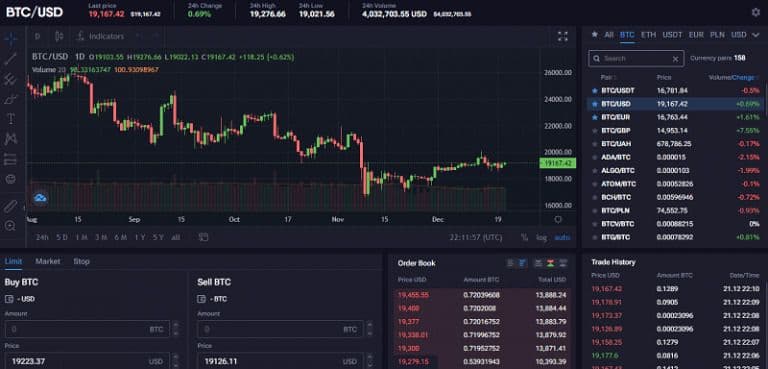
EXMO is one of the most prominent cryptocurrency exchanges for buying, trading, and selling digital currencies. A spot market, an OTC desk, and cashback benefits are among the services offered by the exchange.
Pros Cons EXMO customer service is 24 hours a day, seven days a week. It doesn’t offer margin trading. The exchange supports 182 different cryptos. Clients in the United States are unable to use the platform.
You may buy and sell cryptocurrencies such as EXMO, Bitcoin, DASH, Ethereum, Litecoin, Dogecoin, Tether, Monero, EOS, etc.
Pros Cons Increased commissions for referrals. There are no training programs or investment programs available. EXMO does offer trading bonuses.
Pros Cons Accepts a variety of fiat currencies for deposits and withdrawals. Withdrawals and deposits might take a long time at times. Individuals can use Etana or a SEPA bank transfer to deposit USD and EUR with no expenses. Transactions are subject to several transfer limitations imposed by the platform.
Pros Cons EXMO is presently available in more than 200 countries worldwide. Exmo does not accept traders from the United States.
32. IQMining
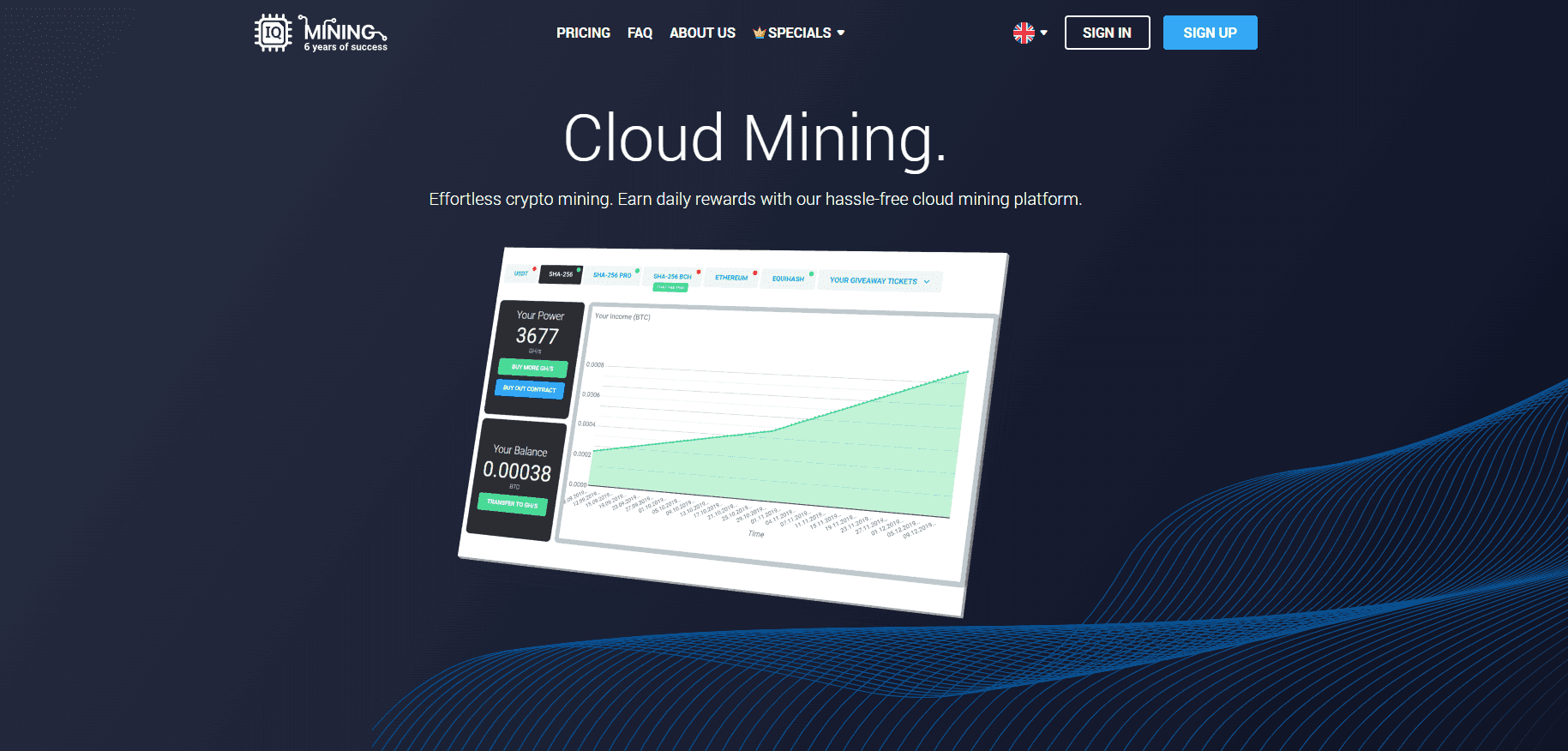
IQMining is a cloud-based cryptocurrency mining platform that offers contracts for Bitcoin and other altcoins. It combines cloud mining with margin trading features for higher potential returns, but its legitimacy and profitability remain questionable.
Pros Cons Wide choice of mining contracts for BTC, ETH, and altcoins. Cloud mining ROI is often low and depends on volatile crypto prices. Simple setup - no hardware or maintenance required. No proof of real mining operations provided. Supports additional income via cloud trading integration. Platform’s transparency and regulatory status are unclear. Operates globally, accessible in most regions. Reports of inconsistent payouts and lack of clear ownership.
IQMining allows users to buy hash power and trade margin contracts. Returns vary based on the purchased plan, mining difficulty, and electricity cost factors.
Pros Cons Multiple contract tiers with flexible investment sizes. No guaranteed profitability - payouts depend on market conditions. Leverage available for margin trading add-on. Trading and mining fees are not clearly disclosed. Ability to reinvest mined rewards automatically. Contract costs are high compared to other cloud miners.
IQMining supports deposits in cryptocurrencies and a few fiat options through payment processors. Withdrawals are usually processed in crypto.
Pros Cons Accepts Bitcoin, Ethereum, and several altcoins. Fiat deposit options are limited and inconsistent. Straightforward withdrawal process to crypto wallets. Withdrawal times vary - not always instant. Low minimum withdrawal amount for crypto users. Extra withdrawal fees may apply per transaction.
IQMining has been operating since 2016, but reviews about its trustworthiness are mixed. The company provides limited transparency about ownership or operational details.
Pros Cons Established name in the cloud mining space. No clear proof of real mining equipment or locations. Long-running platform with an active website and user base. Unregulated entity with no official oversight. Simple interface and dashboard. Many users report poor ROI and questionable reliability
Choosing between the three groups
Cryptohopper_hero.png
Exchanges suit anyone buying, selling or holding coins. Compare on fees, coin coverage, regional access and custody, and move anything you are not actively trading into your own wallet. Coins sitting on an exchange are in someone else's keeping.
Leveraged brokers suit directional traders. Compare funding rates, liquidation mechanics and available leverage, and read the maximum figures as marketing rather than instruction: at 150x a sub-1 percent move ends the position, at 500x a 0.2 percent move does. Size from risk, not from what the platform allows, which our crypto position size calculator handles in a few seconds.
Bot platforms suit traders who already have rules worth automating. They execute an edge, they do not supply one, so backtest before running anything live and use the demo modes where they exist.
One caveat that applies across all three: this listing was compiled at a point in time. Coin counts, fee schedules, ownership and country availability all move, and several platforms here have changed materially since. Check the current position with the platform before depositing anywhere. For other markets, our binary options brokers listing and the main brokers hub cover forex and options platforms on the same criteria.
Final thoughts
So there you go! I have explained everything in detail. Now you can easily select the crypto exchange.
FAQ
What is the difference between a crypto broker and a crypto exchange?
An exchange matches your order against other users and holds your coins, so you own the asset. A broker gives you price exposure, usually leveraged, without you holding the coin. Bot platforms are a third category, connecting by API to an exchange account you already have.
How do crypto platforms work in 2026?
Most are centralised exchanges acting as intermediaries. You deposit fiat or crypto, place orders against an order book, and pay a fee on each conversion, while the platform holds your assets. Leveraged venues add margin and perpetual contracts, where funding rates and liquidation levels matter more than the trading fee.
Which platform has the lowest fees?
On spot, BingX at around 0.1 percent and Binance at 0.1 percent sit at the low end, with Bitcoin.com charging nothing internally beyond network fees. On futures BingX starts at 0.02 percent maker. But headline fees mislead: card markups of 3 to 7 percent are what most retail traders actually pay.
What are the common mistakes?
Funding by card and losing 3 to 7 percent before trading. Choosing a platform on its maximum leverage figure. Leaving long-term holdings in exchange custody rather than a personal wallet. Trading thin altcoin pairs where slippage exceeds any fee saving. And assuming a listing is current without checking.
How do I check a platform is available in my country?
Check the platform's own restricted list before depositing, not after. Availability changes frequently and varies within countries, with several US states blocking platforms that operate nationally elsewhere. Regulatory action can also restrict a venue at short notice.
YoBit-hero.png
Bitsgap-hero.png
BitcoinCom-hero.png
HelloStake-hero.png

BingX-hero.png

GateIo-hero.png
Coinswitch-hero.png
changelly-hero.png
StormGain-hero.png
Luno-hero.png
huobi-platform.png
bybit-platform.jpg
okex-platform.png
bitfinex-platform.png
Buy-bitcoin-and-ethereum-with-credit-card-Coinmama-2018-08-09-18-12-43.png
bitmex-platform.png
kucoin-platform.jpg
paxful-platform.png
prime-xtb-platform.png
Wazirx-hero.png
turbo-xbt-trading-platform.png
exmo-trading-platform.jpg
IQmining_home_page.png
Check out the best trading platforms()

FAQ
How to trade?
First, you need to look for regulators. Only select a broker who is licensed by reputable regulatory bodies. Secondly, look for trading conditions. These include spread, margin, and leverage. Thirdly, you have to look for deposit and withdrawal options. Most brokers provide various options, so it’s good to peek at them. Lastly, you have to look for customer support. Quick communication can get you out of many worrying situations. If you are hunting for the best binary broker, you are lucky. Check out a list of all the top binary options brokers. binary options brokers. This list also includes top-rated brokers for beginners.
Read More
* General Risk Warning: Your capital might be at risk
Conclusion
You’ll face a scam broker if you blindly search the internet. To spot them, I’ll give you a few general guiding points.
Things to consider
Regulation Scam brokers don’t have information about regulation laws. Also, regulated brokers can use various excuses to hold your funds.
Ratings Even if a broker is regulated, it doesn’t mean your funds are safe. Regulators are slow. A broker can claim your trading isn’t according to terms and cancel any profits you made. Therefore, you need to read the ratings from independent websites.
Reviews Many scams buy a lot of forex broker reviews. Also, scams have a network of fake review sites. This way, they push their fake reviews up in google search lists. Broker scams can have very high budgets and even involve government officials. Read only forums and independent ratings.
Do your research Check every broker with reliable sources and seek news headlines for the broker name or domain. You’ll likely find they are penalized or blocked.
In addition, you should ask the brokers about regulation and their actual location
Then check the location and check whether the license is published
Again, check the ratings. You’ll notice that most scammers can’t cover their tracks completely
If you take the above precautions before trading with any platform, your capital will be safe
