Updated:October 15, 2026

8 min
8 min

There are only a few select markets where you can trade 24/7 or on weekends. The futures market comes close, but there are periods on the weekend when you can’t even trade futures.

Author

Futures contracts have different trading hours. That matters especially for weekend futures, so if you're asking "can you trade futures on the weekend?", you are in the right place. There are also different futures exchanges operating within the US, so hours may differ between exchanges.
The two main futures exchanges in the US are the Chicago Mercantile Exchange (CME) and the Intercontinental Exchange (ICE). Some futures also trade on the Chicago Board Options Exchange (CBOE).
VIX (VX) and VIX Mini (VXM) futures trade from 5 pm EST until 4 pm EST with halts. There is a daily break during the week at 5-6 pm EST, outside the normal market hours, and trading starts on Sunday at 5 pm EST (pre-open, with regular open at 6 pm).
Trading times can vary depending on the specific contract being traded. These times vary by up to an hour and may differ on holidays. See the CBOE Futures Hours page for current trading hours.
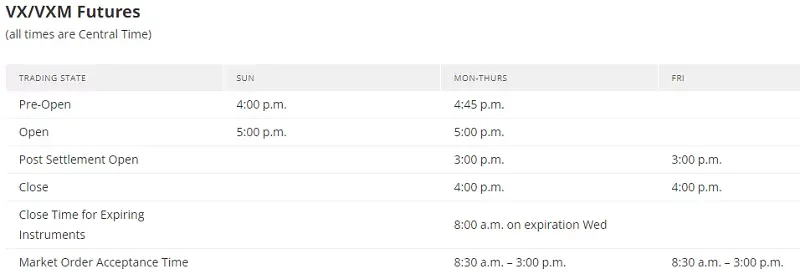
This is where many commonly traded futures contracts are traded. Many CME futures contracts open at 6 pm EST on Sunday. The markets then close at 5 pm EST on Friday.
During the week (not Sunday), there is a 45- to 60-minute break each day between 5:00 pm and 5:45 or 6:00 pm EST. These hours cover the most heavily traded futures contracts:
Agricultural futures may have similar trading times, but they often have more breaks throughout the day. CME provides the trading hours on all products on its CME Trading Hours page, where it lists the trading hours of more than 1,300 futures contracts.
Between 5 pm EST on Sunday and 5 pm EST on Friday (with a daily break), which is essentially Monday to Friday weekday trading, is a general guideline for when you can trade futures. However, you should remember that each futures contract has its own hours.
Asian markets (Australia and Japan) are open for business on Sunday evening (EST), which means there are some market participants and institutional investors trading futures at that time. The European markets open next, providing more market liquidity for futures in the early Monday morning hours. Then, the US market opens, and that is when you typically see the highest volume in futures contracts across the global financial markets.
You can't trade US futures through the entire weekend, specifically on Saturday and Sunday. Still, you can trade certain futures contracts until 5 pm Eastern Time (EST) on Friday, at the end of regular trading hours, and then you start many futures contracts again at 5 pm EST on Sunday. This means that, technically, you can start trading them on the weekend.
There is usually less volume on Sunday evening compared to a Monday afternoon. For example, it can happen when all the US banks and financial institutions are open. This results in lower liquidity and smaller trading volumes.

The “ICE” exchange offers futures contracts on various markets around the world, which means you have nearly endless choices if you want to trade futures with ICE. With thousands of contracts, each may have its own varying trading hours.
Many futures trade nearly 24 hours a day, Sunday through Friday. Traders can execute trades nearly around the clock. The only exception is daily halts. Those periods happen when trading is temporarily halted and then resumes at a set time.
Each agricultural commodity tends to have different trading hours. Here is a sample:
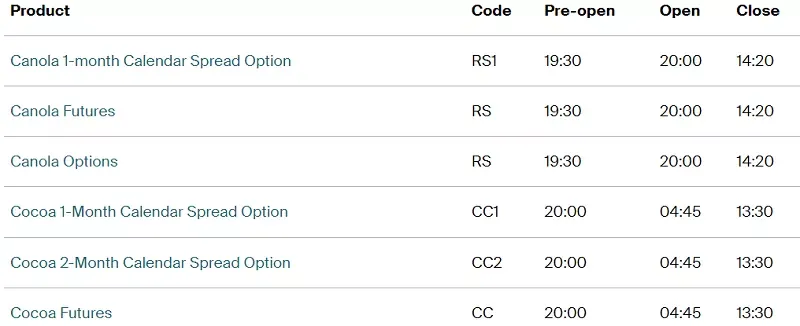
To see the trading hours for the specific contract you are interested in, see the ICE Product Guide. Narrow down the list by selecting the products you want to view.
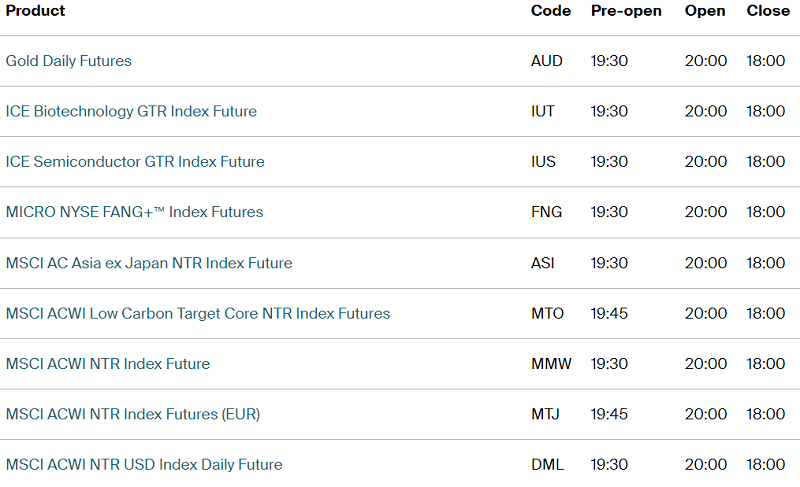
There are a number of financial markets and financial instruments that trade 24 hours per day on Sunday and through the weekends. These are futures, cryptocurrency, and the Forex Market.
Cryptocurrencies trade around the clock as well, even on weekends. I'll discuss that a bit more in the next section. Interactive Brokers offers nearly 24-hour trading on a select number of Exchange Traded Funds (ETFs). This is a break from the norm, as stocks and ETFs aren't typically available for 24-hour trading.
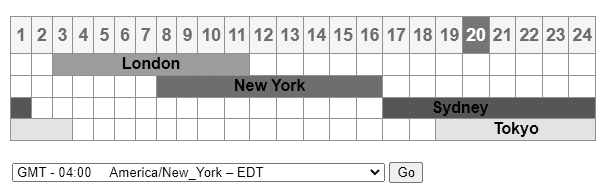
Foreign exchange markets, or Forex, operate the same way. Trading markets are active at 5 pm EST on Sunday evening, and the trading stock market closed at 5 pm on Friday. This progression can be seen on the chart below, as Sydney is the first major Forex Market to open on Sunday at 5 pm EST. New York is the last market to close on Friday at 5 pm EST.
Futures often begin trading on Sunday evening in the US. The top markets are CME Globex, ICE Futures U.S., and Cboe Futures Exchange.
There are only a couple of choices if you want to trade on weekend markets. Markets exhibiting lower liquidity are crucial for any weekend trading strategy player. The cryptocurrency market, including Bitcoin, Ethereum, Tron, Tether, and others, is the main market to trade on weekends. Trades are executed via peer-to-peer networks anytime people want to trade. That is how most crypto brokers/exchanges are structured. It makes crypto markets popular with weekend traders. However, it's also possible to trade Forex on weekends through certain brokers.
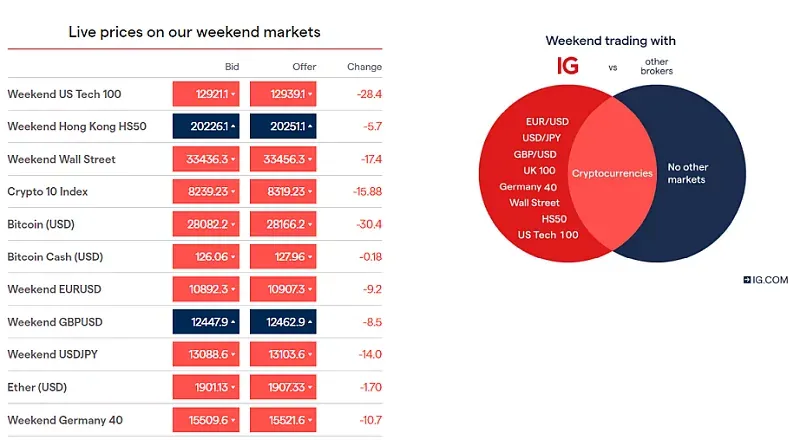
One market that is open on weekends is run by IG.com, a large forex and CFD broker. Trading platforms like IG offer weekend trading. You can trade Forex pairs, major stock indices, and crypto (which is available on weekends through most crypto platforms).
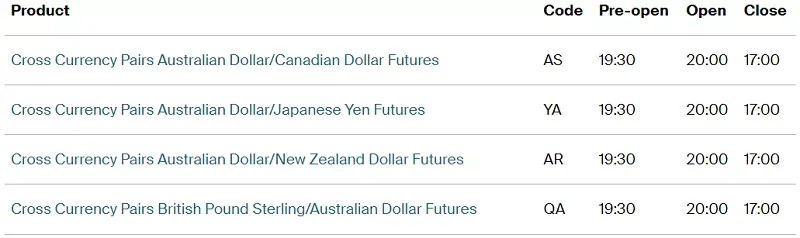
Official stock market hours are 9:30 am EST until 4 pm EST. You can trade most options during this time window. However, many traditional stock markets, like the New York Stock Exchange and NASDAQ, are closed on weekends.
Once the market closes at 4 pm EST, after-hours trading can continue until 8 pm EST. Unless specified (though not usually), options are not traded during these extended hours.
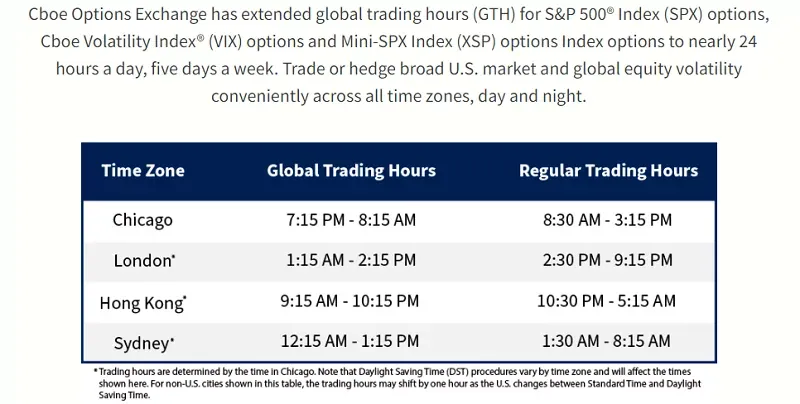
Say you normally trade the E-mini S&P 500 and want to prepare for the Sunday reopen. The first thing to check is the contract's actual exchange schedule, not a generic "futures are open" statement. Many CME contracts reopen on Sunday evening, but the exact session and holiday schedule can differ.
Before the open, note Friday's close, any major weekend news, and the nearest support and resistance levels. Then watch the first few minutes instead of forcing an entry immediately. Sunday liquidity can be thinner than during the main US session, so spreads and price jumps may look different.
If price gaps above Friday's close, I would wait to see whether the gap holds before taking a position. The key point is simple: weekend futures trading usually means Sunday evening access, not normal trading all through Saturday and Sunday.
A common mistake is assuming every futures contract follows the same schedule. CME, ICE, and Cboe products can have different session times, and agricultural contracts often have additional breaks. Check the exact contract before placing an order, especially if you normally trade only during US hours.
Another mistake is treating Sunday evening like a normal weekday session. Liquidity can be lighter, especially before Asian, European, and US participants are fully active. That can make entries less clean.
Traders also forget holiday schedules. A contract that normally reopens on Sunday may use modified hours around major US holidays. Finally, do not confuse crypto weekend trading with futures. Crypto can trade continuously, while US futures normally have a weekend shutdown before Sunday trading resumes.
Weekend futures usually means futures trading that resumes on Sunday evening after the Friday close. Most US futures are not available continuously through Saturday. The exact reopen depends on the contract.
The exchange sets the session for each contract. Many contracts reopen Sunday evening and trade through Friday with daily breaks. Holiday hours can differ, so check the exchange calendar.
That depends on the broker and exchange access. Check regulation, fees, execution, and the official contract schedule before funding an account. Avoid relying only on a broker's marketing page.
Choose the contract, check its session hours, and watch the Sunday open on a demo or small position first. Keep Friday's closing level on the chart to spot a gap. Do not size up immediately.
It can be, but Sunday liquidity may be thinner. Beginners are usually better off learning the contract during normal weekday hours before trading the weekend reopen. That gives you a cleaner baseline. Compare the first hour with a normal weekday session.
Find Your Perfect Broker: Explore Our List Now!
Choose the best with our expert-selected options

Find Your Perfect Broker: Explore Our List Now!
Choose the best with our expert-selected options
Discover top binary options brokers tailored to your region. Browse our curated lists by country:
11082