Updated:November 11, 2026

5 min

Deriv Synthetic Indices Explained
Synthetic indices are instruments whose price is generated by an algorithm rather than by a real market. That single fact explains both their appeal and the question you need to answer before trading them. Updated September 2026.

Joel Lim
Author
Updated October 23, 2026
Synthetic indices are instruments whose price is generated by an algorithm rather than by a real market. That single fact explains both their appeal and the question you need to answer before trading them. Updated September 2026.
Synthetic indices at a glance
-
Nature: algorithmically generated price series, not linked to any real asset
-
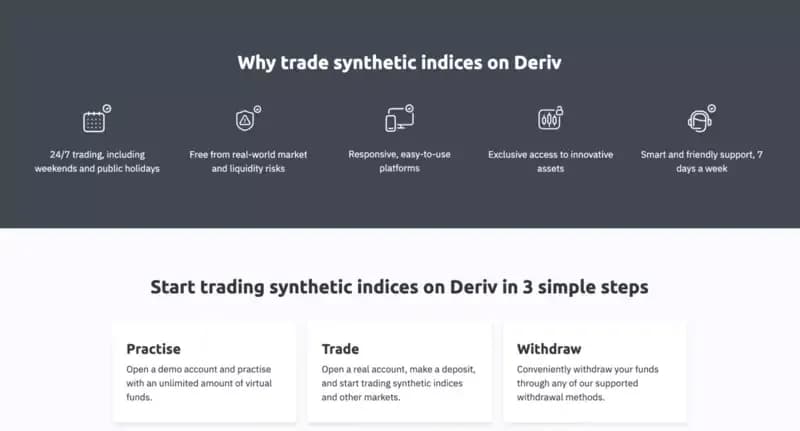
Availability: 24 hours a day, 7 days a week, including weekends
-
News sensitivity: none, economic releases and events do not affect them
-
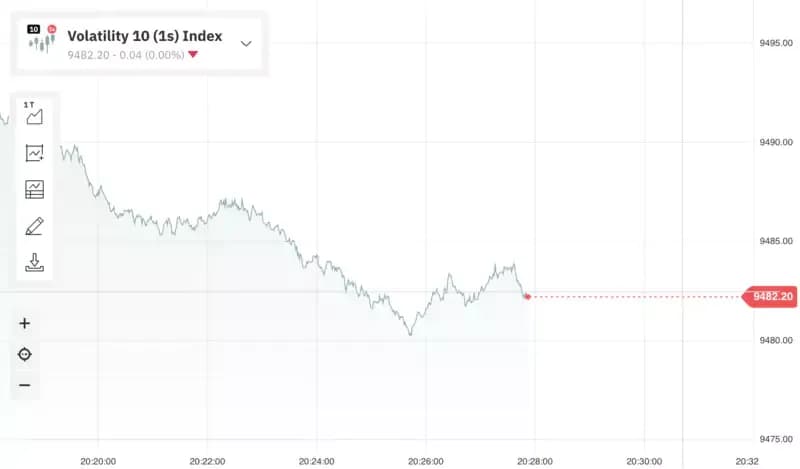
Volatility: defined by the index parameters rather than by market conditions
-
Price gaps: rare, since there is no market close to gap across
-
Trading methods: CFDs, options and multipliers
-
Exclusive availability: offered by Deriv, not traded on external venues
-
Counterparty: the broker generates the price series
Who sets the price
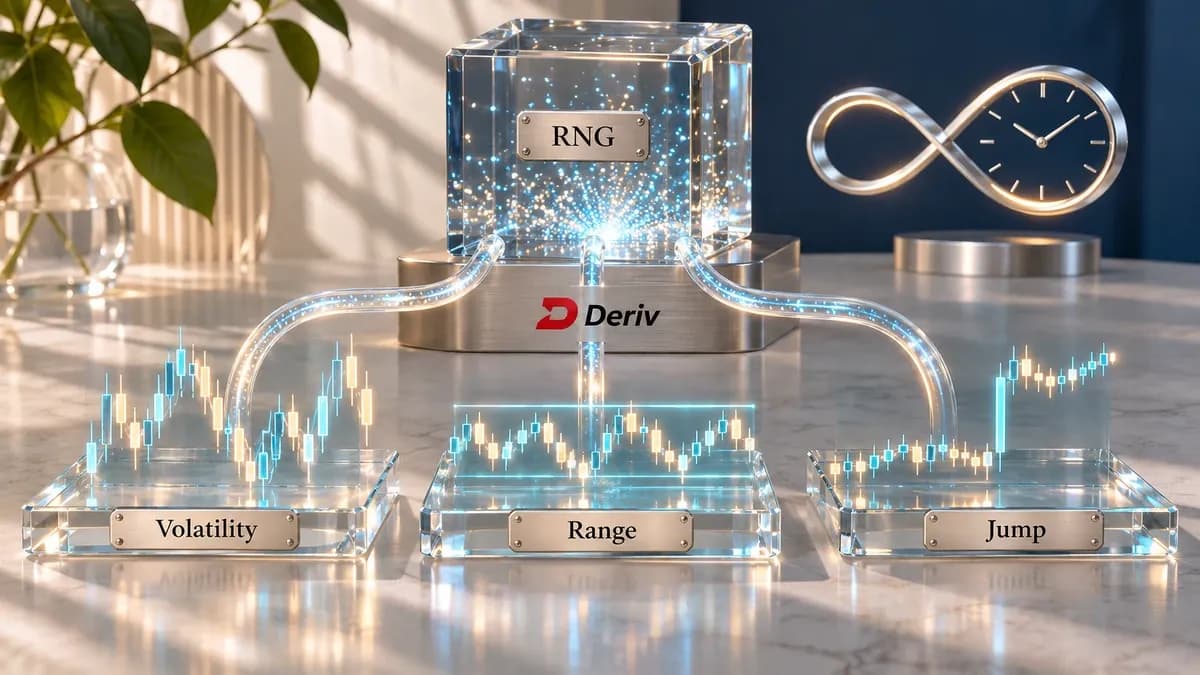
A synthetic index has no underlying asset. Its price is produced by a random number generator configured to behave with a defined volatility profile.
The practical consequence is that you cannot verify the quote against anything. With EUR/USD you can compare your broker's price against any other source in seconds. With a synthetic index there is no second source, because the instrument exists only on that platform.
Deriv states that the generators are independently audited for fairness, which is the relevant reassurance and worth checking for yourself on the company's own documentation. But the structural point stands: you are trading a product created by your counterparty. Decide whether you are comfortable with that before deciding whether you like the volatility profile.
What makes them different
Traditional markets close. Forex pauses over the weekend, equity markets follow exchange hours, and both gap when significant news breaks while trading is suspended.
Synthetic indices do none of this. The market is always open regardless of day or time, which suits traders whose schedules do not match conventional session hours.
They are also unaffected by real-world events. No central bank decision, earnings release or geopolitical development moves them, because there is nothing underlying to react.
For some traders this is the main attraction: it removes the risk of a position being destroyed by an announcement. It also removes fundamental analysis entirely, since there are no fundamentals. Only price behaviour remains.
Advantages and drawbacks
-
Round the clock access: trade at any hour, including weekends
-
Predictable volatility: each index has a defined volatility level rather than one that shifts with market conditions
-
Minimal gapping: continuous pricing means fewer sudden jumps between quotes
-
No news risk: economic events do not affect the price series
-
Simulated market: results depend entirely on algorithmic price movement, with no fundamental basis to analyse
-
Single venue: the instrument exists only on one platform, so there is no independent price reference
Ways to trade them
CFDs let you speculate on price movement with leverage, and the position stays open until you close it.
Options offer a fixed-outcome structure with a defined expiry, where the maximum loss is known at entry.
Multipliers sit between the two: they amplify exposure to price movement while capping the downside at the amount committed, which avoids the margin call risk of a standard leveraged position.
Multipliers are the most beginner-appropriate of the three, precisely because the maximum loss is fixed. CFDs on a high volatility synthetic index can move against a leveraged position very quickly, and the absence of news does not mean the absence of risk.
Getting started sensibly
-
Start on a demo account: the price behaviour differs noticeably from real markets and takes adjustment
-
Understand the volatility rating of each index before choosing one, they are not interchangeable
-
Use multipliers or options before CFDs if you are new, since the maximum loss is defined
-
Apply the same risk limits you would use on any instrument, 24/7 availability makes overtrading easier
-
Read the company's documentation on how the price series is generated and audited
For a full assessment of the platform, see our broker reviews and related trading guides.
Synthetic indices: frequently asked questions
What are synthetic indices?
Instruments whose price is generated by an algorithm with a defined volatility profile, rather than tracking any real asset.
Pros and Cons of Deriv Synthetic Indices
Features of Deriv Synthetic Indices
What Are Deriv Synthetic Indices?
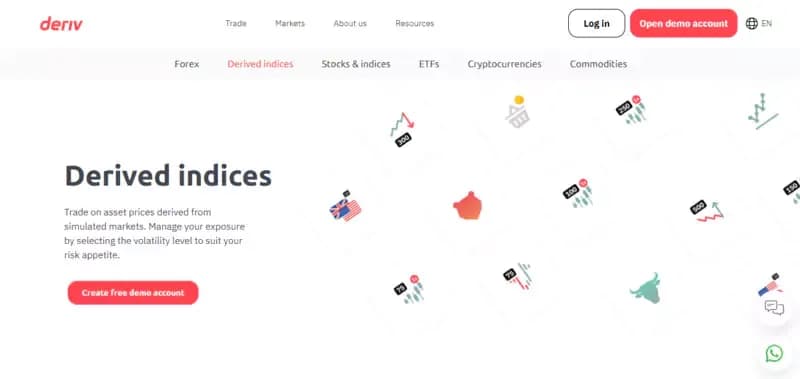
Deriv Synthetic Indices
Who determines the price?
The broker's own random number generator. There is no external market, so the quote cannot be compared against an independent source.
Are they open at weekends?
Yes. Synthetic indices trade 24 hours a day, 7 days a week, because there is no exchange session to close.
Do news events affect them?
No. With no underlying asset, economic releases and geopolitical events have no effect on the price series.
How can I trade them?
Through CFDs, options or multipliers. Multipliers cap the maximum loss at the amount committed, which makes them more forgiving for beginners.
Is fundamental analysis useful here?
No. There are no fundamentals to analyse, so only price behaviour and risk management apply.
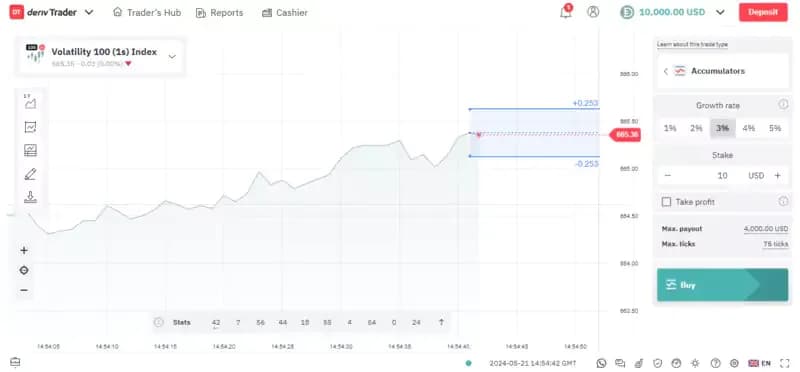
How to Get Started
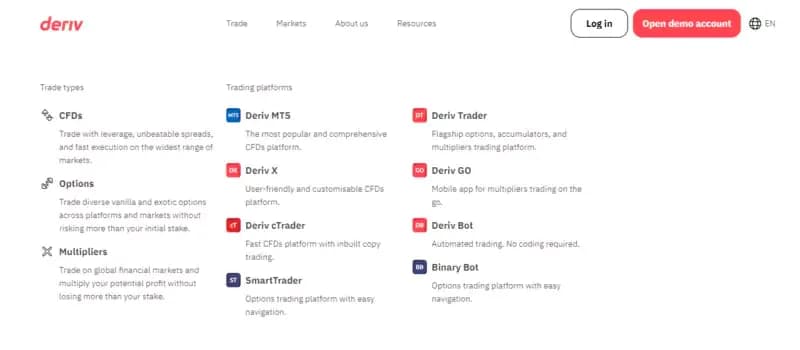
Types of Trading
Find Your Perfect Broker: Explore Our List Now!
Choose the best with our expert-selected options

Find Your Perfect Broker: Explore Our List Now!
Choose the best with our expert-selected options
Discover top binary options brokers tailored to your region. Browse our curated lists by country: