Updated:November 18, 2026

9 min

0
Finding your prop firm match: scalping, swing and news styles
The right prop firm for a scalper can be the wrong prop firm for a swing trader. That is why a real prop firm match starts with trading style, not with a discount code.

Cory Mitchell
Author

Updated November 18, 2026
Why the same prop firm suits one trader and fails another
A trader who enters ten times a day needs something different from a trader who waits for two strong setups a week. The first trader will care about execution, intraday loss limits and consistency rules. The second will care about overnight holding, weekend rules and whether slow, selective trading can still satisfy the challenge requirements.
Two profitable methods can respond differently to the same rules. Consider a trader who takes a handful of intraday setups and closes every position before dinner. A strict weekend holding ban might not matter. The trader will care much more about spreads, news windows and whether a temporary equity decline can breach the daily cap. A second trader may hold positions for a week and need more room for overnight changes. The same account contract can be comfortable for the first person and almost impossible for the second.
This explains why broad rankings should be a starting list rather than a final answer. The user's own trading record is more valuable than a promotional claim. Take the last several dozen trades, group them by holding period and look for the worst daily sequence. The aim is to find the rules that your method naturally tests. If a firm restricts your normal behavior, buying it creates a new strategy whether you intended that or not.
Prop firm match by style: scalping, swing and news trading
Scalpers need clean execution and clear policies on fast entries, news and automation. Swing traders need breathing room in the drawdown and flexibility around holding periods. News traders need to know exactly what happens around major releases. This is where many traders fail the matching process. They pick the firm first and then try to force the style into it.
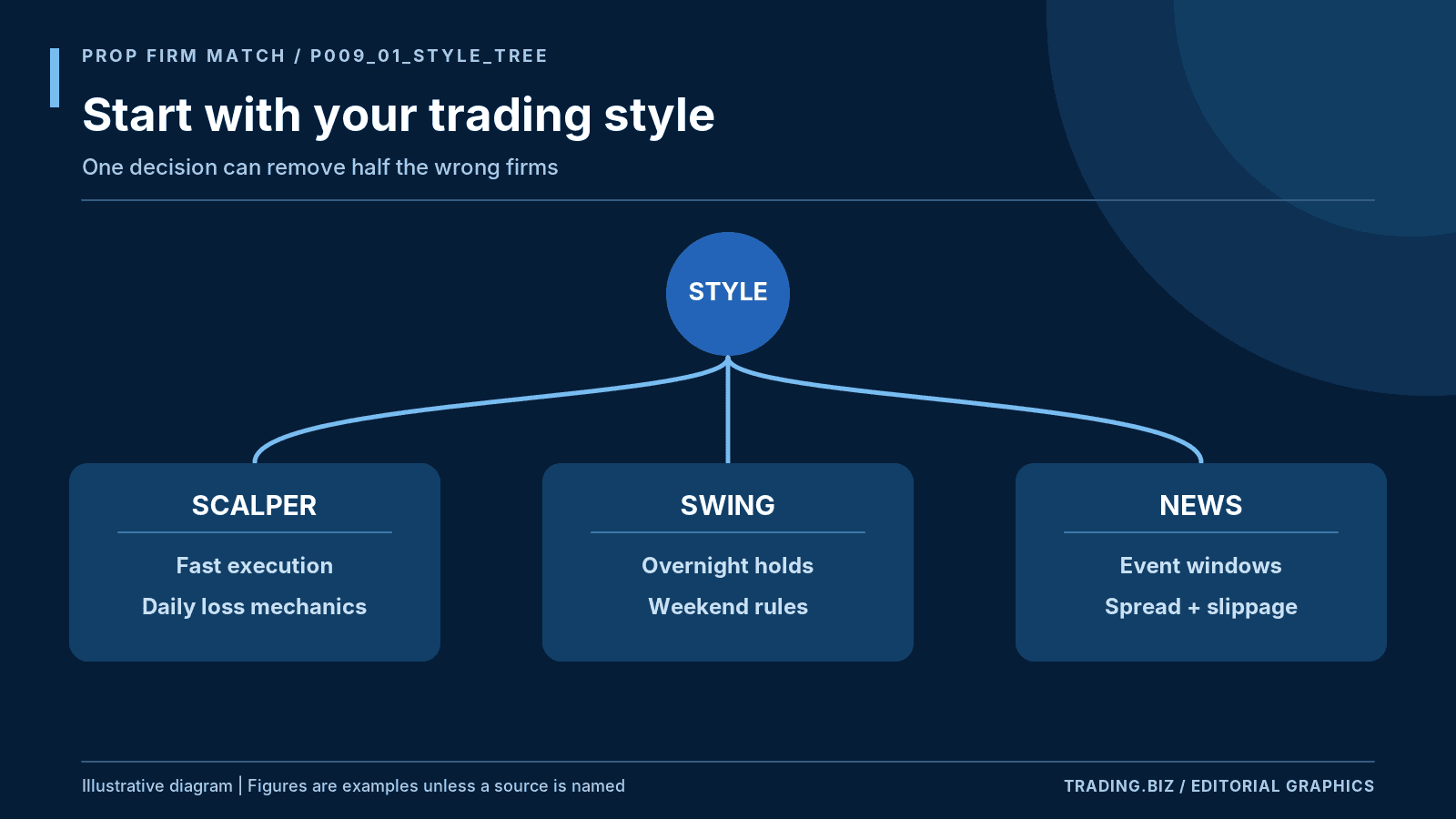
Figure 1. Three trading styles and the rules each should examine.
Scalpers need to examine the full cost of each round trip. A strategy with a six-point average target cannot ignore a spread that routinely consumes one point, or the slippage caused by fast execution. It should also check whether the firm limits high-frequency orders or uses unusual minimum holding times. Those restrictions may matter more than a slightly higher profit split. Rehearse entry and exit under the same session conditions you will use during the challenge.
Swing traders face a different problem. The strategy may expect several days of fluctuation before a move develops. Overnight financing, weekend gap rules and trailing drawdown calculations can disrupt that process. A firm advertising swing-friendly accounts should explain which instruments can be held through Friday's close and whether its loss floor changes while trades remain open. Check those rules before spending time comparing discounts.
News traders need written clarity about restricted release windows. Some programs forbid opening new positions immediately before a major event. Others also forbid closing trades or using pending orders in that interval. A strategy that depends on fast reactions to employment data may have no usable edge inside those restrictions. A trader should not assume that an instrument being visible in the platform means every trading method is permitted.
Rules to compare in a prop firm match
The most important rules to compare are drawdown type, consistency restrictions, news limits and weekend holding. If you cannot explain those four items for a firm, you do not know the product well enough yet.
Build a small comparison sheet and use dollars instead of percentages alone. For a hypothetical 50K account, a 3% daily loss limit gives $1,500 of room. If your usual risk is $300 per trade, five full stop-outs could approach the cap before transaction costs. If the account instead permits 5%, the arithmetic changes, but the trader still needs to know whether the floor is based on today's starting balance or floating equity.
Consistency constraints are a second filter. A method that earns most of its profit in one or two strong sessions may struggle with a requirement limiting the proportion attributable to the best day. This does not mean the strategy is flawed. It means the program favors a different distribution of results. The distinction matters because traders sometimes make extra low-quality entries purely to satisfy a rule.
Costs to compare in a prop firm match
Challenge fee, reset fee and payout terms all belong in the same row of your checklist. A low challenge fee with a high reset fee may still be fine if you almost never reset. A trader with a rocky learning curve may need the opposite.
The fee on the checkout page is only one number. Include resets, any monthly renewal, an activation charge after passing, and the share of eligible profits retained by the firm. If the account uses expensive execution or carrying charges, that belongs in the calculation too. A high-frequency method magnifies each trade fee. A longer-term method may be more affected by overnight charges.
For example, two firms might charge $75 and $120 for an evaluation. If the cheaper firm permits no weekends but your strategy normally holds through Sunday, the $75 account is probably unusable. The higher-priced program may be cheaper in practice because it allows the method to operate normally. Buyers who compare by label rather than by fit often miss this.
Platform, instrument and price feed checks
A prop firm match also depends on platform comfort. Some traders want cTrader, some MT5, some a futures platform. Check instruments, spreads or commissions, and whether the price feed behaves the way your strategy expects.
Platform familiarity can be a real advantage under pressure. If you already use cTrader's order controls, a challenge restricted to another platform forces you to learn new mechanics while you are trying to pass. Check whether your preferred chart timeframe exists and whether bracket orders work as expected. For futures, confirm micro-contract support. For forex CFDs, compare the firm's quote with a trusted reference during your usual hours rather than on a quiet demo screen.
Also inspect the process for an outage. Can you close a position from a web portal if the desktop app fails? Is there a support path for a platform incident? A firm should explain how it handles erroneous prices and suspended markets. These details are rarely glamorous enough for a sales video, but they can make a large difference during a volatile day.
A prop firm match checklist you can copy
Write down your style, holding period, average stop size, preferred market, tolerance for daily drawdown, and whether you need news access. Then rank three firms against those points. That simple exercise usually produces a better match than reading ten affiliate comparisons.
Write a one-page plan with a maximum loss per trade and a maximum loss for the day. Note whether you hold overnight and whether the method trades major news. Add your preferred platform and the instruments you use. Then score no more than three firms for each point. A poor fit on a non-negotiable condition should eliminate a firm even if the average score is high.
Give the candidates a short demo test. Place a trade, modify the stop and close it. Check how the dashboard reports open losses. Repeat during the session when you normally trade. Afterward, read the payout conditions and ask support anything that remains unclear. The result is a prop firm match based on real operating constraints, not an influencer's coupon code.
Revisit the worksheet once the evaluation ends, even if you pass. Record the rules that affected your decisions and the setups you skipped because of restrictions. If those constraints repeatedly push you away from your strongest trades, do not automatically buy the same model again. Good matching is an ongoing decision, not a one-time purchase.
A quick prop firm match example
Imagine a trader who takes two or three trades a day on EURUSD, avoids major news and closes before the session ends. That trader probably needs a firm with clean execution, no awkward consistency cap and a daily drawdown that does not punish a brief open loss. The best match may not be the cheapest firm, but the one whose rules interfere the least.
Now imagine a trader who holds gold or indices over several sessions. That trader needs a different match completely. Weekend restrictions and trailing drawdown become much bigger issues than a small difference in challenge price.
How to use the prop firm match checklist in real life
Do not overcomplicate the checklist. Give each category a score from one to five: style fit, rule fit, platform fit, payout fit and cost. Then total the scores for three firms. The exercise sounds basic, but it forces you to compare what matters instead of what is easiest to market.
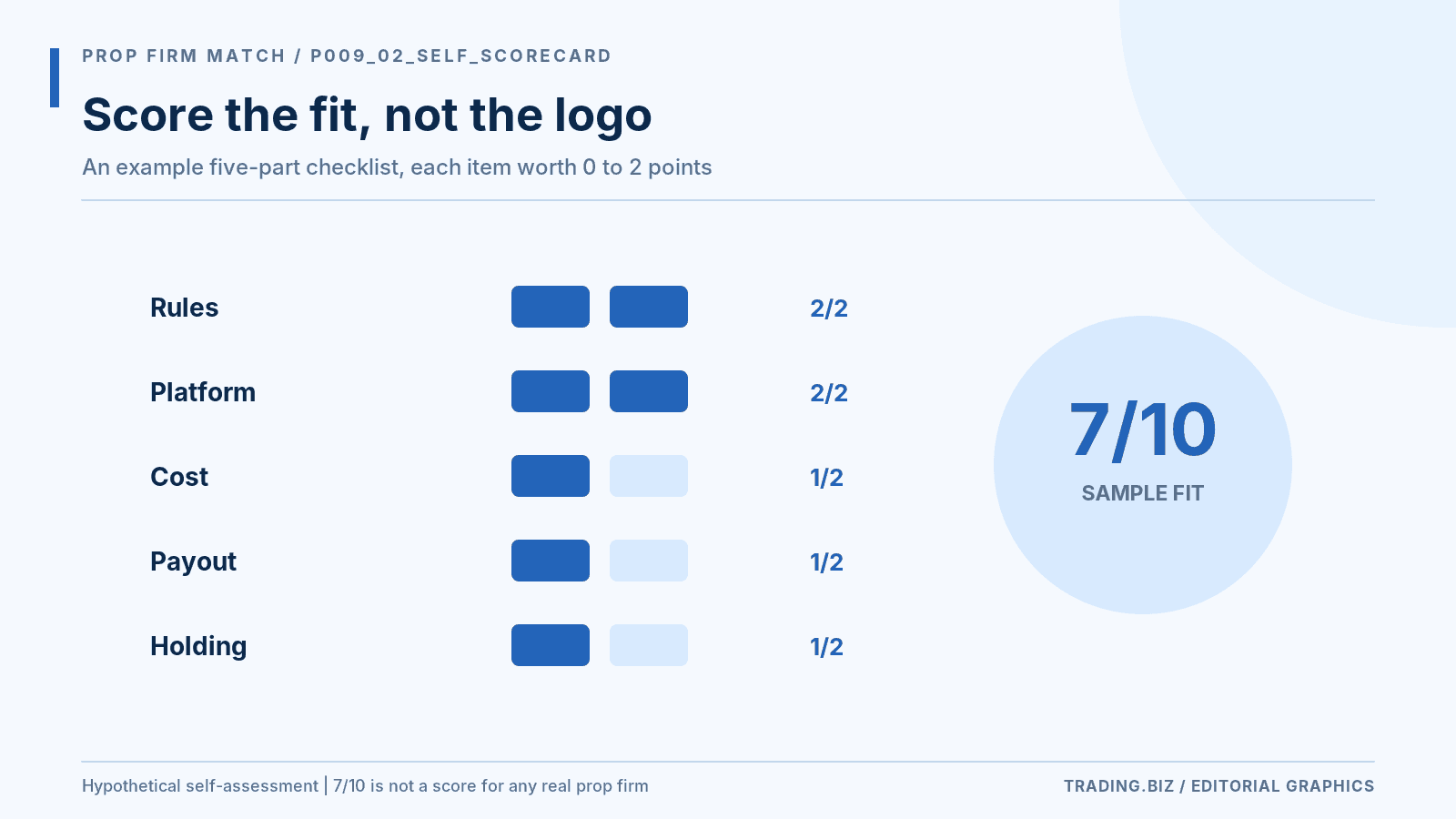
Figure 2. An illustrative five-part trading-style fit scorecard.
If two firms score close, choose the one whose rules are easier to explain in one minute. Clear rules are easier to live with under stress.
Why a prop firm match can change over time
A prop firm that fits you today may not fit you six months from now. Traders change style, gain experience and sometimes move from intraday trading to slower holding periods. That means the match process is not one and done. Review it again if your strategy changes.
The firm can also change. New rules, new payout terms or platform changes can alter the fit. A good trader notices when the environment no longer matches the plan and adjusts early.
FAQ
What is a prop firm match?
It means choosing a prop firm whose rules and platform fit the way you already trade.
Which prop firm is best for scalpers?
The best fit is a firm with clear news rules, good execution and a drawdown model that does not choke short-term trading.
Which prop firm is best for swing traders?
Swing traders should prioritize overnight and weekend flexibility plus a drawdown model that allows wider stops.
Should I compare fees or rules first?
Compare style fit and rules first, then compare costs.
Can I use one prop firm for every strategy?
Sometimes, but many traders do better by choosing the firm that best fits their main strategy.
Find Your Perfect Broker: Explore Our List Now!
Choose the best with our expert-selected options
Find Your Perfect Broker: Explore Our List Now!
Choose the best with our expert-selected options
Discover top binary options brokers tailored to your region. Browse our curated lists by country: