Updated:November 13, 2026

8 min

1
A news trading strategy for NFP and other high impact events
A news trading strategy is a plan for dealing with market-moving announcements, from US non-farm payrolls to central-bank decisions. The plan must cover more than guessing whether the headline will beat a forecast. During a major release, spreads can widen, orders can slip and price can reverse sharply after the first reaction. Traders who have not planned those mechanics are often surprised even when they predicted the economic number correctly.

Ilya Samotolkov
Author

Updated November 13, 2026
How news trading works and which events move markets
Scheduled releases give traders a known time when new information will arrive. Employment data, inflation, interest-rate decisions and growth reports can change expectations for a currency or stock index. The market often moves on the difference between the result and what participants expected, including revisions to older data. A headline that appears bullish may have been priced in already.
Not every event deserves an active trade. Some releases are highly anticipated but produce little reaction. Others trigger large moves because the market was positioned the wrong way or because officials change guidance unexpectedly. Track the asset that reacts to the event rather than assuming every report affects every pair equally.
Using an economic calendar to plan news trades
Open a reputable economic calendar before the session. Note event time, time zone, expected impact, forecast and previous figure. Cross-check major releases against the original agency schedule. For US jobs data, the Bureau of Labor Statistics publishes its own release calendar and full reports. The calendar view is the preparation tool; the official report provides more detail when a headline is confusing.
Write a pre-release plan
Mark nearby price levels and decide whether to avoid new positions during the release window. Record the spread normally observed in the instrument, then define the widest spread your setup can tolerate. Decide in advance what counts as a valid entry after the number, how many attempts you may take and when you will stop for the day. Do this before the event; a fast market is a poor place to invent risk rules.
Trading NFP: before, during and after the release
Non-farm payrolls, often shortened to NFP, summarize changes in US payroll employment excluding certain sectors. Traders also read the unemployment rate, wage growth and revisions. The release can move USD pairs, Treasury yields and equity-index futures. The first price spike does not always reveal the market's final interpretation.
Three ways traders approach NFP
Some stay flat until the report arrives and then wait for a retracement after the first move. Others trade a pre-release setup with strictly controlled exposure and accept that they may exit before the number. A third approach watches the second move after liquidity returns and the market begins to price the broader report. None removes risk. The first seconds are especially difficult because quoted prices can change faster than many retail orders are filled.
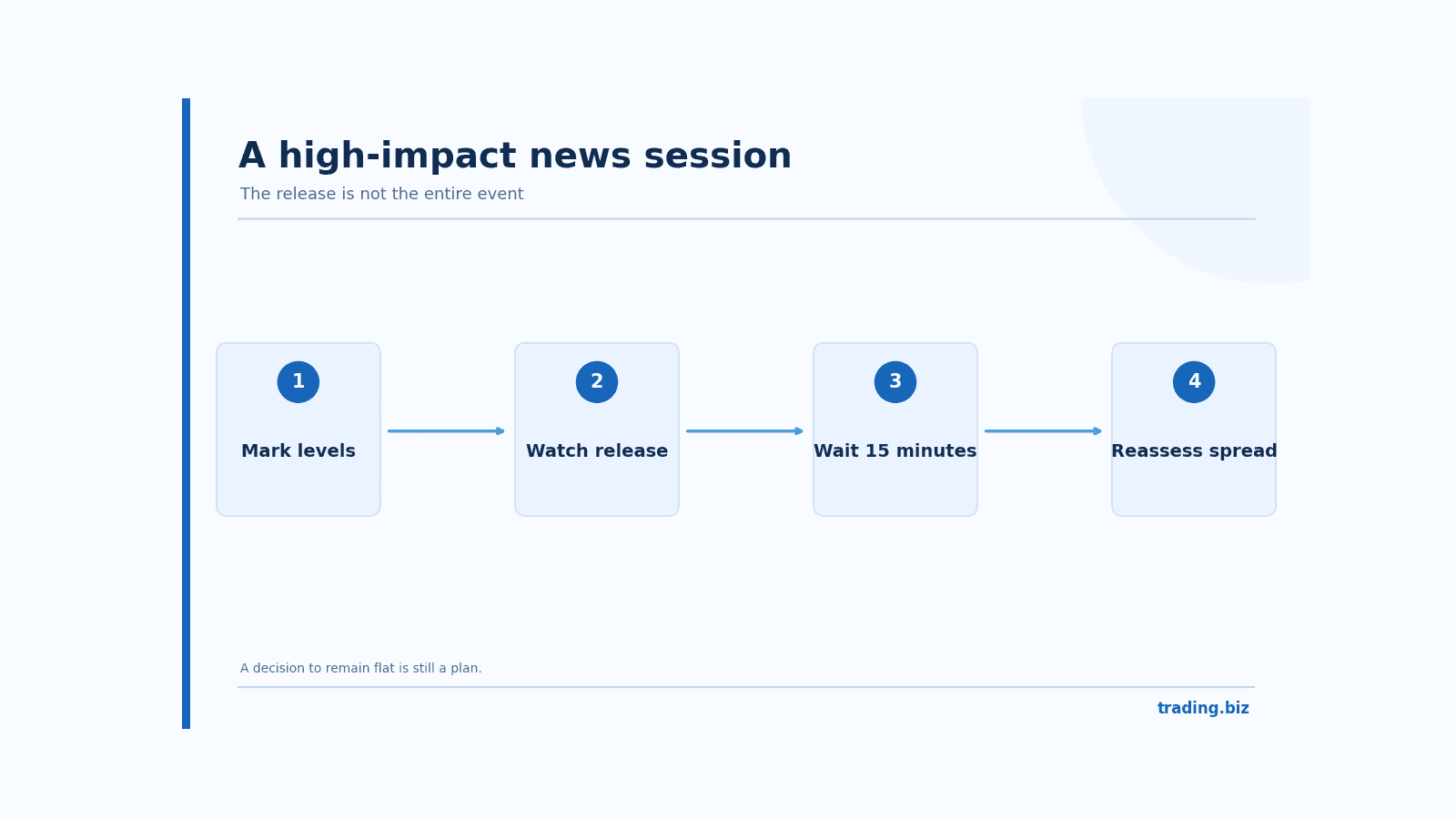
Figure 1. A release-day plan from preparation through the second market reaction.
A hypothetical example: payroll growth is forecast at 160,000 and reports at 220,000. The headline surprise is +60,000. If wage growth is weaker than expected and the previous month is revised sharply lower, the dollar response can differ from the headline interpretation. Avoid converting one number into a guaranteed direction.
News volatility, spreads and slippage
During a quiet period, a liquid currency pair may trade at a narrow spread. Around NFP or a central-bank announcement, the same spread can widen quickly. Stop orders can execute at worse prices than specified. Limit orders may remain unfilled while price jumps past them. A strategy tested on candle-close prices without realistic intraday quotes can therefore underestimate trading costs substantially.
Why the straddle approach can fail
The familiar straddle places a buy stop above price and a sell stop below. The assumption is that one side will catch the breakout. In practice, spread widening can trigger a position early, a reversal can hit both sides, or the filled entry may be far from the planned level. Tight stop distances do not guarantee a small loss. Any straddle test needs tick-level data and realistic order behavior.
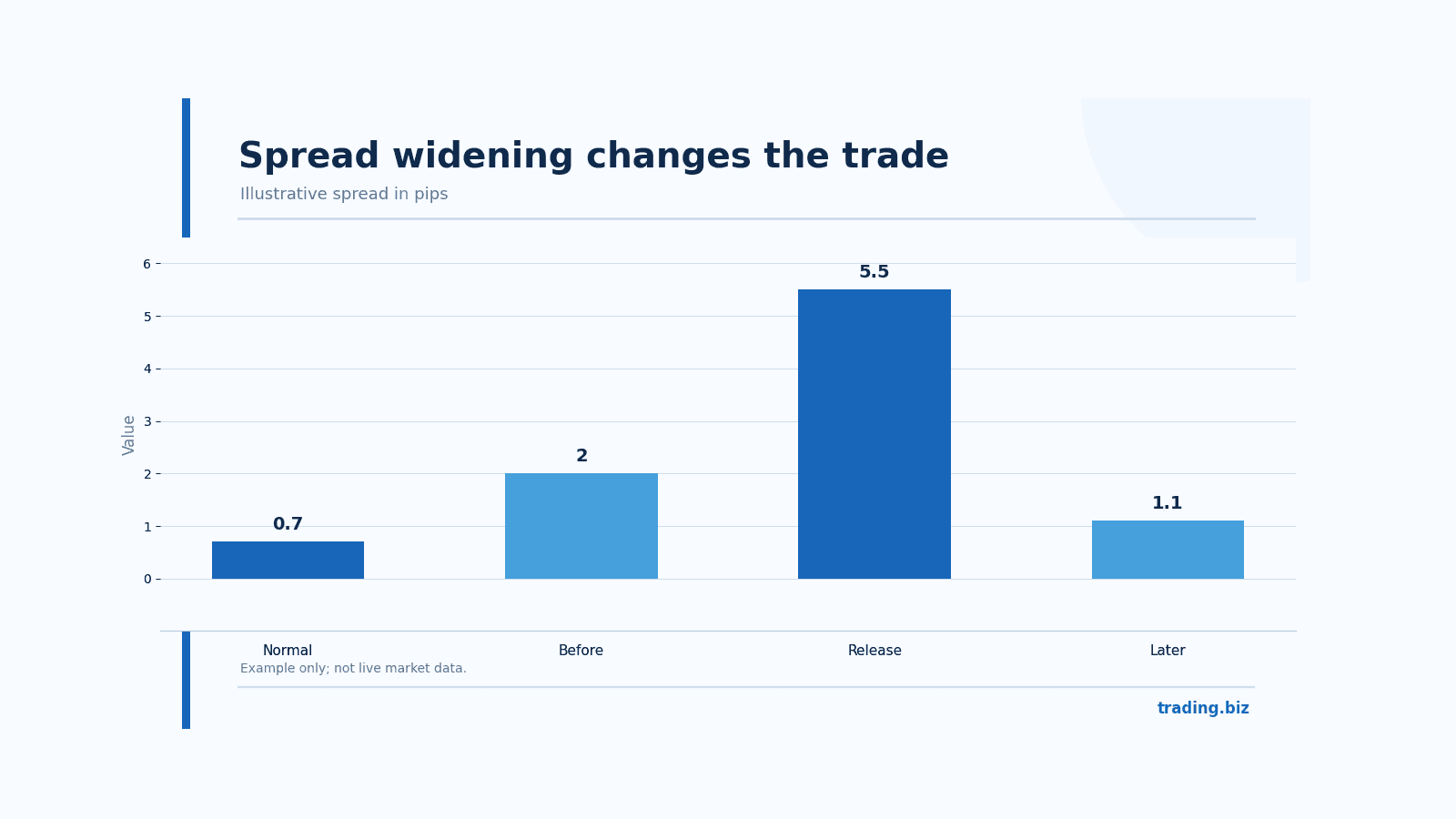
Figure 2. Illustrative spread variation through a high-impact news event.
News-related slippage is not always negative. An order may fill better than requested in some conditions, but the trader should not base the plan on favorable slippage. Risk must be calculated using the possibility of worse execution, especially where leverage is high.
Stop placement and position size around news events
Choose the maximum acceptable money loss first. Then estimate a stop distance that has a sensible relationship to market structure and event volatility. Position size is the money risk divided by the value of that distance, adjusted for expected costs. A standard forex stop that works on an ordinary Tuesday might be inadequate during a major data surprise.
Suppose a trader normally risks $50 with a 20-pip stop. If the event requires a 40-pip structural stop, maintaining the same money risk calls for roughly half the position size before accounting for extra slippage. Increasing the stop distance without reducing size doubles planned price risk. Some traders prefer not to trade the release at all, and that is a legitimate decision.
An event-day loss limit
Set a maximum number of entries, perhaps one initial attempt and one preplanned second attempt. Avoid chasing every subsequent spike. If the event creates a level of volatility outside your tested range, stand aside. The market will still offer opportunities after the report is over.
Choosing a broker for news trading
Execution policy matters more than a promotional minimum spread. Review the broker's typical spreads around releases, order types, slippage policy and margin changes during high-impact events. Some brokers raise margin requirements or restrict certain orders near scheduled news. Ask what happens to a stop order during a fast gap, and test with small size if you have a legitimate reason to trade live.
A VPS can reduce part of the latency between automated software and a broker server, but it cannot guarantee a fill price or solve poor market liquidity. News trading also carries technology risk: a platform can freeze, a feed can pause and an order may be delayed. Plan for what you will do if the connection disappears while a position is open.
The 15-minute observation window after a release
One practical alternative to trading the first spike is to watch the first fifteen minutes without opening a position. Record the initial high and low, the spread at the time of release and whether price settles outside that range. Some traders then look for a retest after liquidity returns. This does not guarantee cleaner trends, but it gives the trader more data than a headline and a single candle.
Do not blindly apply the same waiting period to every report. Central-bank press conferences can introduce new information after the initial statement, and a speech may have several market-moving moments. The calendar tells you when the event begins, not always when the information flow ends.
How to evaluate broker execution during news
Keep a log of intended price, submitted order time, fill price, spread and slippage for each event trade. Compare fills from similar periods, and record rejected or unfilled orders rather than deleting them. A broker advertising a low normal spread may still be unsuitable for the strategy if fills routinely arrive several pips away from the intended entry.
A virtual private server can reduce some connection delay for an expert advisor, but the market's available quotes and the broker's risk controls remain outside your control. Treat execution as a distribution of possible outcomes, not a single ideal price.
NFP is a collection of figures, not one score
Payroll growth often attracts the headline, but the unemployment rate, participation rate, wage growth and revisions provide context. An increase in payrolls can be accompanied by softer wage growth or a rise in unemployment. Monetary-policy expectations respond to that combination. An order sent from a single headline may therefore be vulnerable when the rest of the report changes the market's interpretation.
Keep a simple event sheet with the forecast and actual result for the few figures you follow, then note the first fifteen-minute price response and the closing position of the session. The purpose is to learn how the instrument reacts under different conditions, not to assume that all positive surprises should produce the same trade.
Broker restrictions around scheduled news
Some accounts, especially evaluation programs and high-leverage products, limit entries or exits close to major releases. The restriction may be defined in minutes before and after the announcement, and it can apply to manual and automated orders alike. Read the provider's exact wording. A strategy that depends on opening a trade at the release is useless on an account that prohibits doing so.
Review scheduled-event policies again after changing account types or brokers. The fact that you could trade NFP on a demo does not establish that the same order is permitted in every live program.
FAQ about news trading strategies
What is the most important forex news event?
It depends on the market and current policy debate. NFP, inflation releases and central-bank decisions often draw attention, but their impact changes over time.
Is it best to enter the instant NFP is released?
Not necessarily. Spreads and slippage can be severe in the first seconds. Some traders prefer waiting for the initial reaction to settle.
What does a news forecast surprise mean?
It is the difference between reported data and the pre-release consensus forecast. Revisions and other parts of the report may change the interpretation.
Can a stop loss prevent news slippage?
No. A stop provides an execution instruction, not a guaranteed fill price. Gaps and thin liquidity can produce larger losses than planned.
Should beginners trade major economic releases?
Practicing the calendar and observing the reaction on demo is a safer starting point. Real-money event trading demands a tested execution plan and tight control of leverage.
Official reference: US jobs report schedule
Find Your Perfect Broker: Explore Our List Now!
Choose the best with our expert-selected options
Find Your Perfect Broker: Explore Our List Now!
Choose the best with our expert-selected options
Discover top binary options brokers tailored to your region. Browse our curated lists by country: