Updated:October 09, 2026

12 min

14731
AI in Trading: Expert Overview 2026
Artificial intelligence has moved from being an experimental technology that some traders use to a core technology every progressive trader has to understand. And why not?

Gloria Chimelu
Author
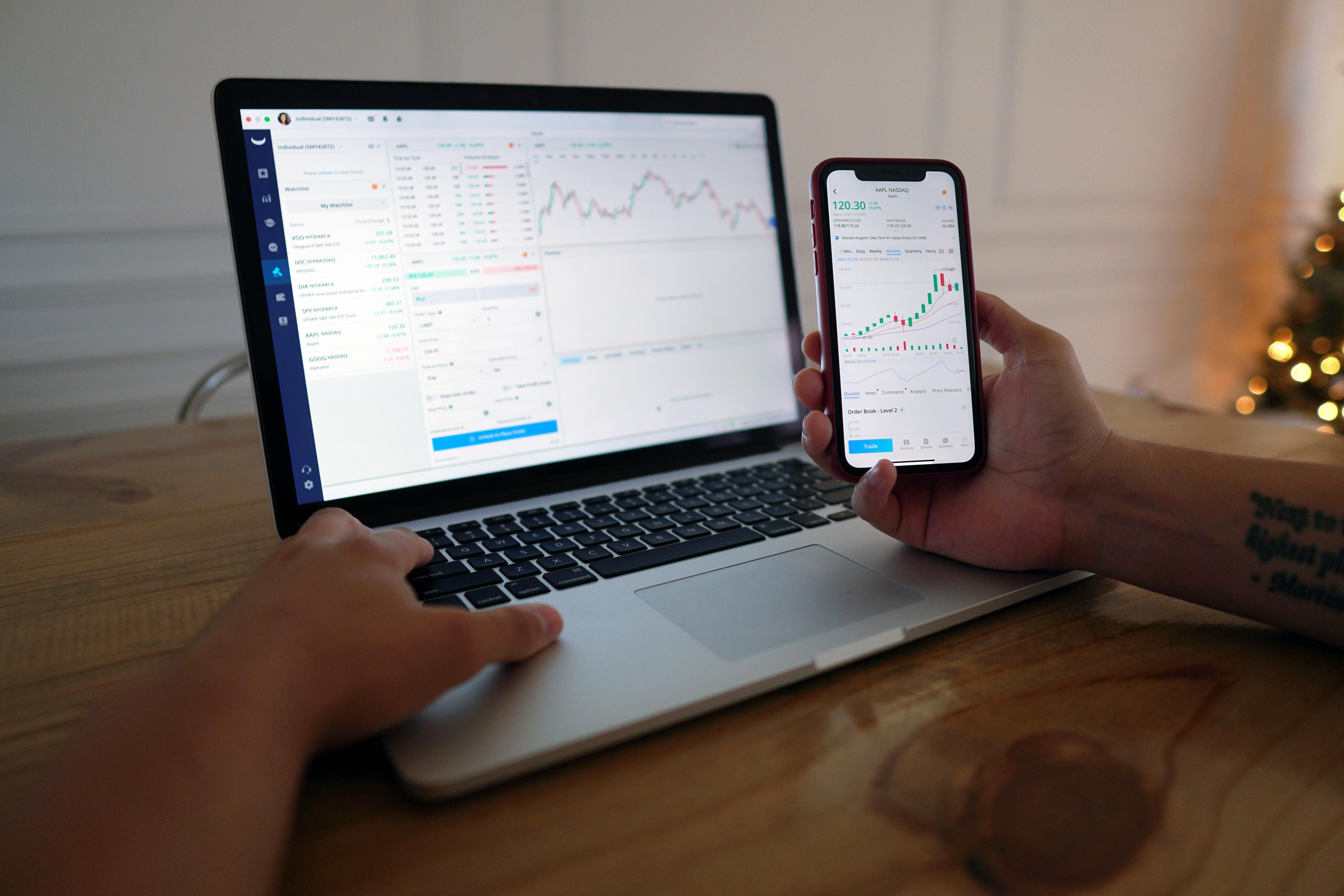
Algorithmic trading is faster and more accurate than any human can be. Data shows that more than 30% of wallets on Polymarket use AI to trade. Further research demonstrates that 60-70% of U.S equity trading involves some form of artificial intelligence. AI is spreading fast in the world of financial markets.
But, this shift did not happen today; it has been slowly in the works. The first crop of traders in financial markets relied on manual processes for everything, without any machine input. They improved by giving computers instructions. Machines acted solely as executioners, e.g., electronic trading platforms, which made trading faster. Then came rule-based algorithms, which allowed the execution of trades based on certain rules. Now, many traders rely on algorithmic systems for different kinds of trading.
How AI Is Used in Trading?
Many people use AI to primarily generate text and media, but in trading, AI has far more complex uses and greater benefits:
- Predictive analytics and modeling. Where Machine Learning (ML) models generate signals, trade direction, market trends, or forecasts.
- Processing natural data. Domain-specific Large Language Models (LLMs) and fine-tuned NLP models perform sentiment analysis by processing a large amount of natural language data like earnings calls, social media posts, and regulatory filings.
- Higher frequency trading (HFT) execution. AI models strike in microseconds to milliseconds and get better through reinforcement training.
- Risk management with dynamic modeling. Here, models monitor correlation, market changes, and assess counterparty risk.
- Market surveillance. Either as a bot for compliance purposes, or one that manipulates the market via tactics like wash trading and spoofing.
3 Key Benefits of Using AI in Financial Markets
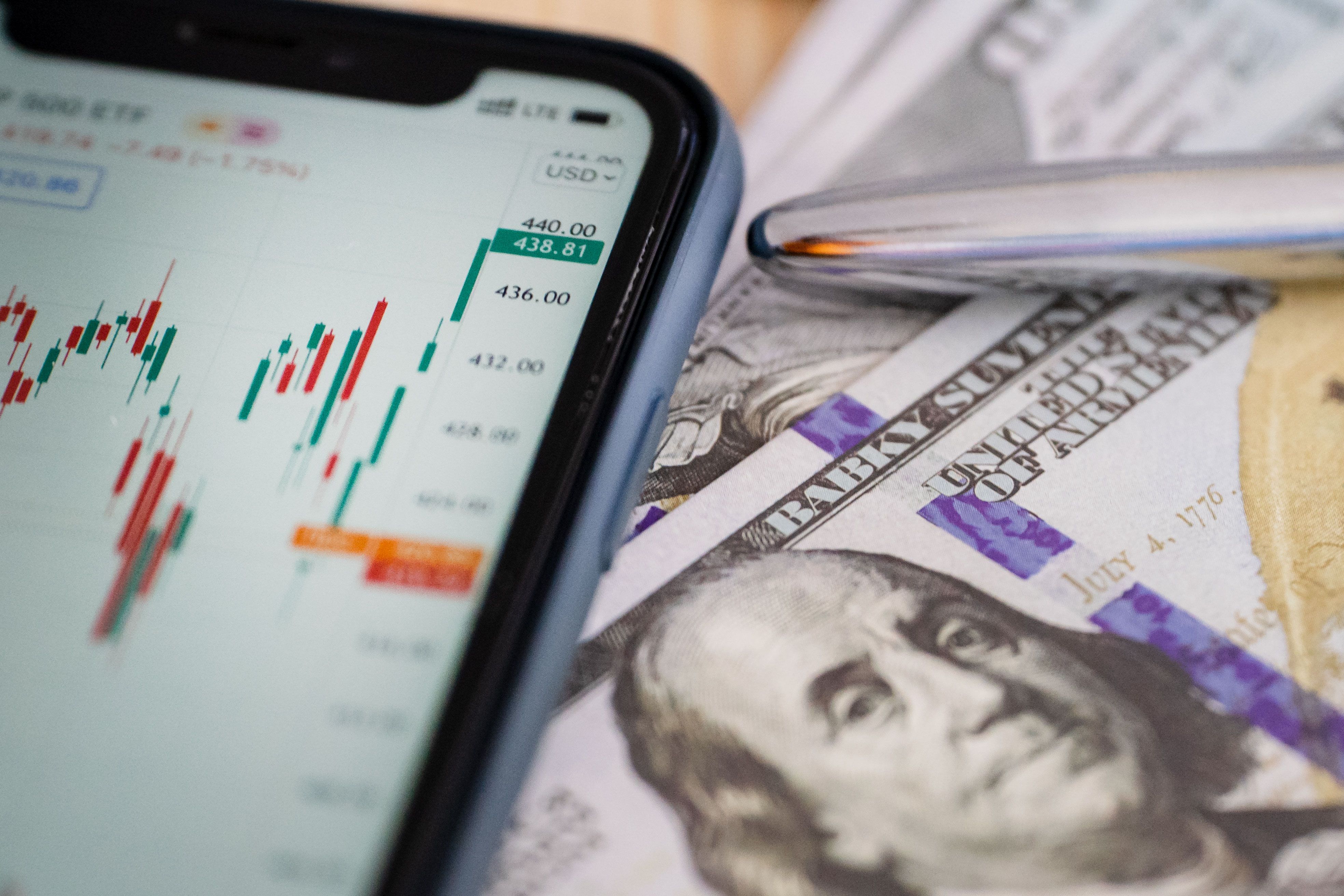
Using AI to trade does not merely improve human performance; it opens us up to a whole new world of capabilities. For accuracy, it is not that AI ensures we never make losses again. Rather, it increases one’s chances of being more profitable over time, which is what matters most in trading. When it comes to speed, it can detect, evaluate, and execute within milliseconds. NLPs can absorb data in real-time and quickly adjust to follow market sentiment.
Also, models do not get attached to losses or wins as we humans do. They follow trading plans with pure logic, never emotions. Therefore, an AI model cannot carry out destructive trading habits like revenge trading, making a trader more efficient.
1. Emotion‑Free Automated Trading
A system that is accurate but profitable will not do much for one who is constantly at the mercy of their emotions. AI models help traders remove emotions from decision-making, leading to better execution. These models don't experience FOMO, nor give in to pressure in high-stress environments. They bridge the gap between decision and execution. While a trader might be swayed by emotional decisions, stressed, or unable to function in a high-stress environment and not execute or delay execution altogether, a model has already executed a trade. This helps traders consistently follow their trading plans even when emotions are high.
2. Improved Risk Management
Risk management is key because one badly managed trade can erase years of hard work. While AI can't eliminate risk, it can reduce it. For example, instead of fixing a stop-loss based on pip values or psychological levels, an AI model can use a dynamic technique like Average True Range (ATR) to determine where a stop should be placed. This reduces the likelihood of a trader being prematurely stopped out because of a very tight stop or absorbing unnecessary loss because of a wide stop, both of which can really affect profitability. In addition, they can analyze order books and liquidity, protecting themselves from being swept away with other traders when the price takes out liquidity.
3. Custom Strategy Creation with AI Bots
Any trader can use a bot and get satisfactory, although varying, results. But a trader who builds a custom strategy with an AI has a real advantage. Why? It allows anyone to input their unique strategy and build a bot that aims to be profitable. Well-designed bots take into account variables like your capital size and risk appetite. The barrier to entry is low, so both beginners and pros can use them to better their trading outcomes. You can continually track your progress and tweak for profitability or investigate deeper when a bot declines in performance.
Top 5 AI Tools Traders Use in 2026
AI tools are no longer an option for traders who want to dig into data and stand out from everyone else. With the sheer amount of data available in the market, from order book flows to sentiment on social media, it is impossible for a trader to constantly keep up with the speed and efficiency required.
As a result, AI has now become the core infrastructure that serious traders use to analyze data, automate execution, and refine their strategies. Each of the tools listed in this section either helps traders reduce noise and make decisions faster or assists with faster execution and optimizing their portfolios for the best results based on existing market conditions.
1. AI‑Powered Auto‑Trading Assistant
An AI-powered assistant is a software that uses NLP, ML, and real-time data to support trading decisions. Think of it as a copilot and not a driver. The assistant is very helpful as it allows a trader to stay active without needing to watch the market 24/7. It monitors the hundreds of assets, orders books, summarizes sentiment, and shows areas of risk. While it is basically an advisor, it can be configured to execute trades on your behalf, based on predefined criteria.
2. AI‑Filtered Economic Calendar
Unlike a regular economic calendar, which provides a list of all economic and news events, an AI-filtered one shows you events that are most relevant for your portfolio, not what everyone else is seeing. It is active, personalized intelligence to help a trader identify market opportunities.
From this type of calendar, you can see how the instruments you trade typically react to news. This removes the need to guess if a particular event will affect you. This type of calendar also reduces noise, enhances focus, and makes execution faster.
3. AI‑Based Strategy Generator
An AI-based strategy generator uses ML to discover and validate setups or opportunities, saving the trader time and energy. Typically, they assess historical data and market volatility and use thousands of combinations to continually seek opportunities. A trader can inspect and modify these trading strategies, reducing their reliance on the model’s suggestions.
One of the best uses for this generator is backtesting, because models use it as a feedback loop to show you what works. With continued stress-testing, strategies that cannot be widely applied are weeded out. Any trader can make use of tools in this category to adjust their strategies to prevailing market conditions and double down on what's working.
4. Market Sentiment Scanner with NLP
NLPs are a leading indicator of where the market is headed and work by scanning millions of texts in real time. These texts come from various sources like Discord channels, social media, and news. After collecting this data, the model begins interpreting patterns, phrases, and even tinier details like punctuations. More advanced models really dig into emotions and look out for things like euphoria, fear, and greed. Simultaneously, they place collected data in 1 of 3 categories: positive, negative, or neutral.
A model also takes into account how fast a narrative is spreading and who is championing it. News outlets? Influential accounts? It does this to know if the shift is sudden and needs to be acted on right now or not. To get the best out of a sentiment scanner, combine it with other things like price action and fundamentals. You can use one on a platform that already provides it or build your own model.
5. AI‑Driven Risk and Capital Management Tool
This tool that relies heavily on a trader's portfolio data to function. It considers factors like market condition, volatility, correlation, and a trader’s historical drawdown to know how much capital should be risked at any given time. AI models use dynamic algorithms to calculate the ideal risk and capital per trade, instead of relying on feelings or using a fixed amount in even bleak market conditions, as human traders would do.
For example, in volatile conditions, a model will reduce position size to preserve more capital, where a trader might naturally want to use more capital to make more money from sharp moves. This kind of automation leads to financial discipline because risk is well-managed, especially in stock trading. Models can also track performance metrics in real time and use behavioral analytics to assess traders’ behavior. At the end of the day, capital preservation and discipline are the goals of models in this category.
The Impact of AI on Trading Strategies in 2026
Traditional models were based on a rigid set of rules, only alterable by humans. AI trading models are more dynamic. They process data across multiple models, making them much faster. Strategies that used to take months to build and test can now be done in a matter of hours with these models. Modern AI training models do not simply execute trades; they analyze, learn, and adjust based on new data. Smart traders now take a hybrid approach to trading, using vast volumes of market data to detect patterns and get insights that they would have naturally missed.
Risks and Challenges of AI Integration
As a trader, it is also important to understand the limitations and potential risks of this incredible technology called artificial intelligence. A model cannot reason with true novel data outside its dataset, nor can it act on things that require simple common sense. This is a major basis that limits how they work. Risks associated with using AI in trading can be grouped into three: technical, ethical, and regulatory. The next section covers these briefly.
Overreliance on AI Signals
Every trader is expected to have a bias on a trade, and not totally outsource their thinking to AI. Doing this can be dangerous because if you completely trust AI without listening to your intuition, you gradually lose your edge and become easily susceptible to losses – AI is not right all the time.
While it can recognize patterns and trends, it does not understand the market contextually. So, if a black swan event happens, AI cannot understand or adjust and would blindly follow its algorithm. Traders should always manually verify decisions and not rely solely on the information a model gives.
Data Quality and Bias Risks
The performance of a model is directly tied to its data. AI trading models are very dependent on datasets, so when they are of poor quality or incorrect, it can lead to inaccurate predictions. Ironically, a lot of traders overlook this particular risk. Unlike humans, models cannot infer or learn outside their algorithm. Bad data can lead to wrong signals, which can lead to losses for traders. Inaccurate data also includes recycled data from other models, which can cause a huge disparity in results without one realizing it.
Algorithm Transparency Issues
We understand traditional finance models; it is easy to see how and why a trade fails. With AI models, the story is different because AI models are black boxes, and the results are not open to interpretation. We generally do not understand a huge chunk of their outputs. A model can be biased or even hallucinating, and the user could be following it blindly.
Because we cannot edit or track their decision-making processes in real time, we have to resign to fate and so hope the model is right. The solution? Blockchain tech. Although it might not be able to solve this completely, it can leave us a trail to see under what conditions a trade happened, so we can better analyze how these “black boxes” work.
Real‑Time System Failures
AI models can experience glitches, have bugs, or even crash, especially during high-stress periods. These circumstances can greatly affect a model’s accuracy, reduce its efficiency, and cause losses to add up quickly. To mitigate this, it is crucial to have a backup system or manually oversee a model’s output to avoid a wrecked portfolio.
Regulatory and Ethical Concerns
Regulation, as it pertains to AI models, is still unclear, but it is something governments are now beginning to look into. Generally, regulators demand models to be fair, transparent, and to preserve the privacy of users. Institutions like the U.S. Securities and Exchange Commission (SEC) have come up with a principle that the human/firm behind a model’s actions will be held accountable, and not the model itself. For example, if a model accesses and acts on insider trading data, the owner of the model will be penalized. In many jurisdictions, it is still okay to use bots ethically.
The Impact of AI on the Future of Trading
In the next 3-5 years, AI trading will be mostly replaced with Agentic AI, which would oversee execution on a much larger scale. Agentic tools overcome two major limitations of the current models we use: context and autonomous learning. Another thing that is on the horizon for AI in trading is personal AI advisors. Execution will still be human, but these advisors will greatly influence how we trade, reducing human error. Regulation will also get tighter, but protect traders better.
As retail traders will have access to the same kind of tools institutions have, the possibilities will become endless. However, AI is not an oracle. Humans need to oversee a model and know when to trade, when to pull the plug, and when to trust it. Markets will keep getting faster and more complex in the future, and the winner will not be the perfect human or the perfect algorithm. It will be the trader who blends both.
Find Your Perfect Broker: Explore Our List Now!
Choose the best with our expert-selected options
Find Your Perfect Broker: Explore Our List Now!
Choose the best with our expert-selected options
Discover top binary options brokers tailored to your region. Browse our curated lists by country: