Updated:November 18, 2026

9 min

Guide to prop firms in Nigeria: payouts, Naira Trader and Maven
Nigerian traders use both local-sounding prop firm offers and global offshore prop firms. The tricky part is sorting the legit programs from the noisy sales pages. Payout method, rules and support quality matter more than a slick landing page.

Jinia Shawdagor
Author

Updated November 18, 2026
Traders comparing prop firms in Nigeria will find locally marketed challenges alongside international programs. The tricky part is sorting the legit programs from the noisy sales pages. Payout method, rules and support quality matter more than a slick landing page.
How prop firms work for traders in Nigeria
The basic model is the same everywhere. You pay a challenge fee, trade under a ruleset, and request payouts if you pass. What changes in Nigeria is the payment side. Traders care about whether the fee can be paid cleanly, whether the payout route is practical, and whether support can answer region-specific questions.
For Nigerian customers, the payment route is often the first practical obstacle. A prop firm's account can be denominated in dollars even though the trader's daily expenses are in naira. The challenge purchase may involve conversion costs, and the eventual payout could be handled through an international service or a digital wallet. The trader should work out that entire path before buying. Otherwise a strategy may pass the evaluation while the account holder is still uncertain how to receive the money.
The model itself is straightforward: a paid evaluation under preset rules followed by a contractual reward arrangement if the trader qualifies. Yet "funded" frequently means simulated trading. Ask whether the firm's capital is traded in actual markets and which company promises to pay the rewards. That answer belongs beside the withdrawal terms in the trader's records.
Naira Trader prop firm: what is known and what to verify
Naira Trader prop firm is a search term many users type because they want something that feels local. That makes sense, but it also means traders should verify the firm more carefully. Look for public rule pages, a real support channel, clear pricing and specific payout terms. If those basics are missing, be careful.
The local-sounding name can create an impression of familiarity. It does not establish incorporation, licensing or a working payout record. Before using a firm advertised as Naira Trader, confirm its legal company name and its official web address. Find the actual terms rather than a shortened sales page. Check whether the company lists a physical address and whether support answers direct questions in writing. If a salesperson insists that documentation is unnecessary because "everyone in the group is getting paid," treat that as a warning sign.
Try a practical test: ask whether the drawdown floor uses the day's high equity or the closed balance and request a numerical example. A credible support team should be able to point to the rule text. Then ask how a Nigerian resident receives a first payout and whether the bank transfer has a minimum threshold. Vague answers are useful information. There is no need to send a fee to find out what the company refuses to explain.
Maven prop firm: rules, pricing and payouts
Maven is another name that shows up in Nigeria-focused searches. The right way to judge it is the same as any other prop firm: price, rule clarity, payout speed, and whether the account model fits your style. Do not buy a challenge just because the brand is trending in a Telegram group.
Maven is discussed frequently among retail challenge traders, but any appraisal needs to identify the exact program being sold. The website may offer several sizes and evaluation variants; screenshots from a previous sale do not establish the current price. Compare the daily loss allowance in actual dollars and determine whether the maximum loss trails the balance. Review the reward policy and the rules around automation. Those details matter more than an advertised share of potential profits.
Nigerian customers should also confirm country availability during registration and after verification. A supported-country selector might not show whether a local payout method is currently functioning. Ask support for the precise receiving currency and processor, then check that your own bank or wallet can use that route. Do not purchase the challenge on the assumption that the conversion can be solved later.
Other prop firms that accept Nigerian traders
Many Nigerian traders still choose global prop firms rather than local or local-branded names. The benefit is a larger track record. The drawback is that support, payout methods and regional restrictions may feel less tailored. A trader should compare both options instead of assuming local is always safer or global is always better.
Check a firm's policy on copy trading if you use a trade copier across multiple profiles. Even a setup that is technically possible on the platform may violate an evaluation rule. It is safer to ask a narrowly worded question and retain the written reply than to rely on an influencer's claim that a certain method "always works."
Paying fees and receiving payouts from Nigeria
Fees are often paid by card or crypto. Payouts may come by bank transfer, stablecoin or a payout processor. USDT is common because it is flexible and fast, though some traders prefer bank transfer for clearer accounting. Either way, test the payout policy before assuming the cash-out side is easy.
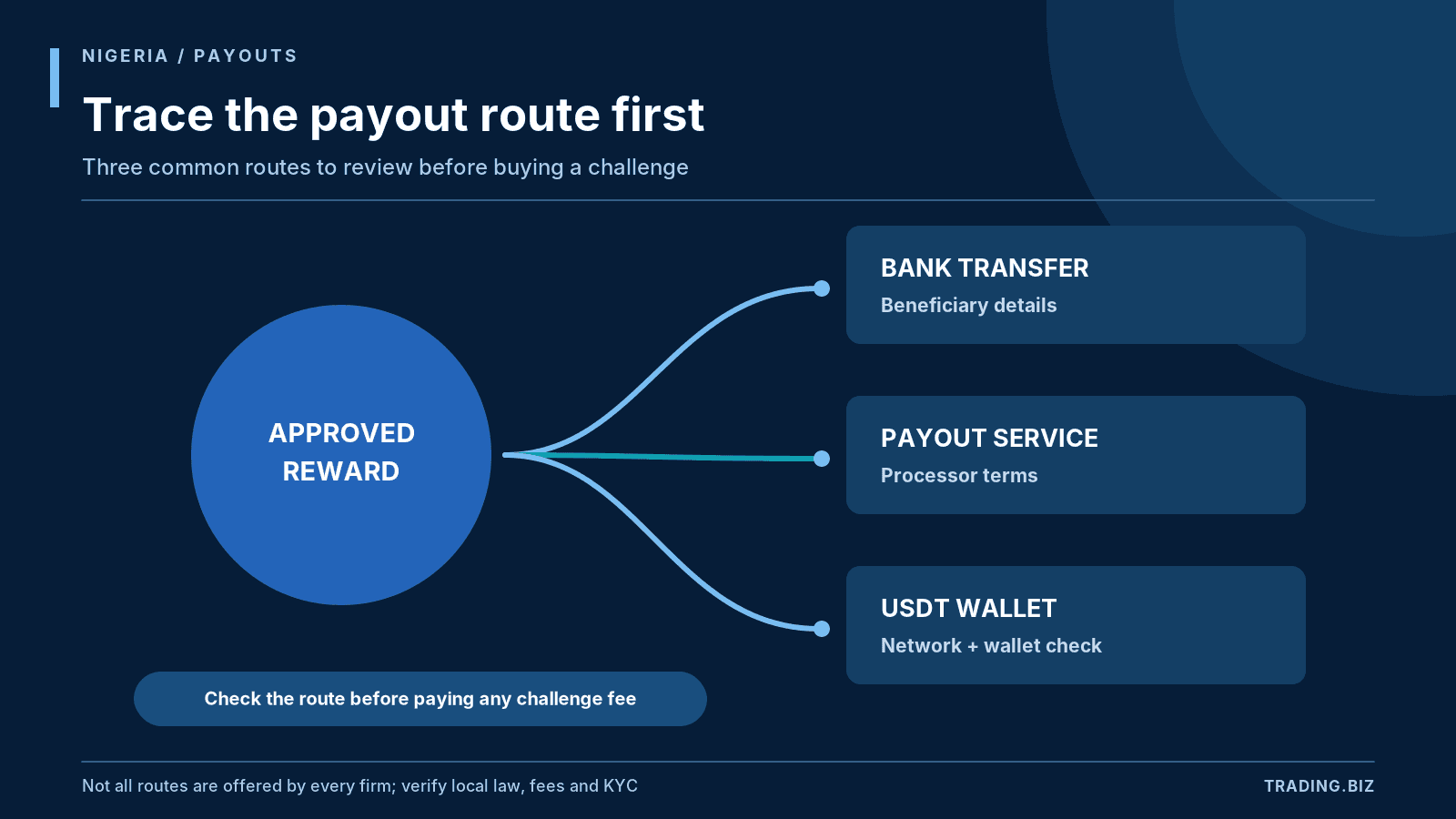
Figure 1. Bank, processor and USDT payout routes to check in Nigeria.
Some customers receive funds through bank transfer, while others choose stablecoins. Each route has a cost. A bank payment can be delayed by intermediary checks and currency conversion. A USDT transfer may be fast but introduces wallet-security concerns and later conversion expenses. The payout provider's name should match the process described by the firm. A request for an unexpected personal payment to "unlock" a reward is a reason to stop and verify independently.
For example, a hypothetical $500 reward subject to a $15 transfer fee and a 1% conversion cost would leave about $480 before other charges. That is a simple planning example, not a Nigerian exchange-rate quote. Write down the same calculation using the actual processor and exchange rate you expect. It makes small differences between providers easier to compare.
Warning signs of fake funding offers in Nigeria
The biggest warning signs are vague rules, pressure to pay through unofficial channels, unrealistic profit promises and weak support. A legitimate prop firm will still carry risk, but it should at least explain its model without hand waving. If the sales page feels louder than the rule page, that is usually a bad sign.
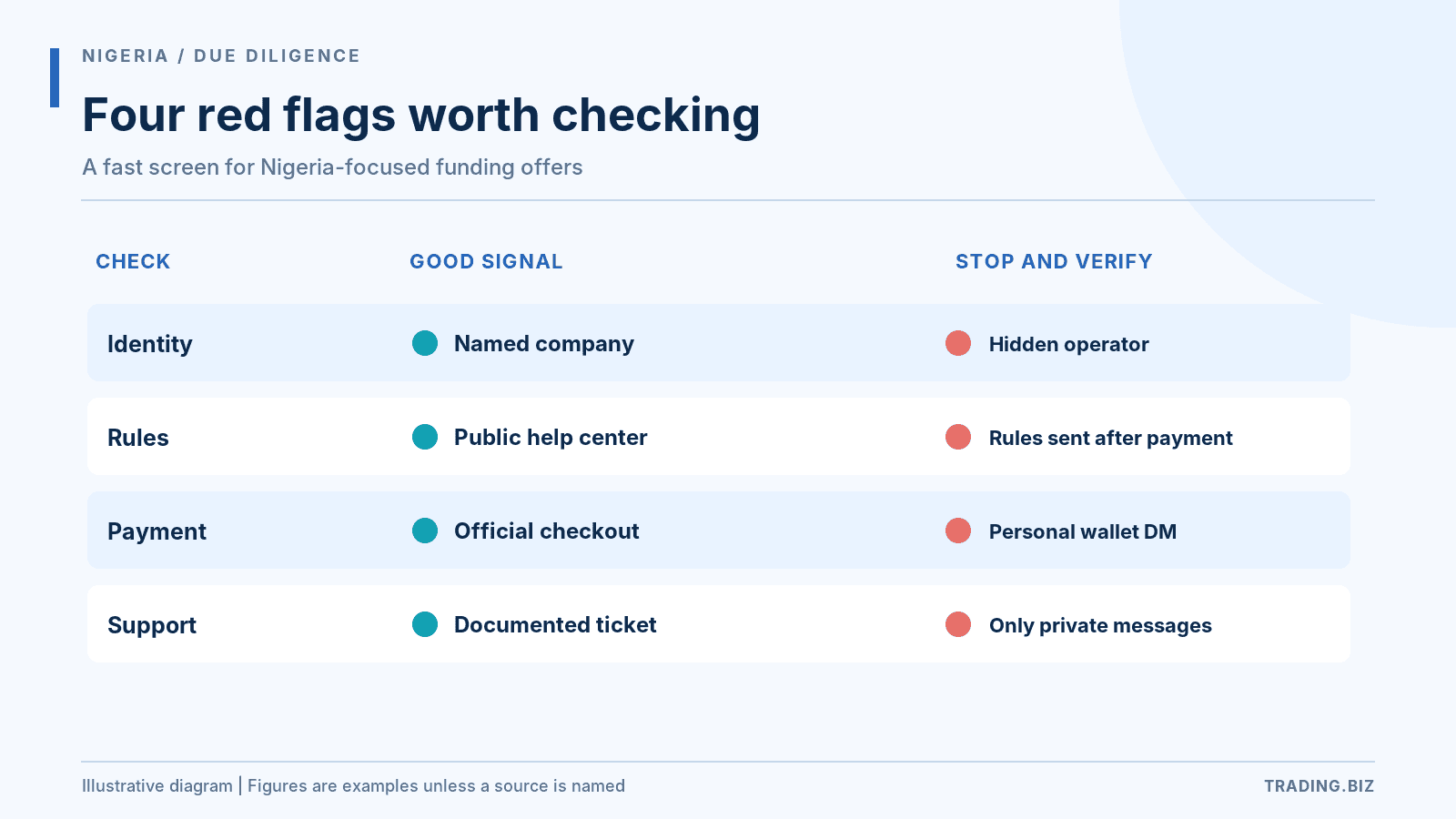
Figure 2. A four-part screen for suspicious prop firm offers.
A fake funding page often borrows the vocabulary of legitimate programs while avoiding specifics. It may show an oversized account balance but not explain the challenge conditions. It may display cropped payment screenshots with no transaction dates. Some scammers impersonate a known prop firm in a messaging app and direct customers to a personal wallet. Never trust a support address or account number taken solely from an unsolicited message.
Nigeria's securities regulator has a public investor-warning and market-operator framework. Regulatory protection for a particular retail prop challenge should not be assumed from a firm's foreign registration. Keep proof of the checkout and the terms, and use payment methods that can be traced. A real company can still disappoint customers, but a company that refuses to identify itself has already failed a basic due-diligence test.
What Nigerian traders should verify before buying a challenge
The first thing to verify is identity. Make sure the prop firm clearly states who runs it, how support works and where the rules live. The second is the payment path. If the firm tries to move you into a private chat for payment, stop there. The third is payout proof, not in the form of hype videos, but in the form of a documented payout policy and consistent trader feedback.
Nigerian traders also benefit from checking whether the firm has a sensible KYC flow. A firm that is relaxed when taking your fee but suddenly becomes vague when you request documents is not a good sign.
How traders in Nigeria manage the payout side
Some traders want naira in a bank account. Others are comfortable taking USDT and deciding later how to convert or use it. There is no universal best method. The right method is the one you understand, can document and can access reliably without using unofficial shortcuts.
That is why payout planning should happen before the challenge purchase. The time to learn how a prop firm pays Nigerian traders is not after you pass.
How to compare a local-looking offer with a global prop firm
A local-looking offer may feel easier to trust because the branding sounds familiar. A global prop firm may feel safer because more traders have discussed it publicly. Neither factor is enough by itself. Compare the rules, the payout route, the support quality and the clarity of the terms side by side.
If the local offer wins on payout convenience but loses badly on transparency, the convenience is not worth much. If the global firm wins on track record but has poor region support, factor that in too.
FAQ
Are there legit prop firms in Nigeria?
There are firms that accept Nigerian traders, but legitimacy still needs to be checked case by case. Read the rules and payout terms closely.
What is Naira Trader prop firm?
It is a search term tied to Nigeria-focused funding offers. Traders should verify the company details, rules and payout terms before paying.
Can Nigerian traders get paid in USDT?
Many offshore prop firms offer stablecoin payout routes, including USDT, though options vary by firm.
Is Maven prop firm available in Nigeria?
Availability can change, so check the firm’s current onboarding terms and supported regions.
What is the biggest risk with prop firms in Nigeria?
The biggest risk is paying a fee to a weak or poorly documented program that makes payouts difficult later.
Find Your Perfect Broker: Explore Our List Now!
Choose the best with our expert-selected options
Find Your Perfect Broker: Explore Our List Now!
Choose the best with our expert-selected options
Discover top binary options brokers tailored to your region. Browse our curated lists by country: