Updated:November 18, 2026

9 min

Is forex trading legal in India? RBI, SEBI rules and risks
Is forex trading legal in India? Yes, but only within the framework set by the Reserve Bank of India (RBI) and the Foreign Exchange Management Act, 1999 (FEMA).

Emma Collins
Author

Updated November 18, 2026
Is forex trading legal in India? Yes, but only within the framework set by the Reserve Bank of India (RBI) and the Foreign Exchange Management Act, 1999 (FEMA). An Indian resident can undertake permitted foreign-exchange transactions through authorised persons and approved venues. An offshore website offering leveraged EUR/USD contracts is not automatically lawful simply because it accepts Indian registrations or deposits in rupees.
The distinction matters. Currency conversion for travel, hedging a genuine foreign-currency exposure, and trading eligible exchange-listed currency derivatives are different activities. Each has its own rules. This guide focuses on resident individuals, while businesses and non-residents may face additional requirements.
Is forex trading legal in India? The short answer
| Activity | General position for an Indian resident |
|---|---|
| Exchange currency through an RBI-authorised dealer for a permitted purpose | Permitted, subject to rules and documentation |
| Use approved exchange-traded currency derivatives | Permitted under the applicable product and exposure rules |
| Trade leveraged forex or CFDs on an unauthorised offshore app | Not a permitted route for residents |
| Send money abroad as forex margin under the Liberalised Remittance Scheme | Not permitted under LRS |
| Trade on an RBI-authorised electronic trading platform | Permitted only for authorised instruments and purposes |
The important detail is authorisation. A foreign regulator's licence may be real, but it does not replace Indian permission to solicit residents for a product. RBI publishes lists of authorised persons and electronic trading platforms, along with an Alert List of entities it has identified as unauthorised. The Alert List is not exhaustive, so the absence of a name is no proof of approval.
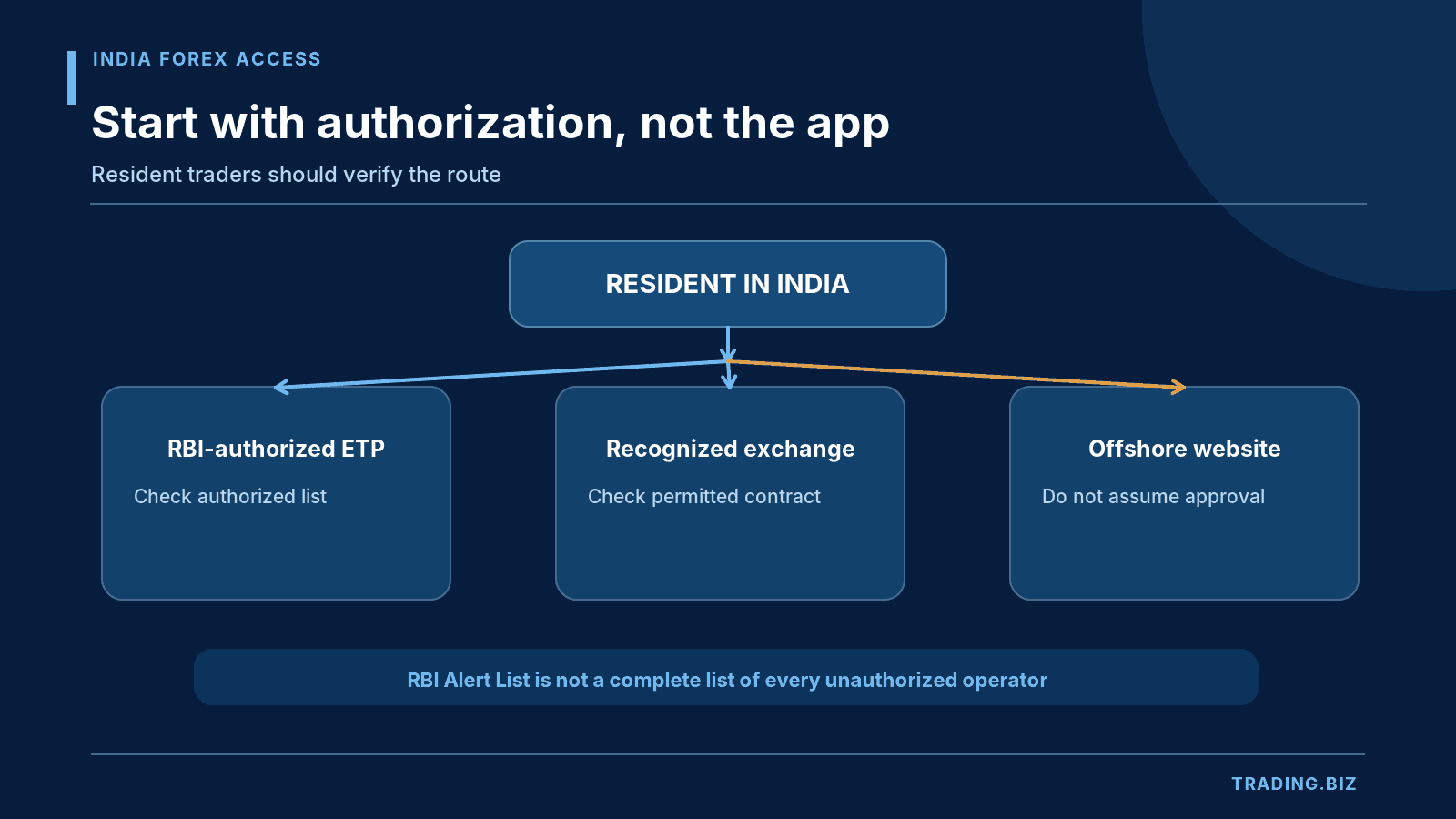
Figure 1. Authorization routes for Indian residents.
Forex trading in India: who sets the rules?
RBI administers the foreign-exchange framework under FEMA. It decides which forex transactions residents may undertake and through which entities. SEBI regulates securities-market intermediaries and recognised exchanges, including brokers that give access to eligible exchange-traded derivatives. NSE and BSE operate trading venues and publish contract specifications; they do not individually authorise an overseas forex app to serve Indian residents.
If a platform says it is an 'RBI-approved forex broker in India', ask for its legal name and the relevant authorisation record. Some firms may be SEBI-registered stockbrokers, which is useful for exchange activity, but you still need to check the product itself. An account offering legitimate Indian securities does not turn every international CFD advertised elsewhere on the website into a permitted instrument.
A practical verification route is to search the intermediary on SEBI's registration pages, inspect the exchange membership, and check RBI's list of authorised persons or electronic trading platforms where relevant. Be wary of payment requests into personal bank accounts, promises of unusually high fixed returns and account managers who demand remote-screen access.
Currency trading on NSE and BSE: permitted derivatives
India's recognised exchanges offer specified currency futures and options. RBI's exchange-traded derivatives directions identify INR pairs such as USD/INR, EUR/INR, GBP/INR and JPY/INR, along with certain cross-currency pairs including EUR/USD, GBP/USD and USD/JPY. Product listings can change, so the actual exchange contract page should be checked before trading.
The rules for INR-linked derivatives are especially important. They are intended for hedging permitted foreign-exchange exposure. Traders may encounter documentation thresholds, and the ability to enter a position without presenting an underlying exposure immediately does not mean that speculative INR derivative positions are automatically allowed. RBI's directions specify the conditions, and brokers apply their own compliance controls.
A person expecting to pay a foreign supplier in dollars has a reason to consider hedging USD/INR exposure. A trader with no foreign-exchange exposure who simply wants high leverage is in a different position. Never rely on a social-media video that skips the legal purpose of the contract.
An exchange currency contract also has a defined expiry, lot size, trading schedule and settlement mechanism. It cannot be treated as interchangeable with a perpetual offshore CFD. Check margin requirements, exchange holidays and the risk of losses exceeding the sum expected if a position is poorly managed. To understand currency price increments, try our forex pip calculator.
Offshore brokers and CFDs: where the legal risk begins
Many international websites advertise the same markets that Indian traders see on charts: gold, EUR/USD, Bitcoin and stock indices. A price feed is easy to display. Legal permission to offer a margined trading service to residents is another matter.
RBI's guidance says resident persons should undertake permitted forex transactions only through authorised persons and authorised electronic trading platforms or recognised exchanges, as allowed. RBI also states that the Liberalised Remittance Scheme cannot be used to send margin to overseas exchanges or overseas counterparties for forex trading. Using a third-party wallet or local payment collector does not resolve that underlying problem.
CFDs are contracts whose value follows a price difference. They may be lawful and regulated in other jurisdictions, but their availability on an offshore app tells you nothing about Indian eligibility. Forex trading is legal in India under rules that need to be checked for each product and platform. Marketing a broker as 'internationally regulated' is not enough.
Some people confuse moving money abroad for permitted overseas investments with remitting money to speculate on leveraged forex. RBI distinguishes the two. Consult the current LRS directions if you are considering any cross-border investment or transfer.
Penalties and enforcement risks under FEMA
Violating FEMA can carry significant financial consequences. Under Section 13, a contravention may lead, following adjudication, to a penalty of up to three times the quantifiable amount involved. The law also provides penalties where the amount is not quantifiable and for continuing violations. The maximum is not an automatic penalty imposed on every person who clicked the wrong link. The facts and proceedings matter.
Regulatory risk is only part of the problem. Users of unauthorised platforms may struggle to recover funds, verify an account manager's identity or enforce a complaint. A platform may show impressive profits while refusing withdrawals until the user pays another fee. The RBI's warnings describe exactly this type of risk.
Keep payment receipts and account statements if you suspect misconduct. RBI points to the National Cyber Crime Reporting Portal for complaints about unauthorised forex platforms; appropriate police or enforcement channels may also apply. Contact your bank promptly if you believe a transfer was fraudulent.
How Indian traders approach currency markets in practice
A sensible starting point is to decide whether you need currency conversion, hedging or an exchange-traded investment product. For conversion, use a bank or authorised dealer. For a genuine exchange-rate exposure, ask the bank or registered intermediary which products you can use and what paperwork is required. For listed derivatives, read the NSE or BSE contract specification and the broker's risk disclosure.
Suppose you expect to receive an invoice in US dollars in three months. If exchange-rate movements could materially affect your business, a permitted hedge may help manage that exposure. The proper contract, size and settlement dates depend on the invoice and applicable RBI directions. It is not the same as opening a leveraged EUR/USD position because a social account predicted a rally.
Before registering with any 'forex trading platform', write down the following: the legal entity, regulator, product name, currency pair, where customer funds are held, fees, settlement process and withdrawal policy. If you cannot answer those questions from reliable documents, do not deposit.
Taxes and reporting on currency derivatives
The tax treatment of permitted exchange-traded currency derivatives depends on the trader's circumstances and classification of activity. Brokerage, exchange charges, GST on eligible fees and transaction reports all affect the net result. You should not assume a general tax rate from a blog post written about foreign exchange in another country.
Maintain contract notes and bank records. A tax adviser can assess the current treatment of business income, losses and filing obligations. Legal permission to enter a trade and the taxability of the resulting profit are separate questions.
A quick legality check for a forex platform in India
Before you accept an account offer, take five minutes to compare the company name in its terms with the entity that appears in official registration records. Look for a regulator reference you can search independently. Check whether the advertised product is a currency exchange service, a listed future or option, or an offshore contract for difference. The same three-letter currency pair can appear in all three forms, but the legal treatment is not identical.
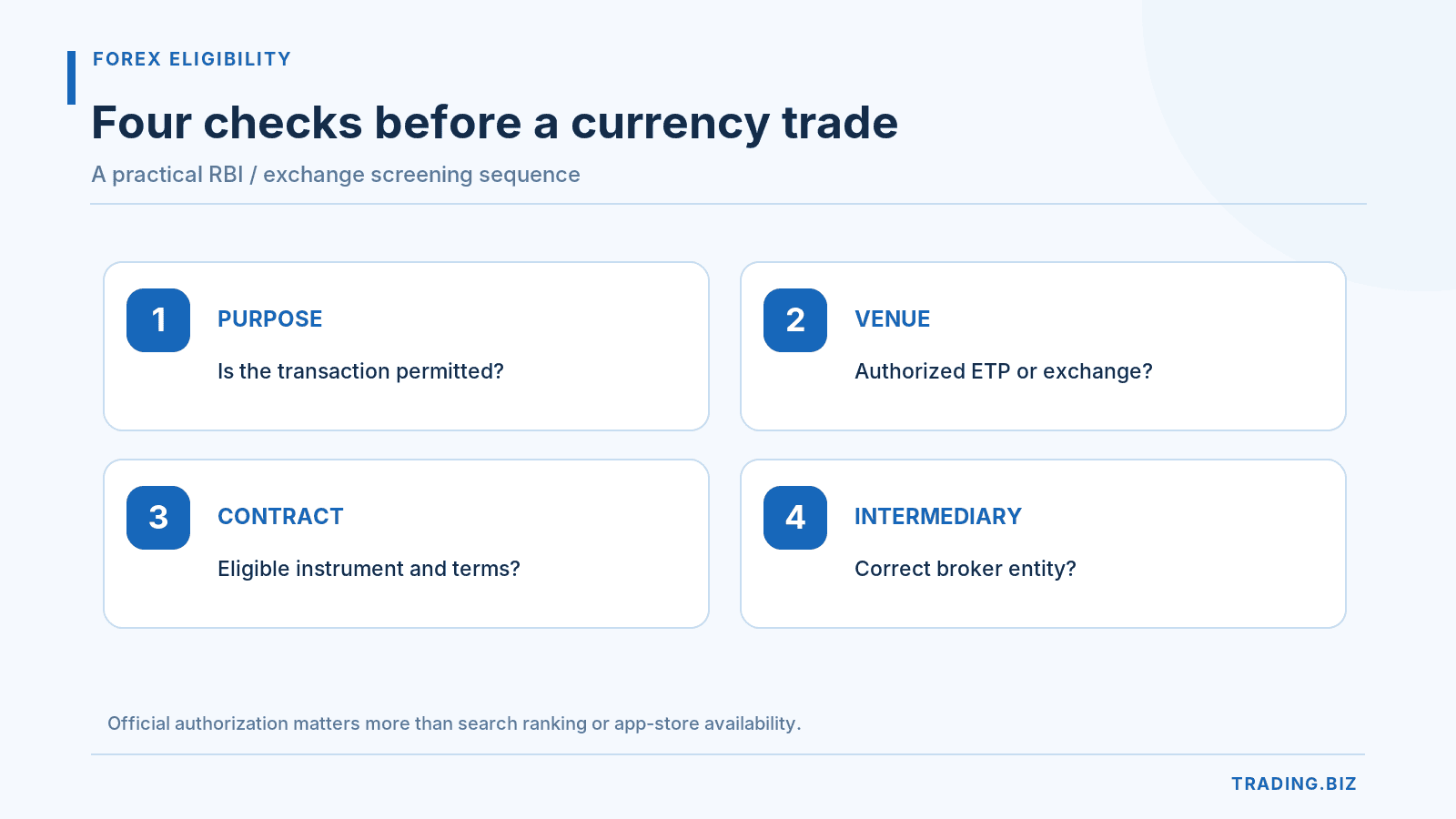
Figure 2. Four checks before an electronic forex transaction in India.
Read the payment instructions closely. A licensed financial institution ordinarily gives clear bank and customer-account details. A demand to fund a trading account through someone's personal UPI handle, or to describe a margin transfer as payment for unrelated goods, should end the discussion. A platform may have attractive execution software and still be an unauthorised place for an Indian resident to transact.
The underlying question is whether you have permission to enter that particular transaction. If a broker cannot identify the Indian rules it relies on, ask your bank or an appropriately qualified professional before taking the next step.
The RBI also warns that its Alert List is not exhaustive. Absence from that list should never be presented as proof that a platform is authorized to offer forex services to Indian residents.
FAQ
Is forex legal in India for beginners?
Permitted forex transactions are available to eligible residents through authorised channels. Beginners should start with the RBI rules and an understanding of the contract. An unauthorised offshore app does not become acceptable simply because it offers a small minimum deposit or a practice account.
Can I trade EUR/USD in India?
The answer depends on the product and venue. RBI's directions provide for certain exchange-traded cross-currency derivatives, subject to relevant rules. An offshore leveraged EUR/USD CFD on an unauthorised platform is a different product. Check the exchange listing and permitted purpose.
Can I use an overseas forex broker from India?
Do not assume so. RBI warns that residents using unauthorised forex platforms or undertaking impermissible transactions may face action under FEMA. A licence from a foreign authority is not evidence of RBI authorisation for Indian residents.
Can I send forex margin abroad under LRS?
No. RBI's published forex FAQ explicitly states that remittances for margins or margin calls to overseas exchanges and counterparties are not permitted under the Liberalised Remittance Scheme. Check with an authorised bank before making any cross-border payment.
Which trading is legal in India?
Stocks, exchange-traded derivatives and permitted forex products can be accessed through the appropriate registered intermediary and venue, within product-specific rules. Verify the legal entity and instrument, not merely the trading app's brand name.
Source references
Find Your Perfect Broker: Explore Our List Now!
Choose the best with our expert-selected options

Find Your Perfect Broker: Explore Our List Now!
Choose the best with our expert-selected options
Discover top binary options brokers tailored to your region. Browse our curated lists by country: