Updated:October 09, 2026

10 min
10 min

In this article, we’ll look at how these assets have performed during times of economic hardship, geopolitical instability, and inflation, as well as how their values and purchasing power have changed over time.

Author
A safe-haven asset is one that investors move their money into during times of panic (or before), difficult times for the economy, or to protect against inflation. Gold and the U.S. dollar have both been safe-haven assets at times, to varying degrees, and with varying amounts of success.
Safe-haven assets or safe-haven currencies will often have low correlation with speculative assets like stocks. To be a safe-haven asset, it must also be in demand. Otherwise, with low liquidity, it will provide little protection when it’s needed.
Both gold and the U.S. dollar fall into this category.
Both the U.S dollar and gold share global recognition as safe-haven investments. Since the 1940s, the US dollar has been the world’s number one reserve currency. This means it is held in large amounts by countries around the globe. This came about because, at that time, the U.S. was one of the largest holders of gold. It had a large economy and a robust financial market system. For these reasons, the U.S. dollar became widely used around the world for transactions.
Initially, it was the American gold stores that made the currency appear more stable. Even though the US abandoned linking or backing its currency to gold internationally in 1971, it has remained the world’s reserve currency (most held by foreign countries).
Gold has a longer history, being a sign of wealth and even a form of currency for thousands of years. More recently, it has applications in electronics and even medicine. It is initially what backed several modern-day currencies. It maintains its status as a metal that people believe in and value.
Gold has been a superior long-term inflation hedge than the US dollar, and thus has maintained purchasing power better. While this may not always be true in the short term, over the last 50 years, gold has been the clear winner.
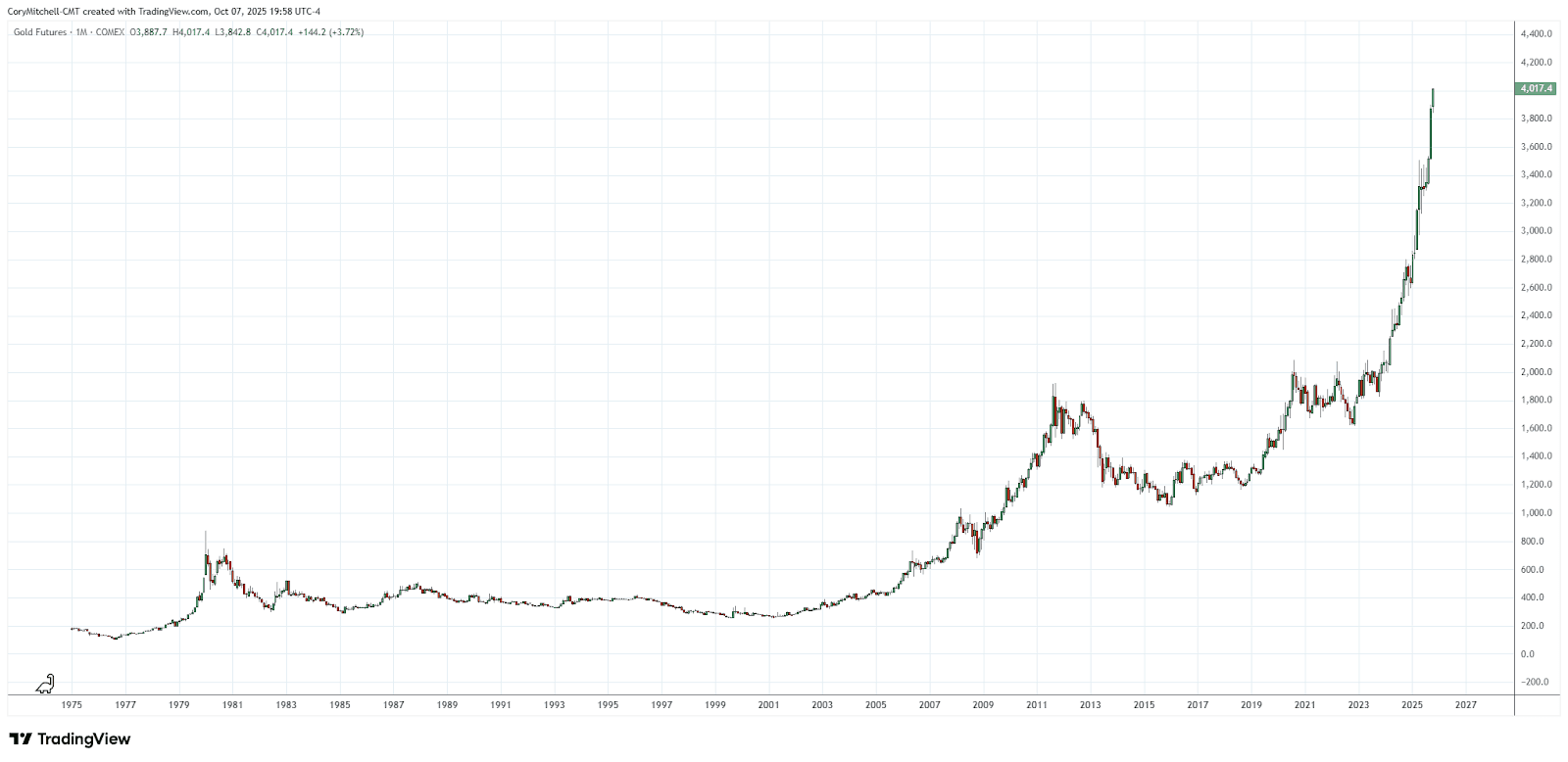
At the start of 1975, it took $184 to buy an ounce of gold. As of October 2025, it takes about $4,000 to buy an ounce. The gold price has increased in value relative to the U.S. dollar. It takes far more dollars to buy the same ounce of gold now compared to 50 years ago. In other words, the US dollar has fallen in value relative to gold.
For the long term, it is far better to own gold than US dollars. US dollars lose purchasing power, while gold does a better job of maintaining it.
In the short term, it isn’t always as clear-cut. Through the late 80s, inflation was moving up, gold was moving down, and the US dollar chopped sideways to slightly lower.
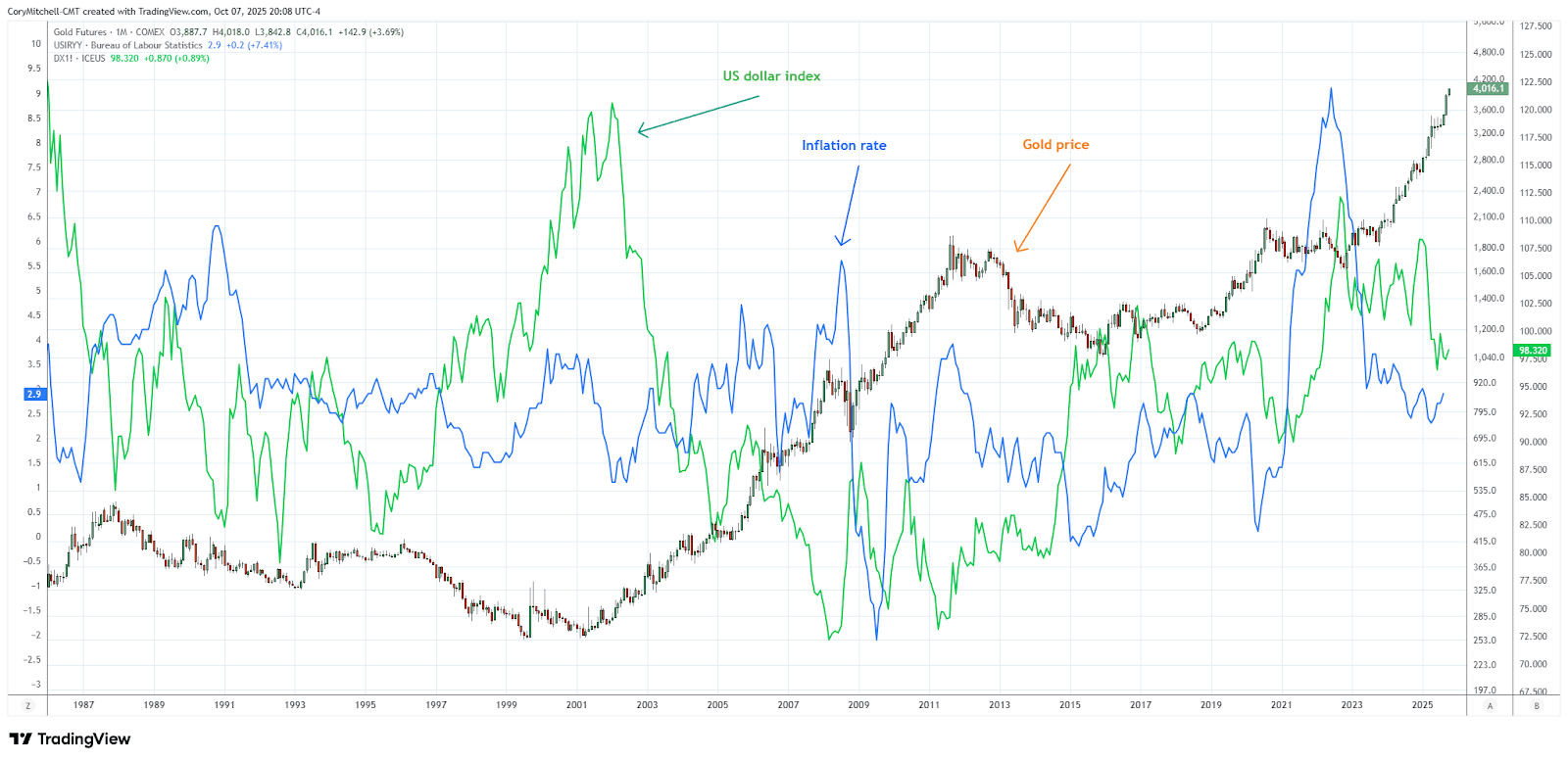
Inflation dropped through much of the 90s, the US dollar soared, and gold slumped. As inflation ramped up through the early 2000s, gold climbed, and the US dollar fell.
As inflation skyrocketed from 2020 to 2022, gold was flat, while the US dollar soared. Yet as inflation declined, gold began climbing once again, and the US dollar fell.
This shows that it is not a single factor, such as inflation, that affects these assets. They also have their own trends, and there is interplay between other assets.
Here is one more chart, with the USD, gold, and the S&P 500 ETF — all plotted according to total percentage return since 1995.
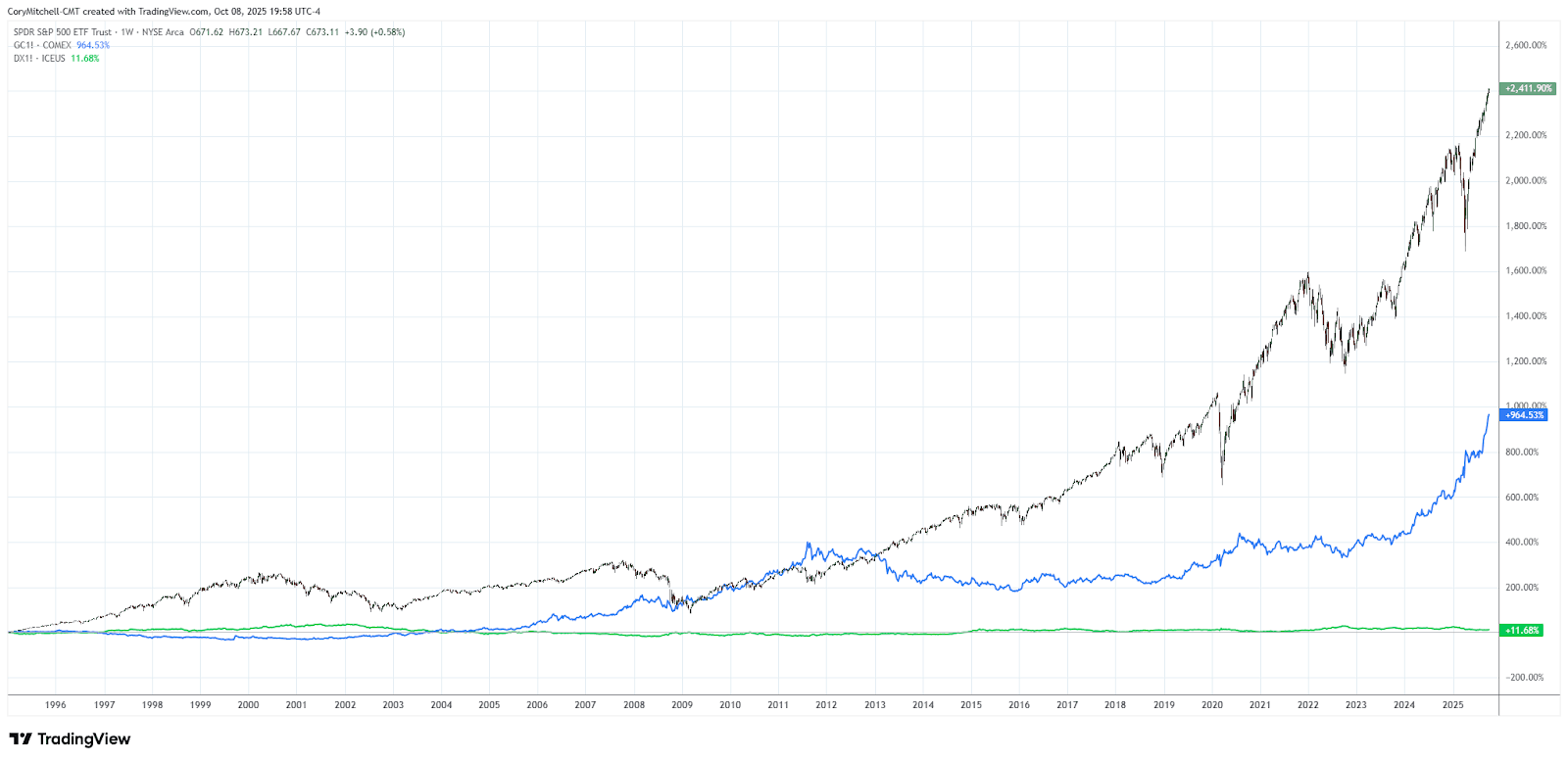
This highlights that the USD is not the place to park cash for the long-term, relative to gold (or stocks).
In times of crisis, cash is often considered king. Whether it is war, a financial crisis, or a stock market crash, most people want cash on hand, so they can continue to purchase goods and pay bills.
The USD is a currency that many people flock to because of its widespread acceptance. It is easy to transact with, widely available, and doesn’t fluctuate in value as wildly as the stock market or cryptocurrencies. While its purchasing power may change over time, from day to day, the USD is widely regarded as one of the most stable currencies to hold and use.
Gold is not easy to transact with. While it can be helpful as a store of value in times of uncertainty — because over the long run the price has appreciated — it is generally not accepted as payment for goods or services. Rather, it usually needs to be converted to currency to obtain transactional value. This makes gold relatively illiquid, or not readily convertible to cash when needed.
Inflation and economic issues are not the only factors affecting the US dollar and gold. There are many other factors at play, including the asset's own trend coming into the event. In this section, we delve deeper into factors that may affect these assets' performance and the differences between gold and the USD.
Gold is a physical asset, a commodity. It is used for jewelry production and in electronics. It is mined. It is not controlled or tracked by the banking or central banking systems. It is not part of the financial system, i.e., the financial system does not rely on it.
The USD, on the other hand, is called a fiat currency. A fiat currency is not backed by anything other than the word of the government that the money can be used for transactions. It is the backbone of the financial system, as it is used for all US domestic and many international transactions. It can be created by simply printing more dollars.
Gold’s supply is limited by mining. There is only so much, and it can’t be artificially created. Limited supply is a factor in creating value, assuming there is demand, which there always has been for gold.
On the flip side, the supply of US dollars is theoretically limitless. It can be created, and there has been a steadily increasing supply of dollars, with a more aggressive jump during the COVID-19 pandemic in 2020.
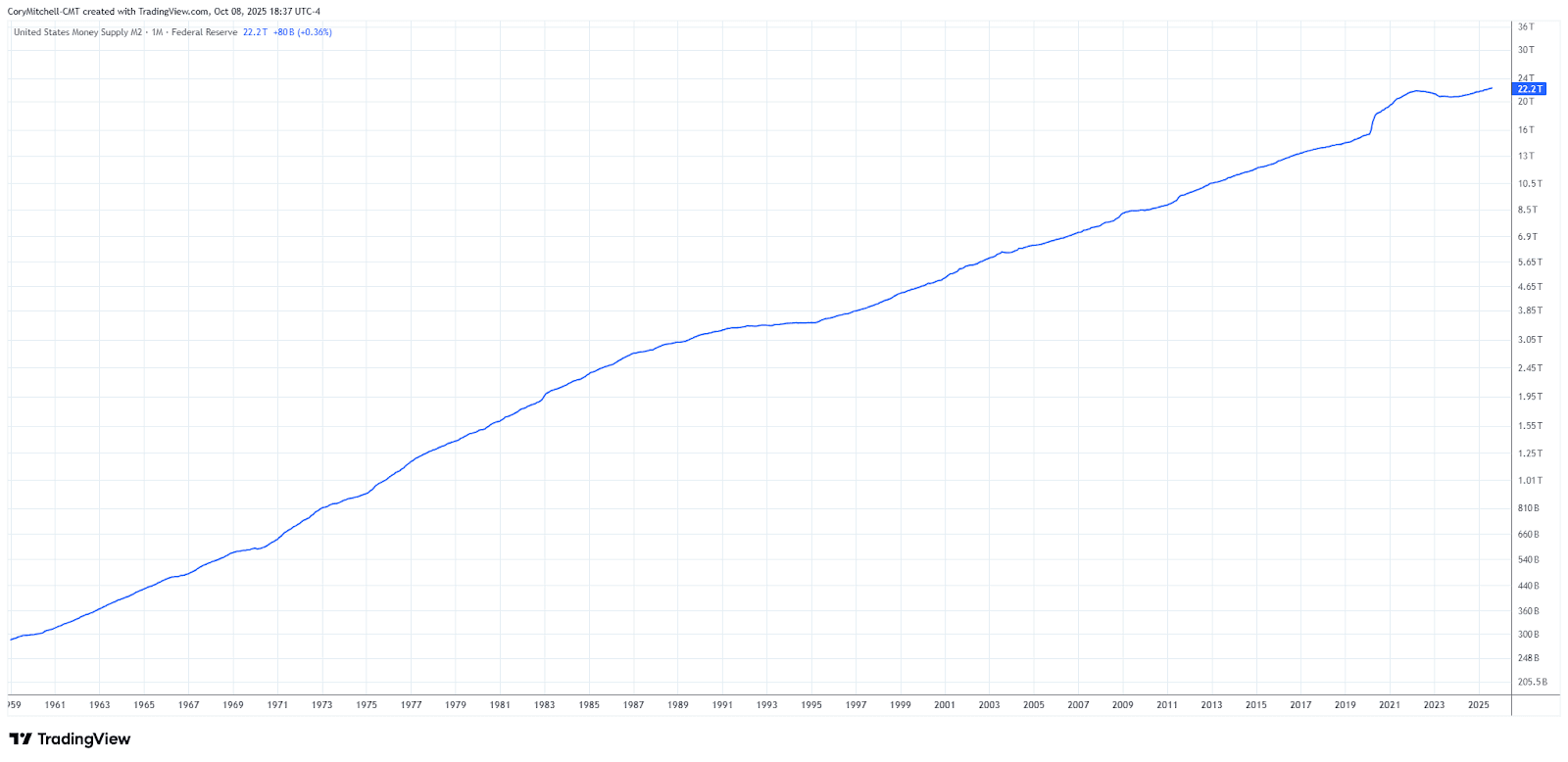
While this does cause the USD to lose value relative to gold over the long run, being able to manipulate the money supply is beneficial for an economy. More dollars can be produced and put into the economy to stimulate spending. The value of those dollars (the exchange rate with other currencies) can be coaxed higher or lower by adjusting government spending, raising or lowering interest rates, increasing or decreasing money supply, adjusting currency reserve requirements, or actively intervening in the foreign currency market to buy or sell large amounts of a currency.
Gold is more of a store of value, while the USD is primarily an economic tool.
During times of major panic, the US dollar often (not always) rises, at least in the short term, as people need cash. They are often selling another asset, which may be falling, to convert that asset into the cash they want/need.
When the financial crisis hit in 2008, the US dollar went up. Gold fell initially and then rallied later. When the stock market collapsed in 2000, the US dollar soared, gold declined, and then later rallied. The same sequence happened during the 2020 stock market decline.
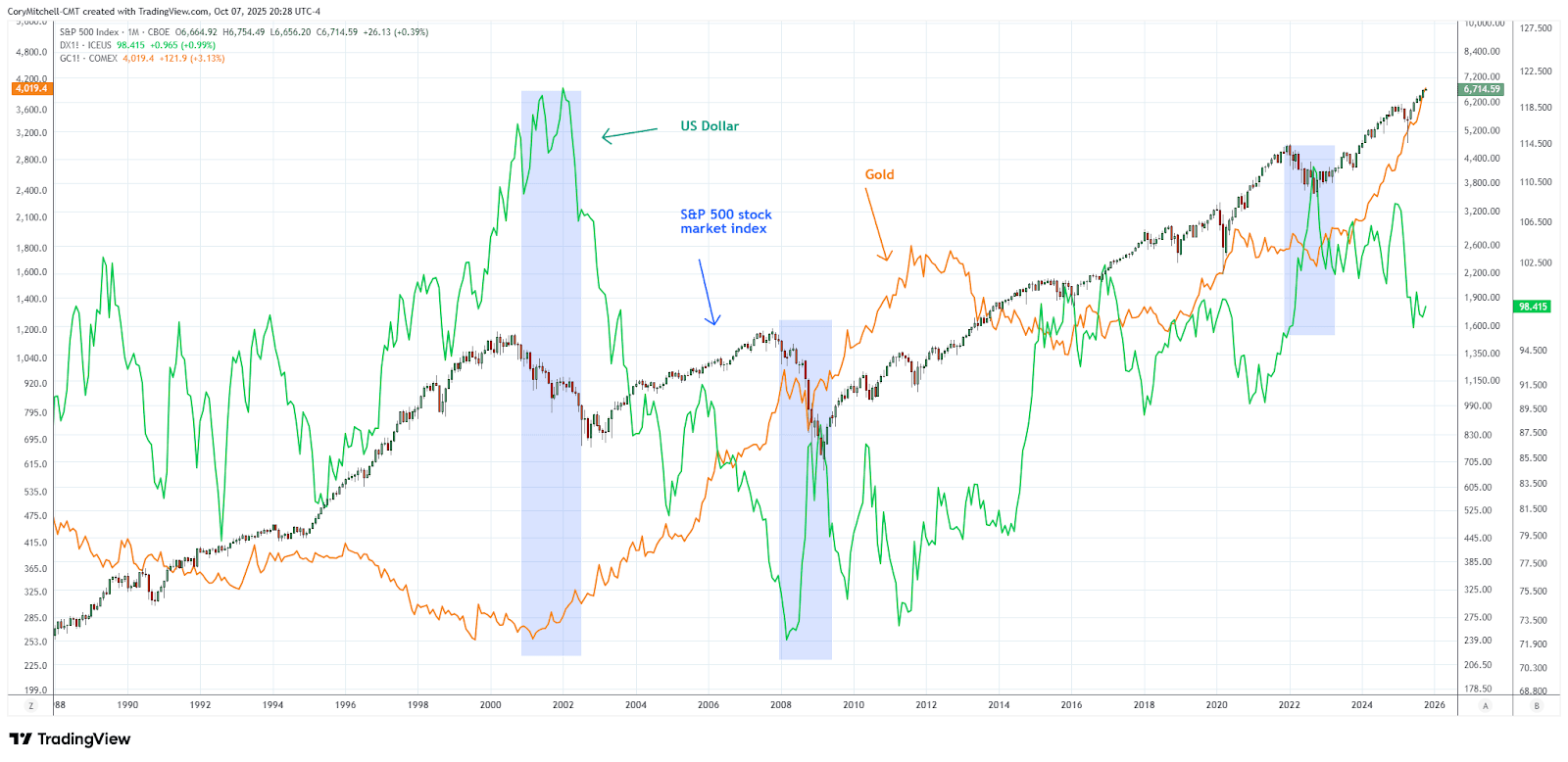
This indicates that people feel comfortable holding dollars during times of high volatility or panic because they believe they can readily use those dollars. But then those dollars get put to better use, such as buying gold, once the initial wave of panic wears off.
Geopolitical tensions are harder to quantify, since they tend to be localized. When Russia invaded Ukraine in early 2022, gold initially fell. The dollar rose. Gold didn’t rise till the end of that year.
During Trump's first term, trade wars escalated during the first year (2017). Gold rose and the dollar fell during that time. Gold was already rising when Trump became president again and started another round of trade wars in 2025. The USD moved lower.
There are many traders and hedge funds that trade trends. As prices rise, they buy. This helps fuel the trend further, until there are not enough people to keep buying at higher prices, and so the price stalls or reverses.
With this understanding, here are the tools that can be used to assess the trends in gold and the US dollar.
The Trading.biz forecast tools use historical modeling to show where gold or US dollar investments may go. Forecast tools typically highlight average movement as well as maximum and minimum movements based on historical data. Forecasts are usually short-term in nature, but can be used for long-term estimates with a wider bandwidth of possible outcomes.
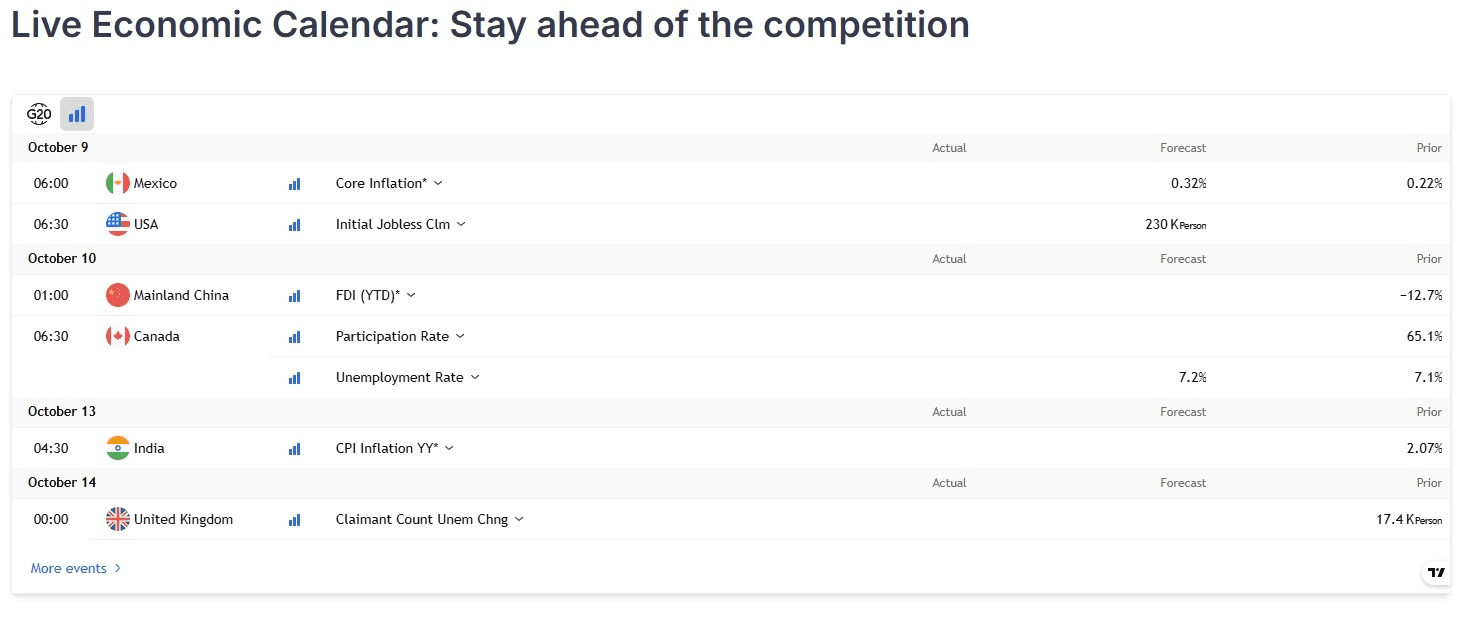
Gold and the USD react to economic news releases, especially related to inflation or interest rates. This includes consumer and producer price index numbers and employment data, as these data points are used by central banks to monitor inflation, economic health, and thus affect interest rates.
Use the Trading.biz economic calendar to stay on top of all the latest economic figures. While each data point may have an effect on gold and USD prices in the short term, it is the trends within the data over time that may provide insight into the long-term trajectory of these safe-haven assets.
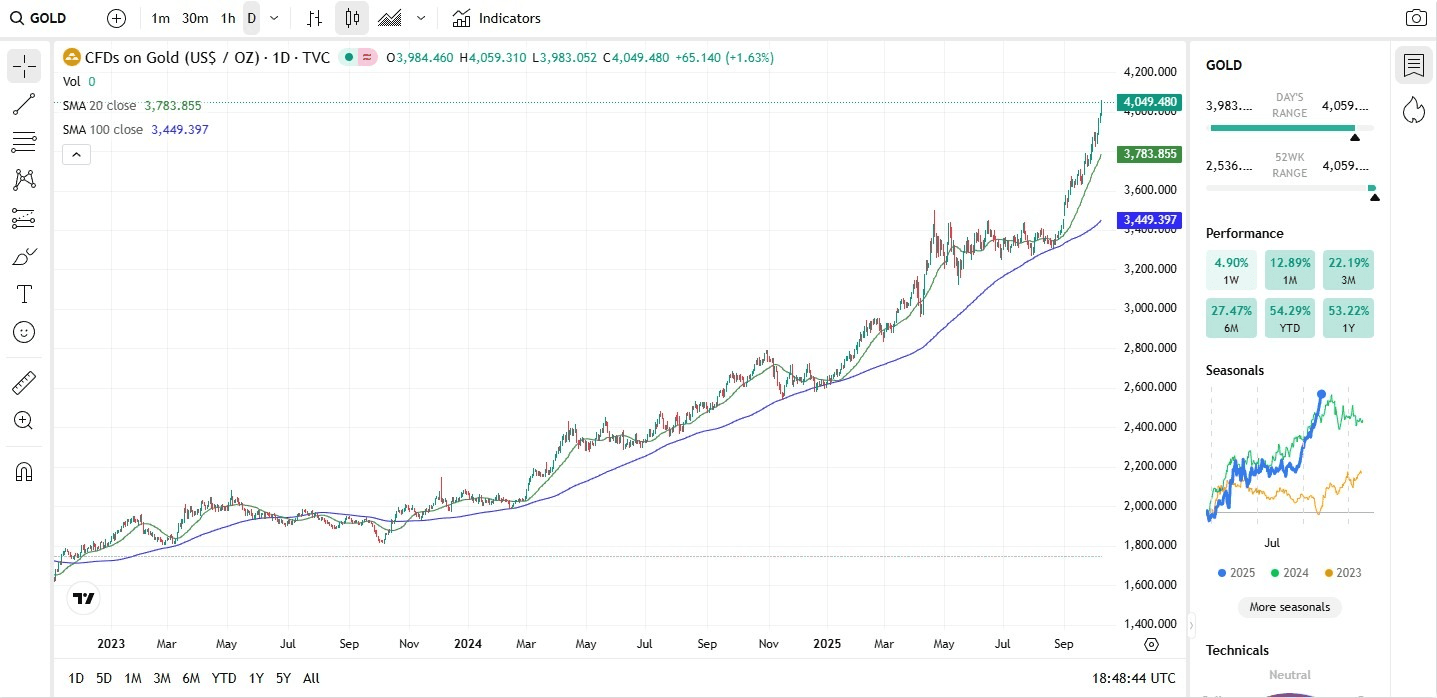
The Trading.biz live charts are where analysis is performed. Moving averages are commonly used to highlight short-term and long-term trends.
10- to 20-day moving averages show short-term trends, 50- to 100-day moving averages show medium-term trends, and the 200-day moving averages highlight the major longer-term trends.
Most retail traders are trend followers, opting to trade in the same direction as the moving averages.
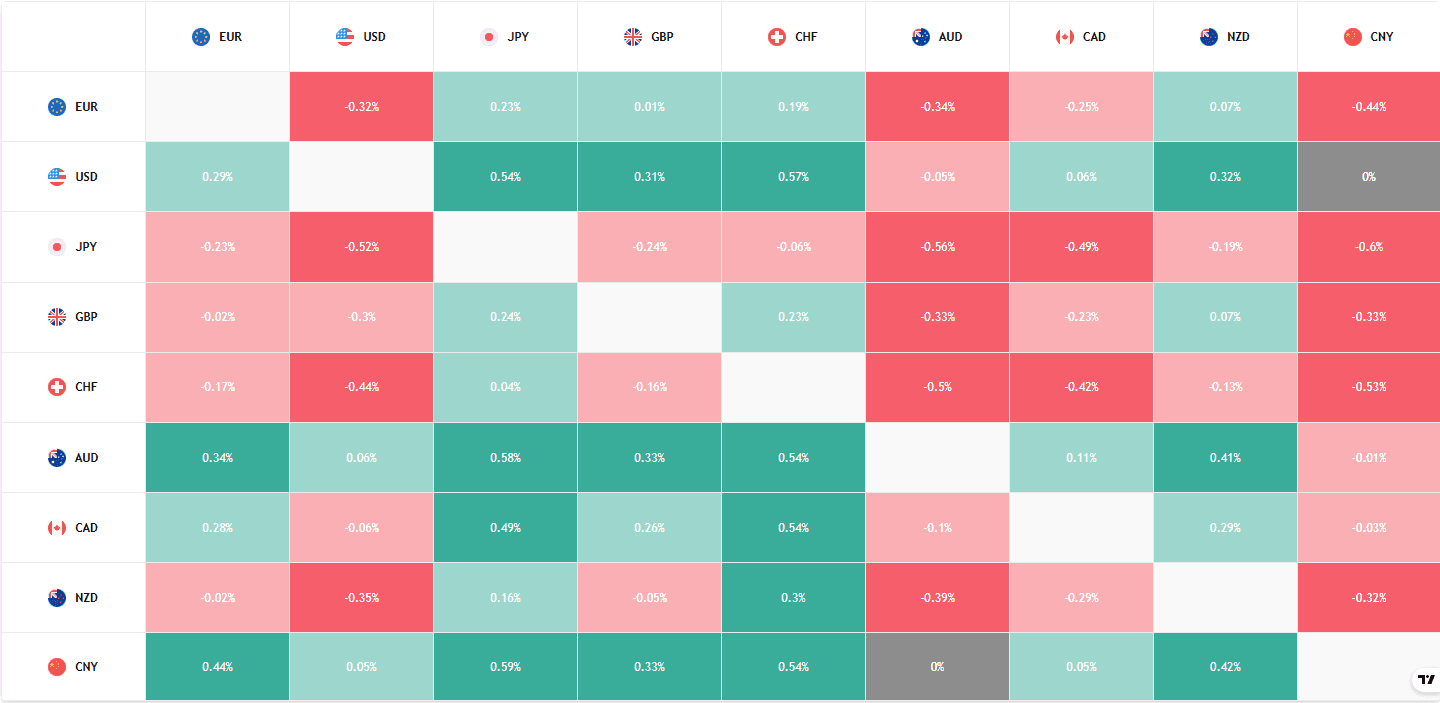
Heat maps are a short-term indicator showing whether an asset is performing strongly or poorly on a given day.
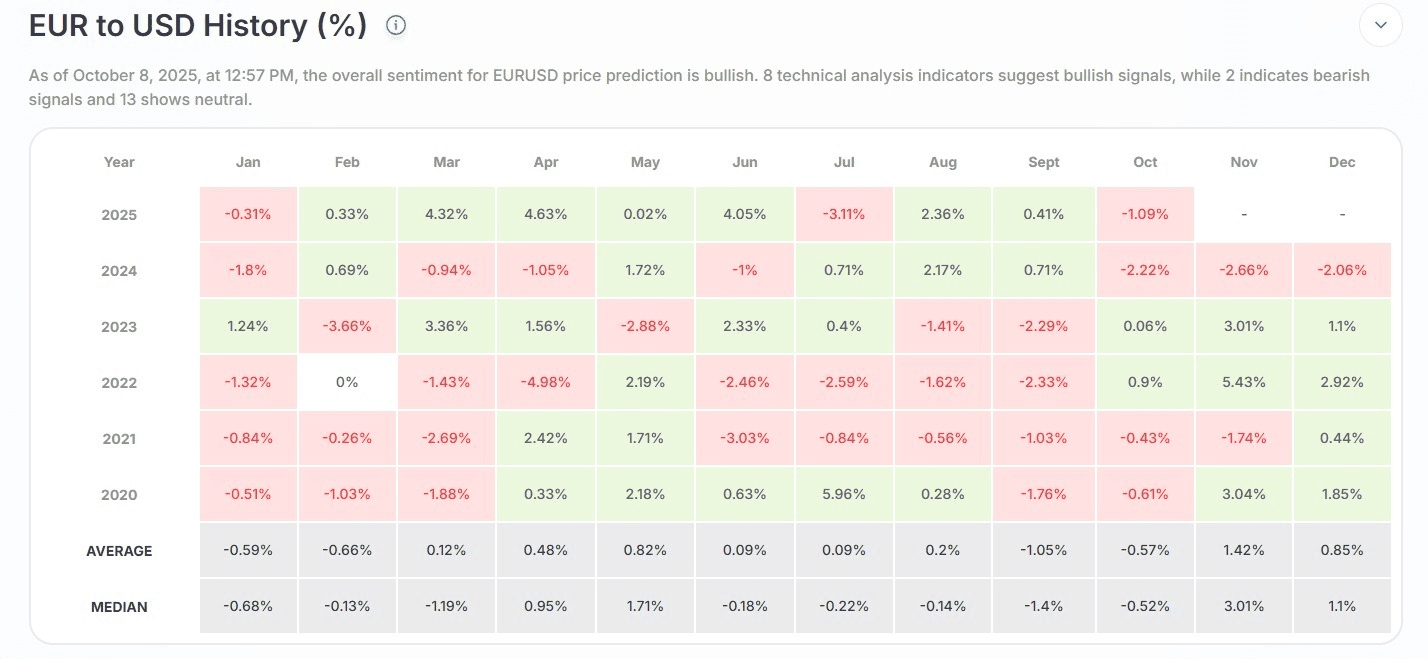
Similarly, in the forecast tools section, see how an asset has performed each month of the year, over the last five years. Like a heat map, it can highlight times of the year that tend to rise or fall.
Gold and the US dollar are both considered safe-haven assets. Investing in gold has produced a return that beats inflation over the last 50 years, although the price moves in cycles up and down, so patience is often required to be rewarded.
The US dollar is considered safe because, in times of panic, people want cash. And the US dollar is widely trusted and accepted.
Thus, gold is a better store of value and tends to increase sometimes after panics. The US dollar loses purchasing power over time, but tends to increase in value when there is a short-term surge in safe-haven demand for cash.
Study the relationship between gold and the USD, as well as other currencies and the stock market, by plotting them on a chart. This will provide insights into how they move relative to each other.
Use the tools available for analysis, and stay informed of economic shifts and technical shifts on the charts, to develop the confidence to know which safe-haven asset (or both) to choose, and when.
Find Your Perfect Broker: Explore Our List Now!
Choose the best with our expert-selected options

Find Your Perfect Broker: Explore Our List Now!
Choose the best with our expert-selected options
Discover top binary options brokers tailored to your region. Browse our curated lists by country:
16119