Updated:November 18, 2026

12 min

3
Crypto exchange in India 2026: CoinDCX, CoinSwitch and P2P
Choosing a crypto exchange in India starts with three practical questions. Can you fund the account in rupees, what will you pay after fees and spreads, and how will you record it for tax?

Semelyuk Alexandra
Author

Updated November 18, 2026
Choosing a crypto exchange in India starts with three practical questions. Can you fund the account in rupees, what will you pay after fees and spreads, and how will you record it for tax? A platform may advertise hundreds of cryptocurrencies and advanced charts yet make a small INR withdrawal surprisingly awkward. Another may offer a simple purchase button with a wide spread hidden inside the quote.
CoinDCX and CoinSwitch are two India-focused options worth comparing. Binance also provides services for eligible Indian users and has reported FIU-IND registration, but the P2P experience carries different risks from an exchange order book. Check each service's current availability and the legal entity behind your account before sending money.
Crypto tax in India: the 30% rate and 1% TDS
The tax rules deserve attention before the first trade. India's Income Tax Department explains that income from the transfer of virtual digital assets is generally subject to a special 30% tax rate plus applicable surcharge and cess. The cost of acquisition can generally be deducted in calculating the relevant transfer income, while ordinary expenses and the set-off or carry-forward of losses face specific restrictions.
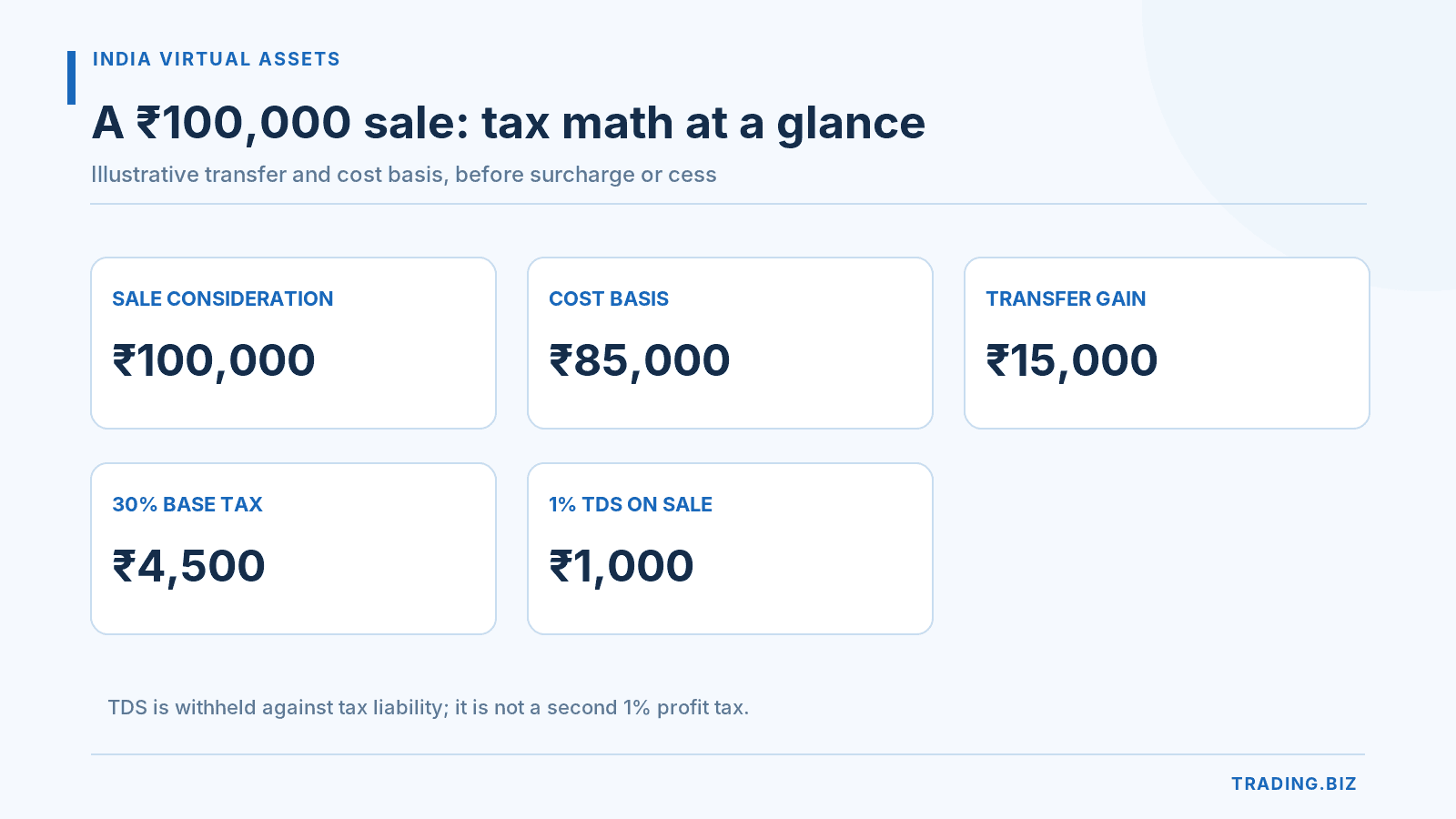
Figure 1. Illustrative VDA sale showing the 30% base rate and 1% TDS.
Section 194S generally provides for 1% tax deducted at source on qualifying payments to residents for transfers of virtual digital assets, with thresholds that depend on the payer's circumstances. TDS is withholding based on the payment or consideration, rather than a simple extra 1% tax on profits. It may apply even when the final trade does not produce a taxable gain.
Consider an illustrative buy at Rs 100,000 and a later sale at Rs 120,000, ignoring other complications. The economic gain before other charges is Rs 20,000. A 30% special rate on Rs 20,000 is Rs 6,000 before surcharge and cess if the gain is taxable on that basis. A 1% TDS deduction on Rs 120,000 would be Rs 1,200, which is accounted for through the tax system. This is a simplified illustration, not a calculation for an individual return.
Keep every trade confirmation, deposit, withdrawal and token-to-token swap. A conversion from one cryptoasset to another may have tax consequences even when no rupees move to your bank. The Income Tax Department's Schedule VDA guidance explains transaction-by-transaction reporting. Consult a qualified tax professional before filing if your activity includes staking, gifts, foreign exchanges or derivatives.
Consider an illustrative Bitcoin sale for ₹100,000 after an acquisition cost of ₹85,000. The gross transfer gain is ₹15,000 before examining how the law treats permitted costs. At the general 30% Section 115BBH rate, ₹4,500 of base tax would arise on that gain, before applicable surcharge and cess. Section 194S addresses a different calculation: 1% TDS on qualifying sale consideration, or ₹1,000 on a ₹100,000 transfer in this simplified example. The ₹1,000 is tax deducted at source that can be credited under the applicable reporting rules; it should not be casually added to the 30% figure as though it were an unrelated second profit tax.
How we chose a crypto exchange for India
We examined INR funding, the price shown before execution, published fee schedules, the ability to transfer crypto and the options for getting help. Regulatory reporting status and security controls matter, but they are not interchangeable with deposit insurance. An FIU-IND registration is associated with anti-money-laundering reporting obligations. It does not mean the government guarantees token values or exchange balances.
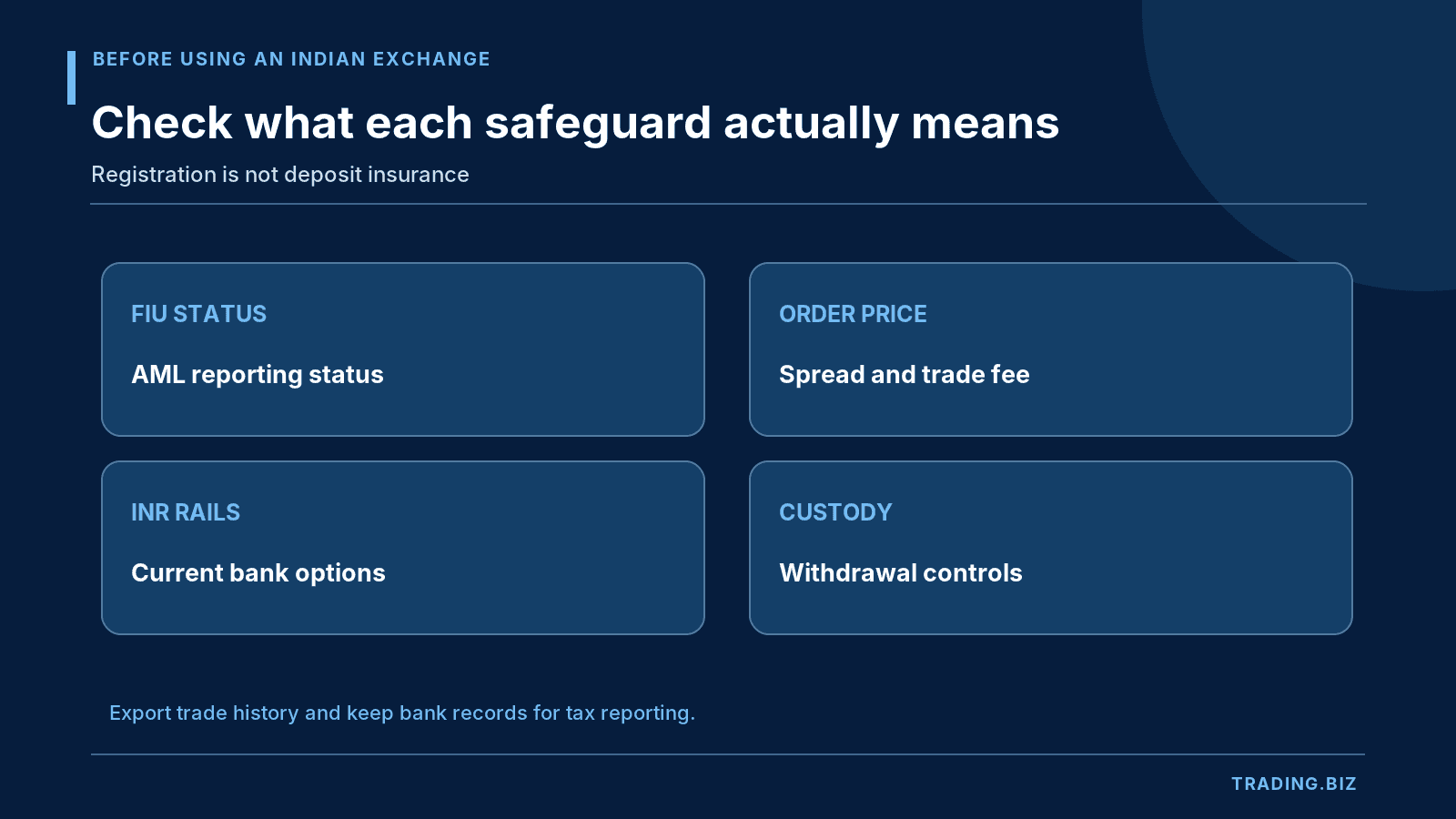
Figure 2. Exchange due diligence, from FIU status to INR withdrawals.
The app should offer an understandable transaction history. Look for an export that includes the date, token, quantity, price, fees and any withholding. Also check whether you can find the account-opening entity and complaints address without searching a dozen marketing pages.
A good exchange for someone buying Rs 2,000 of Bitcoin occasionally may differ from one handling frequent limit orders. High advertised liquidity does not guarantee tight prices on the exact INR pair or time of day you use. Check the trade preview with a realistic amount.
CoinDCX and CoinSwitch compared
| Feature | CoinDCX | CoinSwitch |
|---|---|---|
| Primary use case | INR-linked crypto trading plus more advanced products | Mobile-focused crypto access and trading products |
| Fee check | Published tiers vary by INR spot, crypto-to-crypto and derivatives | Costs vary by product and displayed trade quote |
| Funding | Check INR deposit method currently offered | Check available UPI and bank payment rails in-app |
| Records | Confirm trade and tax export for your account | Confirm tax statements and transaction detail |
| Main caution | Do not assume one rate applies to every market | Compare instant-buy quote with market reference |
CoinDCX: check which fee tier your order uses
CoinDCX publishes a VIP fee schedule covering INR spot markets, crypto-to-crypto spot trading and futures. Those categories can have very different prices. Someone who sees a tiny futures maker fee and assumes it also applies to buying crypto directly with INR is likely to miscalculate costs.
Its published schedule also specifies GST on trading fees. A trade may therefore involve the stated platform rate, GST, a market spread and a separate network fee if you transfer coins out. Promotional rates can be restricted to eligible users or links. Check the fee information while logged in, then save the confirmation for your records.
Suppose the cost of buying a coin is 0.5% of the trade value, excluding GST. On Rs 10,000, the base fee is Rs 50. If 18% GST applies to that fee, it adds Rs 9. The combined fee is Rs 59 before any price spread or later withdrawal charge. The point is to read the full order preview, not to assume this example is today's rate for every CoinDCX account.
CoinSwitch: compare app convenience with total cost
CoinSwitch is designed for an app-based experience and offers different crypto products. The straightforward buy flow may suit someone who wants to build a small position gradually. More active users should investigate the available spot or derivatives interface and its particular fee rules rather than assume all transactions share one schedule.
The most useful number on an instant purchase is the amount of crypto you receive after every deduction. Compare that figure with the reference price on a liquid spot market. Also check whether the app allows an external crypto withdrawal for the coin you plan to own. Product support can differ by coin and customer account.
A crypto trading app with one-button purchasing is pleasant, but it still needs strong account security, clear support and reliable statements. Test a small purchase and withdrawal before committing a large balance.
Binance P2P and other INR peer-to-peer routes
Binance announced FIU-IND registration in 2024 and offers products to eligible users in India. Its P2P marketplace works differently from placing an order on a conventional exchange. Users agree to buy or sell crypto with another person using an available local payment method, while the platform's escrow process is intended to help manage delivery.
The actual payment methods on offer may include bank transfers or UPI-linked options, depending on the current listing and the user's account. Do not rely on a promotional tutorial that names a payment channel from years ago. Check the marketplace itself, the counterparty's verified profile and the exchange's dispute rules.
A higher quoted P2P rate is an economic cost even if the marketplace advertises zero platform fees. For example, buying a stablecoin at a 3% premium over the underlying reference rate costs roughly Rs 300 on Rs 10,000 of value. That premium can exceed a normal order-book trading fee by a wide margin.
P2P precautions for Indian bank transfers
Use the platform's escrow and chat rather than private messaging. Do not release crypto until money has genuinely arrived in the intended account. Treat screenshots and SMS messages as insufficient proof. Avoid payments from unrelated third-party names; they can complicate disputes and compliance checks.
Bank-account restrictions can arise when payments are linked to suspected fraud or disputed transfers. Keep transaction IDs, order references and the verified counterparty record. If a payment is challenged, contact the bank and marketplace promptly. No escrow system can guarantee that a bank payment will never be contested afterward.
INR deposits and withdrawals: UPI, IMPS and bank transfer
Payment availability changes with bank relationships and the exchange's policies. A service may offer UPI for deposits while requiring a different route for withdrawals. Another may temporarily suspend one channel during maintenance or compliance reviews. Check limits and fees before initiating any transfer.
Use only bank accounts permitted under your verified profile. Mismatched names are a common cause of delay. If an app asks for repeated deposits to release a withdrawal, stop and verify through its official support channel. Keep a record of the advertised settlement window and the actual payment reference.
A deposit credited within minutes does not mean a withdrawal will settle equally fast. Compliance checks, bank holidays and network confirmation can add time. Compare the provider's current written terms rather than a general claim that crypto money is 'instant'.
Is there a legal crypto exchange in India?
India has anti-money-laundering and tax rules covering virtual digital asset services. FIU-IND registration of an exchange as a reporting entity is an important compliance consideration. It should not be presented as a universal investor-protection licence or a guarantee that every product on the platform is approved for every resident.
Before registering, examine the service's legal entity, jurisdiction, FIU information where applicable, supported products and complaint procedure. Rules can differ for spot trading, derivatives, custody and cross-border transfers. A user should never infer product eligibility solely from an app being available in an app store.
The security checklist is familiar but worth completing: unique password, authenticator app or security key, withdrawal allowlist if supported, verified app publisher and a small test withdrawal. An exchange can follow reporting requirements and still be exposed to operational or market failure.
Which crypto exchange is best for beginners in India?
Someone making an occasional spot purchase should usually prioritise INR convenience, readable costs and the ability to obtain a tax statement. Advanced perpetual futures, high leverage and complicated automated strategies can wait. If you cannot explain where the price comes from or what happens during liquidation, the product is too complex for a first trade.
Use a small amount you can afford to lose, compare the app's quote with a reference market and check the fee receipt after execution. Then see whether you can withdraw the asset or cash as expected. That simple exercise reveals more about the user experience than a list of social-media rankings.
A practical record-keeping routine for Indian crypto users
After each transaction, download or save the trade confirmation with the time, token, quantity, price, fee and TDS information where applicable. If an exchange converts fees into another token or reports a transaction in USDT, keep the conversion details too. Reconstructing a year's cost basis from a handful of bank statements is difficult because the bank shows cash movements, not necessarily each asset transfer.
Check whether the platform provides transaction identifiers for transfers between your own wallets. Record the receiving wallet and network so you can explain the movement later. An exchange deposit is not automatically a sale, and the nature of a transaction matters for tax treatment. A wallet transfer, a swap, a gift and a reward may require different analysis. Do not guess based on the balance screen.
One useful routine is a monthly review. Match the exchange's report to your bank entries, investigate unexplained deductions and save an encrypted backup. If you use several exchanges, maintain a combined ledger. That is far easier than discovering at filing time that one platform no longer exports historical data in the format you expected.
Store both the exchange trade history and the rupee bank record. A user can otherwise forget that a deposit, a spot purchase, a token transfer and a later sale may involve different dates and values. If the platform allows CSV export, download it monthly rather than relying on an app view that may disappear after a product update. Record the fee asset too. An exchange sometimes deducts commission in the token being purchased, so the quantity received can differ from the order's nominal quantity.
FAQ
Is crypto exchange trading legal in India?
Virtual digital assets are subject to Indian tax and anti-money-laundering rules, but that does not mean all crypto services or products have identical permissions. Check the exchange entity, FIU reporting status and current eligibility terms for the specific service.
Which is better for INR, CoinDCX or CoinSwitch?
Compare the exact quote, fee schedule, payment method and withdrawal options for your intended trade. Both offer India-focused services, but products and charges differ. No single answer applies to every coin or order size.
How much tax do Indian crypto investors pay?
The Income Tax Department describes a 30% special rate on qualifying virtual digital asset transfer income, plus applicable surcharge and cess, and 1% TDS under Section 194S subject to relevant conditions and thresholds. Specific transactions can require professional advice.
Can I use Binance P2P with INR?
Availability depends on your current account and live listings. Follow the platform's rules and stay within escrow. Check the payment name carefully and remember that a P2P premium can materially change the effective buying price.
Is an FIU-registered crypto exchange safe?
Registration is relevant to compliance and reporting. It does not insure coin prices or guarantee withdrawals. Use strong authentication, understand custody arrangements and keep only the funds needed for near-term trading on an exchange.
Source references
Find Your Perfect Broker: Explore Our List Now!
Choose the best with our expert-selected options
Find Your Perfect Broker: Explore Our List Now!
Choose the best with our expert-selected options
Discover top binary options brokers tailored to your region. Browse our curated lists by country: