Updated:November 18, 2026

11 min

0
Funded accounts explained: what is a prop firm and how it works
A prop firm gives traders access to a funded account under a rule set. You do not deposit capital to trade your own live balance the way you would with a broker. Instead, you pay for an evaluation or challenge, prove consistency, and then earn a share of profits if you pass.

Elizabeth Kazandzhi
Author

Updated November 18, 2026
So, what is a prop firm? It offers traders access to a funded account under a defined set of rules. You do not deposit capital to trade your own live balance the way you would with a broker. Instead, you pay for an evaluation or challenge, prove consistency, and then earn a share of profits if you pass.
What is prop trading and how a prop firm is organized
A proprietary trading firm, usually shortened to prop firm, is a company that lets traders operate under the firm’s capital or a simulated evaluation model tied to a payout agreement. Online retail prop firms do not all work the same way, but the user experience is similar. A trader buys access to a challenge, follows rules, and tries to earn the right to a funded account or funded profile.
That is why people use the phrase funded account. The trader is not opening a regular brokerage account with personal cash and full control. The trader is signing up for a program. The firm sets the rules, monitors risk and keeps a slice of any profits that are paid out.
The word proprietary once referred mainly to trading desks that deployed a firm's own money. Retail-funded programs borrow that vocabulary, but the contract may work very differently. The applicant often operates a simulated account during evaluation. Some firms continue to use simulated trading after the evaluation and pay cash rewards according to their terms. Traders should read whether the firm sends orders to external markets, whether it hedges its exposure independently, and which entity owes the reward. A simulated profit is an entry in a program's records until the company pays it.
This distinction is important for risk and consumer protection. A funded profile is usually not a deposit account. The account's quoted buying power is not cash the trader can withdraw. The firm may terminate the program for a rule breach even if the strategy would have recovered later. In exchange, a disciplined trader can attempt to earn rewards without committing the full nominal account balance. That trade-off deserves a realistic comparison with trading a small personal account.
Where the money comes from in a prop firm
New traders often ask where the money comes from. In practice, prop firms make money through evaluation fees, resets, subscriptions in some models, and their share of trader performance. Some firms also use simulated environments heavily and pay traders based on internal program terms rather than a straightforward pass-through of live market profits.
That does not make the model fake by default, but it does mean the trader needs to understand the contract. A prop firm is not a charity handing out free buying power. The business only works if the fee structure, the trader attrition rate and the payout math all make sense together.
Consider a firm that collects a $100 evaluation fee from each applicant. Ten applicants generate $1,000 in gross receipts before processing expenses or support costs. A portion may pass the evaluation, while others buy resets or leave. The company can also retain a share of eligible rewards. This arithmetic explains why evaluation fees matter to the business model, but it cannot tell us whether any individual firm is financially healthy. Firms rarely publish enough information to verify customer profitability or operating reserves independently.
There is another source of misunderstanding. An account may be described as funded at $50,000 even though its maximum permitted loss is $2,500. The balance label is a trading reference point, not a promise that the company has allocated $50,000 of cash to the trader. Anyone comparing prop firms should therefore ask about the legal nature of the relationship and the payout obligations, not merely the headline account size.
How a funded account challenge works step by step
Most prop firm challenges start with a fee and a target. The trader chooses an account size, for example 25K, 50K or 100K, and receives rules. Those rules usually include a profit target, a daily drawdown, an overall drawdown, a minimum number of trading days and a list of restricted behaviors.
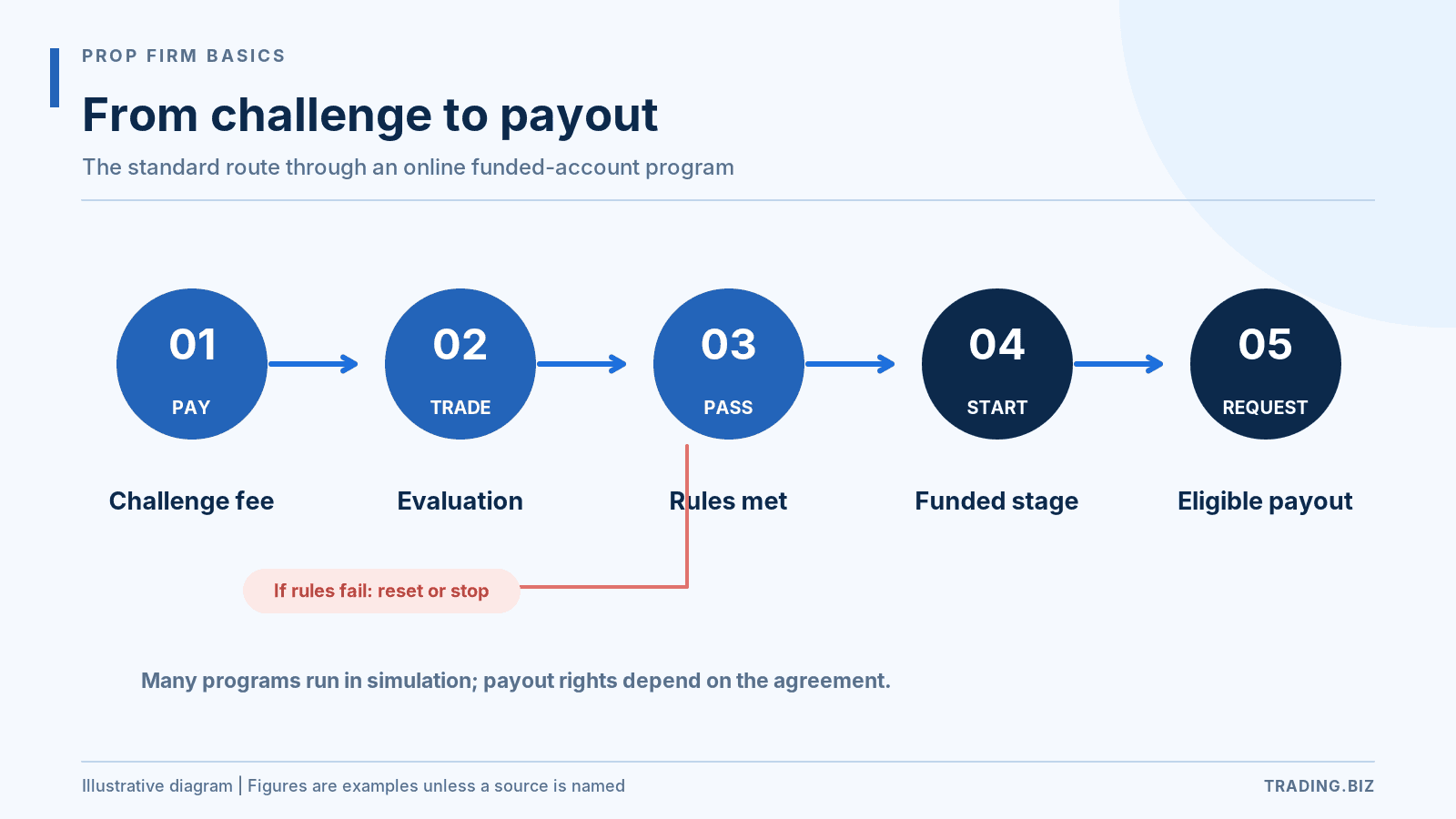
Figure 1. The standard evaluation path, including what happens if a rule is breached.
If the trader hits the profit target without breaking the rules, the trader moves to another phase or directly to a funded stage. At the funded stage, profits are split. A common range is 70% to 90% for the trader, though some firms market higher numbers or staged upgrades.
The catch is that passing the challenge is only the first test. Many traders discover that holding a funded account is harder than passing one. Tight daily loss limits and payout rules can change the way a strategy feels under pressure.
Imagine a two-phase evaluation beginning with a simulated $50,000. The first target might be 8%, or $4,000, while the second target might be 5%, or $2,500. Those percentages are examples, not a universal prop-firm standard. If the daily loss limit is 5%, the trader needs to ensure account equity never breaches the firm's daily reference floor. With an overall 10% loss limit, a decline past the specified $5,000 allowance would also fail the account. The particular formulas can change between providers.
Before the first position, the trader should write down the daily reset time, whether open losses count immediately, and how floating profits affect a trailing threshold. It is easy to focus so much on the target that the drawdown rules become an afterthought. A plan that risks $1,000 to earn $2,000 may appear efficient, but a short losing streak could end the evaluation before the strategy has enough samples to show its edge.
Passing is different from receiving a payout
After passing, many firms review identity documents and prohibited-strategy checks. Some apply separate funded-stage limits or minimum profitable-day requirements. The reward ratio might say 80%, which means $800 from a hypothetical $1,000 of eligible profit, before any taxes or conversion fees. That does not mean $800 can be withdrawn the moment the platform shows the gain. The request window, approval process and payout provider still matter. Ask support for the current withdrawal rules before paying for a challenge, not after you pass it.
Prop firm vs broker: what is different
A broker gives you market access. You deposit your own money, choose account type, and trade under the broker’s execution and margin rules. A prop firm gives you a program with a rule book. Even if the prop firm uses broker infrastructure or a trading platform you know, the relationship is different.
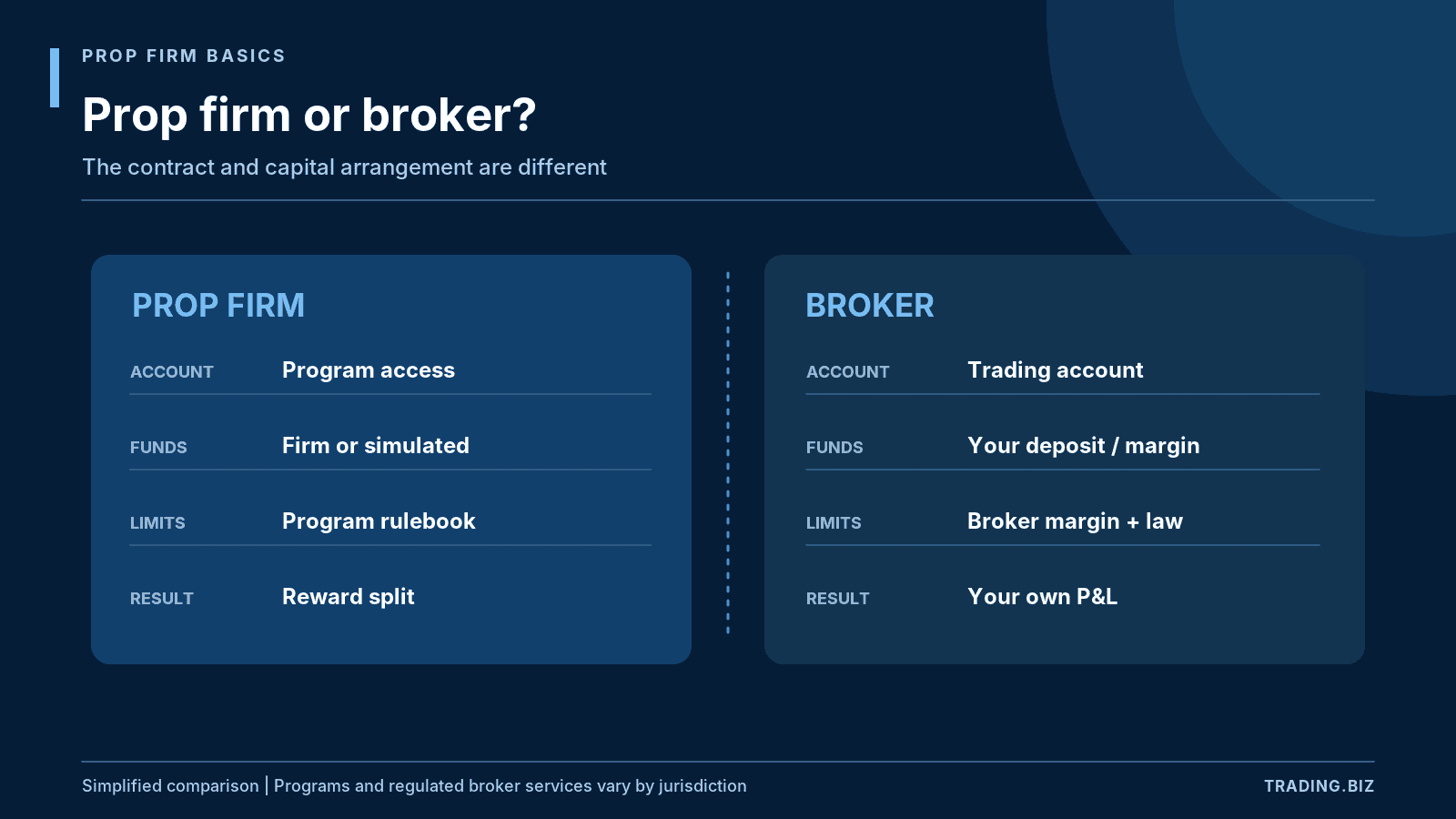
Figure 2. Differences between program access and trading with a broker.
With a broker, losses are yours. With a prop firm, the account can be closed for a rules breach even if your long-term strategy is sound. A broker cares about margin and compliance. A prop firm cares about its internal risk model as well. That difference explains why traders often struggle when they treat a prop challenge like a normal personal account.
Typical prop firm rules: profit target, drawdown and minimum trading days
The most common rules are easy to list: profit target, daily drawdown, overall drawdown and minimum trading days. Some firms add a consistency rule, a profit cap on one strong day, news restrictions, weekend bans or copy trading limits. Futures prop firms often add contract caps and trailing drawdown logic.
A trader should never assume one firm’s rule set is normal everywhere. A static drawdown feels very different from a trailing drawdown. A rule that looks harmless on a sales page can make a strategy untradeable in practice.
Loss rules deserve more attention than profit targets. A daily cap may reset at midnight in the firm's server time, even though the trader's local session crosses that boundary. An equity-based limit reacts to unrealized losses. A balance-based limit can behave differently until trades close. A trailing overall loss floor rises as gains accumulate; a static floor stays anchored to the original reference amount. Those differences can change the result of the same trade sequence.
Consistency rules can be equally influential. Suppose the most profitable day contributes $600 toward $900 of total profit. That is two-thirds. Under a hypothetical rule requiring the best day to represent no more than half the overall profit, the trader would need at least $1,200 total profit before qualifying. The company may simply delay eligibility rather than declare a breach. Check which treatment applies. A rule that sounds like "be consistent" can contain a very precise mathematical threshold.
Risks and pitfalls of prop firm trading
The biggest risk is treating a funded account challenge like free leverage. It is not. You are paying to operate inside someone else’s model. That can be useful if you have discipline and a tested strategy, but it can turn expensive if you bounce between challenges and resets.
There is also business risk. A prop firm can change pricing, change rules, slow payouts or disappear. That is why trader communities watch payout history and rule changes so closely. Before paying, read the help center, search for the payout schedule, and check whether the support team answers direct questions clearly.
Keep a separate running total of all fees paid across attempts. A trader who pays $80, resets twice at $60 each and then buys another challenge for $100 has spent $300 before any payout. That sum should be compared with the capital required to practice the same method in a small personal account. The fees may be acceptable for a tested strategy; they become a costly substitute for practice if the trader is still learning basic execution.
What a funded account feels like in practice
The emotional shift is bigger than most beginners expect. In a personal brokerage account, the rules mostly come from you and the broker. In a prop firm account, the rules are active all the time. A trade that would be fine in your own account can be a problem if it creates a large floating drawdown, breaks a news policy or counts too heavily toward a consistency rule.
That pressure is why good traders still spend time on process after they pass. They resist the urge to celebrate a funded account by taking reckless risks. They usually trade smaller than the rules allow at first, learn the daily rhythm of the platform and treat the first payout as a systems test.
Who should and should not use a prop firm
A prop firm makes the most sense for a trader who already has a working method and wants access to more notional capital without risking the same amount of personal funds. It can also suit a trader who values external risk limits because those limits force discipline.
It makes less sense for someone who is still changing strategy every week. If the trader has not yet found a repeatable edge, challenge fees can turn into tuition fees very quickly. Demo trading or a very small personal account is often a cleaner place to learn the basics.
FAQ
What is a prop firm in trading?
A prop firm is a company that gives traders access to a funded program under a rule set. The trader pays for evaluation access and usually earns a share of profits after passing.
Is a prop firm the same as a broker?
No. A broker is a market access provider. A prop firm is a funding and evaluation program with its own rules.
How does a funded account work?
You trade inside preset loss and profit limits. If you pass the challenge, you move to a funded stage and can request payouts based on the firm’s terms.
Why do traders use prop firms?
Many use them to access more buying power than they would use in a personal account and to limit their own capital at risk.
Can you lose money with prop firms?
Yes. You can lose the challenge fee, reset fees and time if the account breaches the rules or the firm turns out to be poor quality.
Find Your Perfect Broker: Explore Our List Now!
Choose the best with our expert-selected options
Find Your Perfect Broker: Explore Our List Now!
Choose the best with our expert-selected options
Discover top binary options brokers tailored to your region. Browse our curated lists by country: