Updated:November 18, 2026

11 min

0
Common prop firm rules that make traders lose accounts
Most funded accounts are not lost because the trader forgot how to read a chart. They are lost because the trader underestimated a rule. Daily drawdown, trailing drawdown, consistency checks, news restrictions and weekend limits can all end an account fast.

Joe Nakamoto
Author

Updated November 18, 2026
A trader can make a good trade and still lose a funded account for breaking prop firm rules. A limit that looked harmless at signup can decide the outcome. Daily drawdown, trailing drawdown, consistency checks, news restrictions and weekend limits can all end an account fast.
How prop firm rules decide whether you keep the account
A prop firm challenge is really a rules challenge. The market is only half the game. The other half is whether your strategy can live inside the risk model. Traders who understand this early stop chasing the flashiest coupon and start asking boring but useful questions. Is the daily drawdown based on balance or equity? Does the overall drawdown trail the high-water mark? Are there limits around news events? Can I hold through the weekend?
Once those questions are clear, the right firm usually becomes easier to spot.
Before looking for a setup, open the dashboard that shows the account's current limits. A rule book written at purchase is not enough if a trailing threshold has moved during prior sessions. Traders sometimes think they have the same allowance they had on day one. After a profitable stretch, that assumption can be wrong. A five-minute check before the market opens can prevent an expensive mistake later.
The most useful way to test any ruleset is to replay a real sequence of your trades. Include open profit peaks as well as closing balances. Include commissions and overnight charges where relevant. Then calculate whether the exact account would have survived. If it would have failed despite a profitable month, the strategy and the program are poorly matched. A discount code will not fix that.
Daily and overall drawdown: balance, equity, static and trailing
Daily drawdown is the rule that catches people in a single bad session. If the limit is calculated from equity, open trades count. A trader can be green on closed trades and still fail by floating too deep intraday. That is why traders should know the reset time and the exact base used in the formula.
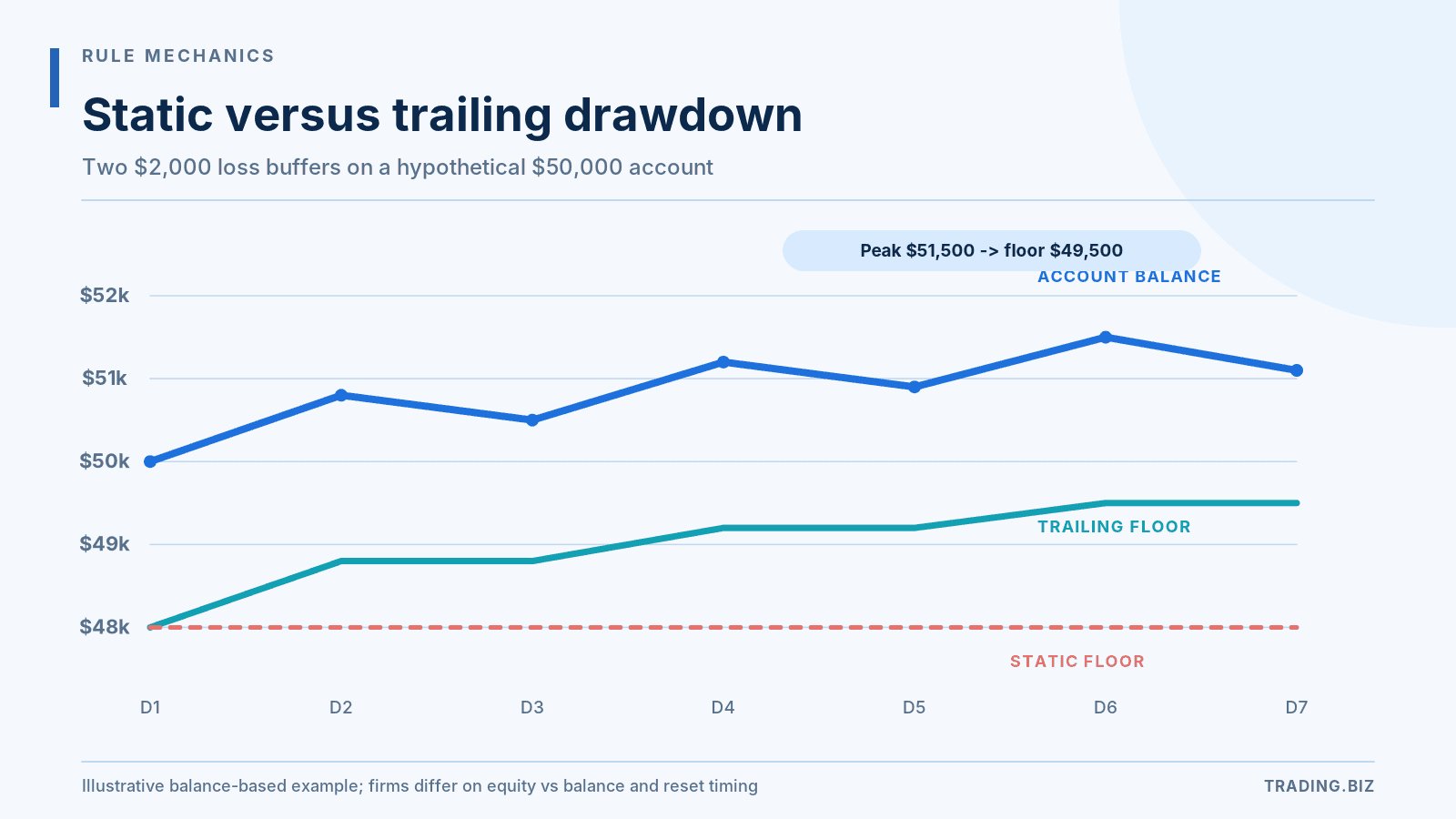
Figure 1. Static and trailing loss floors on an illustrative $50,000 balance.
Overall drawdown can be static or trailing. A static drawdown holds at a fixed number from the starting balance. A trailing drawdown moves up as your balance grows, which sounds fine until you realize it can crowd your stop placement on a strategy that needs room. In futures prop firms, a trailing drawdown is often the first rule experienced traders inspect.
Now take the overall limit. A 10% static loss cap on that same starting account can sit at $45,000 throughout evaluation. A trailing cap might move to $47,000 after a high of $52,000. A subsequent pullback to $46,900 could fail the account despite the balance still being well above the original $50,000 in some other scenario. A trailing floor is especially unforgiving when the strategy often gives back a portion of unrealized gains.
A simple drawdown stress test
Suppose your method has three losses of $350 followed by one gain of $900. Starting from $50,000, the account dips to $48,950 before recovering to $49,850. A static $45,000 floor presents no overall breach. But the daily rule could still be a problem if those losses occur in the same session and the daily cap is smaller. Repeat this exercise with your largest historical loss cluster, and include the spread or commission charged for each entry. The result is more useful than an average win rate shown without context.
Prop firm consistency rules and profit target caps
The consistency rule is one of the most misunderstood prop firm rules. It usually limits how much of your total profit can come from one day or one trade. Firms say it discourages gambling. Traders say it can punish a strategy that naturally gets paid in bursts. Both views have some truth.
A related trap is the soft profit cap. A firm may not call it a cap, but if the model forces you to spread gains across several days, you cannot really smash the target in one clean session and move on. That matters for breakout traders and traders who focus on event-driven setups.
FTMO's 2026 one-step rules offer a concrete example of why the formula matters. Under terms introduced for relevant new accounts on October 12, the consistency calculation tests whether the best day exceeds 50% of total profit. Passing that threshold does not automatically close the account; the trader may need to continue trading until the profit distribution qualifies. Older one-step accounts can be governed by a different best-day formula. The purchase date and model are therefore essential details.
Consider a trader whose best day earned $1,500 while total profit stands at $2,400. The best day represents 62.5%. If a 50% cap applies, total profit needs to reach at least $3,000 without increasing that best-day figure. Chasing another large winning day could create a new concentration problem. It is better to understand the math before choosing an account than to invent extra trades just to satisfy it.
News trading, weekend and overnight restrictions
Some prop firms allow news trading with no extra drama. Others restrict entry or exit around major releases. For a method built around volatility expansion, the restriction can undercut the whole strategy.
Weekend and overnight rules matter even more for swing traders. A trader who normally holds positions for two or three days can look reckless on a program that expects flat exposure by the close. This is why prop firm shopping by headline price alone makes so little sense.
A news restriction may begin several minutes before an event and end a few minutes after. The firm may prohibit opening new orders during that window, or it may also prohibit closing existing positions. Those policies are not interchangeable. One can conflict with a sensible stop-loss exit at exactly the time volatility rises. Look for rules that specify affected instruments, time sources and what the system does to a pending order triggered during the event.
Weekend rules deserve the same care. A trader holding gold into Friday's close may face a forced flattening requirement on one model, while another offers a swing-account exception. There can also be extra financing or spread costs around the rollover. The overnight question is not merely whether a position may remain open. Ask whether the margin and drawdown calculations change during low-liquidity periods.
The clock problem
A firm calculates its day in server time. A trader in Lagos, Mumbai or New York may see that boundary at an inconvenient local hour. Write down the current offset, then check it again when daylight saving time changes in Europe or North America. A position that straddles the reset can affect two daily windows. Time zone mistakes are avoidable. They belong on the trader's checklist beside stop placement.
Copy trading, EAs and banned strategies
Copy trading, signal mirroring and automation rules differ a lot from firm to firm. Some allow expert advisors with limits. Some ban high-frequency patterns or third-party copying tools. Others say they allow EAs but reserve the right to flag activity they see as abusive or latency-based.
If you rely on a semi-automated workflow, ask support before you buy. A vague rule is a risk in itself.
Automated trading rules often distinguish a privately developed expert advisor from a commercially distributed bot. A firm may accept the first but block trading patterns commonly associated with latency abuse, arbitrage across data feeds or prohibited account sharing. The label "EA allowed" is too vague to rely on. Ask about the exact strategy, update frequency and whether multiple accounts may execute mirrored orders.
Rule comparison: FundingPips, FTMO and Apex
FTMO is often the easiest starting point because the language around objectives and loss limits is relatively clear. FundingPips offers several models, which means traders need to pay attention to which rule set they are reading. Apex is a different beast because futures-specific payout, consistency and trailing drawdown details shape the whole experience.
That is the practical lesson. There is no single normal set of prop trading rules. The rules are the product.
The current FTMO comparison table separates two-step, one-step and instant models. The two-step route uses a static maximum loss of 10% and a 5% daily cap, while one-step and instant routes apply different daily limits and consistency rules. FundingPips publishes a model comparison as well: Standard, Pro, Flex and instant-style programs each have their own loss and evaluation structure. A blanket comparison between the brands without naming the model is misleading.
Apex operates in the futures category, so its thresholds interact with contract size and exchange hours. Its funding and payout policies should be assessed separately from forex-style programs. If you already know how MES behaves, estimate your stop risk in dollars and see how many full losses the account can absorb. Drawdown calculations become much more intuitive when expressed in actual trade units rather than percentages on a sales page.
What to save before purchase
Save the model's official objective page, the prohibited-strategy policy and the payout article with their dates. If a rule changes, support will need to know which version applied to the account. A few screenshots cannot guarantee a favorable outcome in a dispute, but they do make the conversation more precise. Keep copies of any written answer about an EA, a news strategy or multiple-account trading. Those are the situations most likely to produce disagreements later.
How to adjust your trading to strict prop firm rules
The easiest adjustment is to trade smaller than your maximum allowed risk. That sounds obvious, but many traders calculate position size from what the firm permits instead of from what their setup truly needs. The result is a style that feels rushed. Smaller size usually gives the strategy more room and keeps emotion down.
The second adjustment is planning around the reset time and high-impact calendar events. If your account recalculates the daily loss at a specific hour, know it. If your strategy uses open risk into data releases, make sure the rule book allows it. Good prop traders treat rules as part of pre-market prep.
Use the smaller of two risk budgets: your normal strategy budget or the remaining room under the account's limit. Suppose your preferred stop represents $250, but only $600 of daily room remains. A third unsuccessful trade could breach the cap once fees and slippage are counted. There is no obligation to take it. Passing an evaluation by declining a marginal setup is often more realistic than trying to repair a losing morning with a bigger position.
Reduce activity after a rough stretch rather than chasing the profit target. Your method should determine when you trade. The rules only determine whether the account can accommodate that method. A written maximum number of trades, an automatic stop for the day and a premarket review of major releases help prevent an impulsive rule breach. Record any violation during demo practice and identify exactly how it happened.
A simple checklist for prop trading rules
Before paying, write down the daily loss limit, overall loss limit, whether drawdown is static or trailing, whether news trading is restricted, whether weekends are allowed and whether copy trading or automation is limited. That list covers most of the major account killers.
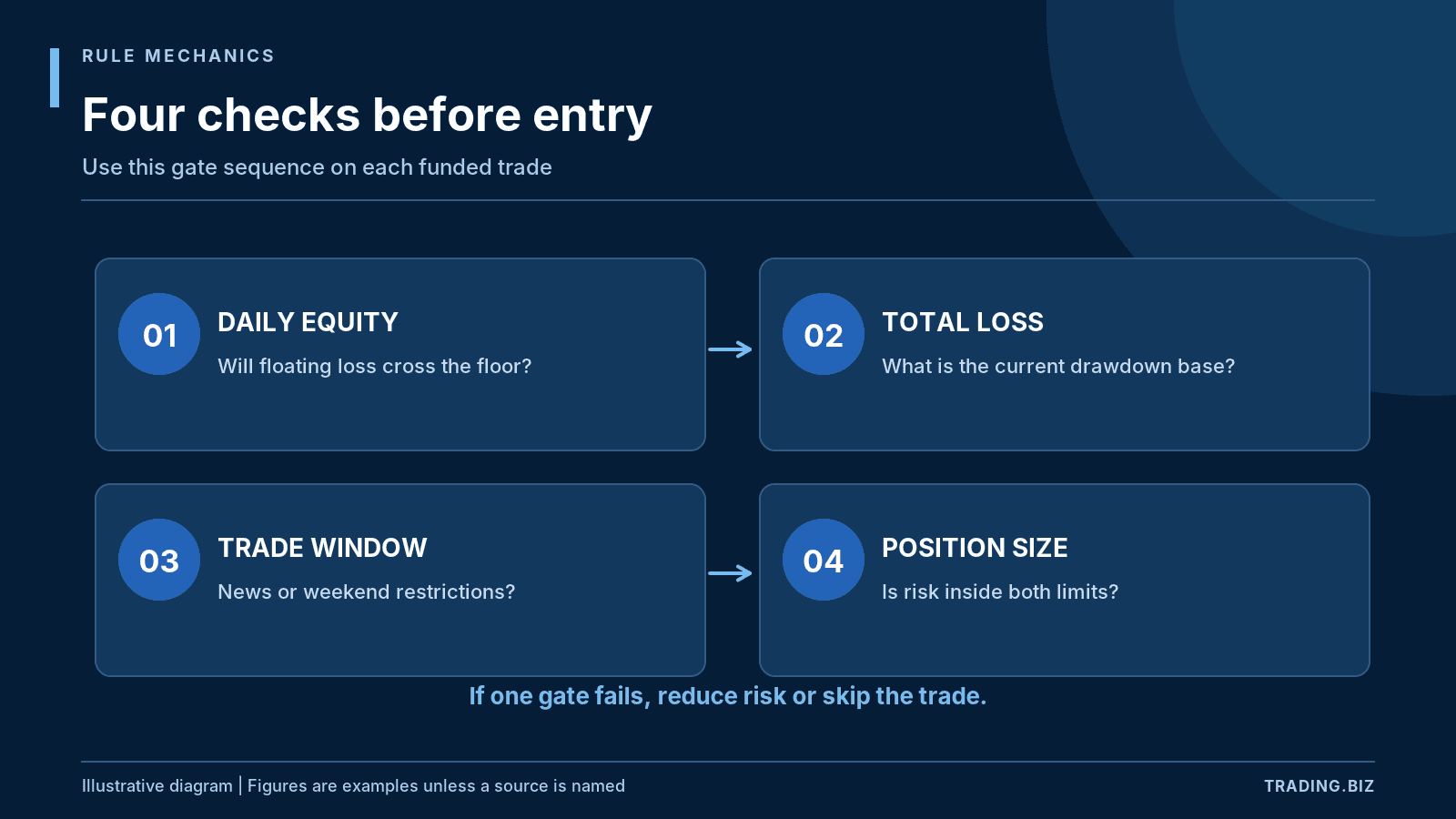
Figure 2. Four practical rule checks before entering a trade.
Then ask one blunt question: if I have two losing days and one good day next week, can my strategy still survive inside this model? If the honest answer is no, the challenge is not cheap no matter what the promo says.
A useful checklist names the failure condition, not a vague topic. Write "equity must stay above $47,500" instead of "watch drawdown." Write the exact restricted news window instead of "avoid news." Note the server-time reset and the day on which the first payout may be requested. Those details can be checked before a trade. They also make it easier to spot when a marketing page and the contract disagree.
Finally, record the cost of getting it wrong. A failed evaluation may mean a new fee, a waiting period or both. Treat that possible loss as part of the risk of the purchase. An account with attractive buying power is still a poor choice if its restrictions force a tested trader into an unfamiliar strategy.
FAQ
What prop firm rule causes the most failures?
Daily drawdown is the most common account killer because one rough session can break it quickly.
What is a consistency rule in prop firm trading?
It is a rule that limits how much of your total profit can come from one day or one trade, depending on the firm’s formula.
What is the difference between static and trailing drawdown?
A static drawdown stays fixed below the starting balance. A trailing drawdown moves up as the account balance rises.
Can I hold trades over the weekend on a prop firm?
Sometimes yes, sometimes no. Swing traders should always check this rule before buying.
Are EAs allowed on prop firms?
Some firms allow them, some restrict them and some ban them. Read the firm’s specific policy.
Find Your Perfect Broker: Explore Our List Now!
Choose the best with our expert-selected options

Find Your Perfect Broker: Explore Our List Now!
Choose the best with our expert-selected options
Discover top binary options brokers tailored to your region. Browse our curated lists by country: