Updated:November 13, 2026

8 min

0
How a margin call works and how to avoid one in forex and crypto
A margin call happens when an account's equity falls too low for the margin required to keep leveraged positions open. The broker may request more funds, restrict new orders or close positions. Some trading platforms trigger automated liquidation before any human warning reaches you. Understanding margin calls starts with three numbers: equity, used margin and free margin. Once you can calculate them, the warning screen becomes much less mysterious.

Artem Kirillov
Author

Updated November 13, 2026
What is margin trading and why margin calls happen?
Margin trading lets an account control a larger market position than its cash deposit alone would support. The broker requires collateral, called margin, against potential losses. Leverage magnifies price moves in both directions. If a position loses value, the account's equity drops while the position may still require the same amount of collateral. Eventually, the broker's maintenance threshold is reached.
A margin call is not necessarily a polite email asking you to decide tomorrow. On high-leverage CFD and crypto accounts, the platform can liquidate positions quickly according to the applicable stop-out rules. On regulated securities accounts, maintenance calls follow another framework and timetable. Read the margin agreement for your exact account type.
Margin level, free margin and stop out: the formulas
Equity equals balance plus or minus the floating profit and loss on open positions. Used margin is the amount currently reserved for positions. Free margin equals equity minus used margin. Many retail forex terminals show margin level as equity divided by used margin, multiplied by 100%. With no open positions, that particular ratio may not be meaningful because used margin is zero.
Example: calculating margin level
Suppose an account has $1,000 in balance, $200 in floating losses and $400 used margin. Equity is $800, free margin is $400, and margin level is ($800 / $400) x 100 = 200%. If the floating loss grows to $600, equity falls to $400, free margin reaches zero and margin level is 100%. That is the arithmetic. Whether a margin call happens at 100%, 80% or another threshold depends on the provider.
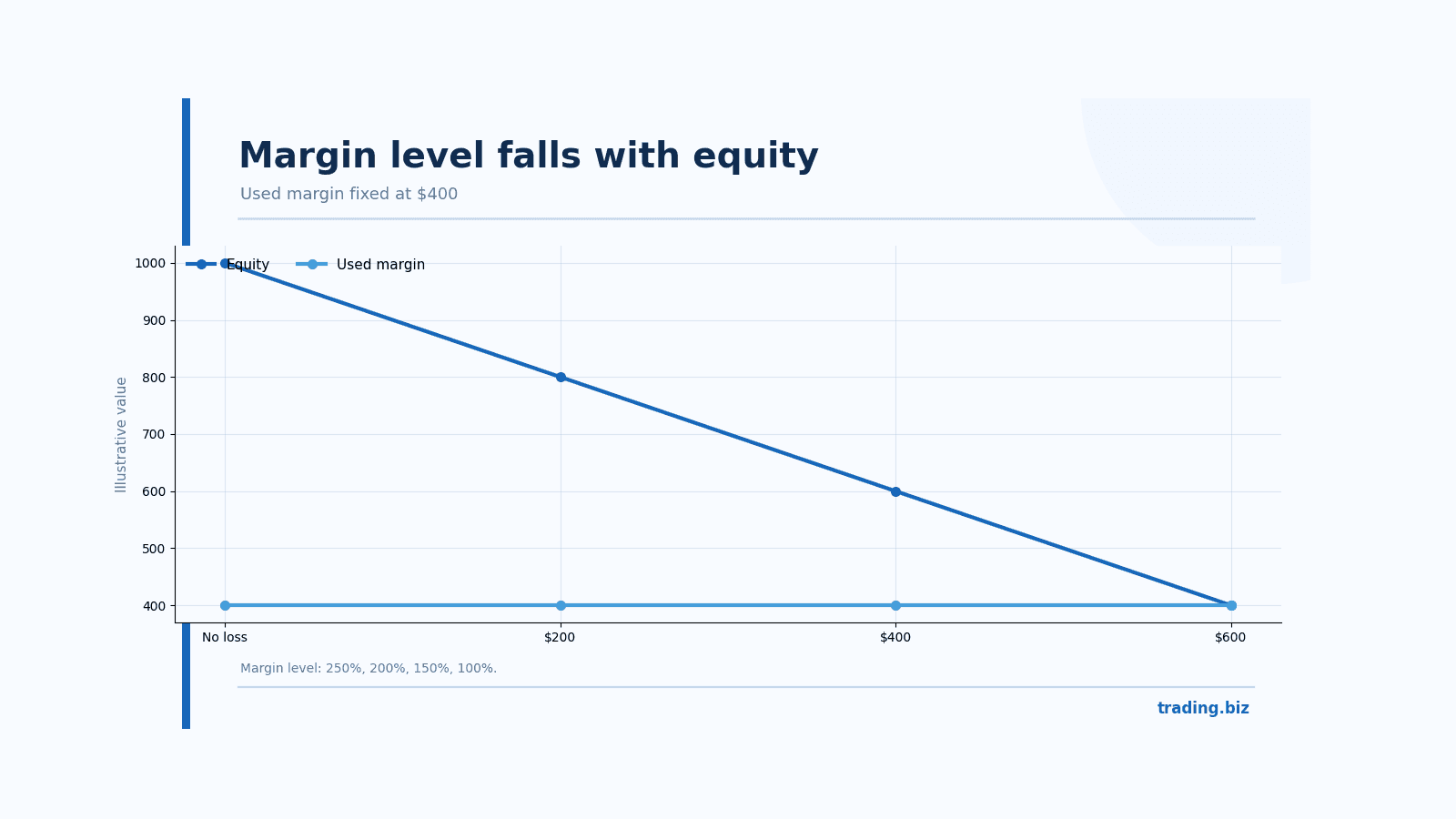
Figure 1. How equity, used margin and margin level relate as losses increase.
Stop-out levels are especially important. A broker might automatically start closing positions at a stated margin level. Other providers calculate a maintenance requirement directly in money terms. Do not assume that every platform's "margin level" formula is identical. The account specification takes priority over a generic online calculator.
A margin call example in forex
A trader opens a leveraged EUR/USD position using $500 of margin from a $1,200 account. Initially, free margin is $700 before trading costs. If the position suffers $450 in floating loss, equity becomes $750 and the margin level falls to 150%. A further $250 loss brings equity to $500 and margin level to 100%. The move required to lose that amount depends on position size and pip value, not merely the leverage shown in the account settings.
Position size changes the speed of the problem
For a standard EUR/USD lot, a one-pip movement is typically worth around $10 when USD is the quote currency. A $300 adverse move corresponds to roughly 30 pips on one standard lot, excluding costs. At 0.10 lot it would be about 300 pips. These are very different risk exposures, even if both traders use the same leverage ratio. Stop distance and volume must be chosen together.
A stop loss can reduce planned risk but cannot guarantee a particular execution price during a market gap. If your strategy depends on the broker filling precisely at the stop, the margin plan is too fragile. Leave enough equity for plausible slippage and abnormal volatility.
Margin calls and liquidation on crypto exchanges
Crypto derivatives exchanges commonly display entry price, mark price, initial margin, maintenance margin and liquidation price. Mark price may differ from the last trade and is often used to trigger risk calculations. Funding payments, fee deductions and added collateral can move the liquidation point. Cross margin draws from a broader wallet balance; isolated margin limits collateral assigned to a specific position, subject to venue rules.
A simplified example: with $100 collateral controlling a $1,000 perpetual position, a 5% adverse change in the underlying is about $50 of gross position P&L, or half the posted collateral, before fees and funding. That does not identify an exact liquidation price. Maintenance margins and exchange-specific mechanics must still be included.
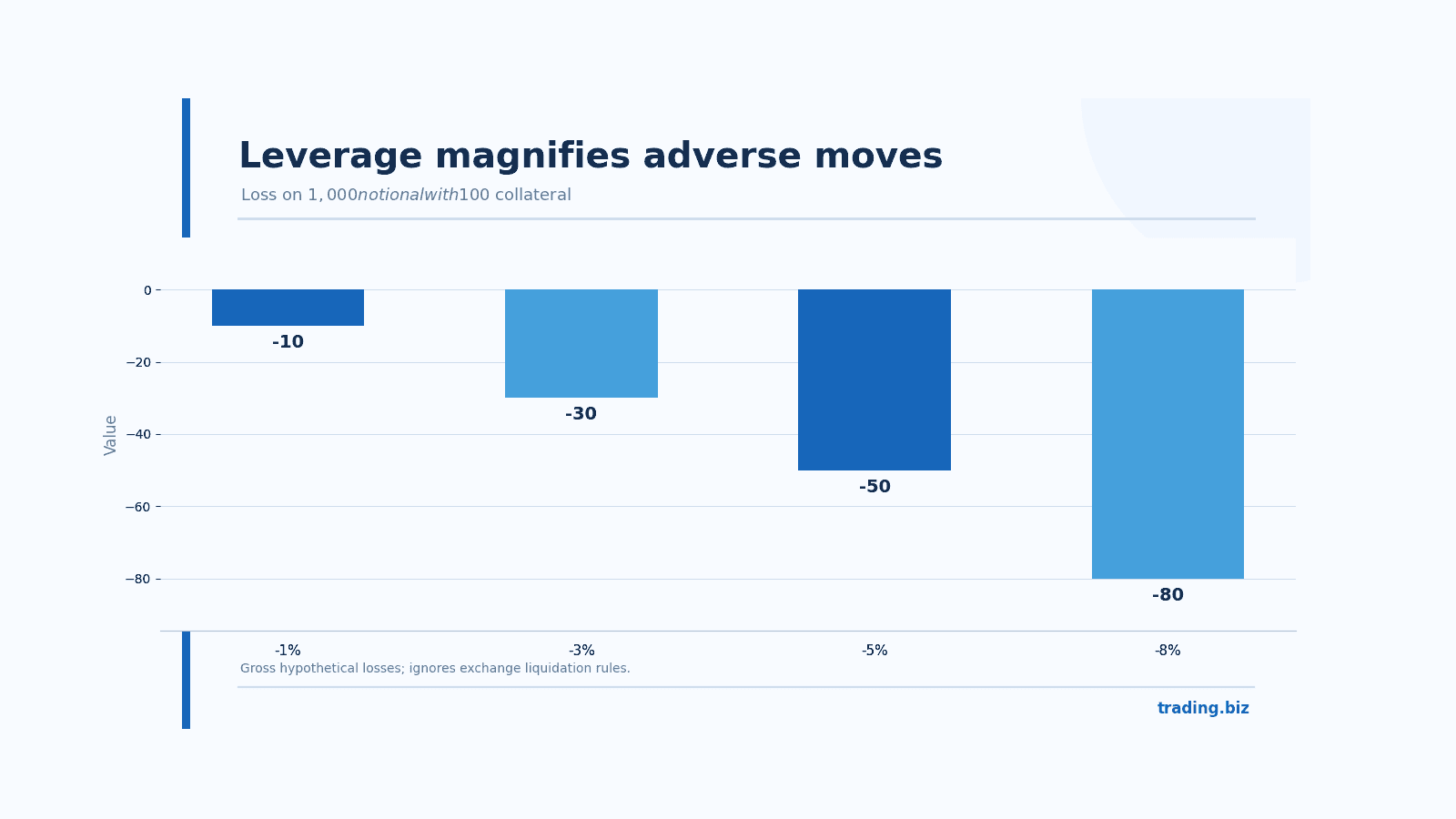
Figure 2. Leverage magnifies the effect of adverse price moves on collateral.
How to avoid margin calls: leverage, position size and stops
Work backward from the maximum acceptable loss. Choose the price level where the trade idea is invalidated, calculate the distance and then size the position. Avoid using the maximum leverage simply because the platform permits it. A small position with substantial free margin gives you more room to make decisions than one balanced on the broker's liquidation threshold.
Check correlated positions. Long EUR/USD and long GBP/USD may both be exposed to broad dollar strength, so treating them as independent risks can exaggerate diversification. On a crypto venue, several altcoins may plunge together. Set portfolio exposure limits as well as per-trade limits.
A margin safety routine
Before trading, confirm current equity, total used margin and maintenance requirements. Know the broker's stop-out trigger and the time of any scheduled market event. Write down the worst plausible price movement and recalculate margin after that move. If the numbers leave almost no free margin, shrink the trade rather than hoping liquidity remains calm.
What to do if a margin call arrives
First determine whether positions have already been liquidated. Check open orders and the official account ledger. Do not rely on a push notification alone. Next, verify the margin deficiency and deadline under your provider's rules. Possible actions include reducing exposure or adding eligible collateral, but depositing more money to defend a losing trade can increase the amount ultimately lost.
If the account is under a securities broker's margin call, read the broker's rights to liquidate without prior notice. If it is a crypto exchange, review cross and isolated positions separately. Save the account statement and contact support through the official platform if calculations seem inconsistent. Keep a full record before deciding to trade again.
Initial margin is not maintenance margin
Initial margin is the collateral needed to open a position under a given product's rules. Maintenance margin is the amount needed to keep it open. Some accounts calculate daily or intraday changes in the requirement. A trader can satisfy the opening requirement and still face a call later because equity declined, maintenance requirements rose or correlated positions increased total exposure.
For a securities margin account, the broker may sell assets without waiting for a customer to respond to a warning. For a leveraged crypto derivatives account, a mark-price liquidation engine can work on a much shorter timetable. The labels are similar but the legal and operational processes are not identical.
A quick margin stress test
Take your current equity and subtract the dollar loss from a plausible adverse move across all open positions. Include spread, commissions and financing. Compare the remaining equity with used margin and maintenance requirements. Repeat with an even worse move. If the first scenario puts you at the margin threshold, your risk budget is too tight. A position that only survives the average day is vulnerable to an event that should have been expected to happen eventually.
Cross margin, isolated margin and hidden portfolio links
On a crypto platform, cross margin may use a shared collateral pool for several positions. That can keep one position alive longer but allows its losses to consume funds supporting other trades. Isolated margin assigns collateral to a position more narrowly, although an exchange may permit adjustments and has its own liquidation rules. Neither mode removes market risk.
Correlated exposure becomes dangerous during sharp moves. Three altcoin positions can fall together after a Bitcoin selloff. A portfolio that appears to have diversified entries may actually have one large risk factor. Before using high leverage, calculate what happens if all correlated positions move against you at once, including fees and funding deductions.
Liquidation price is an estimate that can move
A crypto derivatives interface may show a liquidation estimate at the time of entry. That figure can shift when funding payments are deducted, margin is added or removed, the position changes size or maintenance requirements change. Some exchanges use risk tiers, so larger positions attract a different maintenance calculation. Treat the platform's current estimate as a monitoring tool and avoid operating near it.
If you expect to hold a leveraged position through the night, calculate possible collateral loss under a sharp adverse gap and consider whether you need that exposure at all. An account can be liquidated even if the broader market later moves in the direction you predicted.
FAQ about margin calls
Does a margin call mean my account is already closed?
Not always. Some brokers notify you first, while others automatically reduce or close exposure at a stop-out threshold. Your margin agreement determines what can happen.
What is a 100% margin level?
Under the common retail forex formula it means equity equals used margin. It does not necessarily equal the liquidation point, which can be above or below that value.
Can a stop loss prevent every margin call?
No. Stops can slip or fail to execute at the requested price during gaps. Sensible position sizing and spare margin remain important.
Can I owe more than I deposited?
That depends on the product, jurisdiction and negative-balance protections. Some accounts can expose a customer to a deficit beyond the original collateral. Read the specific contract.
Should I deposit more money during a margin call?
Only after understanding the deficiency and the additional loss you could incur. Reducing or closing exposure may be safer than adding funds to a position whose original rationale has failed.
Official reference: FINRA margin investing information
Find Your Perfect Broker: Explore Our List Now!
Choose the best with our expert-selected options
Find Your Perfect Broker: Explore Our List Now!
Choose the best with our expert-selected options
Discover top binary options brokers tailored to your region. Browse our curated lists by country: