Updated:November 13, 2026

8 min

0
A plain guide to hedging in trading, with forex and crypto examples
Hedging in trading means taking another position intended to reduce the financial impact of an unwanted price move. A business can hedge a future currency payment; an investor can buy a protective put against a stock decline; a crypto holder can short a futures contract to offset some spot exposure. Every hedge has a cost or trade-off. The useful question is how much risk it removes and what you give up for that protection.

Ivanna Petrova
Author

Updated November 13, 2026
Hedging meaning in simple words
Suppose you own an asset worth $10,000 and worry about a sharp fall over the next month. Selling the asset removes the exposure entirely. Hedging tries to retain some of the original position while offsetting part of its downside. You might use an option, futures contract or another correlated instrument. The result depends on how precisely the hedge matches the original risk.
A hedge is rarely perfect. Basis differences, transaction fees, financing and timing can leave residual risk. It may also limit profits if the underlying asset rises. That is why hedging is common among businesses with predictable future cash flows and among funds managing portfolio exposures. For a small retail account, adding a complicated hedge can increase the cost and error rate.
Hedging instruments: options, futures and correlated pairs
A put option gives its buyer the right, but generally not the obligation, to sell the underlying at a specified strike by or at expiration, depending on the contract. Its premium is known upfront, but a put can lose its entire premium. A futures short can more closely offset a long underlying position, yet it creates margin exposure and can require additional collateral during adverse moves.
Correlated pairs offer a less precise approach. A trader long one currency pair and short another might hope common dollar exposure cancels. Correlations move, however, and the two positions can lose together. Correlation-based hedging needs a quantitative model, not just the observation that two charts usually travel in the same direction.
Protective put versus short future
A put allows some upside to remain while limiting specified downside, with the premium as the cost. A perfectly sized short future offsets both downside and upside much more directly. Choose the tool according to the risk you want to keep. A short future can protect a future selling price, but it may also eliminate much of the gain if the spot position rallies.
A forex hedging example
Imagine a UK business expecting to receive $100,000 in three months. If GBP strengthens against USD before the payment arrives, those dollars convert into fewer pounds. The business could use a forward contract to lock an exchange rate today. That reduces uncertainty over its future sterling cash receipt. If the dollar strengthens instead, the forward may leave the company worse off than an unhedged conversion, even though it did exactly what the hedge was designed to do.
Retail traders sometimes open equal buy and sell positions in the same EUR/USD account. The net market direction may largely cancel, but both legs can incur spread, commission and financing charges. Some brokers net the positions automatically rather than maintaining a "locked" pair. A hedge that merely freezes a loss while adding costs does not repair the original decision.
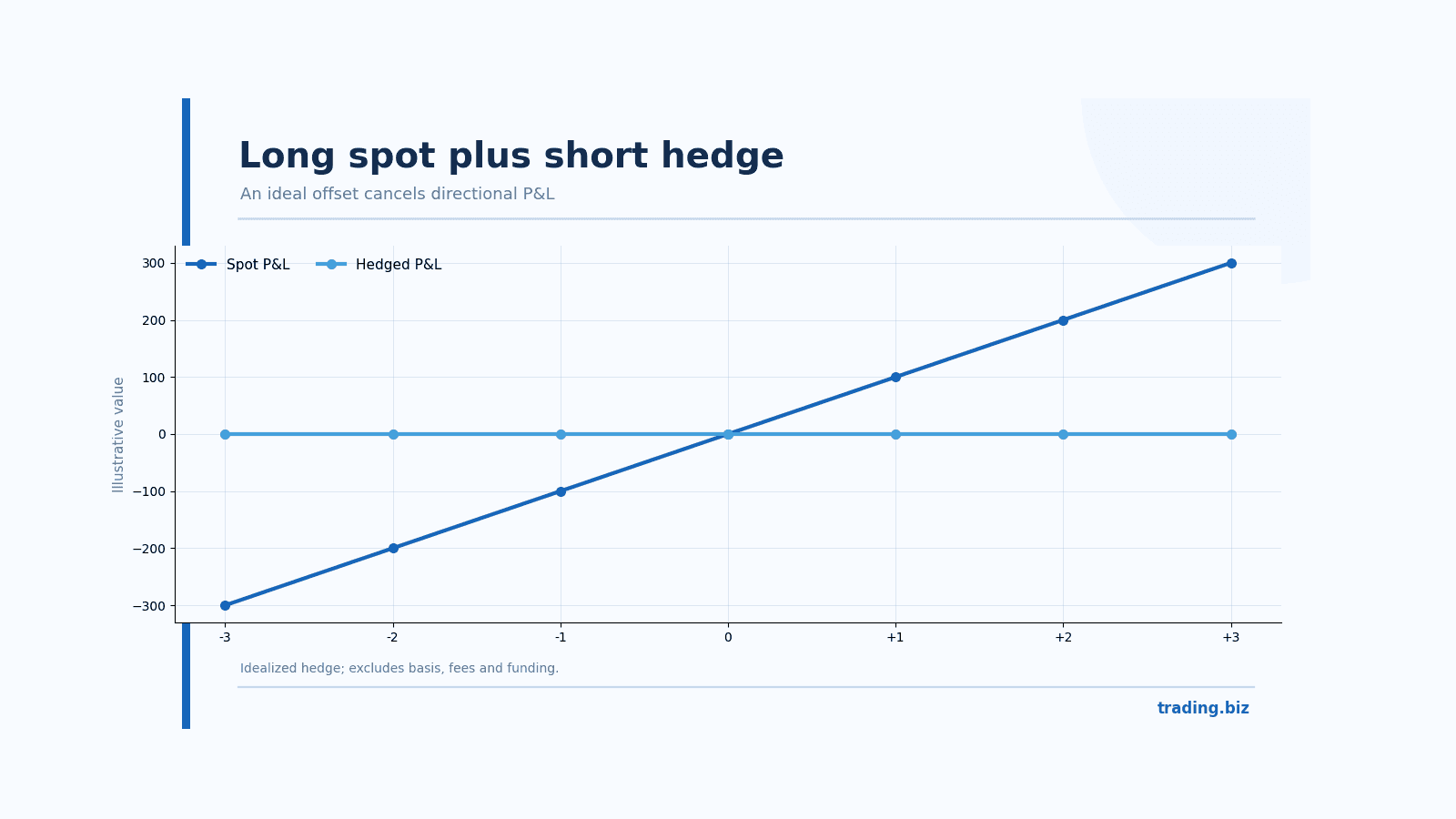
Figure 1. Idealized spot exposure and a direction-offsetting futures hedge.
A hedging example in crypto: perpetuals and stablecoins
Suppose an investor owns 0.5 BTC and wants to reduce short-term bitcoin price exposure without selling spot. A short perpetual future sized to roughly 0.5 BTC of notional can offset much of the spot price movement. If BTC falls 10%, the spot holding loses value while the short future may gain roughly the same amount before funding and trading fees. If BTC rises, the short loses against the spot gain.
The risk is not zero. Perpetual funding payments can make the hedge costly, and margin is required on the short position. A sudden mark-price move might liquidate an undercollateralized hedge even though the combined economic exposure looks flat. Exchanges can also fail or restrict withdrawals. The spot asset and derivatives collateral may be held at different venues, introducing additional operational risk.
Moving into stablecoins
Converting crypto into a stablecoin is another way to reduce exposure to a volatile coin. It is closer to exiting the position than to using an offsetting derivative. The investor now bears issuer, custody, liquidity and depegging risks instead of the original coin's price risk. "Stable" describes an intended peg, not a guaranteed cash balance.
Costs of a hedge and when hedging backfires
Hedges cost money through premiums, spreads, commissions, swaps, funding payments or foregone upside. Take a protective put purchased for $250 against a $10,000 stock holding. Even if the stock ends flat, the put's expiration value may be zero, leaving a 2.5% premium cost on the protected holding. That could be worthwhile for a risk that would otherwise threaten the portfolio, but expensive for someone reacting to every minor dip.
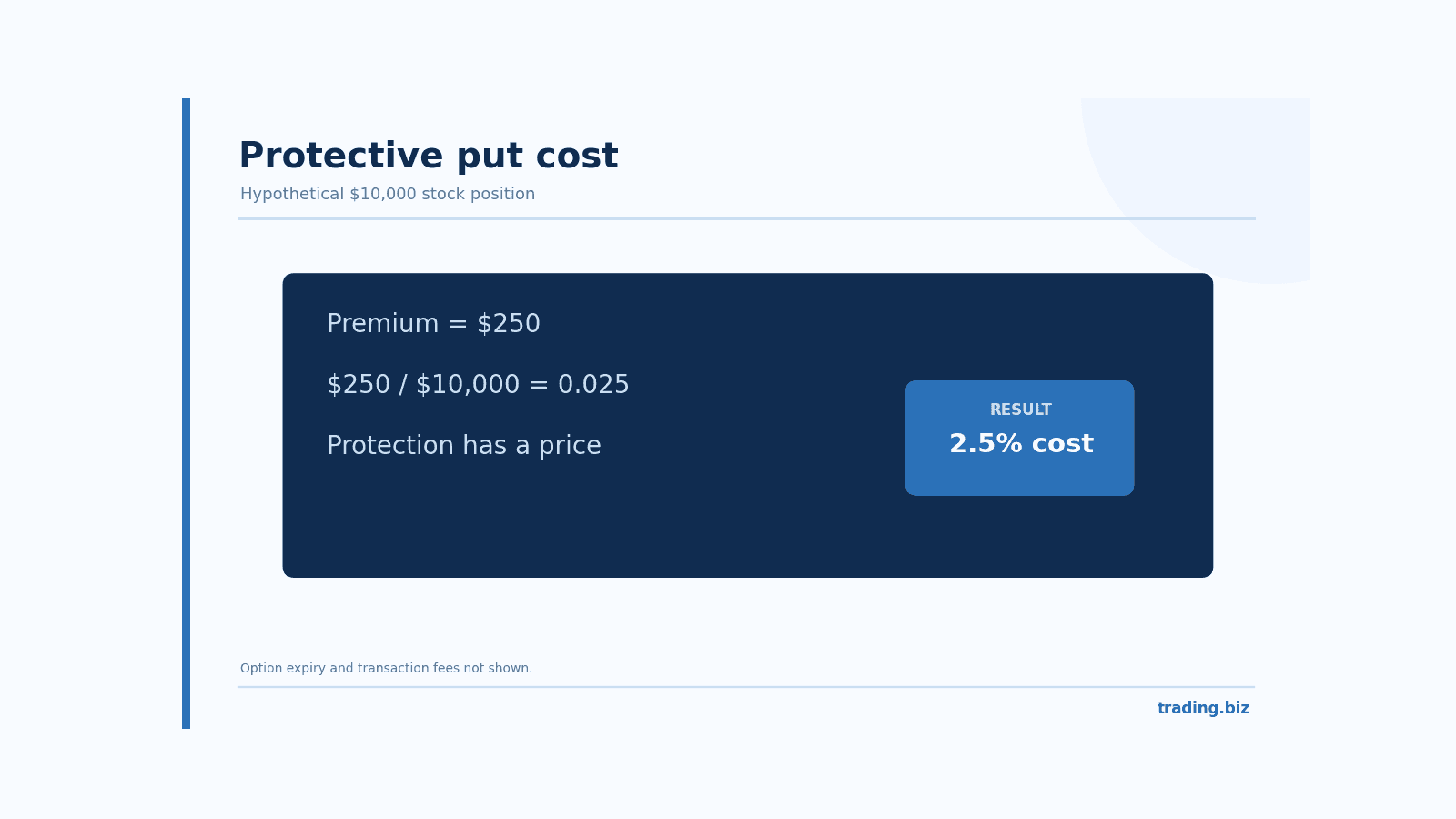
Figure 2. An example of the upfront cost of downside protection.
Hedging also backfires if the hedge ratio is wrong. A futures contract might represent more exposure than the investor owns, accidentally turning a defensive position into a net short bet. Correlation hedges can break under stress. An option hedge may expire before the feared event. Write down the notional size and worst-case cost before entering any hedge.
Broker rules on hedging: locked positions and FIFO
Account structure matters. Some retail forex brokers offer hedging mode with opposite positions in the same symbol; others use netting accounts where the opposite order reduces the original position. US retail forex accounts may face FIFO and restrictions on offsetting positions, depending on the regulated broker and product. A trading strategy developed on a hedging-mode demo cannot always be reproduced under a netting-mode account.
Confirm position-accounting mode, margin offsets and financing rules with your broker. If the platform displays two separate tickets, that alone does not establish that the risk has disappeared. The combined cash-flow and collateral requirements still matter.
Hedging currency exposure without guessing direction
A company expecting to pay €50,000 to a supplier in three months is exposed to the euro strengthening against its home currency. Buying euros forward can fix the future local-currency cost, which helps budgeting. If the euro weakens, the company may regret the chosen rate, but the hedge still did its job: reducing uncertainty about a known payment. Evaluating it only by whether it beat the spot market misses the purpose.
An individual investor with foreign shares has a similar decision. The investor may want to own the overseas companies but avoid taking an equally large currency bet. Currency-hedged funds or forwards can help, subject to expenses and tracking differences. The correct hedge ratio depends on which part of the exposure the investor genuinely wants to remove.
The hidden operational risk
A derivative hedge may require cash margin even if its economic loss is offset by a gain on the original holding. Consider a long spot asset held in a cold wallet and a short perpetual on an exchange. If the spot asset rises sharply, the short position may require more collateral before the investor can transfer or sell the spot gains. An economically balanced hedge can therefore suffer a liquidity squeeze.
Document where collateral sits, when funding is charged and how quickly funds can move. The operational plan is just as important as the payoff diagram.
Hedging is also a timing decision
A hedge entered after an asset has already fallen sharply can lock in the wrong kind of protection. Imagine a long-term investor buying an expensive put only after implied volatility has spiked. The put may still help if losses continue, but the premium can be much higher than it was before the event. The protection becomes less efficient just as the investor feels most anxious.
Set the reason for the hedge in advance: a known payment date, a scheduled event or a maximum tolerable portfolio decline. Decide when the hedge should be removed. If it remains in place indefinitely without review, costs can accumulate and the portfolio may stop behaving as originally intended.
FAQ about hedging in trading
What is the simplest example of hedging?
An investor holding shares buys a put option to limit certain downside exposure. The put costs a premium and expires according to its contract terms.
Does hedging guarantee no loss?
No. Costs, imperfect offsets, margin requirements and counterparty risks remain. A hedge can also fail to match the original position in size or timing.
Is buying and selling the same forex pair a good hedge?
It may cancel much of the immediate price exposure while adding trading costs. It does not recover an existing loss, and some brokers net opposite trades instead.
Can I hedge crypto with perpetual futures?
Yes, a short future can offset long spot exposure, but funding, margin and liquidation risk require careful management.
Should beginners hedge every trade?
Usually no. Reducing position size or exiting a trade is often simpler and easier to manage. Use a hedge only when you can explain its benefit and full cost.
Official reference: Options Industry Council protective put guide
Find Your Perfect Broker: Explore Our List Now!
Choose the best with our expert-selected options

Find Your Perfect Broker: Explore Our List Now!
Choose the best with our expert-selected options
Discover top binary options brokers tailored to your region. Browse our curated lists by country: