Updated:November 18, 2026

10 min

0
Apex, Topstep, Lucid and more: how to pick a futures prop firm
A futures prop firm looks familiar on the surface, but the details are different from forex prop firms. Trailing drawdown, contract scaling, exchange hours and payout limits all matter a lot more here.

Vadim Egortsev
Author

Updated November 18, 2026
How futures prop firms differ from forex prop firms
A futures prop firm usually revolves around products such as CME index futures, micros and sometimes a specific platform stack like Tradovate, NinjaTrader or Rithmic-connected tools. That means the drawdown model, contract limits and payout policy are front and center. In forex prop firms, traders often talk first about MT5, spreads and weekend holds. In futures, the rule conversation starts earlier.
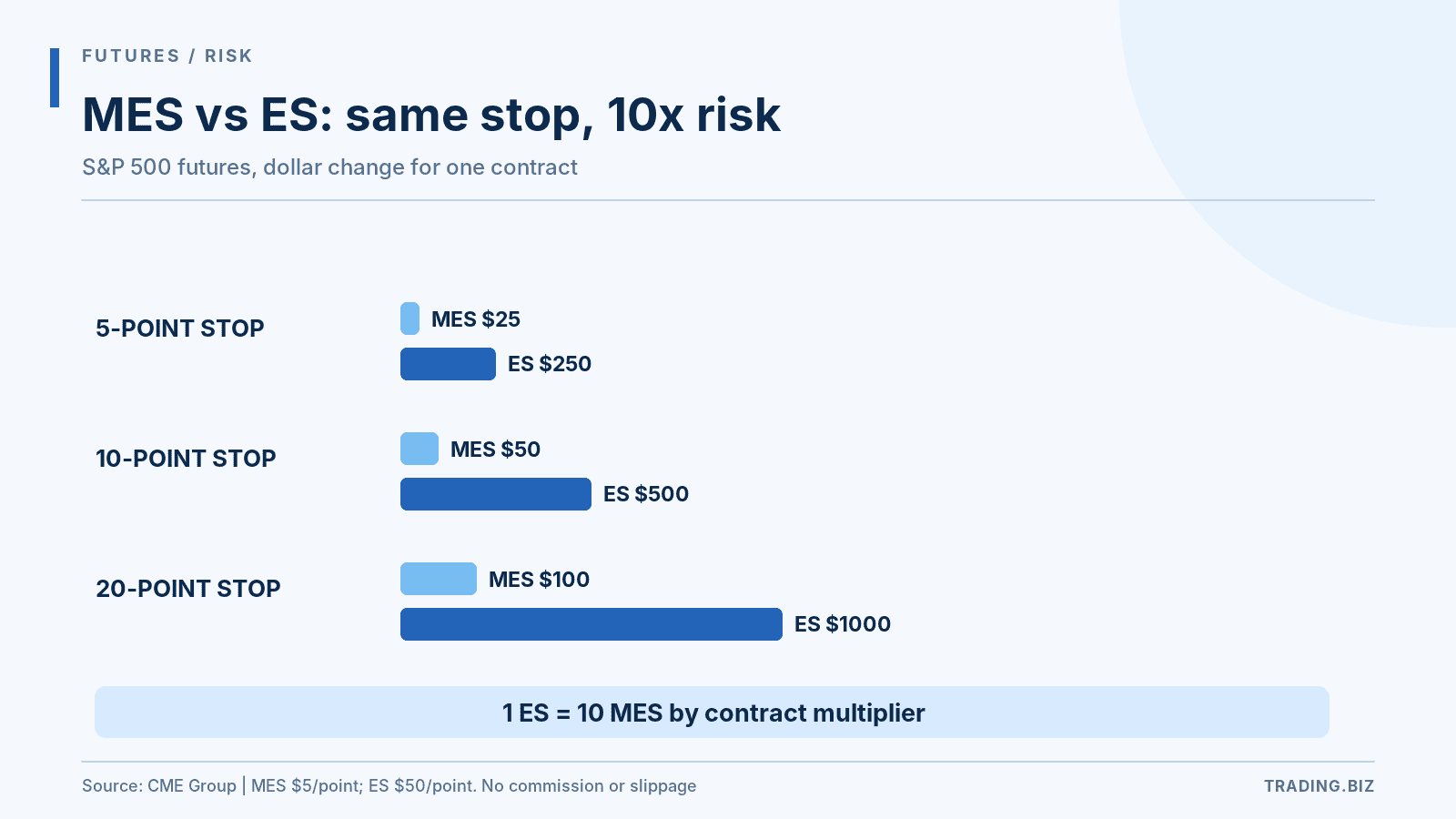
Figure 1. MES versus ES risk for identical S&P 500 futures stop distances.
Most futures prop evaluations use a small group of exchange-traded contracts. Traders need to know contract specifications before touching a trade ticket. On CME equity-index futures, the E-mini S&P 500 contract, ES, moves $50 for a one-point index change. Micro E-mini S&P 500, MES, moves $5 for the same change. A twelve-point stop is therefore $600 of price risk in one ES contract versus $60 in one MES contract, excluding fees and slippage. The account's quoted 50K or 100K figure does not alter those contract values.
Trading hours and clearing also differ from retail forex CFDs. Futures exchanges publish sessions, holiday schedules and maintenance breaks. A prop provider might impose an earlier flattening deadline than the exchange. Check the trading calendar, not merely the chart. The fact that an order ticket accepts a contract does not guarantee the program permits holding it into the close. A serious futures trader knows the official contract month and rollover process as well as the firm's separate rules.
The data connection matters too. Some providers route trading through established platforms; others provide their own front ends. A platform can be functional and still feel wrong for a strategy that depends on quick bracket orders or keyboard trading. Before buying a challenge, confirm support for the platform you already know, whether simulated market-data fees are included, and whether chart data is sufficiently timely for the instrument.
Comparison table for a futures prop firm: price, account size and drawdown type
The three numbers most traders should compare first are price, account size and drawdown type. Price tells you little by itself. A trailing drawdown can turn a cheap account into an expensive habit if your style needs breathing room. That is why traders compare Topstep, Apex Trader Funding, MyFundedFutures, Bulenox, TradeDay and Lucid so closely.
A headline account size is a poor way to compare futures programs. The important columns are the initial loss allowance, the maximum permitted contracts and how the trailing threshold behaves. Consider two hypothetical $50,000 evaluations. Program A has a $2,000 trailing drawdown that follows closed-balance highs. Program B has a $2,000 loss allowance that stays fixed at its starting reference level. A trader can generate the same round-trip trade sequence in both accounts and fail A after a strong early day while remaining compliant with B. The advertised buying power has not changed; the risk rule has.
Fees need an equally careful definition. A subscription-based challenge becomes more expensive each month it remains active. A one-time evaluation may cost more upfront but no more while the trader follows the rules. Activation fees after passing add another layer. Compare the total amount paid in a first-month pass, a third-month pass and a reset scenario. The firm with the lowest banner price may rank third after those calculations.
Futures sizing example for a normal losing day
Suppose your intraday approach uses two MES contracts with a ten-point stop. Each unsuccessful trade risks about $100 in price movement. If the account permits $1,000 of daily loss, ten full losses would theoretically reach that figure before commissions. Nobody should plan to use the entire allowance. A five-trade losing day could already cost roughly $500 plus costs. This calculation is a better starting point for deciding whether a 50K challenge suits your method than the account label on the homepage.
Apex Trader Funding and Topstep
Apex is the brand most traders bring up when they want a low entry point and frequent promo activity. Topstep usually appeals to traders who want a clearer product structure and a more established ecosystem. Neither is automatically better. The question is whether you are optimizing for low initial cost or for a more polished overall experience.
Apex Trader Funding attracts interest because promotional pricing can make an evaluation look unusually inexpensive. That raises a practical question: what happens to the trailing drawdown and payout eligibility after the trader passes? Read the live account rules instead of relying on an archived coupon page. Discount campaigns are temporary; the account contract controls the ongoing experience. Traders who already work with micros should check whether scaling rules permit their preferred growth pattern.
Topstep is a comparison point for traders who value clear futures-oriented onboarding. Its Trading Combine includes monthly billing options, and the Express Funded Account has separate activation rules depending on the purchase path. A trader passing after one billing period pays a different total from someone passing after several months. The firm also uses buying-power account labels, not a promise that the displayed amount exists as withdrawable cash. That distinction matters when a new trader sees a large number on the dashboard.
Neither firm can be assessed through cost alone. Check whether the trading platform supports the brackets you need, what happens if you are disconnected during a volatile move, and whether the firm's daily stopping rules are stricter than your own. Your habits should determine the fit. The firm should not have to teach you basic MES contract behavior after you have already paid for the evaluation.
MyFundedFutures, Bulenox, TradeDay and Lucid
MyFundedFutures belongs on most comparison lists because it is one of the better-known alternatives in the category. Bulenox and TradeDay attract traders who want another route outside the two giants. Lucid prop firm keeps getting attention because traders want simpler, cleaner options and watch newcomers that try to fix the usual pain points.
These alternatives are often grouped together, but their programs can differ materially. MyFundedFutures may appeal to users who want a choice of evaluation structures. Bulenox has attracted fee-conscious futures traders, while TradeDay emphasizes a futures-focused experience. Lucid is worth reading for its specific account rules rather than for any claim that newer must mean better. Because product menus and fees change, use each official rule page to determine what is available when you buy.
For every provider, record the supported exchanges and product contracts. Some firms allow MES and MNQ but enforce different position caps across them. Others set the limits by an equivalent number of micro and mini contracts. A position-size rule written as "maximum 10 contracts" has little meaning without knowing whether it refers to micros, minis or an aggregate risk calculation. This is where comparison charts often oversimplify the product.
Platform access can change the economics
Suppose your normal setup requires quick order modification. A platform with slow mobile controls might cause missed fills or delayed stop changes even if the spread is competitive. Conversely, an expensive software add-on makes little sense for a trader who places two orders a day. The practical test is to rehearse your complete routine in simulation: enter, set a bracket, modify the stop, close a partial position and review the fill. If any step is awkward, include that friction in the firm's score.
Rules to read before you buy a futures prop firm challenge
Three rules deserve extra care: trailing drawdown, contract limits and payout rules. A trailing drawdown can squeeze a scalper or intraday momentum trader much faster than expected. Contract limits can slow a scaling plan. Payout rules can change the real timeline for accessing profits. If you understand those three pieces, you understand most of the product.
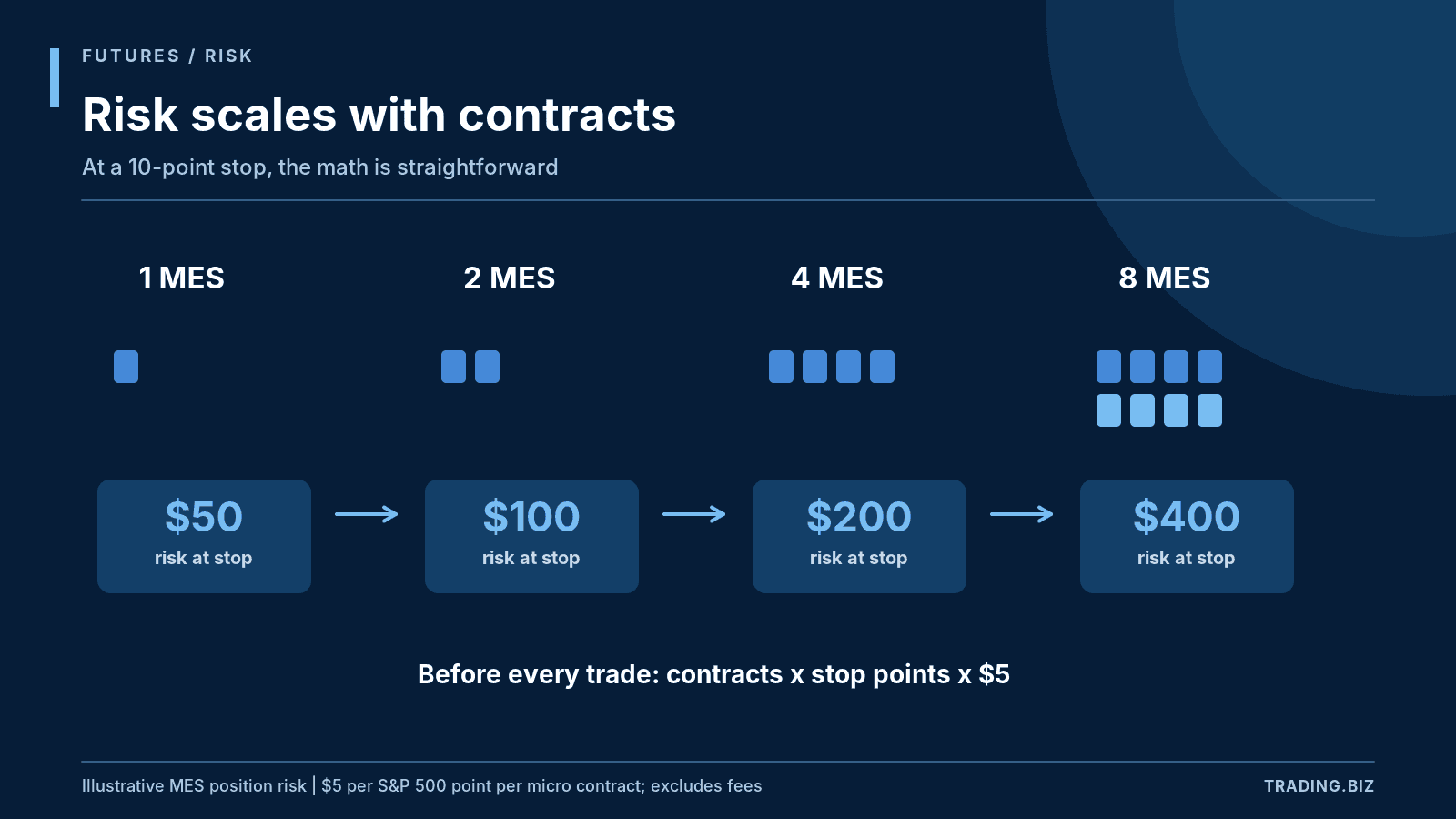
Figure 2. How a fixed stop distance scales with MES contract count.
The phrase "trailing drawdown" is incomplete until the calculation method is specified. The threshold may follow intraday equity highs, realized balance highs or a daily settlement reference. For traders who let positions run, intraday high-water calculations can be particularly restrictive. A winning trade that gives back part of its peak can shrink the remaining room before the trader ever closes it. If a firm's help center uses examples, read all of them rather than relying on a summary table.
Consistency and payout caps deserve the same attention. A firm might ask for a minimum number of trading days or place limits on the first withdrawal. A large profitable day might not qualify you immediately. Check whether the trading account resets after a payout and whether the remaining cushion is reduced by the amount withdrawn. That point often determines how aggressive a trader can be after receiving a first reward.
Finally, clarify the rules around news releases and exchange holidays. Futures markets can widen sharply during economic announcements, and slippage can make an expected stop loss more expensive than its chart distance suggests. Plan for real fills rather than perfect ones. A firm cannot turn a bad risk model into a good one by advertising more capital.
Futures contracts also expire. Traders should check when their platform rolls charts and when the program stops accepting orders in the expiring contract. Liquidity typically migrates to the next active month, and trading a thin contract can produce poor fills. This matters to an intraday trader using tight stops. Make contract-calendar checks part of the routine instead of assuming every S&P 500 futures symbol behaves the same way throughout the quarter.
Why futures traders obsess over trailing drawdown
A trailing drawdown changes the rhythm of the whole account. If the trailing threshold moves up as your balance rises, a strong day can tighten the space you have for the next day. That is why some traders feel trapped after a good session. They are profitable on paper but suddenly have less room to operate than before.
This is also why futures traders should not judge a firm by the nominal account size alone. A 50K account under a tough trailing drawdown may feel smaller than a smaller account with a cleaner loss model.
How to test a futures prop firm before committing
Trade the intended style in sim first. Use the same session hours, contract size and stop placement you would use live. Then map those trades against the firm’s loss limits and payout policy. That exercise exposes problems quickly.
If possible, choose one firm and one model and trade it long enough to learn the environment instead of jumping between firms. Futures rules are detailed, and learning one ruleset deeply usually beats sampling five at once.
Who benefits most from a futures prop firm
A futures prop firm can suit a trader who already understands contract specifications, session structure and the way losses can stack in index futures. It is especially useful for traders who want larger notional exposure without tying up the same amount of personal capital.
It is less suitable for someone who is still learning what one contract does during a fast move. Futures are efficient, but they are not gentle. Beginners should earn some screen time in sim before treating a prop challenge as practice.
FAQ
What is the best futures prop firm?
Topstep is a common answer for traders who want an established structure, while Apex is popular among traders who focus on entry cost.
Why is trailing drawdown so important?
Because it changes how much room a trade can have and often determines whether your strategy is realistic inside the account.
What platforms do futures prop firms use?
Common options include Tradovate, NinjaTrader and related futures platforms.
Is Lucid a futures prop firm to watch?
Yes, it is one of the names traders often compare when they want alternatives to the biggest brands.
Can beginners use a futures prop firm?
They can, but beginners should demo trade futures first because the pace and risk profile are very different from casual stock trading.
Find Your Perfect Broker: Explore Our List Now!
Choose the best with our expert-selected options

Find Your Perfect Broker: Explore Our List Now!
Choose the best with our expert-selected options
Discover top binary options brokers tailored to your region. Browse our curated lists by country: