Updated:November 18, 2026

9 min

0
The cheapest prop firm challenge by account size in 2026
The cheapest prop firm challenge is not always the best deal. Low entry prices matter, but traders also need to watch reset fees, payout limits and whether the rule set is too tight to trade comfortably.

Vadim Egortsev
Author

Updated November 18, 2026
How we compare challenge prices by account size
To compare cheap challenges fairly, you need to match account size, challenge structure and what happens after you pass. A 50K one-step model is not directly comparable to a 50K two-step model with different loss limits. The price tag is only the first layer.
For this guide, the focus is on widely searched firms and public pricing pages checked in November 2026. Prices and discounts change all the time, so treat any list as a snapshot, not a forever ranking.
Start with the checkout amount for the exact account model, not an advertised "from" price. A 10K evaluation and a 100K evaluation may share a brand but have different fees, drawdown allowances and payout limits. Some firms quote a single payment. Others use a subscription until the trader passes. A third type charges an activation fee later. These prices cannot be compared fairly in one column without describing the route to a funded account.
Here is the calculation worth keeping in your notes: total access cost equals initial fee plus renewals plus resets plus activation fees, minus any refund that you qualify to receive. A conditional refund should remain a potential rebate until the contract's requirements have been met. A trader who passes quickly on the second attempt may spend less on a higher-priced one-time evaluation than on a cheaper monthly model that takes several cycles.
Cheapest prop firm challenge for 10K, 25K, 50K and 100K accounts
At small account sizes, firms like FundingPips often compete aggressively on price. In futures, Apex is frequently in the low-entry conversation, especially when promos are running. Topstep is rarely the rock-bottom cheapest, but the structure is easy to understand. FTMO usually costs more, yet many traders still pay the premium because the rules and support are easier to trust.
For 50K and 100K accounts, the gap between firms can look wide on the sales page. The real question is whether the cheaper model forces more resets, tougher payout conditions or a rule set that does not fit your style.
On FTMO's published two-step pricing page in November 2026, the $10,000 challenge begins at €89 and the $50,000 route is listed at €345. These are euro amounts and describe a specific evaluation structure. A competing firm's dollar price may exclude applicable taxes or use a different target. Currency conversion alone can change which price is cheaper for an Indian, Nigerian or Pakistani buyer.
For a 25K account, compare the maximum loss in cash. A 10% static cap represents $2,500. A 6% cap represents $1,500. If both programs charge the same entry fee, the second gives less room for normal variation in results. At 100K, the gap grows: 10% leaves $10,000 of stated maximum-loss room, while 6% leaves $6,000. The nameplate size increases the psychological appeal, but the loss budget is what a careful trader should compare.
The cost of execution is easy to overlook. A scalper making several round trips daily pays spreads or commissions on every trade. An evaluation platform with expensive execution can consume more of the loss budget than one with a slightly higher upfront fee. Test your usual instrument during your normal trading session before making the purchase. For a concrete cost calculation, try our pip value calculator before paying a challenge fee.
Prop firm discount code offers and how to apply them
A prop firm discount code usually works like a regular promo field at checkout. The simple mistake is buying because a code exists, not because the challenge fits. A 20% discount on the wrong model is still the wrong model.
Good practice is to compare the discounted fee, the reset price, the refund policy and the first payout conditions all at once. That gives you a real effective cost, rather than a number from a promotional banner.
Do not accept a coupon from a stranger who asks you to buy through an unrelated payment page. The safest practice is to enter the code on the firm's official website and confirm the discounted total before paying. If the site silently changes the selected model after a promo is applied, go back and verify the objective table again.
Funding Pips discount code and what it usually covers
FundingPips discount code campaigns are common enough that traders should expect pricing to move. The smart move is to read what the discount applies to. Some promos apply to selected models or specific sizes. Others expire fast or cannot be stacked with other offers.
FundingPips has several challenge structures, and discounts should be judged against the exact model selected. Its official model chart distinguishes one-step Flex from two-step Standard, Pro and Flex, plus an instant option. The loss limits and reward schedules differ. A code that makes one of these options inexpensive does not make the rules equivalent to the others. Check the current official checkout rather than copying a coupon from an old video description.
One practical way to decide is to write down the offer with its expiration date. Then wait long enough to review the rules without the countdown timer on the screen. If you still want the same model after reading the full terms, the discount is useful. If the sale was the only reason you clicked, it probably was not a sound decision.
What a low price hides: resets, rules and payout limits
Cheap challenge fees can hide expensive habits. If a trader keeps resetting because the rules are hard to respect, the effective cost rises fast. Some firms also limit early payouts or cap the amount you can withdraw at first. That changes the value of a low entry fee.
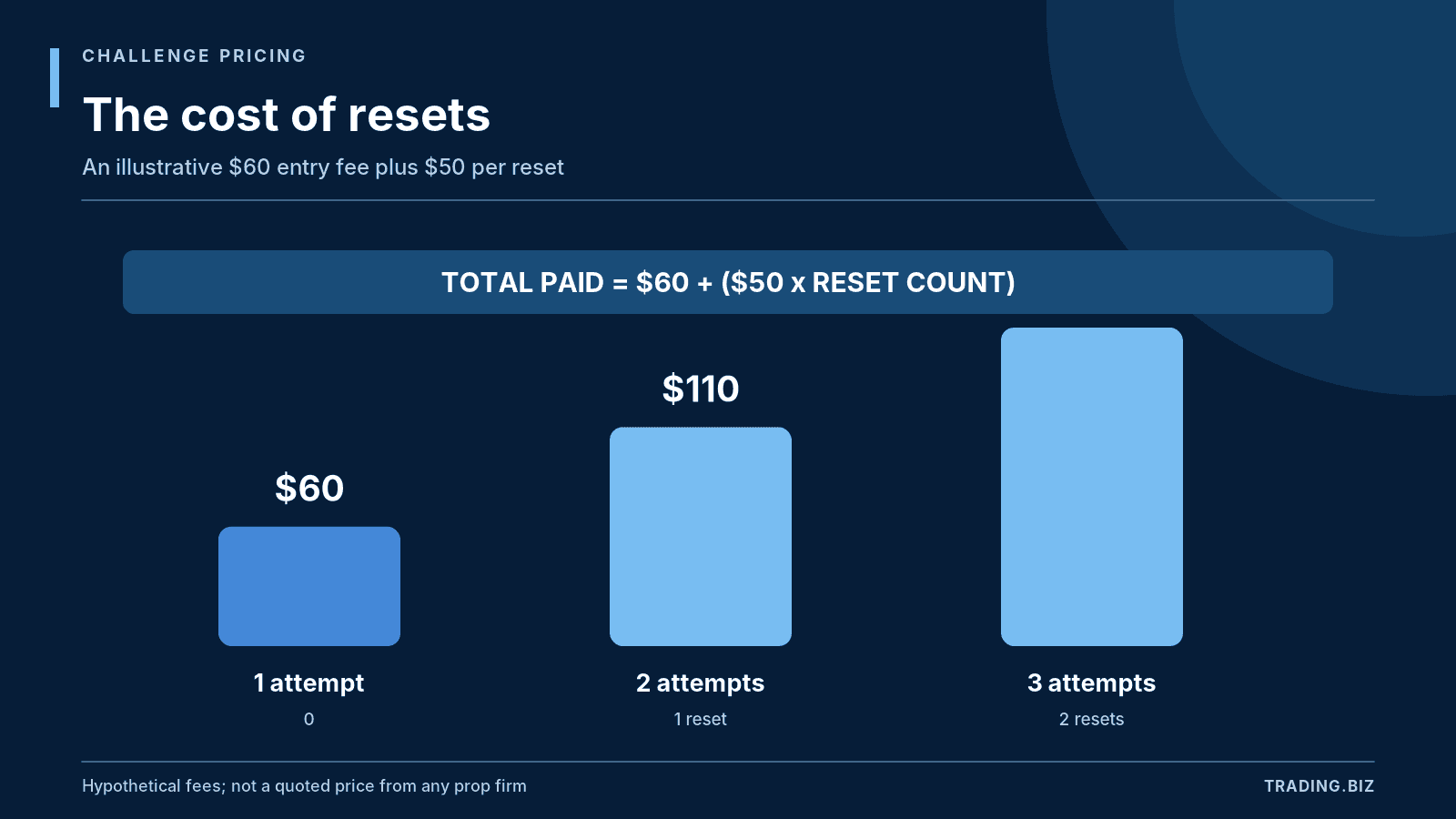
Figure 1. How repeated challenge resets increase the total fee paid.
In other words, the cheapest prop firm challenge for one trader may be a mid-priced challenge with a better fit, because that trader passes once instead of failing three times.
Take a hypothetical $55 challenge that allows a reset for $45. A trader who fails three times and finally passes after the fourth purchase may spend $190 before reaching the funded stage, excluding any activation fee. Meanwhile, a $120 evaluation passed on the first attempt would cost $120. Nobody can predict which path will occur, but the scenario shows why the advertised cheapest challenge is not always the least expensive route.
Payout policy can change the effective value as much as fees. If a funded account permits only a limited first withdrawal, the trader may wait longer to recover challenge costs. If the contract requires a minimum number of profitable days, a big winning trade may still leave the account ineligible. Ask how much of an eligible reward can be requested on the earliest payout date and whether unwithdrawn profits affect drawdown thresholds.
Refunds and renewals: what you may pay beyond the first fee
Some prop firms refund the challenge fee after certain milestones. Others do not. Some futures firms use subscription-style pricing and separate activation terms. These details matter more than most traders expect. Before paying, look for the full cost path, across the entire purchase and payout cycle.
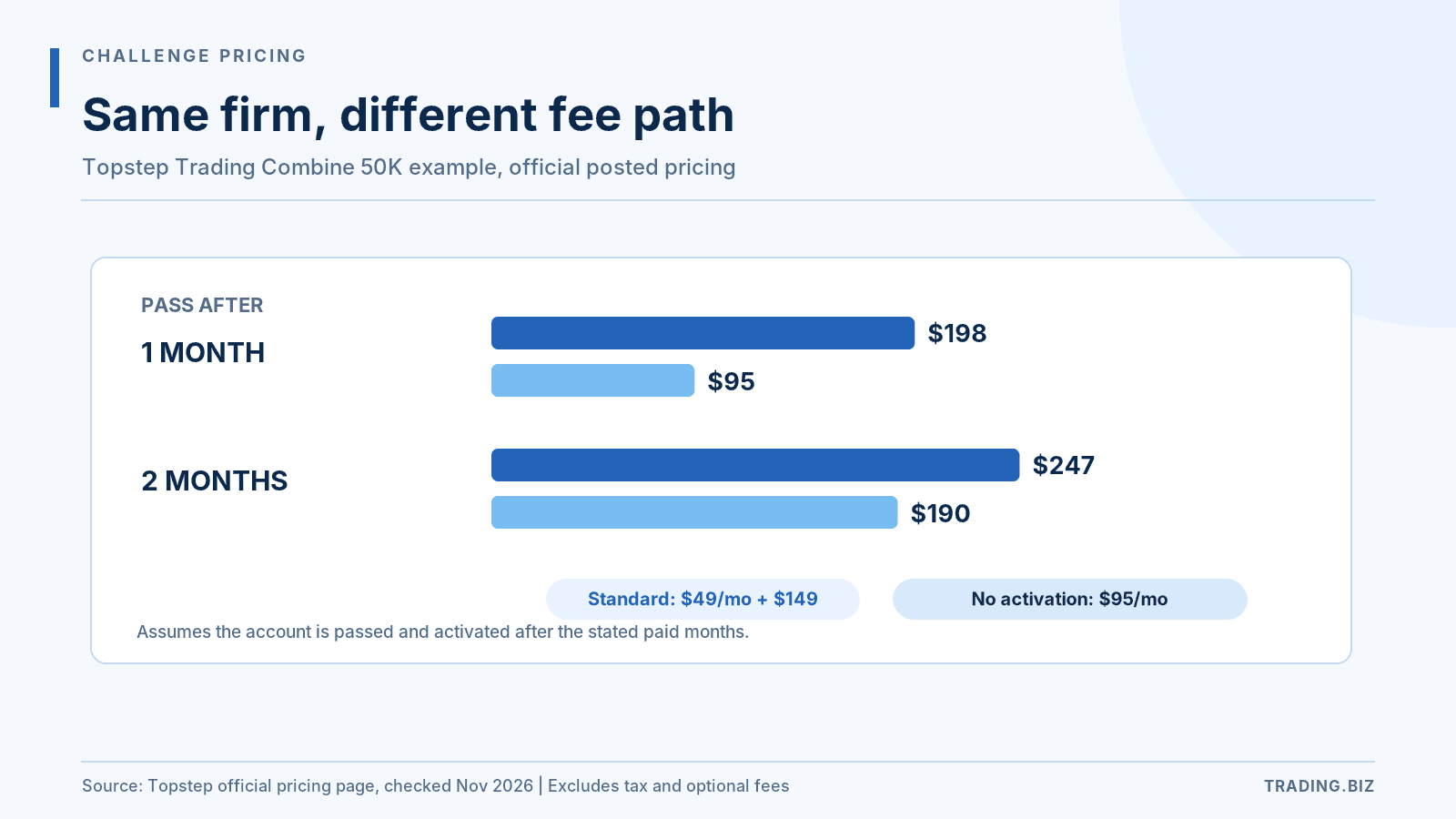
Figure 2. Topstep 50K subscription paths using its published pricing schedule.
Topstep is a useful example because traders can select different Trading Combine pricing paths. In 2026 it has offered routes with distinct monthly charges and activation conditions. Its official help center sets out how Express Funded Account activation works after a passing combine. The correct total depends on which plan you bought and how many billing cycles passed before qualifying. Comparing only the cheapest monthly number misses a substantial part of the decision.
Make sure an advertised refund is a contractual feature rather than a vague possibility. Some firms refund an evaluation fee only after a first reward. Some never refund it. Account activation, data packages and optional platform services can also add costs. Read the price summary once before purchase and again after passing, since those are two different moments of financial exposure.
How to compare cheap prop firm challenges fairly
One practical way to compare is to calculate a simple expected cost. Take the starting fee, add the reset fee multiplied by how often you realistically expect to reset, and then compare that number with the account rules. The result is not perfect, but it is more honest than looking at a promo banner alone.
You can also compare cheap challenges by time pressure. A challenge with a low fee but a structure that pushes you to trade too often can be more expensive in behavior terms. A slightly higher fee on a more flexible model may save you money because you do not force mediocre setups.
When the cheapest prop firm is still the wrong choice
The cheapest firm is the wrong choice when the support is poor, the payout terms are fuzzy or the rules clearly fight your method. Traders who hold for longer than a day should not choose a bargain account that bans overnight exposure. Traders who like to capitalize on event volatility should not choose a model that clamps down hard on news trading.
Price matters, but the whole point of a funded account is to give a strategy room to work. If the rule set kills the strategy, the low fee is just decoration.
FAQ
What is the cheapest prop firm challenge right now?
That changes often, but FundingPips and Apex usually appear near the low end of public pricing pages. Always check the latest promo and rules.
Are prop firm discount codes worth using?
Yes, if you already want that challenge. A discount code helps on price, but it does not fix a bad rule set.
Is a free prop firm challenge real?
Free trials exist, but a fully free funded path is rare. Read the terms closely before signing up.
Do cheap challenges have worse rules?
Not always, but traders should expect tradeoffs somewhere, whether in payout terms, resets or restrictions.
Should I choose price or payout speed?
Most traders need both, but if forced to choose, a firm with fair rules and reliable payouts is usually the better buy.
Find Your Perfect Broker: Explore Our List Now!
Choose the best with our expert-selected options
Find Your Perfect Broker: Explore Our List Now!
Choose the best with our expert-selected options
Discover top binary options brokers tailored to your region. Browse our curated lists by country: