Updated:November 18, 2026

11 min

0
Our shortlist of the best trading apps in India for 2026
The best trading apps in India depend on what you want to trade. Stocks and F&O, forex-style CFDs, binary-style platforms and crypto all sit under the same search phrase, but they are very different products with different legal and risk profiles.

Ivanna Petrova
Author

Updated November 18, 2026
How we chose the best trading apps in India
For Indian users, the first filter is market access. A stock investor needs a demat-linked app and local regulation. A forex or CFD trader is usually looking at offshore platforms. A crypto user needs INR support and clean deposits or withdrawals. Those are three different shopping journeys, so this guide separates them instead of pretending one app wins everything.
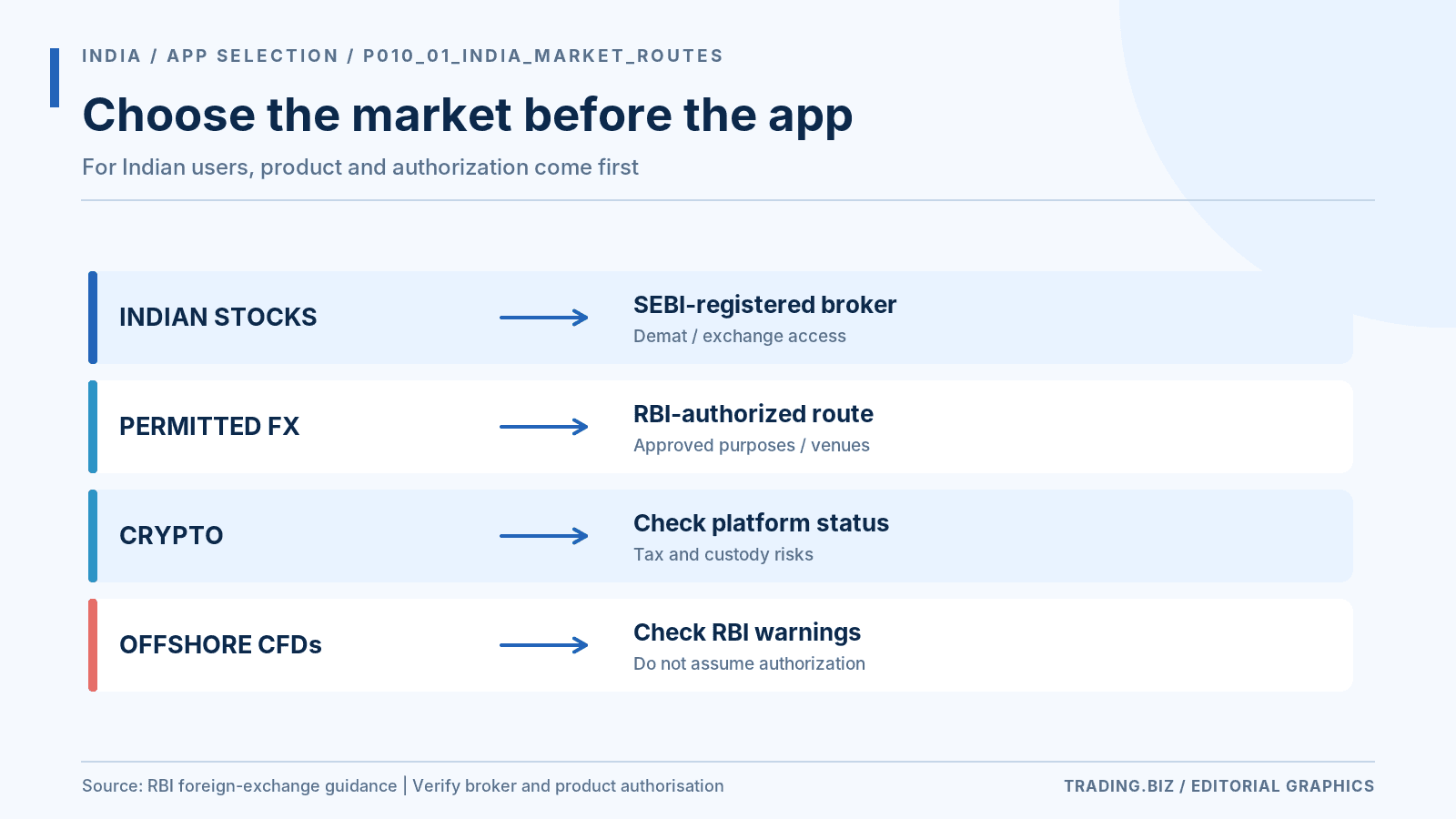
Figure 1. Product and authorization checks for Indian trading app users.
The first question is what market the reader wants. Buying NSE shares through a demat account is legally and operationally different from speculating on offshore CFDs. Crypto exchanges create a separate custody and tax problem. A single app ranking that ignores these categories can send a beginner toward a product they never meant to use. We therefore start with market authorization, then compare the trading experience within that category.
An Indian stock app should make it easy to confirm the broker's SEBI registration and the exchange membership used to route orders. It should also explain its depository participant relationship, since delivery shares live in a demat account rather than in the app itself. For crypto, the initial screening covers INR transfer methods, account security and whether the provider appears on the relevant FIU registration list. For an international platform, residency restrictions and RBI rules are the decisive questions before spreads or interface quality.
We also give weight to routine costs. A headline "zero account opening" offer does not tell the investor about brokerage charged on every sale or the depository participant fee applied to delivery transactions. An active trader needs to know whether market orders and limit orders cost the same, and whether a platform charges separately for premium charts or API access. These details are easier to test than sweeping claims that an app is best for everybody.
Best trading apps in India for stocks and F&O: Zerodha, Groww and Upstox
For listed Indian markets, Zerodha, Groww and Upstox remain the obvious shortlist. Zerodha stays popular with active users who want a strong ecosystem. Groww is easy to pick up, especially for newer investors crossing over into trading. Upstox is still firmly in the mix for users who want a broad retail app with active-trading features. These apps fit users who need regulated access to equities, derivatives and an Indian account structure.
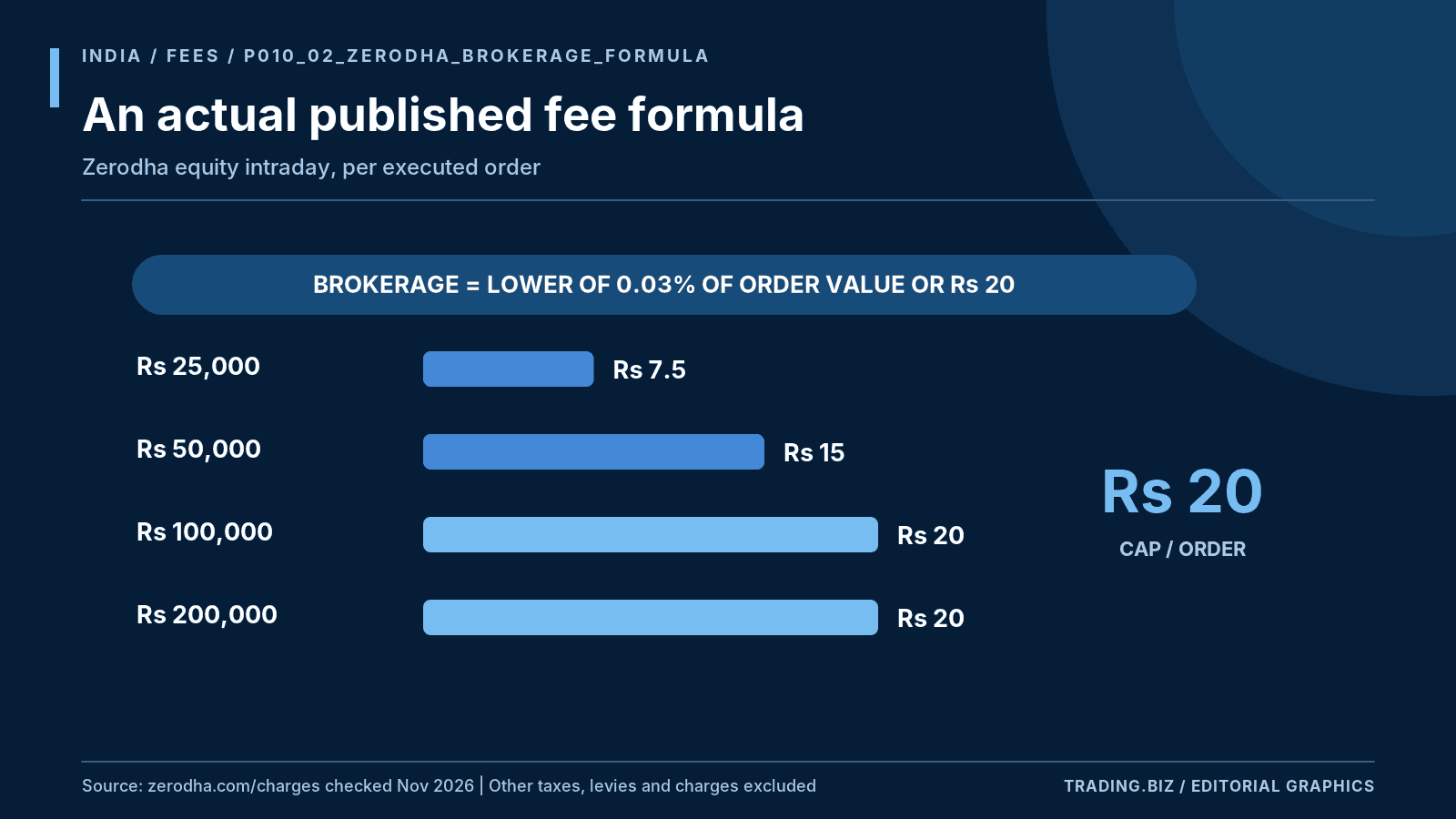
Figure 2. Zerodha intraday brokerage calculated from its published tariff.
Zerodha remains an obvious reference point for traders who want a established brokerage workflow. Its published equity delivery brokerage is zero for eligible retail individual clients, and its standard equity intraday brokerage is the lower of ₹20 or 0.03% per executed order. Options trades generally carry a flat ₹20 brokerage per executed order. Regulatory charges and demat-sale charges still apply where relevant. A new investor should look at the full tariff, not stop reading at the word "free."
Groww takes a different approach to the mobile experience. Its published equity brokerage is the lower of ₹20 or 0.1% per executed order, subject to a ₹5 minimum. That also applies to delivery trades under its current pricing page. For someone making many small purchases, the minimum can matter more than the percentage. Upstox is another sensible app to test for order entry and account reporting, but confirm the live plan before quoting a rate because promotional offers and brokerage schedules can change.
Angel One belongs in the shortlist for users who want research features alongside active trading. Its official pricing states that equity delivery and intraday orders are charged at the lower of ₹20 or 0.1%, with a ₹5 minimum, after applicable promotions. The practical comparison is therefore not "free versus paid" across all three brands. It is the total monthly cost of the activity you expect to do, including taxes and the cost of selling shares out of demat.
What the percentage fee means on a small order
Suppose a client buys ₹8,000 of stock in a delivery transaction. At 0.1%, the brokerage would be ₹8, but a ₹5 minimum would not change that result. On a ₹2,000 order, the percentage is ₹2, so a ₹5 minimum becomes relevant. A 0.03% intraday charge on ₹50,000 is ₹15, below the ₹20 cap. These calculations concern brokerage alone. Stamp duty and securities transaction taxes may materially change the all-in cost, especially for small trades.
A delivery investor should also understand where dividends and corporate-action notices appear. A convenient brokerage app is of little help if account holders ignore depository emails or fail to update bank details. Keep the registered phone number current and check whether the app exposes contract notes in a downloadable format. For long-term investing, records may become more valuable than advanced chart drawing tools. Spend a few minutes finding statements before placing the first purchase, because they are the documents you will need when reconciling taxes or a corporate action.
Best trading apps in India for forex and CFD trading
Search interest often pulls forex-style apps into the same list. That is fine as long as the distinction is clear. Offshore CFD apps and Indian stockbroking apps operate under different rules. Exness says it does not accept residents of India, and RBI rules restrict unauthorized electronic forex trading platforms. Checking residency eligibility and authorization comes before comparing deposits or demo features. For permitted currency contracts, start with an appropriately authorized Indian intermediary.
The RBI permits certain currency trading through authorized persons and recognized exchanges under specified conditions. Retail accounts on unauthorised offshore electronic forex platforms are a different matter. The Reserve Bank says residents should not transact through unauthorized ETPs, and its public Alert List is a warning resource rather than a complete register of all prohibited operators. A trading app appearing in an app store is not a regulatory licence.
Exness illustrates why residency checks matter. The broker's own help center lists India among countries whose residents are not accepted for its services. Older websites that still call it one of the best trading apps for Indian residents are therefore giving misleading practical guidance. A trader who lives in India should not assume that changing a device location or using another person's documents resolves legal or account-eligibility restrictions. For lawful currency exposure, start with permitted exchange products through an appropriately authorized Indian intermediary.
Binary and options-style apps such as Quotex: legal status and risk
Binary-style platforms attract attention because the interface feels simple and the deposit threshold is low. The risk is that simplicity can hide how speculative the product is. Indian users should not assume that a popular app is automatically a strongly protected one. The more a platform leans on fast wins and tiny deposits, the more caution is needed.
Binary-style products typically ask users to predict whether a price will end above or below a reference level after a short time. The displayed payout is often smaller than the amount at risk. If a $10 stake pays $8 in profit on a win and loses the full $10 on a loss, a 50% win rate creates an expected loss of $1 per pair of trades. The breakeven win rate would be about 55.6%, before any other friction. This payout arithmetic deserves more space in an app review than screenshots of easy-looking trades.
Do not infer local authorization from the size of a social-media community. The legal status of a particular platform and activity should be checked against applicable financial and gambling rules. Claims that any offshore binary app is "RBI approved" require direct evidence from the regulator. A demo can teach how a chart looks, but it does not convert a high-risk payout product into a conventional investment.
Best crypto trading apps in India and INR deposit options
Crypto trading apps belong in the conversation because many Indian users search for one app that does it all. In practice, a crypto app should be judged on INR deposit support, liquidity, fee clarity and withdrawal reliability. A platform that handles INR onboarding smoothly can save a lot of friction for beginners.
Crypto users should judge the complete purchase process. The quoted token price is one component. A platform may include a spread in an instant-buy quote, while a spot order book displays maker and taker charges separately. INR transfers can also depend on the customer's bank and the exchange's current payment arrangements. Do not assume UPI funding is available indefinitely simply because it appeared in a previous screenshot.
CoinDCX and CoinSwitch are familiar names, with entries for their operators in government-published FIU registration materials. That registration addresses anti-money-laundering reporting; it does not insure coins or guarantee investment returns. Indian users should also consider Section 115BBH's 30% tax on taxable VDA transfer income and Section 194S's 1% TDS on qualifying transfer consideration. TDS is not an extra 1% profit tax, and the rules for deductions and loss set-off are restrictive. Accurate cost tracking is therefore part of app selection.
The best Indian trading app by investor type and budget
For Indian stocks and F&O, the best trading app in India for most beginners is one of the established local apps. For offshore CFD or forex-style trading, the best app is usually the one with a clear demo, clean mobile interface and a risk model the trader understands. For crypto, pick an app with straightforward INR support and clear fees. It is better to choose by market and budget than to chase a top 10 list that mixes totally different products.
For a first-time stock investor, regulated access and clear account statements deserve more weight than a feature-packed trading screen. A user who plans to buy once a month may care primarily about delivery brokerage and demat charges. An intraday trader will care about order handling, execution reports and the cost of several round trips each session. These are different workloads, so they should be tested separately.
Create one sample scenario before deciding. If you expect four ₹10,000 delivery purchases per month, calculate brokerage, applicable taxes and any annual maintenance costs across a full year. Then compare the account-opening experience and the clarity of the transaction report. For crypto, run the same exercise with one INR purchase and one withdrawal. If the platform makes it difficult to find the net amount credited, that is a genuine usability problem rather than a minor cosmetic issue.
How Indian users should narrow the app list
The fastest way to narrow the list is to separate products. If you want to trade Indian equities and F&O, start with local stockbroking apps. If you want global CFD exposure, compare international broker apps separately. If you mainly want crypto, compare crypto apps on INR rails and liquidity. Mixing all three categories into one shortlist usually creates confusion.
After that, check account opening friction, funding methods, charting quality and how easy the app makes it to understand costs. Good apps remove friction without hiding the risk.
What beginners often get wrong with trading apps in India
Beginners often choose the app with the lowest visible account threshold and assume that means lower risk. It does not. A low minimum deposit can sit next to very high product risk. The better question is whether the product itself makes sense for the user’s experience and goals.
A second mistake is ignoring the withdrawal process. A trading app may look great at deposit time and still turn clumsy when you want your money out. That is why the best trading app in India is the one that stays easy to understand from signup through cash out.
A simple checklist for the best trading apps in India
Before installing anything, write down the market you want, the minimum amount you want to start with, whether you need a demo, whether you need UPI or INR support, and how often you plan to trade. That tiny checklist makes the app search much easier.
If an app looks polished but does not fit those basics, it is the wrong app for you no matter how popular it is. A good match saves time and reduces mistakes.
FAQ
Which is the best trading app in India for beginners?
For Indian stocks, many beginners start with Groww or Zerodha because the apps are well known and easy to navigate.
Which trading app in India supports UPI?
Many locally focused finance and investment apps support UPI for funding flows. Always check the current app funding options.
Can I trade forex on the same app as Indian stocks?
Usually not in the same regulatory setup. Local stock apps and offshore CFD apps are different products.
Is Quotex legal in India?
Users should be cautious with binary-style platforms and review the legal and risk implications carefully before depositing.
What is the best trading app in India for crypto?
The best choice depends on INR deposit support, fees and the markets you want, but clean INR rails are a big plus for most users.
Find Your Perfect Broker: Explore Our List Now!
Choose the best with our expert-selected options

Find Your Perfect Broker: Explore Our List Now!
Choose the best with our expert-selected options
Discover top binary options brokers tailored to your region. Browse our curated lists by country: