Updated:November 18, 2026

11 min

0
Best forex brokers in USA 2026: CFTC and NFA regulated list
The best forex brokers in USA searches should start with a registration check, not a leverage offer. US retail forex is a tightly regulated market.

Gloria Chimelu
Author

Updated November 18, 2026
Anyone looking for the best forex brokers in USA should start by checking registration, not the leverage advertised in an ad. US retail forex is a tightly regulated market. That narrows the selection, but it also gives traders a clear way to find out which legal entity is taking the other side of their trades. OANDA, FOREX.com and tastyfx are three familiar names worth comparing for eligible US retail accounts.
There is no universal winner. A trader who cares about TradingView integration may prefer one platform; someone using MetaTrader or trading unusual currency pairs may make another choice. Spreads change constantly, and the cheapest advertised account can cost more after commissions and overnight financing.
Why so few forex brokers accept US clients
Retail forex in the United States falls under Commodity Futures Trading Commission (CFTC) rules and National Futures Association (NFA) supervision. A firm acting as counterparty to qualifying off-exchange leveraged forex for retail customers generally needs the appropriate registration, membership and financial compliance arrangements. The requirements are expensive, and some international brokers choose not to serve US residents.
A brokerage licence elsewhere does not grant a firm access to US retail forex customers. A company may be authorised by the FCA in the United Kingdom or ASIC in Australia and still have no US retail forex business. You should check the exact US legal entity rather than relying on a multinational group's reputation.
If a website advertises a 500:1 leveraged forex account to American residents, investigate carefully. Standard US retail margin requirements are significantly stricter. An impressive leverage claim is a poor substitute for a verifiable NFA record.
CFTC and NFA regulation explained
The CFTC is the federal derivatives regulator. The NFA is the self-regulatory organisation responsible for membership, standards, examination and public registration records for many futures and retail forex firms. Retail Foreign Exchange Dealers (RFEDs) and relevant Futures Commission Merchants operate under specific requirements.
Registration matters, but it is no guarantee of profit or protection against all failures. Currency prices can move unexpectedly. Positions can be liquidated, and spreads may widen when liquidity dries up. The CFTC itself tells customers to verify registration and disciplinary history before trading.
US off-exchange forex accounts are generally not the same as insured bank deposits. Don't assume Securities Investor Protection Corporation protection applies to retail spot forex. Review the broker's public financial and risk disclosures, rather than relying on the logos displayed on its homepage.
How to verify forex trading brokers in USA using NFA BASIC
Open the NFA BASIC database from the CFTC or NFA site. Search by the broker's registered legal name or NFA ID, then check registration status, membership classification, disciplinary history and any available financial data. Match those details to the legal entity in the account agreement. Marketing brands sometimes change while legal registrations remain under a longer corporate name.
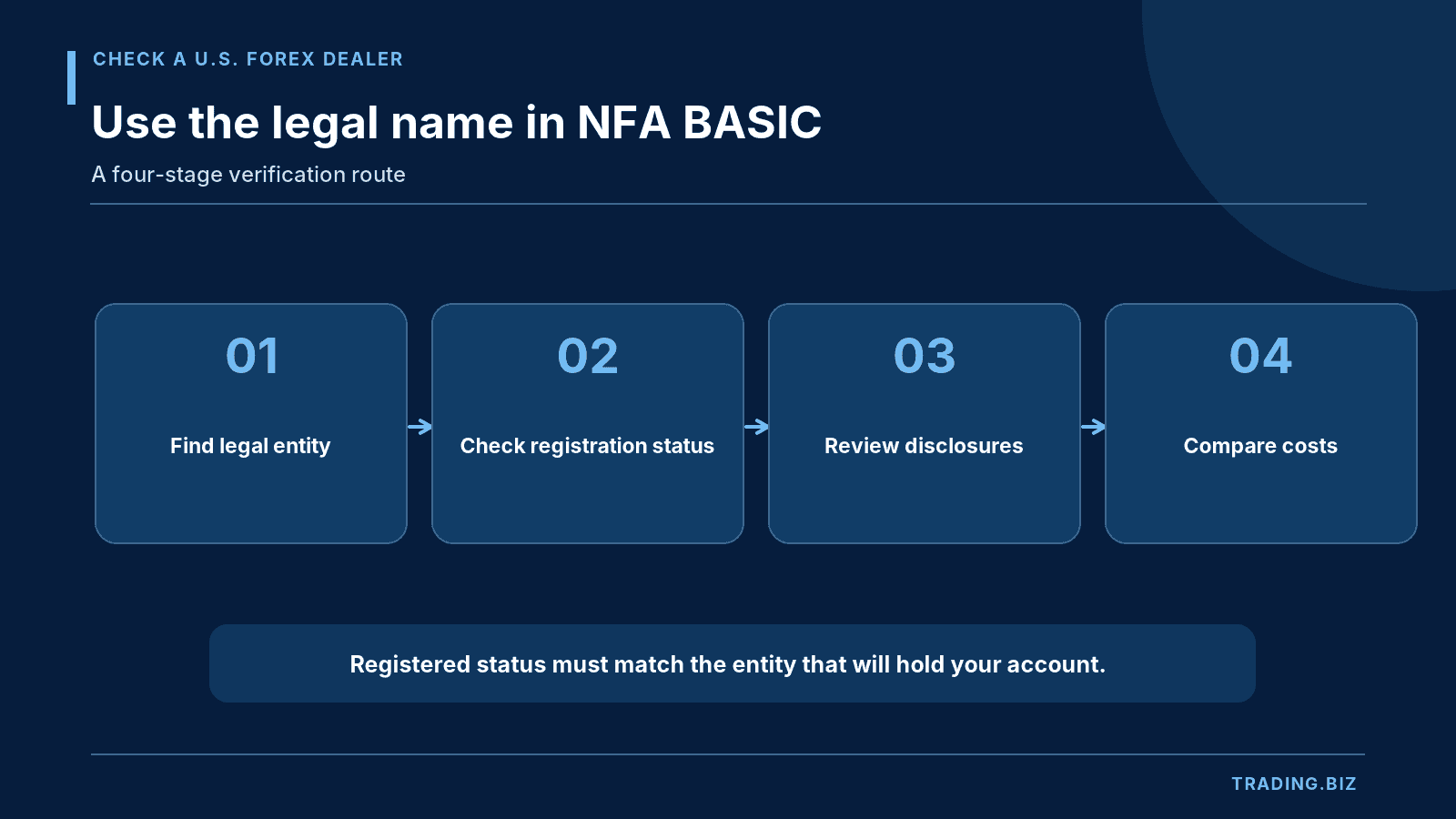
Figure 1. How to verify a U.S. forex dealer using NFA BASIC.
You can verify examples such as OANDA Corporation, GAIN Capital Group LLC for FOREX.com, and tastyfx LLC against their own disclosures and the regulator's database. A similar-looking domain name or social account is not the registered firm. Don't send money to a personal bank account provided by someone claiming to represent a dealer.
Read the disclosure dates. Firms can merge, add products or change their registrations. The point of BASIC is that you can check the status at the time you open an account, rather than trust an article indefinitely.
US forex brokers compared: platforms and pricing
| Broker | US retail offering | Pricing and tools to compare |
|---|---|---|
| OANDA Corporation | Retail forex through a registered US entity | Spread-based pricing, available commission accounts, OANDA Trade and MT4 |
| FOREX.com / GAIN Capital | US forex with standard and RAW pricing | Web and mobile platforms, MT4/MT5 access by account, TradingView integration |
| tastyfx LLC | US retail forex dealer | Spread-only and other eligible pricing accounts, web/mobile tools |
| Interactive Brokers | Forex for qualifying US clients, generally not ordinary retail leveraged spot accounts | Check Eligible Contract Participant conditions before treating it as a retail option |
This is a comparison of market access and trading models, not a performance ranking. Look at your own account's available platforms and eligible instruments before deciding. Product lists and pricing are subject to change.
OANDA: a straightforward spread comparison
OANDA Corporation identifies itself as a CFTC-registered FCM and RFED and an NFA member. Its US offering includes an easy-to-read trading interface and access to major currency pairs. It publishes spread information and explains additional financing charges. Some accounts or pricing options may charge a separate commission, so check the exact account package.
A useful test is to compare EUR/USD around the same time on two demo accounts. Watch the spread at normal market hours and during a major economic release. The difference can be larger than a broker's promotional minimum spread. OANDA's documentation also makes clear that leverage, rollover and order execution deserve attention before committing real funds.
FOREX.com: platform choice and RAW pricing
FOREX.com is operated in the US by a registered legal entity and publishes details of its standard spread-only and RAW pricing accounts. The RAW option combines tighter quoted spreads with a commission charged for each side of a trade. Its published example uses a $7 commission per $100,000 of USD notional traded per leg. That means opening and closing the position are separate chargeable transactions.
Platform availability also differs by account. Some traders value the combination of a proprietary interface and MetaTrader, while others specifically want TradingView integration. Confirm that the combination you intend to use is available with your chosen pricing plan, because not every tool appears on every account type.
tastyfx: another registered US choice
The tastyfx legal disclosures identify tastyfx LLC as a CFTC-registered retail foreign exchange dealer and NFA member. It offers US-focused forex access and trading tools. Compare its typical spreads and any special account pricing against the two alternatives rather than relying on a claim that commissions are zero.
If you're familiar with a different tastytrade product, don't assume the legal entity or account protection is identical. Forex services and securities brokerage can be offered by related but distinct firms. Read the forex-specific agreement.
Why Interactive Brokers needs a separate eligibility check
Interactive Brokers is a major multi-asset broker, but ordinary US retail users should not assume they can open the same leveraged spot forex account that is available to clients elsewhere. US spot forex access has important Eligible Contract Participant conditions. If you need a small US retail forex account, check eligibility before adding IBKR to your shortlist.
Comparing forex fees without falling for a 'zero spread' claim
The visible bid/ask spread is one cost. You may also pay a commission, overnight financing, a currency conversion charge or an inactivity fee. Calculate the round-trip cost for the position size you normally use.
Consider a hypothetical EUR/USD trade of 10,000 euros. A 1.2-pip spread on a mini lot is about $1.20 before extra charges, because a pip is roughly $1 for 10,000 EUR/USD units. A raw spread of 0.2 pip would cost about $0.20, but add commissions for entry and exit. If those commissions total $1.40, the raw account costs about $1.60 before swaps. The less glamorous standard spread can be cheaper for that size and price combination.
Execution also matters. A stop order becomes a market order when triggered on many platforms and may fill at a worse price during a gap. Compare actual statements over a reasonable sample, not a single screen capture.
Leverage, FIFO and hedging restrictions for US accounts
The NFA financial requirements generally set minimum retail forex security deposits at 2% of notional value for specified major currencies and 5% for other currencies. These correspond to maximum theoretical leverage of roughly 50:1 and 20:1 before any tighter broker limits. Higher leverage gives a smaller margin requirement but increases the chance of rapid liquidation.
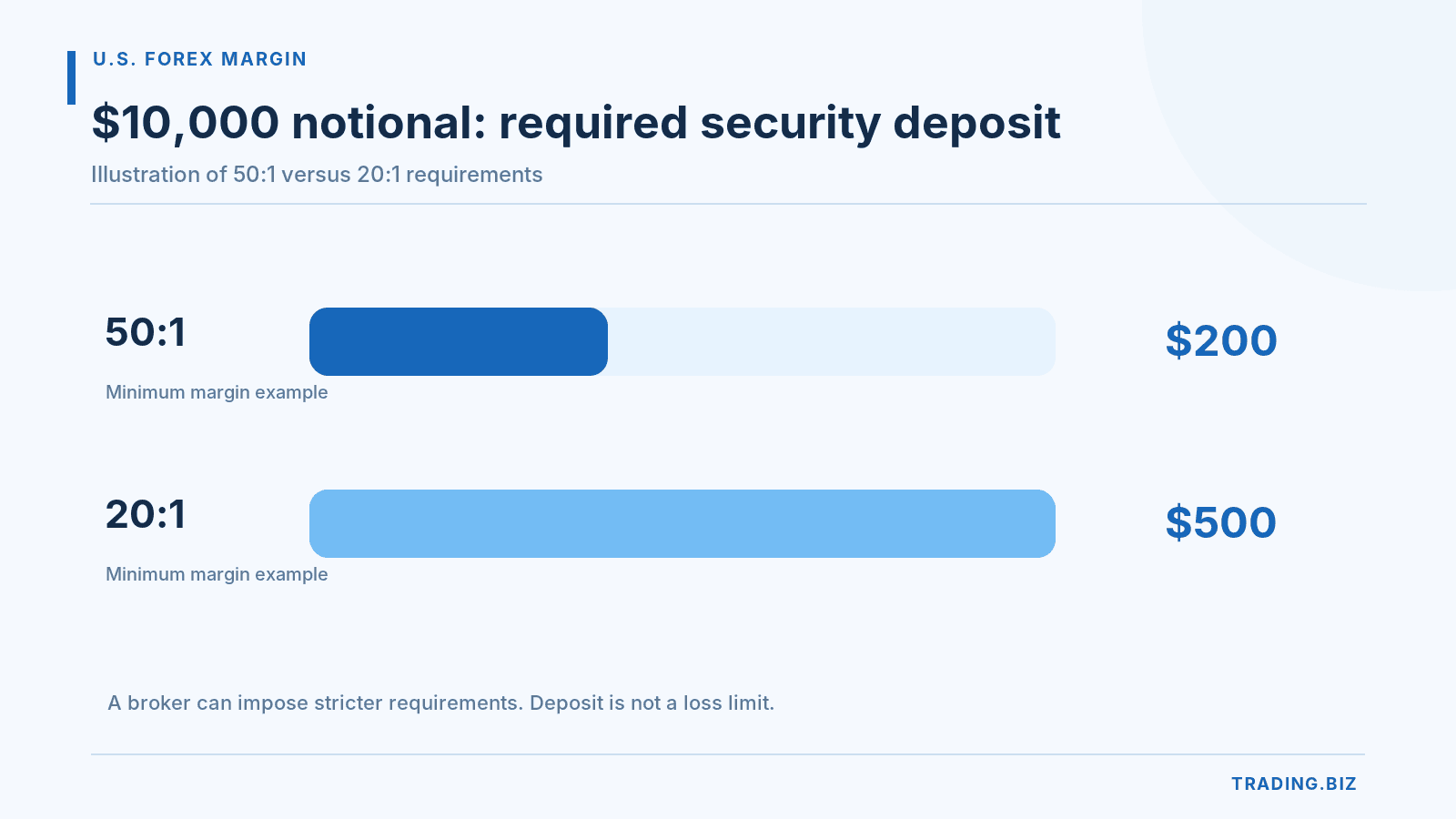
Figure 2. Illustrative margin deposits for $10,000 exposure at two leverage ratios.
US rules also affect the handling of offsetting positions and order allocation. Many brokers implement first-in, first-out treatment for multiple positions in the same pair and restrict holding separate opposite-direction positions that effectively hedge the same currency. The details should be read in the account terms because platform order displays can differ.
Suppose you have a $2,000 account and open a $50,000 equivalent position. A 1% adverse move represents about $500 before spreads or financing, or one-quarter of the account. Lower margin does not make the economic loss smaller. Traders should size positions using the possible loss, not the maximum exposure that the broker permits.
The difference between 50:1 and 20:1 leverage is easy to calculate. A $10,000 notional position requires a minimum security deposit of $200 at 50:1, compared with $500 at 20:1, before a dealer imposes any stricter house requirement. The deposit is collateral, not the maximum possible loss. A market gap or forced close can still create substantial damage relative to the balance. American retail customers should compare these limits with the account's full margin agreement rather than borrowing leverage examples from offshore websites. Higher leverage can magnify a strategy's mistakes faster than its opportunities.
Offshore brokers and risks for US residents
Offshore firms sometimes advertise leverage of 200:1 or 1000:1 and claim that US clients can bypass domestic rules through a foreign address or wallet. That is a serious warning sign. Misstating residency can lead to frozen accounts, voided agreements and difficulties recovering funds. Overseas dispute procedures may offer limited practical recourse.
Check NFA BASIC, not a marketing comparison that rewards larger leverage. If an unregistered promoter contacts you through social media, preserve the details and avoid sending money while you verify. The CFTC maintains public guidance on avoiding unregistered intermediaries.
A practical broker test before the first deposit
Open the demo accounts for the two dealers you are most seriously considering and load the same currency pair at the same time. Write down the spread during a calm period, a major US data release and the last hour of Friday's session. Compare the order ticket's minimum size, the default stop settings and the way the platform displays account margin. A long list of indicators is of little value if the order preview is difficult to understand.
Ask customer support three ordinary questions. How are overnight financing charges calculated? Can a pending withdrawal be cancelled? Where are the entity's NFA and CFTC disclosures? Good answers should point to written policies, rather than merely tell you that the company is trusted by thousands of users. Keep the responses with your account documents.
Finally, simulate a losing position. For a hypothetical $2,000 account, decide in advance whether you could tolerate a $40, $100 or $300 loss on one trade. Those values are 2%, 5% and 15% of the account. Your loss limit should drive trade size. The maximum leverage a broker permits is a ceiling, not a useful target.
Check the dealer's precise registered entity on NFA BASIC, then save its disclosure document and confirm the customer-support telephone number from the official website. A familiar brand name in an app-store listing is insufficient evidence.
FAQ
Which are the best forex brokers in USA for beginners?
Compare registered US dealers such as OANDA, FOREX.com and tastyfx. Start by checking eligibility and registration, then test a demo, read the pricing agreement and confirm how withdrawals work. A familiar interface is helpful, but risk controls and transparent statements matter more.
Is US forex trading legal?
Yes. Eligible retail customers may trade through appropriately registered providers under CFTC and NFA requirements. Some products advertised abroad are not available to ordinary US residents. Check the exact legal entity and account.
Can Americans use 500:1 forex leverage?
Standard US retail forex requirements do not support that level. NFA minimum security deposit rules generally imply 50:1 for specified currencies and 20:1 for other pairs, with potentially tighter requirements at individual firms.
Does the NFA guarantee my forex account?
No. Registration helps establish oversight and provides information about a firm, but it does not guarantee investment returns or remove market risk. Read the dealer's public disclosures and account agreement.
Is Interactive Brokers a US retail forex broker?
US leveraged spot forex access at Interactive Brokers involves eligibility limits, including Eligible Contract Participant requirements. Ordinary small retail accounts should not assume they qualify. Verify the specific product and client classification directly.
Source references
Find Your Perfect Broker: Explore Our List Now!
Choose the best with our expert-selected options
Find Your Perfect Broker: Explore Our List Now!
Choose the best with our expert-selected options
Discover top binary options brokers tailored to your region. Browse our curated lists by country: