Updated:November 27, 2026

2 min

1
Xpeng Targets Household Robots Within Two Years Following Commercial Launch

Pogodin Viktor
Author

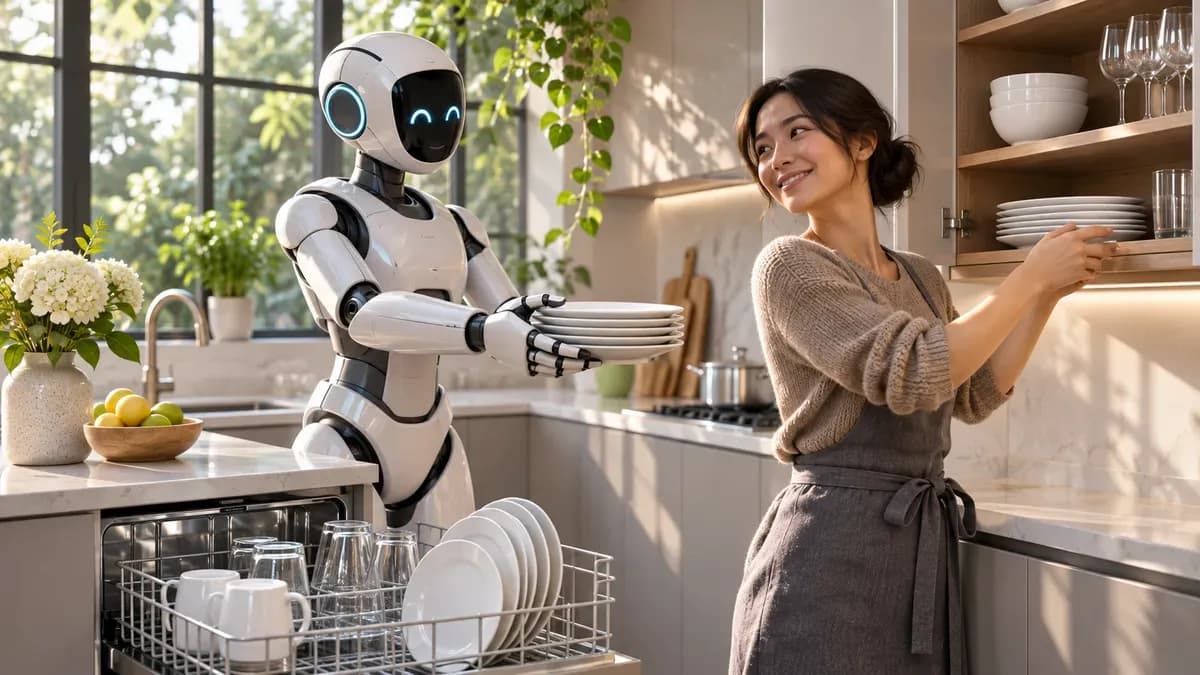
Humanoid robots could move closer to household use one to two years after successful commercial deployment, according to Brian Gu, co-president of Chinese electric vehicle maker Xpeng. Speaking to CNBC on November 26, Gu outlined a possible development path. The company has not announced a launch date for a household version.
Xpeng unveiled its latest general-purpose humanoid robot, IRON, on November 25. Mass production is planned for January 2027. The company intends to begin training the robot as an assistant in its car showrooms during the first quarter. Sales are targeted for the second quarter, with deliveries expected in the second half of the year.
Gu identified coordination between the robot’s systems as a major engineering challenge. A robot needs to walk, answer questions and complete a task while maintaining its balance and responding to its surroundings. Demonstrating those abilities individually does not establish that they can work reliably together.
Xpeng is developing both the hardware and software behind IRON. Gu linked that approach to lessons from the automotive business. He said founder and CEO He Xiaopeng initially placed considerable faith in software. Developing electric vehicles demonstrated how difficult it is to make physical hardware execute instructions safely and consistently.
In August, Xpeng’s robotics business raised more than $900 million in its first funding round, led by IDG Capital. The financing valued the business at more than $6.3 billion on a post-money basis. Gu expects to attract additional investors after IRON’s commercial launch.
The company has faced pressure in equity markets. At the November 25 close, Xpeng’s U.S.-listed depositary shares were down more than 55% since the start of 2026.
Its robotics development uses the Turing Physical AI Architecture, which connects perception, task planning and physical control. Xpeng also draws on its proprietary chips and driver-assistance technology. Gu said U.S. restrictions on advanced Nvidia chips had not changed access to the components needed for its current robotics development.
Gu believes robotics could become a meaningful part of Xpeng’s business within two to three years. He suggested the unit could become profitable as early as 2027, based on his expectation of higher margins than in vehicle manufacturing.
Household deployment would require IRON to operate safely around children, elderly people and pets, and respond to unexpected situations. Gu said those demands would raise requirements for the robot’s energy reserves and consistency of performance.
Find Your Perfect Broker: Explore Our List Now!
Choose the best with our expert-selected options


Find Your Perfect Broker: Explore Our List Now!
Choose the best with our expert-selected options
Discover top binary options brokers tailored to your region. Browse our curated lists by country: