Updated:November 11, 2026

5 min

Types of Trading Accounts in India
In India a trading account and a demat account are separate. The trading account executes buy and sell orders, the demat account holds the securities you own. That distinction is the reason most of the account types below exist. Updated September 2026.

Rahul Nambiampurath
Author

Updated October 23, 2026
In India a trading account and a demat account are separate. The trading account executes buy and sell orders, the demat account holds the securities you own. That distinction is the reason most of the account types below exist. Updated September 2026.
The account types
-
Equity trading account: for stocks, with cash or margin variants
-
Commodity trading account: opened with a commodity broker for commodity exchanges
-
Online and offline: how orders are placed, by platform or by phone
-
Two-in-one: trading and demat accounts linked
-
Three-in-one: trading, demat and bank accounts linked
-
Discount broker: lower fees, execution only
-
Full service broker: higher fees, research and advisory included
Equity trading accounts
The fundamental account type, used for buying and selling shares on the stock exchanges.
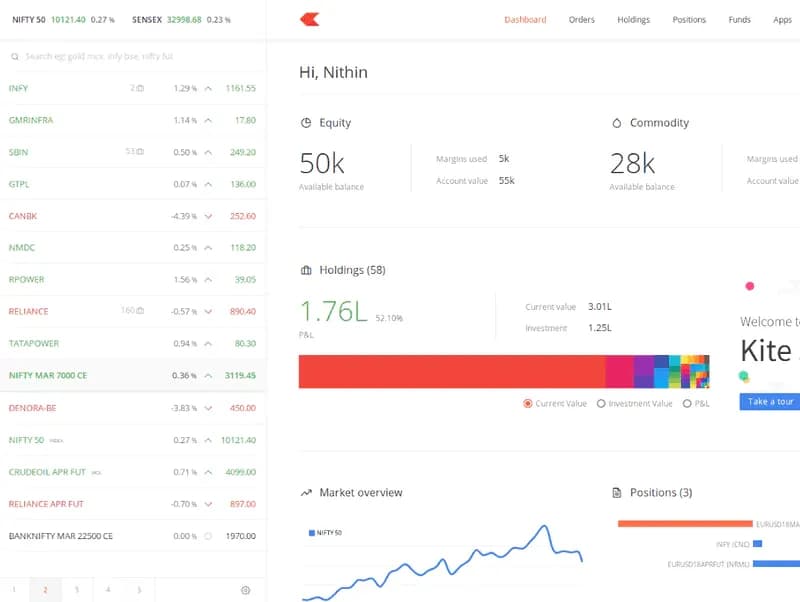
Equity Trading Accounts in India
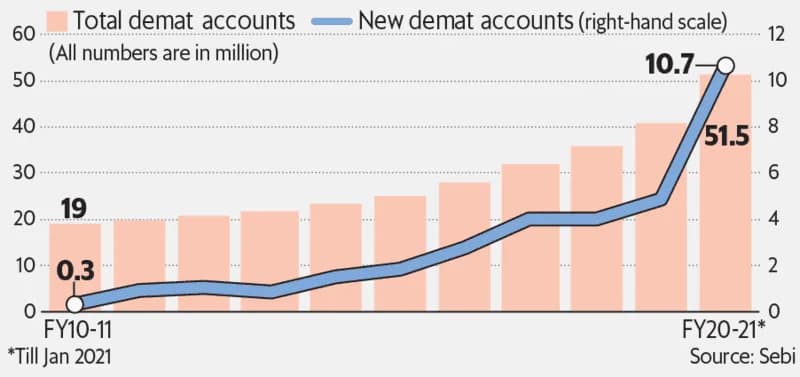
Increasing number of demat accounts in India
-
Cash account: trades are settled with full payment upfront, no borrowing involved
-
Margin account: allows intraday positions and leverage, with funds borrowed from the broker
A basic equity account is sufficient for trading options and futures alongside shares, which makes it the starting point for most traders.
The margin variant deserves a caution. Borrowing from the broker amplifies both outcomes, and intraday margin positions are closed automatically if the market moves against you far enough. Understand the broker's margin call and auto-square-off rules before using one.
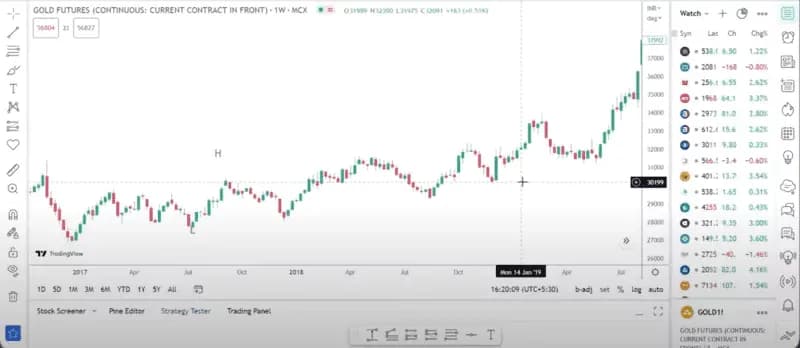
Commodity trading accounts
A separate account opened with a Trading Member of a commodity exchange, structured similarly to an equity account: you deposit funds and place orders against them.
Settlement is typically on a T+1 basis, meaning a profit realised today reflects in the account the following business day.
The Multi Commodity Exchange is the principal venue for commodity trading in India.
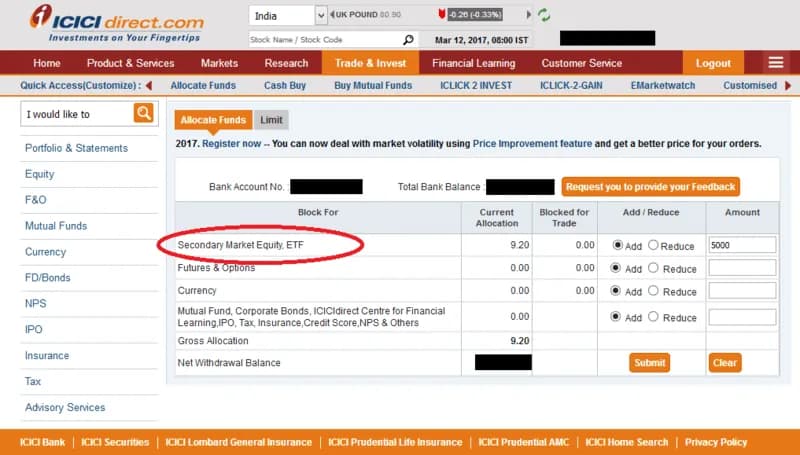
Online and offline accounts
Offline means placing orders by telephone with your broker, who executes on your behalf. Some brokers also maintain branch offices for in-person service.
Online means placing orders yourself through a platform or app, which is faster and generally cheaper.
Offline is not obsolete. It remains useful for large or complex orders where a conversation is worth the commission, and for investors who prefer not to transact through an app.
Two-in-one and three-in-one accounts
These products bundle the separate accounts that an Indian investor otherwise has to hold individually.
-
Two-in-one: links the trading account and the demat account
-
Three-in-one: links the trading account, the demat account and a bank account
The practical benefit is settlement speed. In a three-in-one arrangement, funds move from the bank account to the trading account and shares settle into the demat account without manual transfers between institutions.
Most active traders prefer three-in-one accounts for that reason, though two-in-one works well for anyone comfortable transferring funds manually. Some brokers also offer instant fund transfer arrangements with specific banks, which closes much of the gap.
Discount against full service brokers
Discount brokers charge low, often flat, brokerage and provide execution without advisory services. Full service brokers charge more and include research, recommendations and relationship management.
The choice depends on whether you would actually use the research. An active trader with their own method pays for advisory they ignore, while an investor who relies on recommendations gets nothing from a discount broker's lower fee. Compare the total annual cost against what you genuinely use rather than the headline rate.
Choosing an account
-
Confirm the broker is registered with SEBI and check the registration number
-
Start with a cash equity account unless you specifically need margin
-
Open a commodity account separately only if you intend to trade commodities
-
Prefer three-in-one if you trade frequently, two-in-one is fine for occasional investing
-
Compare total annual cost including annual maintenance charges, not just brokerage per trade
-
Check the auto-square-off and margin call rules before using leverage
Compare platforms in our stock brokers section and read the full broker reviews.
Indian trading accounts: frequently asked questions
What is the difference between a trading and demat account?
The trading account executes buy and sell orders. The demat account holds the securities you own in electronic form. They are separate in India.
What is a three-in-one account?
One linking your trading account, demat account and bank account, so funds and securities settle without manual transfers between institutions.
Do I need a separate commodity account?
Yes. Commodity trading requires an account with a Trading Member of a commodity exchange, separate from your equity account.
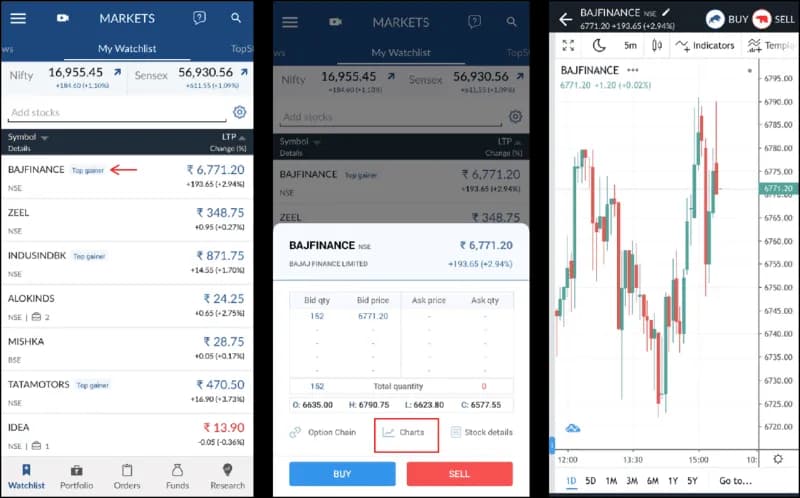
India Discount Trading Accounts
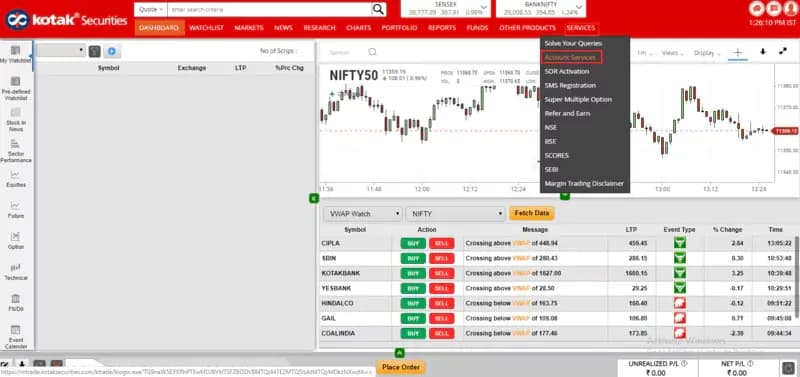
Two-in-One and Three-in-One Trading Accounts in India
Online and Offline Trading Accounts in India
Commodity Trading Accounts in India
What is the difference between cash and margin accounts?
A cash account settles with full payment upfront. A margin account allows leverage and intraday positions using funds borrowed from the broker.
Should I use a discount or full service broker?
Depends on whether you would use the research. Compare total annual cost against what you actually use, rather than the headline brokerage rate.
What is T+1 settlement?
Profits or transactions settle on the next business day. This applies to commodity trading accounts in India.
Full Services Trading Account in India
Find Your Perfect Broker: Explore Our List Now!
Choose the best with our expert-selected options

Find Your Perfect Broker: Explore Our List Now!
Choose the best with our expert-selected options
Discover top binary options brokers tailored to your region. Browse our curated lists by country: