Updated:November 11, 2026

5 min

Is Binary Options Trading Gambling?
The distinction between trading and gambling is not about the instrument. It is about whether you know your odds and whether they favour you. That test can be applied to binary options directly. Updated September 2026.

Saqib Iqbal
Author

Updated October 23, 2026
The distinction between trading and gambling is not about the instrument. It is about whether you know your odds and whether they favour you. That test can be applied to binary options directly. Updated September 2026.
The test in one line
Trading means operating a system tested over enough repetitions to show a positive expected result. Gambling means operating without knowing the expected result, or knowing it is negative and proceeding anyway.
By that test, binary options can be either. The instrument does not decide it, the preparation does.
The payout problem
Before anything else, the arithmetic specific to this instrument needs stating, because it determines what a viable strategy has to achieve.
A binary option pays less than 100 percent on a win and costs the full stake on a loss. At an 85 percent payout, winning returns 17 dollars on a 20 dollar stake while losing costs the full 20.
That asymmetry sets the break-even win rate above 50 percent. At an 85 percent payout you need to win roughly 54 percent of trades simply to break even. At a 70 percent payout the requirement rises to about 59 percent.
This is the structural house edge, and it is the reason the test matters here more than in most markets. A strategy that is right slightly more often than not is not sufficient, and knowing the required rate before starting is the difference between the two activities in this article's title.
What trading means
Successful trading means working within a system tested in advance. The strategy specifies what conditions must be present to enter, when to exit, and how much to commit per trade, usually as a percentage of the account.
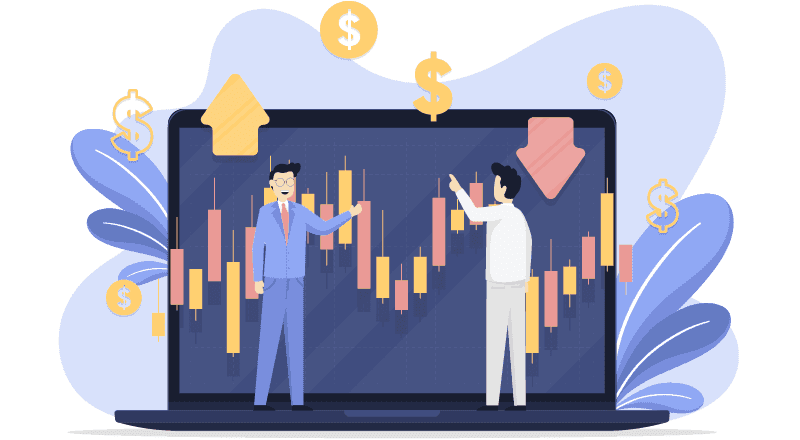
What is Trading?
It is then backtested: applied to historical price data with the profits and losses added up. This is the cornerstone of the distinction, and it is something anyone can do.
You may not know whether an individual trade will win. But if the system has been tested across enough repetitions, you have a reasonable estimate of the result over many of them.
What gambling means
Gambling is either not knowing the expected outcome over multiple attempts, or knowing the odds are against you.
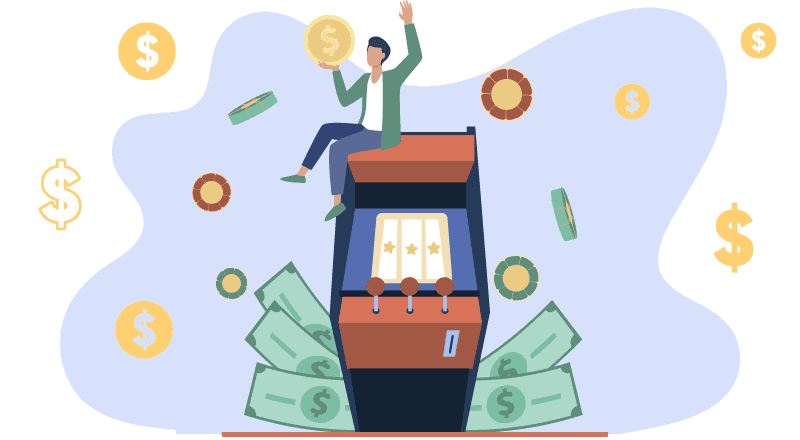
What is Gambling?
Blackjack gives roughly a 42 percent chance of winning a given hand for a typical player. The house edge is small per hand and inevitable over many of them, which is why sustained play produces a loss.
Taking a trade without knowing whether the approach has ever worked falls into the same category. The odds may happen to be favourable, but you have no basis for believing so.
Testing a strategy yourself
Define entry criteria, then apply them to historical charts. Mark every point where the strategy would have signalled a trade and record whether the outcome was a win or a loss.
With the payout known, convert the results into money. Across ten trades at a 20 dollar stake and 85 percent payout, seven wins and three losses produces 119 dollars of gains against 60 dollars of losses, a net of 59.
That is a 70 percent win rate, which is what makes the arithmetic work. At the same payout, a 50 percent win rate loses money steadily.
Two cautions on backtesting. A sample of ten proves nothing, and sustained win rates near 70 percent on short-duration binary options are not typical of what retail traders achieve. Test across a large sample and treat an unusually good result as a reason to check your method for error rather than as a reason to start.
The regulatory position
Relevant to the question this article asks: binary options are banned for retail clients in the European Union and the United Kingdom.
Regulators introduced the restriction after reviewing the proportion of retail clients losing money on the product. That assessment does not answer the philosophical question about gambling, but it is a substantial data point on how the instrument performs in practice for the people using it.
Applying the test
-
Calculate the break-even win rate from your broker's payout before doing anything else
-
Define entry and exit criteria specifically enough that two people would take the same trades
-
Test across a large sample of historical data, not ten instances
-
Compare your tested win rate against the break-even requirement, with margin
-
Fix the stake per trade as a percentage of the account before starting
-
If you cannot state your expected result over 100 trades, you are gambling regardless of the instrument
See the risk overview in binary options and related trading guides.
Trading or gambling: frequently asked questions
What separates trading from gambling?
Whether you know your expected result over many repetitions and whether it is positive. The instrument does not decide it, the preparation does.
What win rate do binary options require?
Above 50 percent, because losses cost the full stake while wins pay less. At an 85 percent payout, roughly 54 percent. At 70 percent payout, about 59 percent.
How do I test a strategy?
Apply defined entry criteria to historical charts, record every signal and outcome, and convert the results into money using your broker's payout.
Is a 70 percent win rate realistic?
Not typically on short-duration binary options. An unusually good backtest result is a reason to check your method for error before trusting it.
Are binary options legal?
Retail trading is banned in the EU and UK, following regulatory review of how many retail clients lost money on the product.
How large should a backtest sample be?
Large enough to include losing runs. Ten trades shows noise, not performance.
Find Your Perfect Broker: Explore Our List Now!
Choose the best with our expert-selected options
Find Your Perfect Broker: Explore Our List Now!
Choose the best with our expert-selected options
Discover top binary options brokers tailored to your region. Browse our curated lists by country: