Updated:November 11, 2026

6 min

What Is a Short Squeeze?
A short squeeze is a rapid price rise driven not by buyers who want the stock, but by sellers who are forced to buy it back. Understanding that distinction explains everything else about how they behave. Updated September 2026.

Cory Mitchell
Author

Updated October 23, 2026
A short squeeze is a rapid price rise driven not by buyers who want the stock, but by sellers who are forced to buy it back. Understanding that distinction explains everything else about how they behave. Updated September 2026.
The mechanism in one paragraph
When many traders are short a stock and the price starts rising, those positions lose money. To limit the damage they must close, and closing a short means buying shares. That buying pushes the price higher, which forces more shorts to close, which pushes it higher again.
The reason this accelerates rather than settling is the asymmetry of short selling. A long position can lose at most what was invested, because a share cannot fall below zero. A short position has no such ceiling: the price can keep rising indefinitely, and so can the loss.
That unlimited downside is what turns an orderly exit into a panic. Short sellers are not choosing to buy at higher prices, they are being forced to, and forced buying is price insensitive.
How shorting works
Short selling means selling borrowed shares, expecting to buy them back cheaper. The shares must eventually be returned to whoever lent them.
Sell 100 shares at 10 dollars and you receive 1,000. If the price falls to 8, buying them back costs 800 and the difference is your profit. If the price rises to 15, buying them back costs 1,500 and the difference is your loss.
Borrowing is a privilege with costs attached. Someone must lend the shares, and interest is charged for the loan. In a heavily shorted stock those borrowing costs rise, which adds further pressure on short sellers to close.
What a squeeze looks like
Price rises are unusually sharp and often vertical on the chart, because exits are happening simultaneously rather than gradually.
Most stocks are declining or moving sideways before a squeeze, which is what attracted the short positions in the first place. The reversal is therefore abrupt rather than developing out of an existing uptrend.
The most extreme historical examples are unrepresentative. Most short squeezes produce a sharp move over days rather than a sustained multiple over weeks, and building expectations from the outliers leads to holding positions far past the point where the squeeze has exhausted.
Identifying a candidate
Squeezes only occur in stocks carrying substantial short positions, and two metrics identify those.
Short interest as a percentage of float measures how much of the tradable share supply has been sold short. Not all shares are tradable, since some are held by insiders and institutions, so the float is smaller than total shares outstanding. A high percentage indicates crowding on the short side.
Days to cover divides short interest by average daily volume, giving the number of trading days required for all shorts to exit at normal volume. A stock with modest short interest but very low volume can still squeeze violently, because there is not enough liquidity for shorts to exit without moving the price.
High short interest alone is insufficient. It creates the conditions, but something must start the move: positive news, an earnings surprise, or coordinated buying. Without a trigger, a heavily shorted stock can stay heavily shorted indefinitely.
Ways to position for one
Buying the stock is the direct approach: purchase before the squeeze and sell into the rise. The difficulty is timing, since high short interest can persist for months without a catalyst.
Buying call options gives the right to buy at a set strike price. The option gains value as the underlying rises, and the maximum loss is the premium paid. Time decay works against the position, so it requires the move to arrive within the option's life.
Selling put options collects a premium upfront, which is retained if the stock rises or holds. The profit is capped at the premium regardless of how far the stock climbs, while the risk if the stock falls is substantial.
That last strategy deserves a warning the source did not give. Selling puts on a heavily shorted stock means taking the opposite side of a crowded bearish trade, capping your upside at the premium while accepting large downside if the shorts turn out to be right. The risk and reward are asymmetric in the wrong direction.
Waiting for confirmation
-
Price begins rising rapidly on elevated volume
-
Positive news is released by the company
-
A catalyst emerges that undermines the bearish thesis
-
Borrowing costs rise, indicating pressure on existing shorts
Entering after confirmation means missing the first part of the move. That is the correct trade-off: positioning in advance means holding a speculative position indefinitely while the thesis may never trigger at all.
Practical points
-
Check both short interest as a percentage of float and days to cover, neither alone is sufficient
-
Identify what the catalyst might be, high short interest without one goes nowhere
-
Define an exit before entering, squeezes reverse as sharply as they rise
-
Size the position as speculative capital, these moves are violent in both directions
-
Avoid selling puts into a squeeze candidate, the risk and reward are asymmetric against you
See related trading guides and compare platforms in our stock brokers section.
Short squeeze: frequently asked questions
What causes a short squeeze?
Short sellers being forced to buy back shares as the price rises. That buying pushes the price higher, forcing more shorts to close in a self-reinforcing loop.
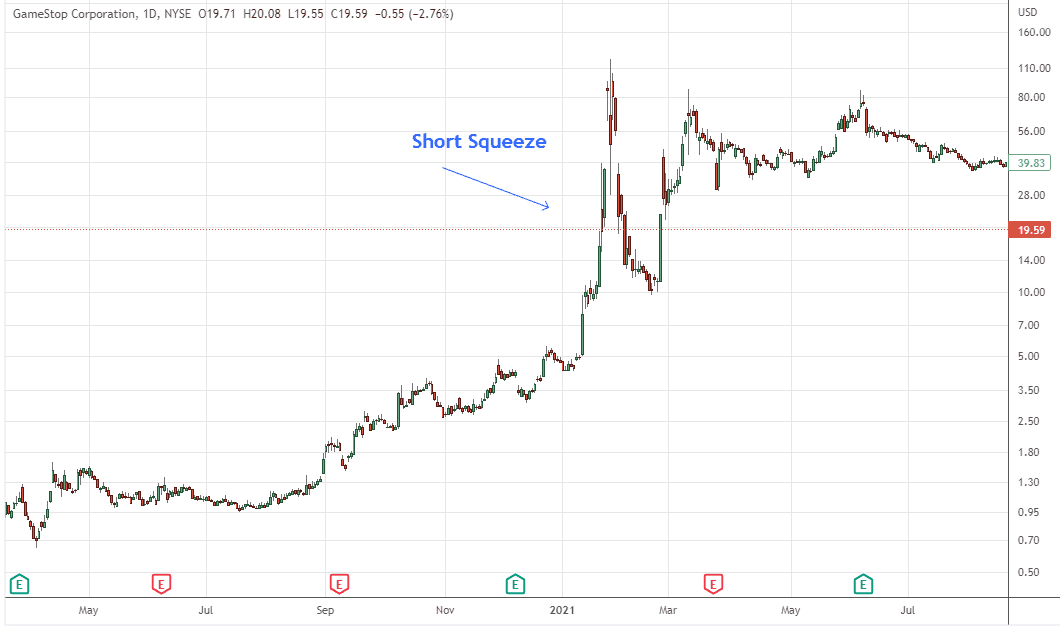
Buying accelerated
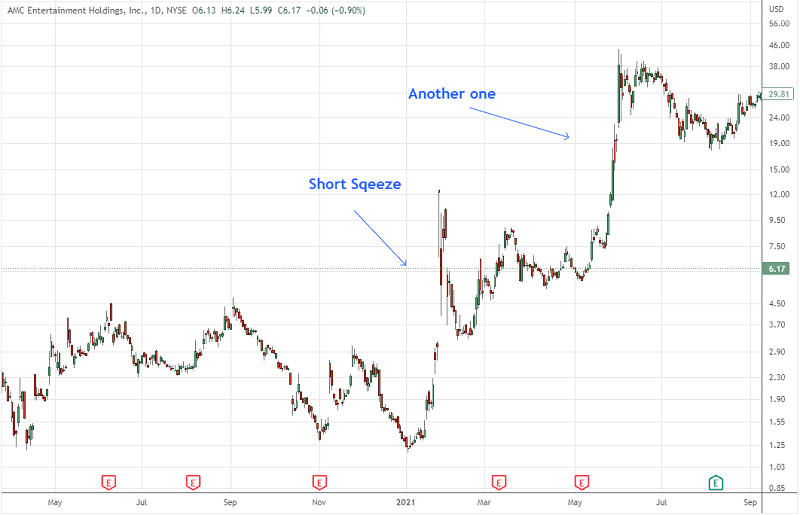
Short Squeeze Chart Examples

What is a Short Squeeze?
Why do squeezes accelerate so sharply?
Because short positions have no loss ceiling. The forced buying is price insensitive, since sellers are closing to limit damage rather than choosing to buy.
What is short interest as a percentage of float?
The proportion of tradable shares that have been sold short. A high figure indicates crowding on the short side and the conditions for a squeeze.
What is days to cover?
Short interest divided by average daily volume: how many days of normal trading it would take for all shorts to exit. Low volume amplifies the effect.

How to Profit From a Short Squeeze
Is high short interest enough?
No. It creates conditions but a catalyst is needed, such as positive news or an earnings surprise. Without one, a stock can stay heavily shorted indefinitely.
What is the safest way to position?
There is no safe way. Buying after confirmation misses part of the move but avoids holding a speculative position that may never trigger.
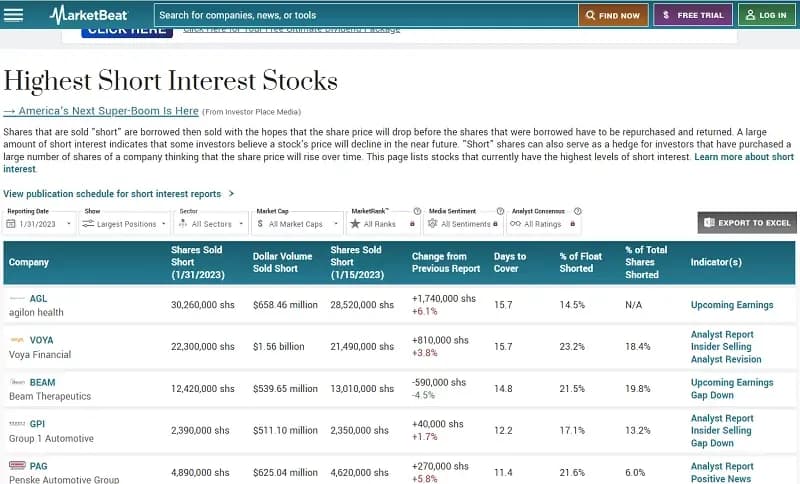
Publicly available on sites
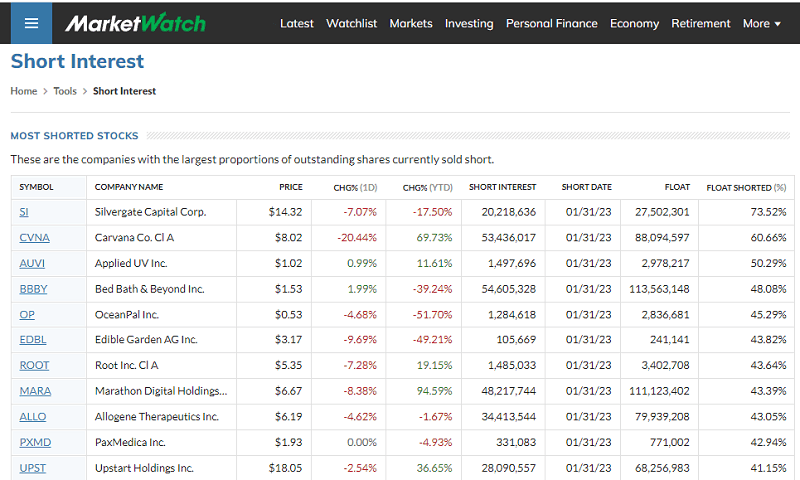
How to Determine if a Short Squeeze is Likely to Occur
Find Your Perfect Broker: Explore Our List Now!
Choose the best with our expert-selected options


Find Your Perfect Broker: Explore Our List Now!
Choose the best with our expert-selected options
Discover top binary options brokers tailored to your region. Browse our curated lists by country: