Updated:November 13, 2026

8 min

A scalping strategy for 1 to 5 minute charts: setups and risks
A scalping strategy looks for small price moves over seconds or minutes, often on one-minute or five-minute charts. The target can be so narrow that spread, commission and slippage decide whether the strategy works. Scalping is also mentally demanding. A trader must recognize the setup, place the order and accept a loss without turning the next trade into a recovery attempt. These three setups offer a starting point for testing, not a promise of fast profits.

Johnathan Maverick
Author

Updated November 13, 2026
Scalping meaning and how scalp trading differs from other styles
Scalping trades are short and frequent compared with typical day trades. A scalper may target four to ten pips in a liquid forex pair or a few ticks in a futures contract. The exact numbers depend on market volatility and fees. Time in the trade is less important than the objective: capturing a small intraday movement with tightly controlled execution.
Because profits per trade are small, cost discipline matters more than in many longer-horizon strategies. A profitable-looking backtest can turn negative once realistic spreads are added. This is why a strong scalper cares about the order book, broker execution and time of day as much as indicator settings.
When scalping works: sessions, pairs and volatility
Scalping needs enough movement to cover costs without so much disorder that stops become meaningless. Liquid sessions, such as the London and New York overlap for major forex pairs, often provide active price movement. Around major economic releases, volatility can become too erratic to trade using ordinary assumptions. The safest time is not necessarily the busiest minute.
Choosing a market for a scalping test
Start with one liquid instrument. EUR/USD is commonly used for forex examples because spreads can be competitive during active sessions. Gold and indices can move more sharply, but contract specifications and execution behavior differ. A gold scalping strategy should not be copied directly from a EUR/USD pip-based tutorial. Learn the instrument's tick value and average transaction costs first.
Three scalping strategy setups on one- to five-minute charts
The following setups are deliberately simple enough to record and test. Each needs an entry trigger, invalidation level and exit rule. Use a higher timeframe to define the session's broader context, but do not shift the chart every time price moves against you.
Setup 1: trend pullback on a five-minute chart
On a five-minute chart, identify a rising series of swing highs and lows. Wait for price to retreat toward a prior breakout level or a short moving-average zone. Consider a long entry only after a candle closes back in the trend direction. Place the stop beyond the local pullback low, then calculate position size from that distance. If the stop would be too wide for the target available before resistance, skip the trade.
Setup 2: one-minute range rejection
Mark a tight range formed during a quieter part of a liquid session. A scalper may look for a brief probe outside the range followed by a close back inside. The target is often the middle or opposite edge of the range. The setup fails when price accepts the breakout and does not return. Avoid this approach immediately ahead of high-impact news, when an apparent false break can become a real momentum move.
Setup 3: breakout and retest
Wait for price to break a level that has been tested repeatedly, then see whether the first pullback holds above it for a long entry. Entering on the retest may produce a better stop location than chasing the breakout candle. The cost is missed trades: price may never return. That is acceptable. A strategy that only works if you chase every move is difficult to execute consistently.
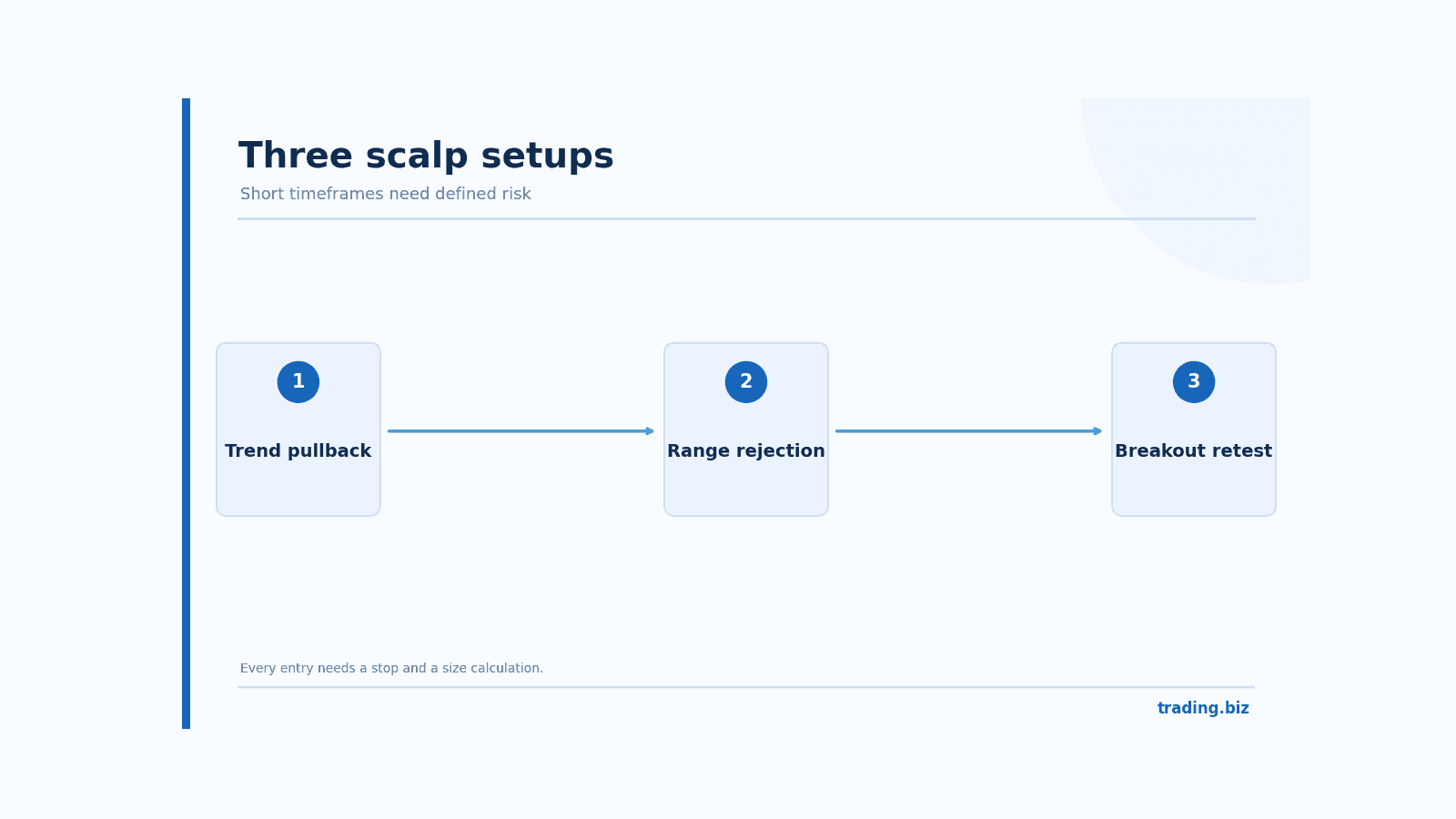
Figure 1. Three common short-term setups, each requiring its own trade rules.
Costs that decide scalping results: spread, commission and slippage
Suppose a forex scalper has a six-pip gross target and pays a one-pip spread plus the equivalent of 0.4 pip in commission. If adverse slippage averages another 0.3 pip, total friction is about 1.7 pips. The target nets roughly 4.3 pips if filled as modeled. That is a major reduction. On a four-pip target, the same 1.7-pip friction would consume 42.5% of the gross gain.
The loss side matters as well. A stop planned at five pips might lose more if an order slips or the spread widens. Calculate expectancy using actual filled trades, not only the indicator's ideal chart entry. Some scalpers show high win rates while losing money because the losing trades are larger and the friction is constant.
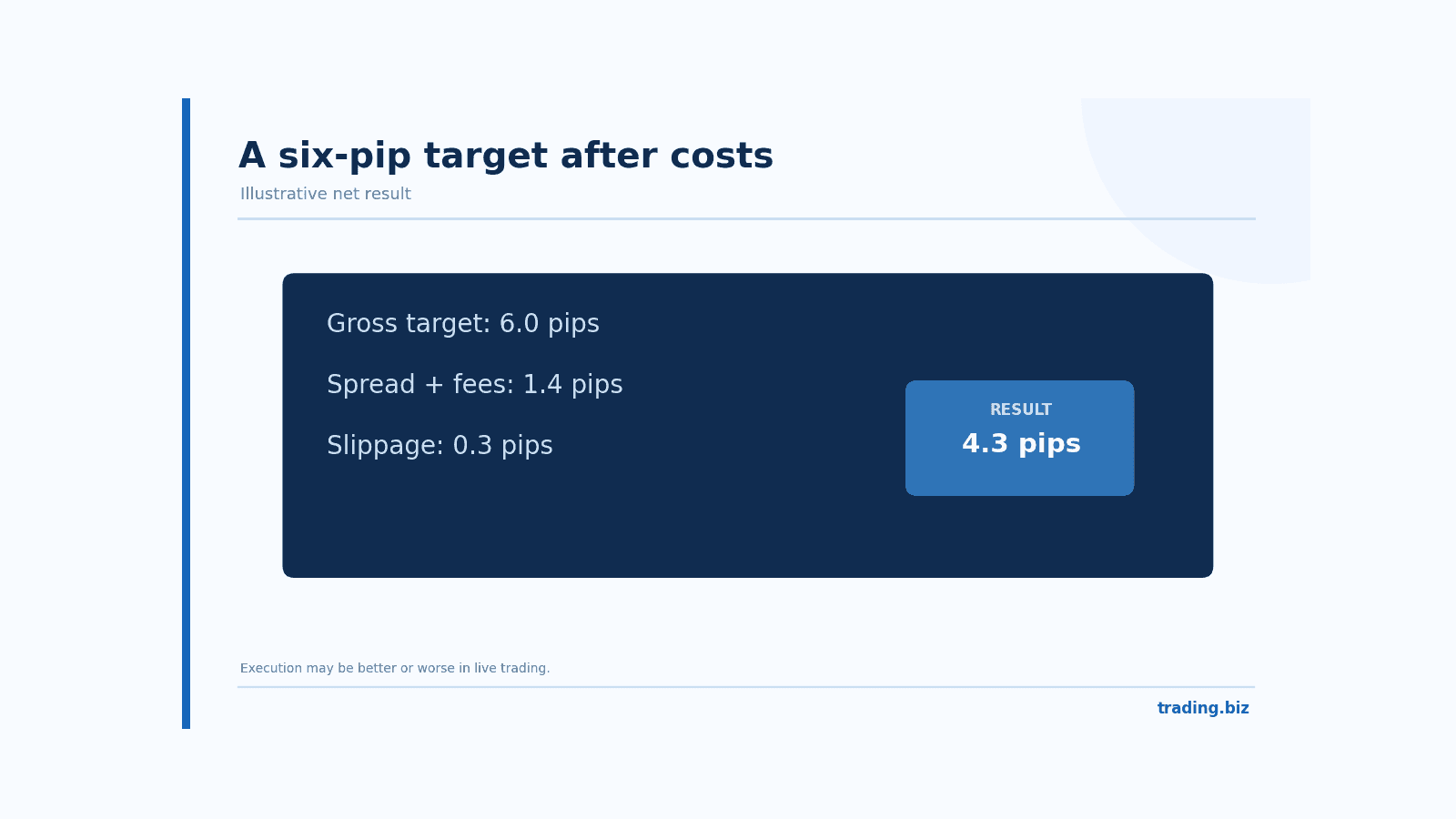
Figure 2. How spread, commission and slippage shrink a six-pip target.
Why commissions matter even on a zero-spread account
A broker offering a near-zero raw spread often charges a commission per lot. Convert that commission into a pip equivalent for the contract size. Compare total round-trip cost at the times you trade. A minimum advertised spread measured in ideal conditions may not reflect what you pay during the session open or during important news.
Choosing a broker for a scalping strategy
Check the broker's execution policy, commission schedule and whether it permits your intended trade frequency and automation tools. Measure average spreads during the exact session you plan to scalp. Test orders on demo and then, if appropriate, at the smallest live size. The crucial measurement is the difference between the intended price and the executed price, including whether a limit order frequently remains unfilled.
A VPS can help automated strategies stay connected, but it cannot remove market slippage or turn a bad model into a profitable one. One-click trading can reduce interface delay, yet it also makes impulsive entries easier. Choose tools that support your rules rather than simply encouraging more clicks.
Scalping risks: stops, daily limits and overtrading
Risk small enough that the next normal loss does not affect your ability to follow the plan. Establish a daily maximum loss and a maximum number of trades. Scalping creates many opportunities to break those rules because the market is always producing fresh candles. If you find yourself taking a new position instantly after being stopped, the setup may have become emotional rather than technical.
Do not widen a stop because a trade has almost reached it. Do not average down to transform a five-pip idea into a long-term position. A scalping strategy must be closed according to its original logic, even when the loss feels too small to accept. The consistency of execution is what makes the test results usable.
A useful scalping journal
Record instrument, session, setup type, intended entry, actual fill, stop distance, planned target, all fees and reason for exit. Tag trades taken outside the plan. Review net results by setup and time of day every week. A pattern of good trading only during one session can be valuable evidence; a record dominated by random entries is not.
The break-even math for a scalper
A trader taking equal-sized wins and losses needs a win rate above 50% after costs to have positive expectancy. If a setup has a five-pip gross target and a five-pip gross stop but the all-in trading friction is one pip on every round trip, winners net roughly four pips while losers cost about six. Break-even win rate is 6 / (6 + 4) = 60%, assuming those outcomes are otherwise exact. A backtest reporting 55% wins before spread would be unprofitable under that example.
The asymmetry gets worse if losing trades slip more than winners. Measure executions rather than assuming every stop and target fills at the planned price. Spread is not a small detail for one-minute charts. It is part of the strategy.
Why fewer trades sometimes improve a scalp system
Scalping encourages activity because signals appear constantly. Filtering out the weakest setups can reduce fees and improve the average quality of remaining trades, but it can also reduce the sample size. Test each filter separately and on later data. If a filter only removes losers on the historical chart, it may have been tuned after the fact.
The best measure is net expectancy per executed trade together with drawdown and the mental demands of the session. A high-frequency approach that works only when you never lose focus may be impractical for someone trading from a phone between meetings.
Slippage statistics need losers and winners
Measure each fill against the price available at the moment of order submission. If you look only at trades that reached the target, you may underestimate the cost of fast exits during losses. Stop-market orders can slip precisely when volatility is greatest. Record adverse and favorable differences separately, then compute a realistic net distribution for the strategy.
Test using the lot sizes you intend to trade. A fill seen on a tiny demo position may not scale cleanly to a large live order. Liquidity is finite, and execution performance can change as size grows. A scalping strategy's edge needs to survive that scaling test before higher volume is considered.
FAQ about scalping strategies
Is a one-minute scalping strategy better than five minutes?
Neither is inherently better. One-minute charts produce more noise and timing pressure. Five-minute charts can offer cleaner structure but fewer entries.
How much spread is too much for scalping?
It depends on the typical target and win-loss profile. A spread that consumes a large share of average gross profit can make an otherwise plausible setup untradeable.
Can beginners start with a scalping strategy?
They can study it on demo, but the execution pace is demanding. Many beginners benefit from learning order mechanics and risk limits on slower charts first.
Does scalping require an automated bot?
No. Manual scalping is possible. Automation can reduce clicking delay, but it also introduces code, connection and broker-policy risks.
What is the biggest mistake in scalp trading?
Overtrading after a loss is common. Failing to account for spread, commission and slippage is equally damaging because it distorts the strategy's actual expectancy.
Official reference: CFTC foreign currency resources
Find Your Perfect Broker: Explore Our List Now!
Choose the best with our expert-selected options

Find Your Perfect Broker: Explore Our List Now!
Choose the best with our expert-selected options
Discover top binary options brokers tailored to your region. Browse our curated lists by country: