Updated:November 11, 2026

5 min

Forex Trading Explained
Forex is the buying and selling of one currency against another. The mechanics are simple to state and easy to underestimate, particularly the part where leverage turns a small price move into a large account move. Updated September 2026.

Cory Mitchell
Author

Updated October 23, 2026
Forex is the buying and selling of one currency against another. The mechanics are simple to state and easy to underestimate, particularly the part where leverage turns a small price move into a large account move. Updated September 2026.
What forex is
Foreign exchange trading means taking a position on the relative value of two currencies. It is the largest financial market in the world by daily volume.

What is Forex?
The most actively traded currencies are the US dollar, euro, Japanese yen, British pound, Swiss franc and the Australian and Canadian dollars.
Approaches vary widely. Some traders use technical analysis on short timeframes, others trade fundamentals and hold positions for months or longer. The market accommodates both because it runs continuously through the week.
Market hours
Unlike equity markets with fixed opening hours, forex runs 24 hours a day from Sunday evening to Friday evening.
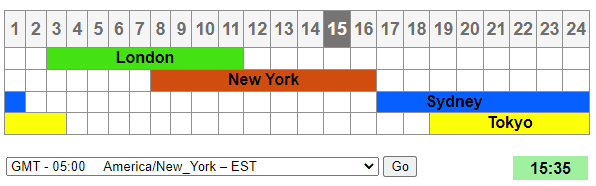
Forex Market Hours
Sydney opens first at 5 PM Eastern on Sunday, followed by Tokyo, then London, then New York. The cycle repeats through the week and the trading week ends when New York closes at 5 PM Eastern on Friday.
Sessions overlap, and the overlap matters more than the opening times. The London and New York overlap carries the highest volume and the tightest spreads on major pairs, while the gap between New York closing and Sydney opening is the thinnest part of the day.
Why currencies trade in pairs
A currency has no value in isolation, only relative to another. Buying EUR/USD means buying euros and selling dollars simultaneously.
The practical analogy is a currency exchange before a trip: you hand over dollars and receive euros at the prevailing rate. A forex position does the same thing, expressed as a rate such as 1.3696.
Pairs are identified by three-letter codes. The majors are the most liquid and carry the tightest spreads, while exotic pairs, of which there are roughly a hundred, trade far less and cost more to enter and exit.
How profit and loss work
The first currency in the pair is the directional one. Buying EUR/USD means you profit if the euro strengthens against the dollar.
Movement is measured in pips. A pip is one hundredth of one percent, the fourth decimal place on most pairs. Buy EUR/USD at 1.1515 and sell at 1.1535 and you have gained 20 pips.
Pairs involving the Japanese yen are the exception: they quote to two decimal places, so the pip is the second decimal rather than the fourth.
Pip value
A pip gain means nothing until converted into money. Pip value depends on three things: the pair traded, the currency of your account, and the size of the position.
The same 20 pip move produces a different result on a micro lot than on a standard lot, and a different result again if your account is denominated in a currency other than the quote currency.
This is why position size is calculated before entry rather than estimated. Knowing your pip value tells you exactly what a stop loss costs in money, which is the number that actually matters.
Brokers, leverage and capital
Trading requires a broker and capital. Most brokers offer micro accounts, where the minimum position is one micro lot of 1,000 currency units.
Leverage determines how much position size your deposit controls. At 30 to 1, a 10,000 dollar deposit controls up to 300,000 in currency. At the small end, a 50 dollar deposit may not cover the margin on even a single micro lot depending on the pair and the leverage available.
Two points the arithmetic hides. First, leverage is capped by regulation: in the EU and UK the retail limit is 30 to 1 on major pairs, lower on others. Offshore brokers advertise far more, and that is a reason for caution rather than an advantage.
Second, the fact that leverage allows a large position does not mean taking one. At 30 to 1, a 3.3% move against a fully leveraged position eliminates the deposit. Most experienced traders use a fraction of the leverage available to them.
Starting sensibly
-
Open a demo account first and trade it through at least one losing streak, not just a good week
-
Learn to calculate pip value for your account currency before placing a real trade
-
Start with micro lots regardless of how much capital you have
-
Use a fraction of available leverage, not the maximum
-
Choose a broker regulated in your jurisdiction and verify the licence in the public register
-
Expect to lose money while learning, and size positions so that losing does not matter
Compare regulated platforms in our forex brokers section and see related trading guides.
Forex trading: frequently asked questions
Why do currencies trade in pairs?
Because a currency only has value relative to another. Buying EUR/USD means buying euros and selling dollars at the same time.
What is a pip?
The smallest standard price increment, one hundredth of one percent, or the fourth decimal place. Yen pairs are the exception, quoting to two decimals.
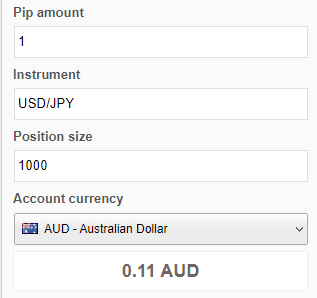
Calculate pip value
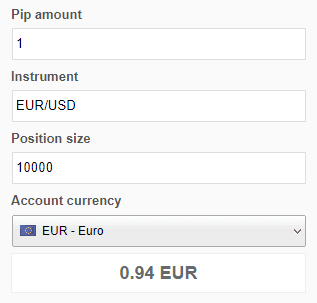
Movement will increase
Make Money In Forex
When is the forex market open?
24 hours a day from Sunday evening to Friday evening, rotating through Sydney, Tokyo, London and New York sessions.
How much capital do I need?
Micro accounts allow positions of 1,000 currency units, so small amounts are possible. But very small deposits may not cover margin on a single micro lot.
What leverage is available?
Capped at 30 to 1 on major pairs for retail clients in the EU and UK. Offshore brokers offer more, which increases risk proportionally.
When is the best time to trade?
The London and New York overlap carries the highest volume and tightest spreads on major pairs.
Find Your Perfect Broker: Explore Our List Now!
Choose the best with our expert-selected options
Find Your Perfect Broker: Explore Our List Now!
Choose the best with our expert-selected options
Discover top binary options brokers tailored to your region. Browse our curated lists by country: