Updated:November 11, 2026

6 min

The Cup and Handle Pattern
The cup and handle is a bullish continuation pattern with unusually specific measurement rules, which is what makes it tradable rather than subjective. Here is how to identify it, where to enter, and where the stop and target belong. Updated September 2026.

Pejman Zwin
Author
Updated October 23, 2026
The cup and handle is a bullish continuation pattern with unusually specific measurement rules, which is what makes it tradable rather than subjective. Here is how to identify it, where to enter, and where the stop and target belong. Updated September 2026.
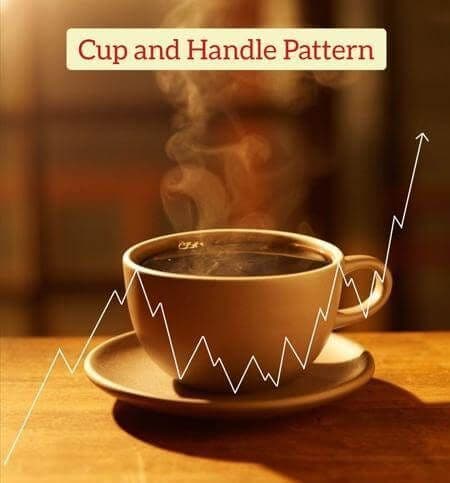
Exciting memories of this pattern
The pattern in brief
-
Type: bullish continuation, forming within an uptrend
-
Structure: a rounded cup followed by a smaller downward handle
-
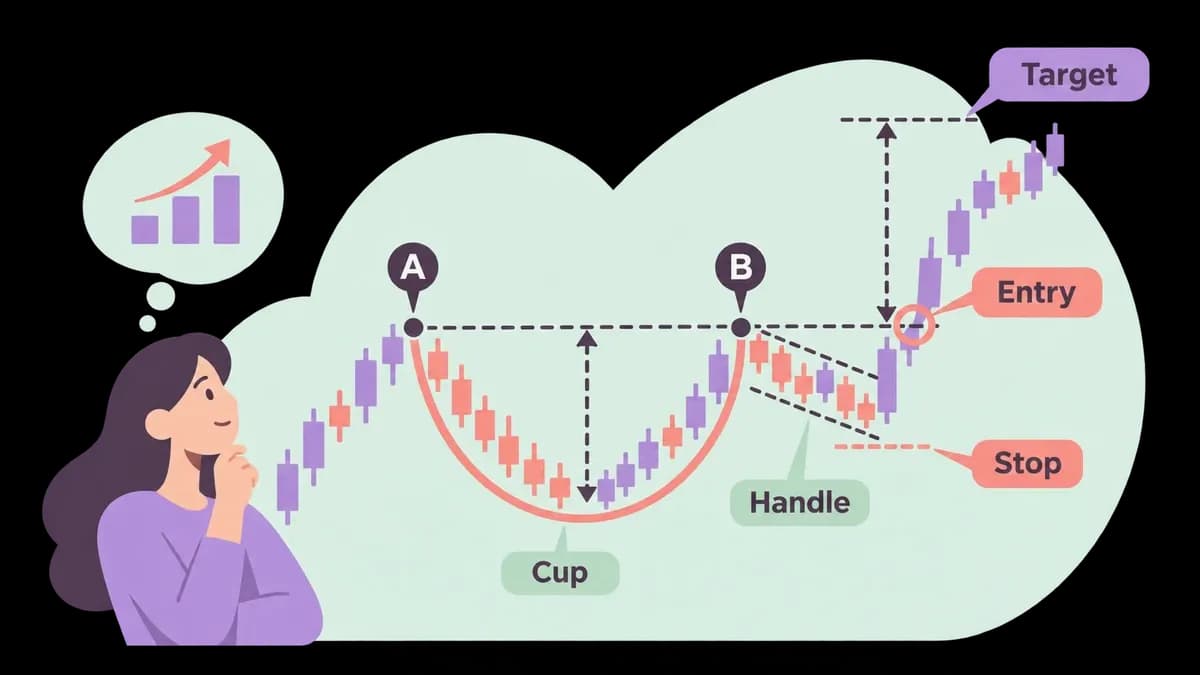
Neckline: drawn between the two tops on either side of the cup, labelled A and B
-
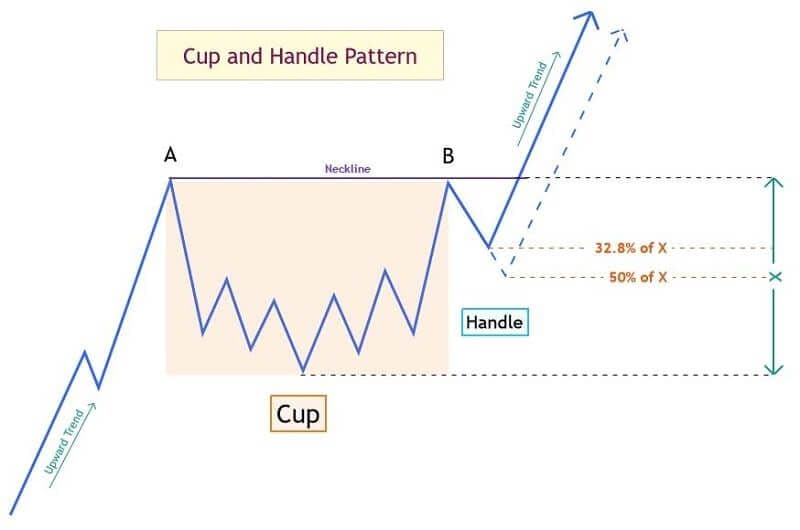
Ideal handle depth: 38.2% of the cup height, and never more than 50%
-
Cup shape: wide and U-shaped is more reliable than narrow and V-shaped
-
Entry: on the break of the neckline
-
Target: the cup depth projected up from the neckline
-
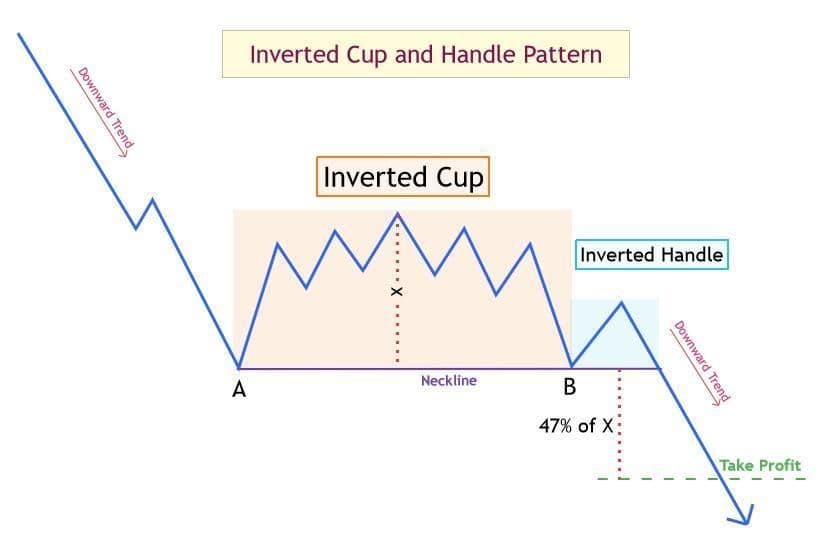
Inverted version: bearish continuation in a downtrend, mirrored
How the cup forms
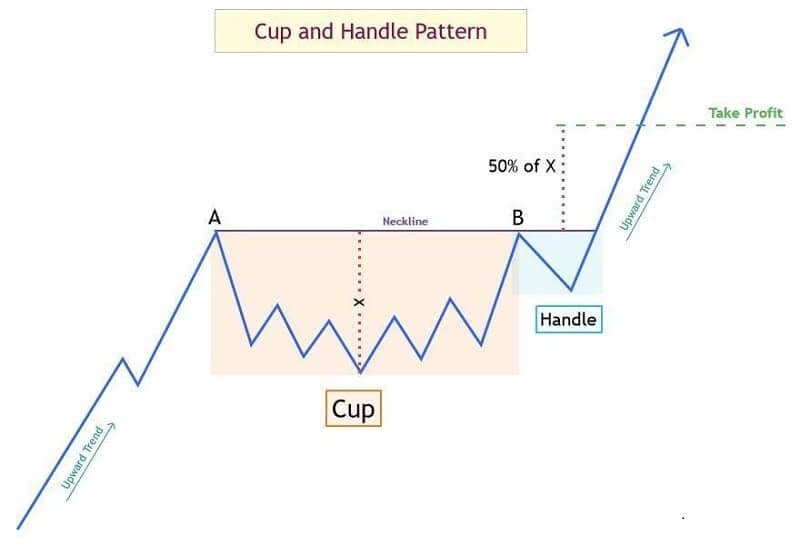
In an uptrend, price reaches a resistance zone that pushes it back, starting a pullback. This first top is point A.
Price declines but stops making new lows, then recovers with low momentum initially. As momentum builds, it returns toward the same resistance level, forming the second top, point B.
The neckline is drawn from A to B. At this stage the cup is complete.
How the handle forms
After the cup completes, price enters a tight downward move creating a smaller low, the handle.
In ideal conditions the handle depth is 38.2% of the cup height. It can be shallower, but a handle exceeding 50% of the cup height substantially weakens the pattern.
On lower timeframes the handle sometimes appears as a bullish flag or pennant. That is the same structure viewed at higher resolution.
Validation rules
-
A wide, U-shaped cup base is more reliable than a narrow V-shaped one, because it indicates gradual accumulation rather than a sharp rejection
-
Tops A and B should sit at approximately the same level
-
Handle depth should not exceed 50% of the cup height
-
The pattern works in both two-way markets such as forex and crypto, and in one-way markets, since it is a continuation pattern
The handle depth rule is the most useful filter. A deep handle means sellers regained substantial control, which contradicts the continuation premise the pattern depends on.
Trading the cup and handle
Enter long when price breaks the neckline. Waiting for the breakout candle to close above the neckline reduces the risk of entering a false break.
Place the stop loss below the handle low, or below the breakout candle for a tighter stop depending on your position sizing.
For the target, measure the vertical distance from the lowest point of the cup to the neckline, and project that distance upward from the breakout point.
Because this is a strong continuation pattern, positions can be held beyond the measured target using a trailing method. A moving average works well here: while price stays above the line, momentum persists, and a close below it signals the move is losing strength.
A period length of 21 suits lower timeframes and 100 suits higher ones.
The inverted cup and handle
The inverted version is a bearish continuation pattern forming in downtrends. It appears less frequently, which makes it worth recognising when it does.
Price pulls back upward within a downtrend, seller pressure resumes, and momentum fades to form a rounded top. Price then stalls at the previous high, establishing the neckline between the two bottoms, A and B.
The handle forms as an upward move creating a smaller top. It can reach up to 50% of the cup height, and anything beyond that renders the pattern unreliable.
-
Entry: short after the breakout candle closes below the neckline
-
Stop loss: above the highest price of the handle
-
Target: the distance from the neckline to the cup high, projected down from the breakout
-
Trailing: hold while price remains below the moving average
An inverted cup with a wide, rounded top is more reliable than one with a narrow peak. As with the standard version, bottoms A and B should sit at a similar level.
What the research shows
William O'Neil, who popularised the pattern, documented it as a continuation formation in uptrends with defined breakout characteristics.
Thomas Bulkowski produced statistical work on both versions, establishing measured targets derived from the pattern dimensions rather than estimated visually. His research on the inverted version follows the same measurement logic, mirrored.
The value of both bodies of work is that they replace visual judgement with rules. Two traders looking at the same chart should identify the same neckline, the same handle depth and the same target.
Practise identifying the pattern on historical charts before trading it, and check that the handle depth rule holds each time. See related trading guides and compare charting platforms in our forex brokers section.
Cup and handle: frequently asked questions
What is the cup and handle pattern?
A bullish continuation pattern within an uptrend, formed by a rounded cup followed by a smaller downward handle before a breakout.
The highest price of the cup
Research on Cup and Handle pattern
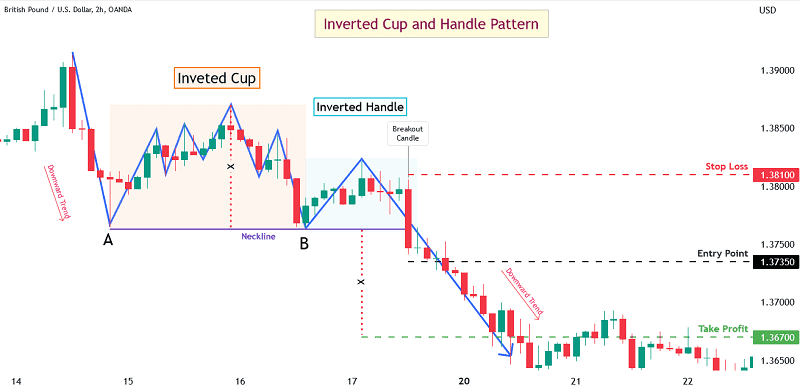
GBPUSD in the 2 hour time frame
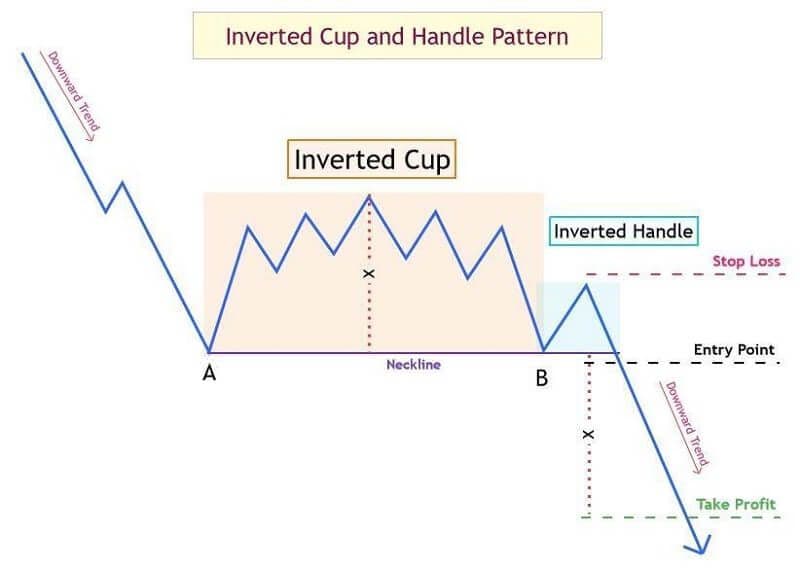
Trade on Inverted Cup and Handle
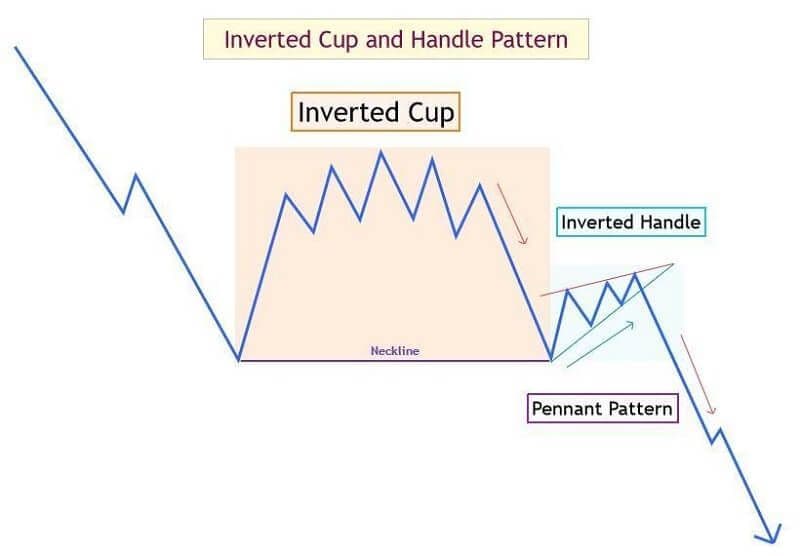
Inverted Cup and Handle pattern
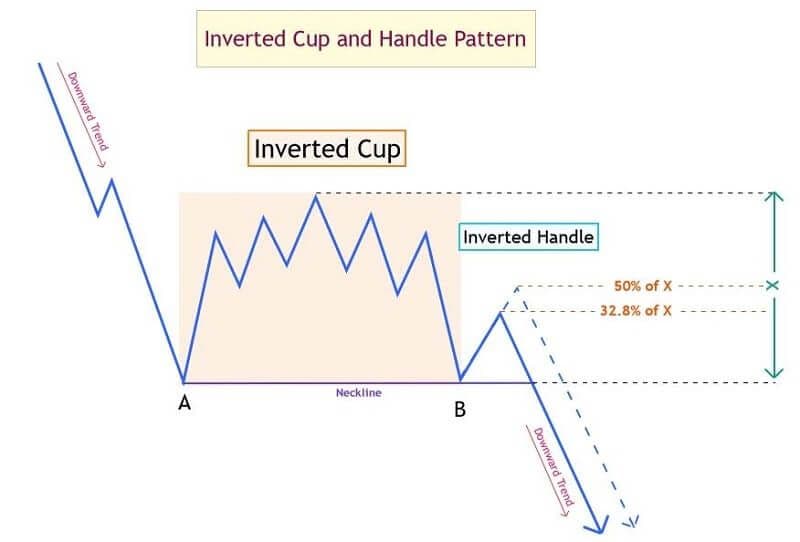
Inverted Cup and Handle pattern
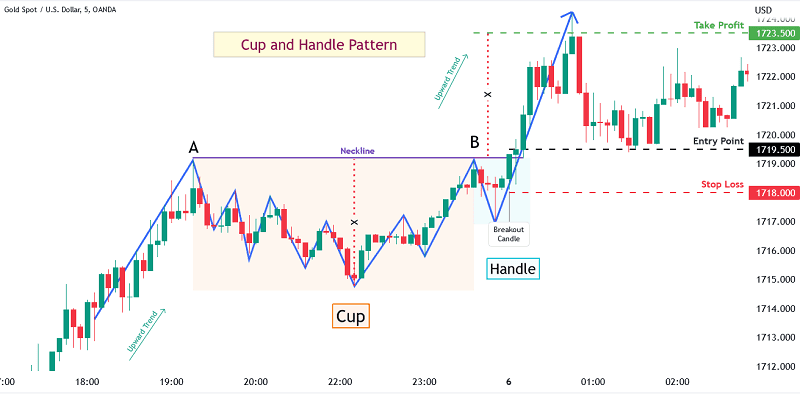
XAUUSD chart in the 5-minute time frame
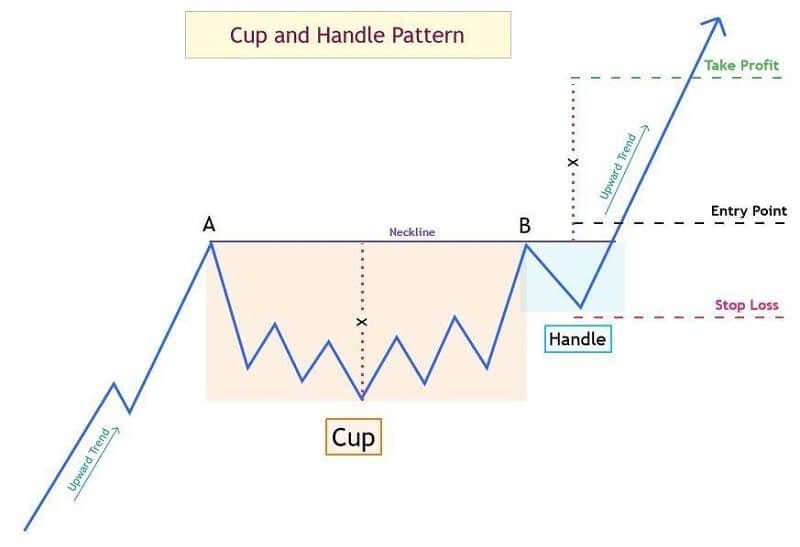
The Cup and Handle
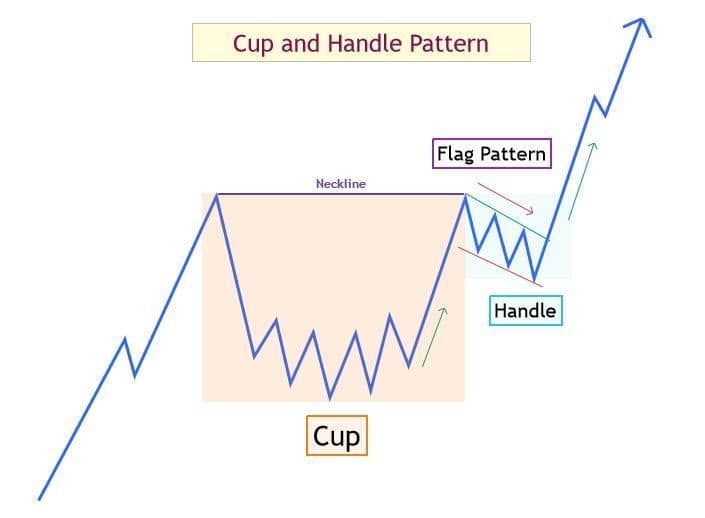
Handle slope
Open positions
How deep should the handle be?
Ideally 38.2% of the cup height. A handle deeper than 50% of the cup substantially weakens the pattern.
Where do I enter?
On the neckline break, ideally waiting for the breakout candle to close above it to avoid a false break.
How is the target calculated?
Measure from the lowest point of the cup to the neckline, then project that distance upward from the breakout point.
Is a V-shaped cup valid?
Less reliable than a wide U shape. A rounded base indicates gradual accumulation, while a sharp V suggests a single rejection.
What is the inverted version?
A bearish continuation pattern in a downtrend, structurally mirrored: enter short below the neckline, stop above the handle high.
Find Your Perfect Broker: Explore Our List Now!
Choose the best with our expert-selected options
Find Your Perfect Broker: Explore Our List Now!
Choose the best with our expert-selected options
Discover top binary options brokers tailored to your region. Browse our curated lists by country: