Updated:November 18, 2026

9 min

Funding for crypto traders: crypto prop firm rules and payouts
A crypto prop firm can look attractive because crypto trades around the clock and many traders want funded exposure without locking up a large amount of personal capital. The catch is that the category still feels uneven. Traders need to read the rules closely.

Vishenko Dmitry
Author

Updated November 18, 2026
How a crypto prop firm works and who it suits
A crypto prop firm usually offers a challenge or evaluation program tied to crypto instruments, often perpetual futures or a CFD-style product set. The model suits traders who already trade Bitcoin, Ethereum and other liquid markets and want outside risk capital with a ruleset.
A crypto prop program may promise exposure to Bitcoin or Ethereum without requiring the applicant to deposit the entire nominal trading balance. In return, the applicant follows evaluation rules and receives a contractual share of eligible rewards. Before paying, find out whether the account uses a simulated feed, exchange-linked derivatives or a CFD-style instrument. Those products may look nearly identical on a candlestick chart while behaving differently during overnight financing, exchange outages or sharp weekend moves.
A trader who has already built a risk process for crypto might find the model useful. It is a much harder fit for someone still learning how leverage works. The nominal account value encourages large positions, but the true risk budget is the permitted drawdown. If the program advertises 100K but allows only $5,000 of total loss, position size should be based on that $5,000 constraint rather than on the headline figure.
Crypto prop firms compared: instruments, price and drawdown
The first filter is whether the firm is truly crypto-focused or simply added a few crypto symbols. The second is whether drawdown rules fit the volatility of the market. A daily drawdown that feels manageable in forex can feel tiny when crypto volatility expands.
Begin with instrument coverage. Does the firm offer actual perpetual futures, index-like derivatives, or quotes against stablecoins in a simulated environment? Check whether the contract has funding payments and whether those charges are included in equity for drawdown calculations. On perpetual futures markets, funding payments can affect position results even when the coin's price changes very little. A trader who holds overnight should model that cost alongside the stop.
Next look at the evaluation rules. A static 8% maximum loss and a trailing 8% maximum loss are not equivalent. In the trailing version, profitable closed balances may raise the loss floor and leave the trader less breathing room after a successful week. If the program also imposes a narrow daily loss cap, one volatile Bitcoin session can consume much of the remaining allowance. Work through the provider's numerical examples before accepting the label "crypto-friendly."
Finally, consider fees. The purchase price is one cost, but transaction charges may be more important for an active strategy. A trader taking twenty round trips a day should calculate the total commission or spread across the entire week. If the firm uses a synthetic quote rather than an exchange feed, check whether there are unusual weekend spreads. A low evaluation fee is not attractive if routine execution costs make the method unworkable.
Crypto Fund Trader and similar crypto-focused programs
Crypto Fund Trader is one of the brand names traders type directly into search. That makes it a natural reference point, but the evaluation should stay the same: pricing, supported instruments, drawdown logic, and payout terms. A crypto-only label does not guarantee a better experience.
Crypto Fund Trader is widely searched because it markets directly to this niche. The relevant questions are ordinary and practical. Which assets are available? Can you hold positions on Saturday? What network is used for rewards? Is there a minimum payout threshold? Which situations trigger a rule violation? Anyone comparing it with a broader CFD-style prop program should ask the same questions of both companies.
Some firms advertise a very inexpensive trial or special promotion. Read whether the low price buys a genuine evaluation, a limited demo or merely access to a training environment. The phrase "funded" may appear in marketing material long before the trader qualifies for rewards. A trustworthy program will define the stages and the payment obligations without relying on vague testimonials.
A leverage calculation that belongs in the trading plan
Assume the trader controls $10,000 of Bitcoin exposure with $1,000 of margin, an effective 10:1 exposure ratio. A 2% adverse price move changes the position's gross value by about $200. That is roughly 20% of the posted margin before fees. A 5% adverse move is about $500, or half the margin. The exact liquidation mechanics depend on the exchange and contract. The arithmetic still explains why apparently small crypto moves can matter so much when leverage is high.
How crypto prop firm rules differ from forex
Weekend access is the obvious difference, since crypto does not sleep. Leverage rules, funding fees and symbol coverage are also bigger issues. Some firms offer weekend trading but compensate by tightening risk limits. Others keep the product set narrower than the homepage suggests.
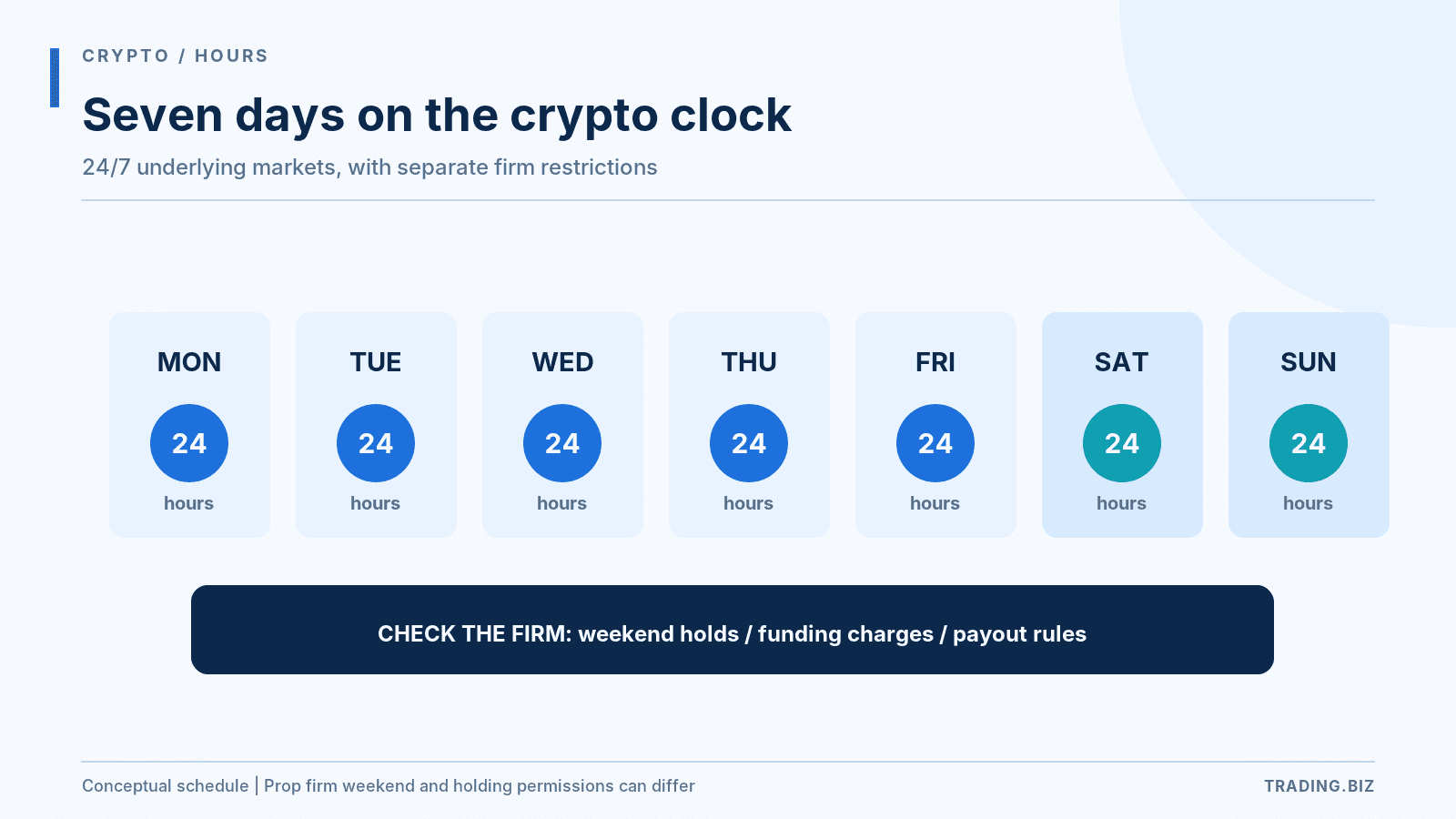
Figure 1. Crypto underlying markets operate throughout the week, subject to firm restrictions.
Crypto trades through the weekend, but the prop program may not. Some firms pause payouts or account reviews on non-business days. Some restrict exposure around scheduled system maintenance. Others price products through liquidity providers with operating hours that differ from the underlying spot market. A customer should verify actual instrument availability at the times they plan to trade instead of assuming a 24/7 BTC chart means uninterrupted execution.
Crypto also has a correlation problem. Four altcoin positions might appear diversified because they have different names. During a market-wide selloff, all four can fall together. A trader who risks $100 per position might be exposing the same account to a $400 loss from one broad market event. Daily limits should be assessed at portfolio level, not ticket by ticket. This point becomes more important as the firm permits more simultaneous orders.
Perpetual funding is easy to underestimate. Imagine a $10,000 notional position with a hypothetical funding charge of 0.01% for one funding interval. The charge would be $1. The amount looks small until a leveraged position is held through many intervals or the rate changes sharply. Some periods pay the long side; others pay the short side. Check the venue's schedule and the firm's accounting treatment. A simulated account might model financing in a different way from an exchange. That difference should be tested during a quiet week and during high volatility before staking evaluation fees on a longer-term strategy.
Payouts and risks before you pay a crypto prop firm
USDT payout is common in the category because it fits a global user base. Traders should still check timing, minimum withdrawal size and whether the payout comes through a third-party processor. The main red flags are vague rules, unclear execution quality, and promises that sound more like casino marketing than risk capital.
A USDT reward can be convenient, yet it is still a transfer on a blockchain network. Verify the network address and whether the receiving wallet supports it. Small networks can have different fees and availability from the route used by the firm. If a company proposes a new wallet address through a private message, verify through the official account dashboard before sending any money or providing identification documents.
A payout should also be recorded in the currency in which the contract measures rewards. A dollar reward paid in stablecoins may later be converted through an exchange at a different market rate. If the trader is in a country with virtual-asset tax or reporting rules, those records may become important. Saving the original award statement alongside the transaction ID is easier than reconstructing the history at the end of the year.
Questions to ask before a crypto challenge
A useful inquiry to support is short: "Does unrealized profit raise the trailing loss threshold, and which price feed supplies the mark?" Follow it with a question about funding payments and a question about holding through maintenance. If the replies are generic, the product may be poorly documented. Do not pay merely to discover how these features operate. The smartest crypto prop firm purchase is the one whose rules match a strategy already tested in similar market conditions.
Why crypto volatility changes the prop firm equation
Crypto does not pause on the weekend, and strong moves can happen when a traditional trader is away from the desk. That can be a benefit if your strategy captures momentum, but it also means risk control must be tighter. A drawdown rule that looks generous during quiet hours can feel very small during a sharp Bitcoin move.
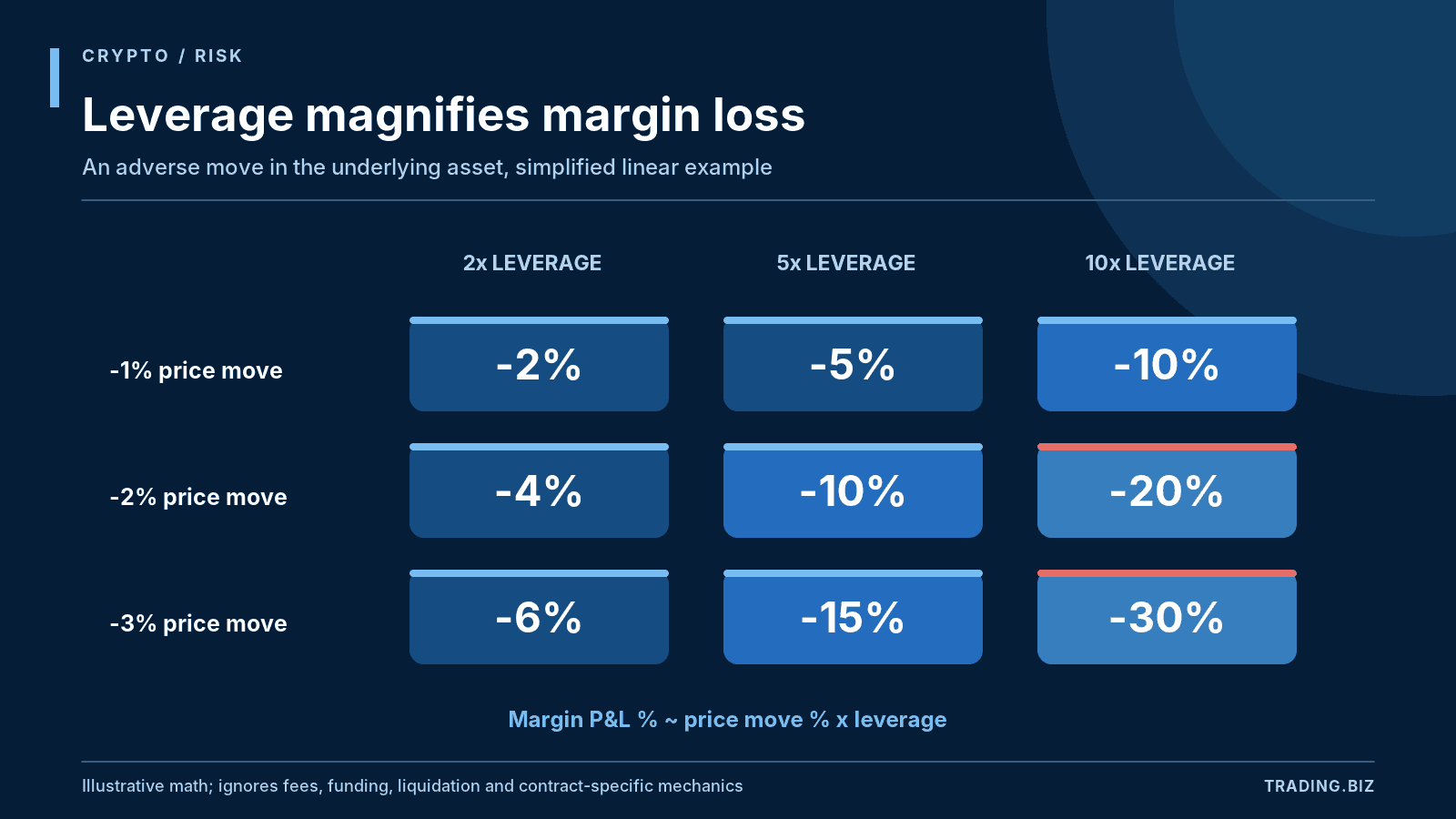
Figure 2. Illustrative leveraged exposure to adverse crypto price moves.
For that reason, crypto prop traders should build their size assumptions around the most volatile days, not the calmest ones. It is better to leave room for the market than to discover too late that the account does not.
What to test before paying for a crypto prop firm
Look at the available instruments, the way fees are presented, whether weekend trading is fully supported and how payouts are processed. Then check how the firm explains risk. If the site spends more time selling the dream than explaining the rules, that is useful information by itself.
A solid crypto prop firm does not need dramatic promises. It needs clear product detail, realistic rules and a payout path traders can trust.
How traders should size risk in a crypto prop firm
The cleanest approach is to size for the worst ordinary day, not the best calm day. Crypto can move hard and fast, and a position that looks modest at entry can become stressful quickly. Smaller size, hard stops and realistic daily limits tend to keep traders in the game longer.
It also helps to think about correlation. Holding several crypto positions at once may look diversified, but they can still move together when the market accelerates. A crypto prop firm account should be managed as one risk bucket, not a row of unrelated tickets.
FAQ
What is a crypto prop firm?
It is a funded trading program aimed at traders who focus on crypto markets such as Bitcoin and Ethereum.
Which crypto prop firm is well known?
Crypto Fund Trader is one of the names that appears often in crypto prop firm searches.
Do crypto prop firms pay in USDT?
Many do, although payout methods vary by firm.
Can I hold crypto trades over the weekend?
Often yes, but always check the specific rule set because firms handle weekend exposure differently.
What is the biggest risk with a crypto prop firm?
The biggest risk is buying a challenge with rules that do not fit crypto volatility or using a weak firm with poor payout terms.
Find Your Perfect Broker: Explore Our List Now!
Choose the best with our expert-selected options
Find Your Perfect Broker: Explore Our List Now!
Choose the best with our expert-selected options
Discover top binary options brokers tailored to your region. Browse our curated lists by country: