Updated:November 11, 2026

5 min

Binary Options vs Forex
Binary options and forex are often presented as two versions of the same thing. They are not. They differ in how risk is controlled, what you actually own, what they cost, and critically, whether you are legally allowed to trade them at all. Updated September 2026.

Jinia Shawdagor
Author
Updated October 23, 2026
Binary options and forex are often presented as two versions of the same thing. They are not. They differ in how risk is controlled, what you actually own, what they cost, and critically, whether you are legally allowed to trade them at all. Updated September 2026.
The difference that comes first
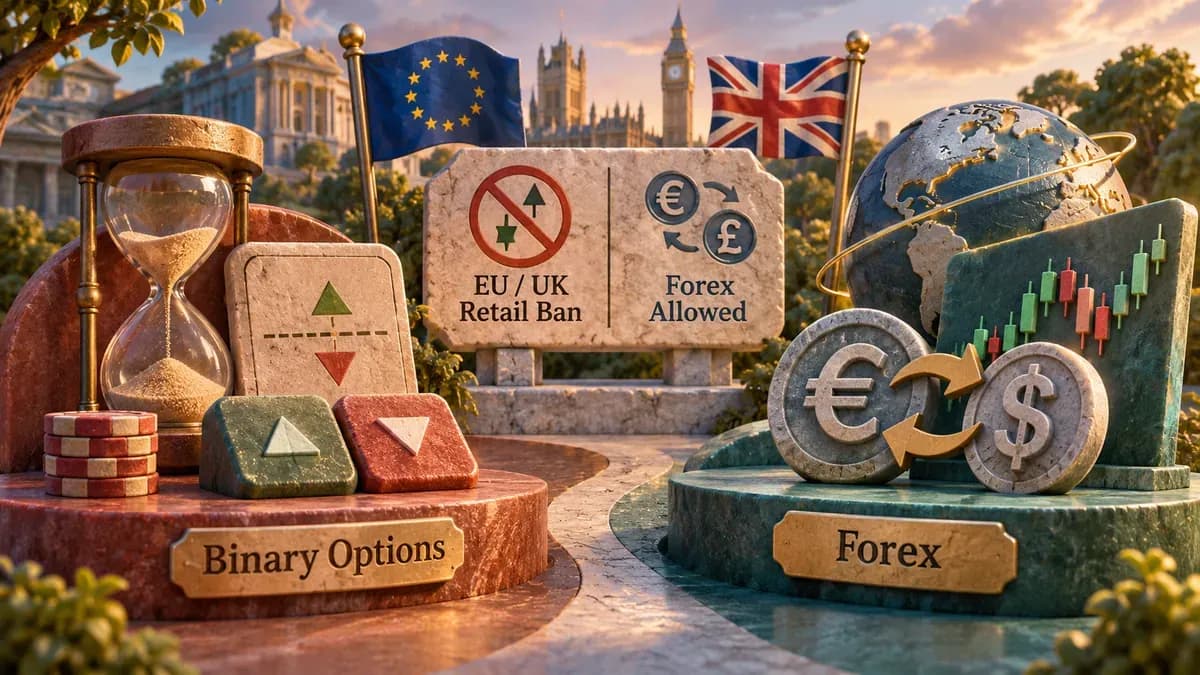
Retail trading of binary options is banned in the European Union and the United Kingdom. Regulators introduced the restriction after reviewing the proportion of retail clients losing money on the product.
Forex trading remains legal for retail clients in both jurisdictions, but under strict conditions: leverage capped at 1:30 for major pairs, mandatory negative balance protection and required risk warnings.
If you are in the EU or UK, that settles the comparison before any discussion of strategy. Platforms still offering binary options to retail clients in those regions are operating outside the regulated market, which removes your access to compensation schemes and complaints procedures.
What binary options are
A binary option is a contract on whether an asset's price will be above or below a set level at a set time. The most common underlying assets are currency pairs, but commodities, indices and cryptocurrencies are also offered.
What are Binary Options?
You do not own the underlying asset. You predict direction only, not magnitude: if you think EUR/USD will rise, you place a trade on that outcome, and whether it rises by one pip or fifty makes no difference to the payout.
Each contract has a fixed expiry and a known maximum loss, the amount staked. There is no overnight financing to manage, because positions close at expiry.
The trade-off is that the payout is fixed too. A correct prediction pays less than 100% of the stake, while an incorrect one loses the full stake. The maths requires a win rate meaningfully above 50% just to break even, and that structural disadvantage is what regulators focused on.
What forex trading is
Forex trading means taking positions on the relative value of two currencies. The market grew out of genuine commercial need: a company buying goods abroad must convert currency to pay for them.
What’s the Difference Between Binary Options and Forex Trading?
What is Forex Trading?
Today it is a global decentralised market running around the clock across sessions, with trades possible from anywhere.
One clarification the original version of this article got wrong: retail forex trading does not usually mean owning currency. Most retail accounts trade CFDs or margin positions, where you take exposure to price movement without taking delivery. Actual ownership happens only in spot conversion through a bank or currency service.
Types of forex market
-
Spot market: currencies traded at the current market price, with near-immediate settlement
-
Forward market: a rate agreed now for delivery on a future date, used by businesses to fix costs regardless of later rate moves
-
Futures market: standardised, exchange-traded contracts for a set currency amount at a set date, typically used by institutional participants rather than individuals
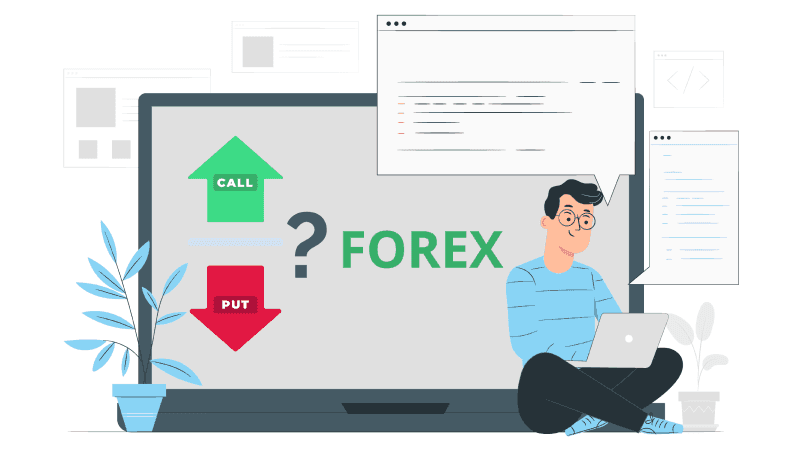
Point by point comparison
-
Expiry: binary options have a fixed expiry time, forex positions stay open until you close them
-
Leverage: not applicable to binary options since the stake is fixed, capped at 1:30 for retail forex in the EU and UK
-
Stop loss and take profit: unavailable on binary options because the outcome is predetermined, standard tools in forex
-
Volatility: binaries ignore magnitude entirely, forex results depend directly on how far price moves
-
Access: binary options are restricted for EU and UK retail traders, forex is available under regulated conditions
-
Cost: binaries embed the cost in the payout ratio, forex charges through the spread, commission and overnight financing
-
Risk profile: binary loss is capped at the stake but total, forex loss varies with the move and requires active management
Which suits which trader
-
Binary options appeal to those wanting a known maximum loss and no position management, but the fixed payout structure works against the trader and access is restricted in major jurisdictions
-
Forex suits those willing to manage positions actively, using stops and position sizing to control risk
-
Beginners are generally better served by a regulated forex account on a demo first, where risk controls can actually be practised
-
Whichever you choose, verify the platform's licence in the regulator's public register before depositing
Compare regulated platforms in our forex brokers section, and read the risk overview in binary options before considering that instrument.
Binary options vs forex: frequently asked questions
Are binary options legal?
Retail trading of binary options is banned in the EU and UK. They remain available in some other jurisdictions, but platforms offering them to EU or UK retail clients operate outside the regulated market.
Do I own the currency when trading forex?
Usually not. Most retail forex accounts trade CFDs or margin positions, giving exposure to price movement without ownership.
Which has lower risk?
Binary options cap the loss at the stake, but that loss is total and the payout structure requires a win rate above 50% to break even. Forex loss varies but can be limited with stops.
Can I use a stop loss on binary options?
No. The outcome is fixed at expiry, so stop loss and take profit orders do not apply.
What leverage is available in forex?
Up to 1:30 on major pairs for retail clients in the EU and UK. Offshore brokers offer far more, which increases risk proportionally.
Which is better for a beginner?
A regulated forex account practised on a demo first, because risk management tools exist and can be learned. Binary options offer no such controls.
Find Your Perfect Broker: Explore Our List Now!
Choose the best with our expert-selected options
Find Your Perfect Broker: Explore Our List Now!
Choose the best with our expert-selected options
Discover top binary options brokers tailored to your region. Browse our curated lists by country: