Updated:November 18, 2026

9 min

Colour trading app explained: how it works and why users lose
A colour trading app asks users to predict the next colour in a rapid sequence, usually after depositing real money. It may show a chart, a countdown and a balance in the same style as a trading terminal.

Vitalii Bednarskyi
Author

Updated November 18, 2026
A colour trading app asks users to predict the next colour in a rapid sequence, usually after depositing real money. It may show a chart, a countdown and a balance in the same style as a trading terminal. The outcome, however, generally depends on the game's internal result mechanism rather than the price of a share, currency or commodity. Anyone searching for a colour trading app should understand the payout rules before treating it as a way to earn income.
You may also see the spelling 'color trading app' or terms such as colour prediction app and colour trading game. The labels change, but the central question stays the same: who determines the outcome, how is it checked, and how much does the operator keep from each bet?
What a colour trading app is and how its rounds work
A typical round runs for a short fixed interval. The user selects a colour, enters a stake and waits for the timer to expire. The app then displays a result and settles the balance. Some versions show numbers, odd/even choices or a separate 'big/small' option. Others use coloured circles or moving bars to create the appearance of market data.
Here is a simple example. You stake $10 on red. The app promises $19 back if red wins, including the original stake. Your profit on a win is $9; your loss on a miss is $10. If red and blue are genuinely equally likely, the expected result of one $10 bet is a loss of $0.50. That 5% expected loss comes from the payout, even if the software generates outcomes fairly.
Colour trading versus real financial trading
In a regulated securities market, a share gives you an interest in a company. In spot currency or crypto trading, your result depends on an external market price and on the actual product you bought or sold. Brokers may offer derivatives with significant risk, but the contract refers to a specified market or underlying instrument.
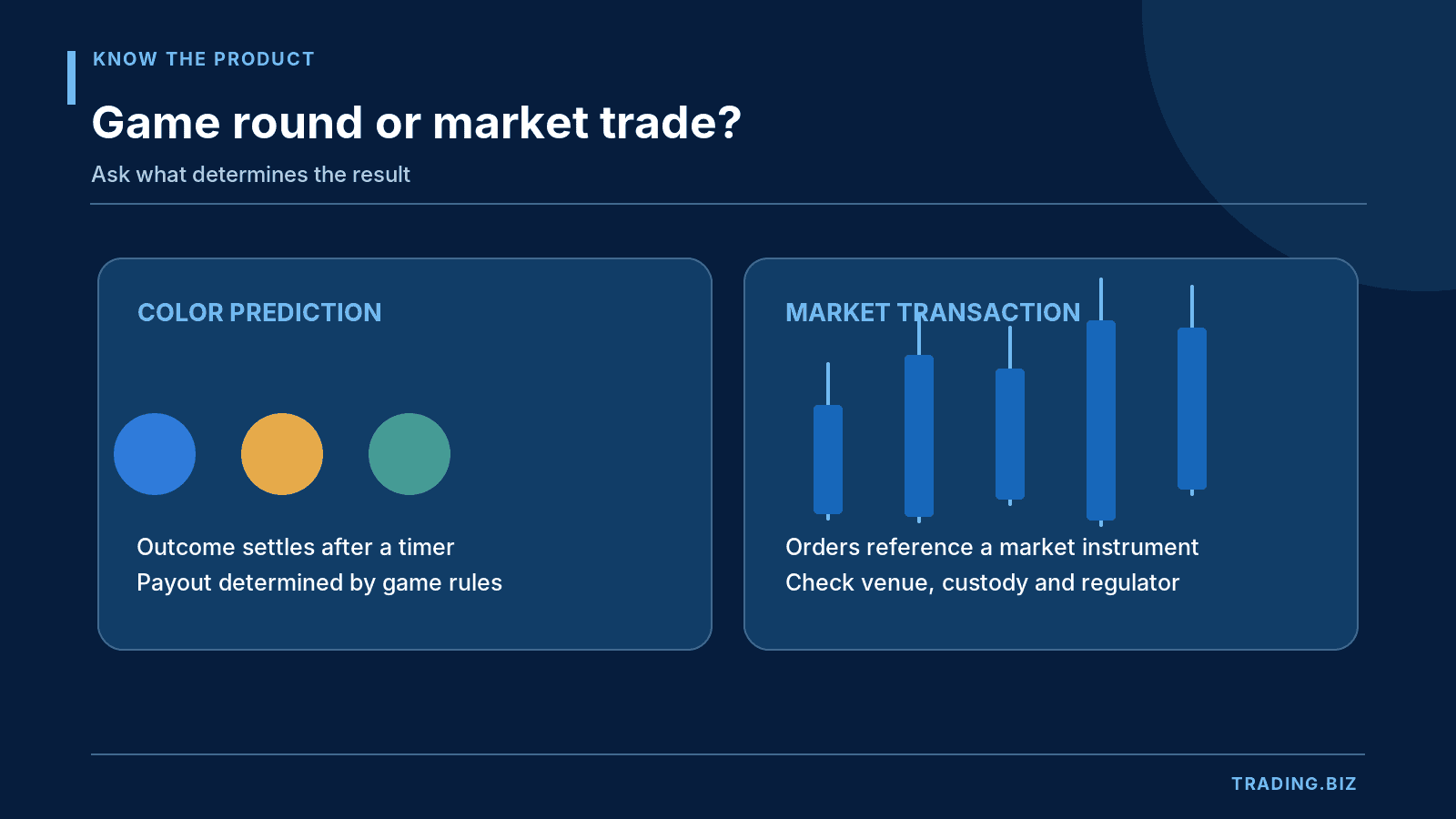
Figure 1. Why color prediction rounds differ from market orders.
In a colour prediction game, the user normally has no ownership of a financial asset and no claim on an external benchmark. The 'chart' is often a history of game results. Calling every round a 'trade' can blur an important distinction about risk and consumer protections.
Ask to see the instrument, settlement reference, contract terms and the identity of the regulated operator. If the answer is a vague description of 'AI market signals' or a private algorithm you cannot inspect, do not assume that the activity is securities trading. Fast rounds and a broker-like interface do not change the legal nature of a betting product.
Why people lose: odds, payouts and the house edge
The most useful calculation is expected value. Multiply the chance of each outcome by its net gain or loss, then add the results. For a fair two-colour game paying $1.90 back per $1 staked, half the rounds win $0.90 and half lose $1. The expected loss is five cents per dollar wagered. Over many rounds, that disadvantage can become substantial.
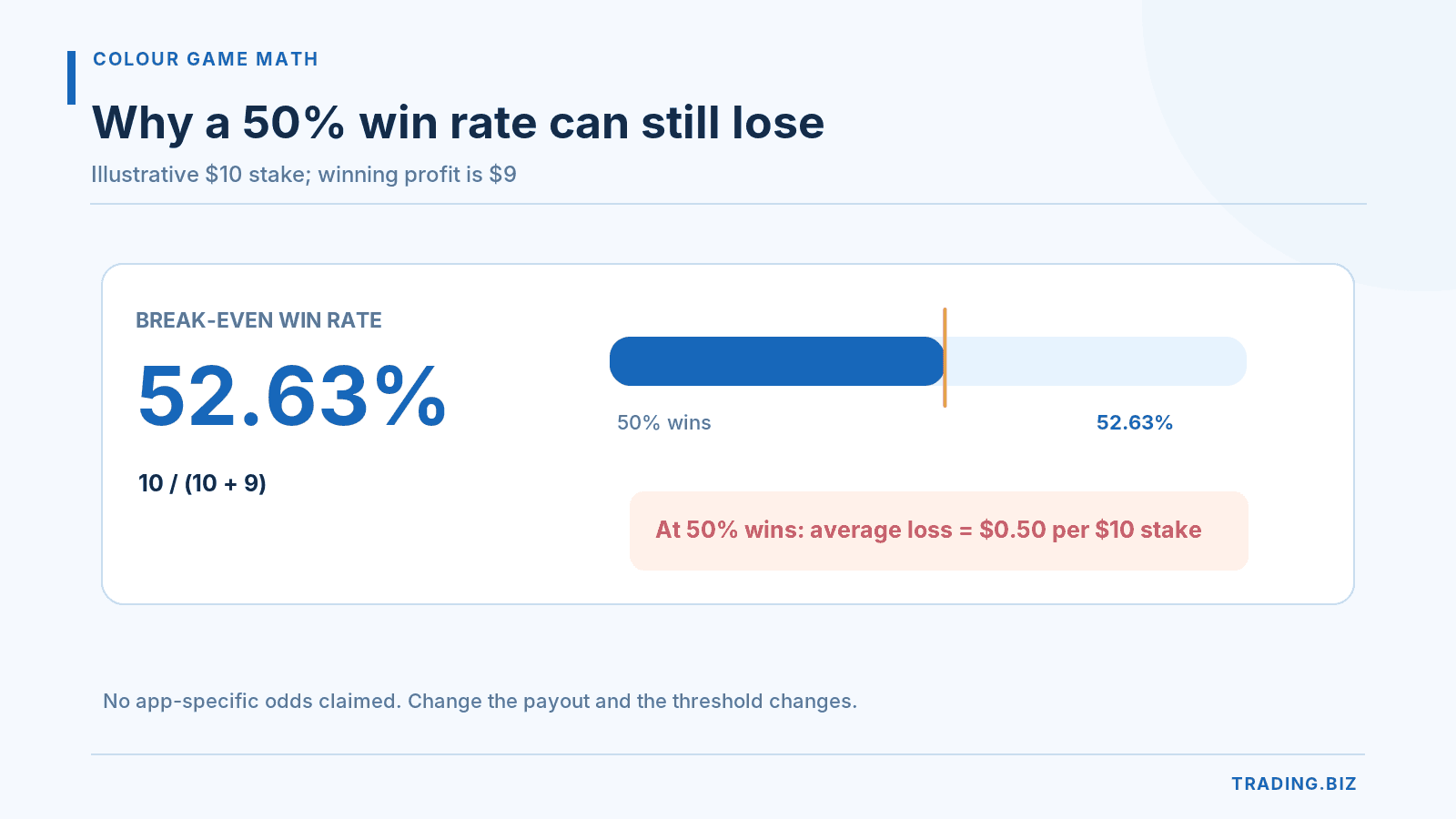
Figure 2. Breakeven probability in a hypothetical $10 color game with $9 winning profit.
| Two-outcome illustration | Amount per $10 stake |
|---|---|
| Advertised return on a winning bet | $19 total, including stake |
| Profit if your choice wins | $9 |
| Loss if your choice fails | $10 |
| Expected outcome with 50/50 odds | -$0.50 per round |
Real apps may have different odds, special colours or settlement deductions. Those differences need their own calculation. A displayed 90% 'accuracy' claim is meaningless without a verifiable track record, a sample size and an explanation of how signals were selected.
A streak of wins can make a system feel predictable. Human brains are good at finding patterns, even in independent random events. If a coin has landed heads five times, that does not make tails more likely on the next independent toss. Colour trading panels that display historical streaks often encourage precisely this error.
Colour trading prediction tips and signal sellers
Some groups sell colour trading prediction subscriptions. They may publish screenshots of profitable rounds, delete unsuccessful forecasts or claim to know the next server result. A genuine statistical advantage would need independently recorded predictions made before the round starts, over a large sample, with all losses included.
Doubling your stake after a loss is another common suggestion. Consider bets of $5, $10, $20, $40 and $80. Five consecutive losses cost $155, and the next step already requires $160. A small bankroll or a table limit stops the progression long before the promised recovery. Even when an eventual win happens, the payout may be too low to cover the full sequence.
Automated 'colour bots' add software risk. They may request account credentials, payment permissions or direct access to messaging apps. Do not give anyone remote access to a financial account because they promise a guaranteed signal. A random game has no reliable chart indicator comparable to audited market data.
Color trading app scams and withdrawal problems
A troubling app often works normally while users deposit small sums and withdraw modest wins. Later it may demand a separate 'tax', 'activation fee' or 'security deposit' before releasing a balance. Another warning is a support representative asking you to transfer money to a personal wallet instead of the payment instructions inside the app.
If you have already deposited money, save the app name, website address, payment receipts, chat messages and account history. Contact your bank or card provider promptly and ask what dispute options apply. Report suspicious activity to the relevant local authority. Do not pay a recovery agent upfront; fraudsters sometimes follow the first scam with a second offer to retrieve the money.
Avoid sharing one-time passcodes or identity documents through unofficial chats. A professional-looking Telegram channel or influencer video cannot substitute for an operator's verifiable licence and legal identity.
Is colour trading legal in India, Pakistan or Nigeria?
India: the online money games ban
India enacted the Promotion and Regulation of Online Gaming Act, 2025, and government guidance published in 2026 describes a broad prohibition on online money games. It covers chance-based and skill-based money games and restricts their promotion and payment processing. A real-money colour prediction app falls squarely into an area that users should treat as prohibited rather than assume it is a licensed trading service. Free-to-play educational games with no monetary stakes are a different category.
Rules and enforcement can evolve, so check official government guidance before relying on claims that a new app is 'legal in India'. Offshore hosting or a foreign company registration does not by itself confer Indian authorisation.
Pakistan: check the activity and local law
Pakistan has cautioned against unlicensed online investment platforms, and gambling laws create additional concerns for betting-style apps. A colour prediction operator cannot show it is legitimate merely by calling its product 'trading'. Confirm what activity the app offers, where the company is incorporated, how consumer complaints are handled and whether the operator has relevant regulatory oversight. Avoid treating a mobile-store listing as evidence of legality.
Pakistan's newer 2026 virtual-asset framework regulates licensed crypto service providers. That does not grant a colour prediction game permission to accept wagers. Crypto regulation and gambling permissions concern different products.
Nigeria: gambling licences are activity-specific
Nigeria has gaming regulators, including the Lagos State Lotteries and Gaming Authority, which publishes licensing requirements and a register of operators. A sports-betting licence does not automatically cover every form of colour prediction game. Users should check the operator's exact name, licensing category, geographic scope and expiry date. The absence of a recognisable approval is a reason to stay away, not proof that the app is legal.
Legal alternatives for learning to trade
If the goal is to learn price analysis, start with paper trading in a legitimate market. Use a demo environment that references real price feeds, write down your entry and exit decisions, and review the result after a few weeks. A demo account cannot replicate every emotional or execution problem, but it is a safer classroom than repeated wagers on colours.
For investing, consider regulated stockbrokers or investment funds available in your country. Learn how orders, fees and custody work before using real money. Genuine investments can lose value, and speculative products may be entirely unsuitable for beginners. At least the instrument and applicable rules are identifiable.
FAQ
Is a colour trading app the same as forex trading?
No. A colour prediction game usually settles on a game-generated outcome. Forex trading concerns currency prices and can involve regulated or unauthorised providers depending on jurisdiction. The name 'trading' on a betting app does not establish a link to the forex market.
Can colour prediction signals guarantee profits?
No credible signal service can guarantee the outcome of an independently random round. Ask for a complete, timestamped record of predictions and settlement results. Screenshots of winning bets are easy to select and cannot demonstrate a reliable edge.
Why do I sometimes win several rounds in a row?
Short-term streaks occur naturally. The house edge comes from the combination of odds and payouts over many rounds. A recent run of wins does not remove that disadvantage or predict the next result.
What should I do if the app refuses a withdrawal?
Stop making deposits, save evidence and contact your payment provider. Report the operator to local consumer, cybercrime or gambling authorities as appropriate. Demands for additional 'release fees' are a serious warning sign.
What is a safer way to learn trading?
Use paper trading or a demo account with observable market prices. Study order types, position sizing and the risks of leverage. If you later use real funds, choose a properly authorised provider and start with an amount you can afford to lose.
Source references
Find Your Perfect Broker: Explore Our List Now!
Choose the best with our expert-selected options
Find Your Perfect Broker: Explore Our List Now!
Choose the best with our expert-selected options
Discover top binary options brokers tailored to your region. Browse our curated lists by country: