Updated:November 11, 2026

6 min

How to get approved for options trading at any level
Trading options involves buying and selling derivative contracts based on an underlying asset. Many traders prefer options because the right strategies can deliver high returns while requiring a lower investment than stocks.

Cory Mitchell
Author

Updated October 23, 2026
Trading options involves buying and selling derivative contracts based on an underlying asset. Many traders prefer options because the right strategies can deliver high returns while requiring a lower investment than stocks.
With options trading you can hedge risk exposure, make a profit (or lose) based on price moves, or generate income.
Before any of that, you need approval. Learning how to get approved for options is a short process: you either open a new account, or you ask for options trading privileges on an account you already have. This guide covers both routes, whatever your level of trading experience.
Steps to get approved for trading options
Each broker has simple steps you can follow to get approved for options trades. There are varying levels of options trading based on experience, risk tolerance, employment history, investment objectives, and income/financial information.
The following are general steps for if you already have a trading account and want to add options privileges to it.
If you are opening a new account, you will typically be asked during the account opening process what assets you want to trade.
Select “options trading” if this is of interest to you, as well as any other markets you are interested in trading. Your broker’s account opening process will guide you through all the steps for getting options approved. If you have an existing account, here is how to get approved for options.
Log in to your brokerage account.
Find your trading permissions in your Settings and select Options. For example, if you are using Interactive Brokers, you go into your Settings, then click on Trading Permissions.
When you request to add options trading privileges, you will need to fill out an application form. It will include questions on your income and net worth, employment information, and how you plan to trade the options. How you answer these questions, especially the part about how you plan to trade, will help determine which tier your broker provides you. Since the broker already has your documents on file, you may just need to verify your existing information with a signature, or update it.
Submit the application. You will typically receive a response within a few business days.
Check out our review of Charles Schwab for options trading.
Option trading tiers
Brokers offer tiers for options trading, and while the levels are similar across various brokers, they may be called slightly different things.
Here is how options trading tiers are structured:

Want to add options privileges
Cash account - In a cash account you can buy calls and puts, sell covered calls, or sell cash secured puts. Basically, you can do things with defined risk or trades where you have enough cash and securities in your account to cover the liability. This is often referred to as “level one” trading.
Margin Limited - This is a margin account, which means you can take positions worth more than the cash you have in the account. In terms of functionality, you can trade the same types of options as a cash account, but you have access to margin.
Margin Basic - With this type of margin account you can complete the aforementioned trades, as well as making debit or credit spread trades. This is often referred to as Level 2 options or tier 2 options trading.
Margin Advanced - With this type of account you can conduct all the previously mentioned trades, as well as advanced trades. This tier may also provide privileges in other markets, such as shorting stocks, futures trading, or cryptocurrency trading, depending on the broker. This is level 3 / tier 3 options trading.
Each broker may break down its tiers slightly differently, with some perhaps having 5 tiers, but the general structure is the same.
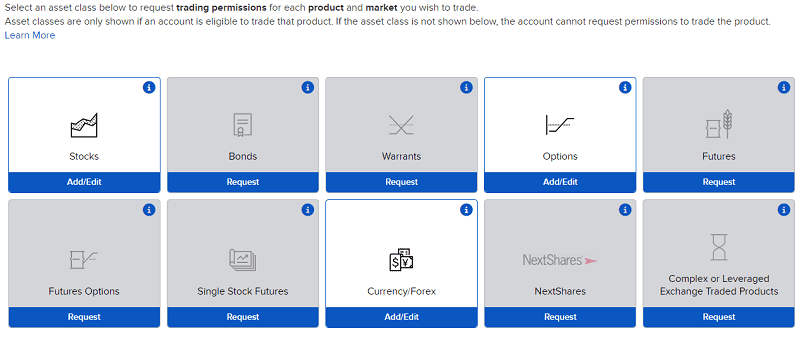
Trading Permissions
Which tier you actually need
Match the tier to the trade. Hold 100 shares and want to sell a covered call against them? That is level one, and a cash account already covers it. Run a five-dollar-wide credit spread on the same stock instead and you need Margin Basic, level two, because the position carries risk you have not funded in full. Asking for Margin Advanced when covered calls are the whole plan just gives the reviewer more to question.
Tips to get approved for options trading
If you want to make sure you get approved for options trading, here are some tips to follow.
The approval process for options trading is relatively straightforward, and you likely shouldn’t run into any problems. Here are some tips to keep it that way.

Tips to Get Approved for Options Trading
Request what you need - no more. If you only plan to buy calls and puts, say so when filling out the questionnaire. If you don’t need access to advanced features, don’t ask for them.
Trade safely and responsibly, then request more features if needed. Start with the minimum features you need to trade. If you need more, you can always make a request later after the broker has seen that you know what you’re doing.
If you are rejected for options trading, or the broker doesn’t give you access to the features you want, you can always contact them and plead your case.
Each options broker has their own process for approving options accounts. If one broker denies you options privileges, you can always try another broker. Options are commonly traded, and brokers want you to trade.
The bottom line
For most applicants approval is a formality, not a test. Answer honestly, request the tier that matches the trades you intend to place, and expect a decision within a few business days.
If your broker turns you down, compare options brokers before reapplying. Our broker reviews set out the tiers, account minimums and markets each platform opens up.
FAQ
What does getting approved for options mean?
It is permission from your broker to trade derivative contracts on your account. Approval is granted in tiers, from buying calls and puts in a cash account up to spreads and advanced strategies on margin, and the tier decides which trades you can place.
How does options approval work in 2026?
You submit an application inside your brokerage account with details on income, net worth, employment and how you intend to trade. Existing clients often just confirm data already on file. Most brokers answer within a few business days.
What are the common mistakes?
The main one is asking for the highest tier by default when your plan only calls for covered calls. Others are overstating trading experience, leaving the employment or net worth fields inconsistent with the documents on file, and giving up after a single rejection.
Is options trading suitable for beginners?
Level one is built for beginners: buying calls and puts, selling covered calls and cash secured puts all carry defined risk. Spreads and advanced strategies sit higher up, and brokers want a track record before granting them.
Find Your Perfect Broker: Explore Our List Now!
Choose the best with our expert-selected options

Find Your Perfect Broker: Explore Our List Now!
Choose the best with our expert-selected options
Discover top binary options brokers tailored to your region. Browse our curated lists by country: