Updated:November 11, 2026

15 min

5 key trading innovations you need to try in 2026
The key trading innovations you need to know about in 2026 come down to five things: AI forecasting, bots, crypto derivatives, real-time data and zero-commission pricing. Crypto and the technology around it keep moving fast. Analysts expect new tools to reshape how investors build strategies. The market has also absorbed a large wave of first-time traders over the past year. New money plus new tooling is what makes the coming year worth planning for.

Gloria Chimelu
Author

Updated October 23, 2026
The key trading innovations you need to know about in 2026 come down to five things: AI forecasting, bots, crypto derivatives, real-time data and zero-commission pricing. Crypto and the technology around it keep moving fast. Analysts expect new tools to reshape how investors build strategies. The market has also absorbed a large wave of first-time traders over the past year. New money plus new tooling is what makes the coming year worth planning for.
Automation, artificial intelligence (AI), and other innovative tools are here to help companies navigate the complex financial conditions of the global economy, partly driven by commodity shocks. They also help traders achieve their targeted goals, given the current policy uncertainty due to changes in fiscal policy and fluctuations in interest rates.
Monetary policy is expected to diverge across developed markets, with some central banks anticipated to maintain a hold on interest rates in 2026, while others apply rate cuts or hikes. Sticky inflation is expected to remain a theme, which will limit the ability of central banks to lower interest rates significantly.
Supply chain uncertainty is expected to persist in 2026, but companies are better prepared to face challenges than in previous years. Economic turbulence is expected to test supply chains in 2026, affecting planning and pricing for retailers and consumer goods companies. Cost optimization will be a priority for companies in their supply chains in 2026 due to rising costs and uncertainty.
Decisions from the Trump administration and the White House's outlook drive market movement in the US and other countries. There is little sign of market volatility easing in the near term. Geopolitical risks will push fragmentation and diversification in global trade dynamics in 2026. The geopolitical landscape will influence how companies think about trading. These changes are expected to accelerate in the second quarter. The re-emergence of inflation is a key risk. The outlook for the first half of 2026 is cautious, but the second half outlook is expected to be better, with strong growth predicted.
Regarding the broader investment landscape, U.S. equities are projected to rise by 8-10% in 2026, driven by a favorable policy mix and AI-related productivity gains, with the S&P 500 expected to reach 7,800 by the end of 2026, reflecting strong earnings and cash flow growth. Investors are advised to seek diversification across different asset classes, sectors, and geographies due to elevated valuations in U.S. mega-cap stocks. Both developed market (DM) and emerging market (EM) equities are expected to outperform other asset classes, particularly cash and bonds, in 2026.
This article walks through the five innovations worth trying in 2026. You will see whether AI investments pay off. You will also see whether crypto derivatives deserve a place in your portfolio. Each section covers what the tool does and where it falls short. Want to know which platforms support them? Our broker reviews cover that side.
1. AI-powered prediction tools in trading trends 2026
AI tools can help predict market movements with greater accuracy, as shifts in global growth create market volatility. AI has become a key player in various industries, ranging from healthcare and education to agriculture and finance. The application of generative AI in financial modeling is a strong trend. AI investments in supply chains are expected to face recalibration in 2026 as companies adjust their expectations for immediate impacts. The first half outlook suggests continued AI-driven volatility.
The main features that the AI incorporates include:
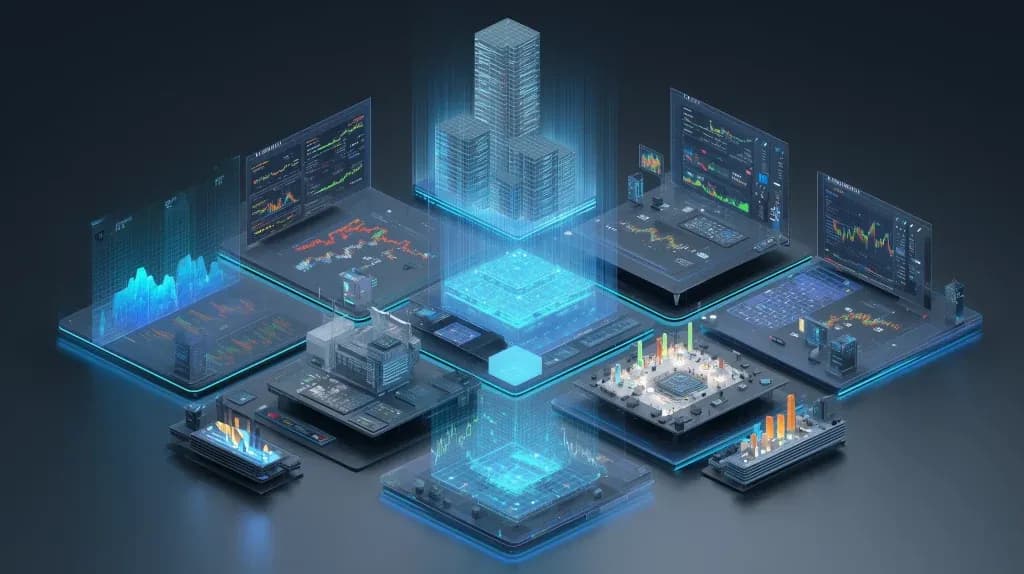
Data analytics. What sources do you rely on when learning about a potentially interesting asset? That could be the current market sentiment, investors' feedback on social media, market conditions, financial reports, etc. The volatility in the credit markets and other high-yield segments is also a critical data point. Artificial intelligence can process large amounts of data in seconds, including reports on the labor market, the health care sector's performance, the state of the domestic demand, and the complexities of demand planning. AI can monitor the state of the supply chain and its impact on the earnings growth of major companies. Not only does this save time, but it also ensures reliable results since there's no room for human error. Consider checking AI tools like Inciteai that can provide loads of market data, from current exchange rates of a certain pair to Goldman Sachs market analysis.
Machine learning (ML) algorithms. In trading, AI uses this approach to learn from market patterns. This is essential when reacting to unexpected supply shocks or labor market data. With the continuous use of ML, the prediction accuracy is expected to improve over time, providing investors with a clear outlook. For instance, with tools like QuantConnect you can train ML models or access their library.
Using historical information. You can choose the timespan for the AI to monitor while analyzing market patterns. This includes analyzing the long-term effects of supply chain bottlenecks and the performance of the S&P 500 during past crises. It's possible to access short and long-term analysis and get all the details you need for a smart trading decision. Check out tools like Ai Trading from Algosone, which can collect and analyze historical price and volume data while noting shifts in the supply chain and the corresponding market moves.
AI can point out potential price forecast details and discover trends that factor in many different things, like the way the Federal Reserve is likely to adjust monetary policy to achieve lower interest rates, the growing demand for Brent Crude, or the rising supply of the dollar. AI can also detect signs of upward pressure on prices.
2. Trading bots for advanced risk management
The hardest thing to do when executing trading decisions is to bypass emotions. They often cloud your judgment, leaving you to make poor moves and suffer potential losses. It can happen during monetary policy environment shifts or when the interest rates are in flux. That's where trading bots come into play because they automate trading strategies, eliminating the room for emotions that may cause problems.
The idea is simple. You set the parameters for the bot to follow. Once the market meets those terms, the bot executes the trade without asking you twice. Adoption keeps growing across global trade, and the barrier to entry has dropped: most retail platforms now ship a bot builder that needs no code.
Here are the main trading bot advantages:
Order management. Bots place buy and sell orders for you, including stop-loss and take-profit levels set in advance. How tight those levels sit is your call. It comes down to how much risk you accept per trade. The practical gain here is consistency. The order goes in at the level you chose while you were calm, not at the level you talk yourself into at three in the morning.
24/7 trading. The great benefit of trading bots is that they are always online. Even while you are sleeping or doing something else, they monitor the market for suitable trading conditions. It can perform price action monitoring for precious metals and keep tabs on emerging global markets like Latin America. A bot can even be configured to watch for market anomalies around major public events like Liberation Day. It allows companies to maintain their global trade focus.
Minimize risks. Automation removes a whole class of mistakes: the wrong ticker, the wrong size, the position you forgot to close before the weekend. That matters most in volatile stretches, which is exactly where manual errors cluster. Bots also enforce position sizing. Tell the bot to risk one percent per trade and it risks one percent every time. No exceptions for a setup that looks too good to pass up.
The parameters that bots can monitor include price changes, market conditions, or trading volume. You can use them for hedging, portfolio diversification, and day trading. These tools are ideal for those who don't enjoy improvisation but prefer to rely on detailed data analysis of the global economy. It's also great if you don't have much time to use trading platforms, but don't want to miss out on potential trading opportunities.
A worked example: setting bot parameters
Say you hold bitcoin and want protection without watching the screen all day. You set the bot to sell a quarter of the position if price drops five percent below your entry. It buys the same amount back if price recovers to entry. Two numbers do all the work: the trigger and the size. Test both on historical data first. Most platforms replay a strategy against past price and volume, and that replay is where bad parameters show themselves. A trigger set too tight fires on ordinary noise and bleeds you through fees. Set too wide, it fires after the damage is done. Start small, watch it for a month, then scale.
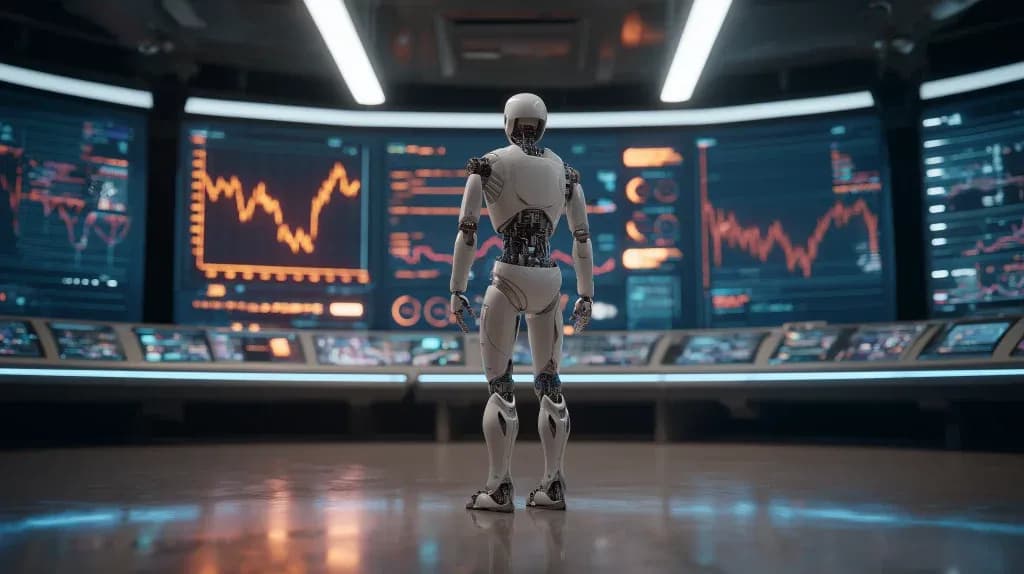
3. Crypto derivatives as a new trading frontier
The most popular crypto derivatives include options and futures. The health of the credit markets and the high-yield segment is a major factor influencing the valuation of all risk assets. The use of these instruments is an effective way to hedge against broader market risks, such as shifts in global trade dynamics. Derivatives are useful for protecting a portfolio during a potential trade war or geopolitical event, and for trading the volatility of the high-yield bond market.
Crypto options are contracts that give you the right to sell or purchase a digital asset by a specific date, but only at the preset price. You don't have any obligation to make this move, but you have to pay the premium. From a buyer's perspective, you can limit losses by paying only for the premium, while the profit is theoretically unlimited.
Crypto futures are contracts that oblige you to buy or sell the currency at the specified price and date. The main difference is that this is mandatory, but if things go your way, you can benefit from a potentially unlimited profit. On the other hand, the risk is higher, too, if the performance of global equities is factored in. Futures also have a fixed expiration date. A simple options calculator profit can help get the right value prediction and confirm that the investment is the right move for you.
Derivatives can be a smart hedging strategy against the actions of central banks, as they offer leverage opportunities. They are also a fine chance for diversifying different assets and trading strategies in managing cross-border capital flows. This includes hedging against the uncertainty of tariff costs and trade negotiations, as well as the regulatory landscape set by the Trump administration. To navigate this uncertainty, companies will continue to lean on short-term tactics to blunt the impact of shifting tariffs in 2026.
4. Real-time data tools for decision-making
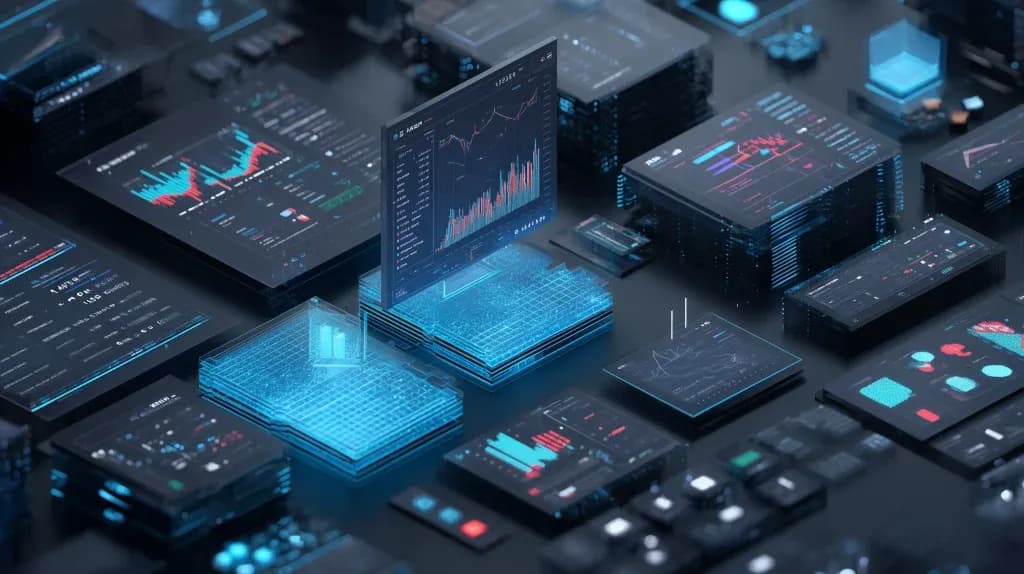
Crypto trading runs faster than it did a few years ago, and traders have to keep up. Real-time data tools are the practical answer. They shorten the gap between an event and your reaction to it. On a quiet day that gap costs you nothing at all. On the day a central bank surprises the market, that gap is the whole trade.
Here’s what these could include:
Live market feeds. You will receive constant updates about price fluctuations, trade volumes, and other parameters, allowing you to quickly assess the market's reaction to the latest reports on the labor market and any unforeseen supply chain crises. (e.g., check our Live Binary Options Charts).
Customizable alerts. You can set notifications for the tool to inform you as soon as something important happens, such as a major market event or a price level change. This is vital when central banks release their statements. These alerts can track market events, economic reports, or even announcements from international bodies like the United Nations.
Sentiment analysis. AI scans social feeds, news wires and order flow in real time to catch a mood shift before it shows up on the chart. Treat the output as a warning light, not a signal. Sentiment tells you the crowd is nervous. It does not tell you which way the crowd will run.
The combined pressure of inflation and labor market tightness is forcing companies to adjust their pricing power and operating models to maximize shareholder returns. A wide range of technical indicators is also available to traders. These include traditional metrics like moving averages, but also credit fundamentals for related companies.
You can rely on anything from moving averages to momentum oscillators. Most platforms bundle them free. Pick two or three and learn them properly. Stacking eight indicators on one chart mostly produces contradictory readings. The same logic applies to calculators. A stock option calculator helps only if you feed it real numbers.
5. Zero-commission trading
Trading accessibility improved sharply once platforms stopped charging per trade. The saving is obvious. Competition among zero-commission brokers has also pushed account minimums down, so a first position no longer needs a four-figure deposit. Global access is the other defining feature. Read the fine print, though. Commission-free rarely means cost-free, and the revenue usually moves into the spread or into withdrawal and inactivity fees. Compare the total cost, not the headline.
Zero-commission trading is perfect for frequent traders. You can execute many swaps without analyzing what portion of the profit you lost because of the imposed fees. The crypto market overall is benefitting from higher popularity because zero-commission platforms are attracting more investors who haven't tried trading digital assets. A low minimum deposit is also attractive for investors looking to open their first crypto position.
Tips for integrating global markets trends into your trading routine
The main thing to ensure is that you are open to new trends and adapting your trading routine with innovative tools. Of course, that doesn't mean you shouldn't keep using old-fashioned trading tools like an exchange calculator or crypto position size calculator to get the latest exchange rate forecast. These converter tools are free and usually available for crypto and fiat money, including the US dollar.
Using automatic processes like trading bots can ensure you participate in the market 24/7, and leveraging real-time data tools is the best way to make informed decisions. While the AI adoption of these new technologies might still be in the early stages for many, it is accelerating. The outlook for AI-related trading tools includes massive growth. With 2026 set to bring some major changes to the trading sector, it's better to adopt these technologies sooner rather than later.
The bottom line
None of these five tools replaces a strategy. What they change is how fast information reaches you and how consistently you act on it. AI cuts research time. Bots remove the emotional trade. Derivatives cap the downside. Real-time feeds shorten the lag. Zero-commission pricing stops small trades from bleeding value through fees. Pick one, learn it properly, then add the next. Trying all five at once is the fastest way to learn none of them. When you are ready, start with the broker comparison and choose a platform that supports the tools you plan to use.
FAQ
What are the key trading innovations you need to try in 2026?
Five of them stand out. AI-powered prediction tools, trading bots for automated risk management, crypto derivatives such as options and futures, real-time data tools with live feeds and alerts, and zero-commission trading accounts. Each one addresses a different weak point: research speed, emotional discipline, downside protection, reaction lag and cost.
How do AI prediction tools work in trading?
They process far more data than a person can read in a day: financial reports, labour market releases, social sentiment and price history. Machine learning models then look for repeating patterns and estimate what usually follows. Accuracy improves with use, but the output stays a probability, never a promise.
Why do trading bots matter for risk management?
Because they trade the plan you wrote when you were calm. A bot places orders around the clock, holds position sizing to the percentage you set, and never widens a stop because a losing trade feels like it will turn around. Emotion is the most expensive variable in retail trading, and automation removes it.
What are the common mistakes with these tools?
Trusting AI output without checking the source data. Running a bot live before testing the parameters on historical prices. Buying crypto futures for the leverage without accounting for the obligation to settle. Stacking a dozen indicators until they contradict each other. And treating zero commission as zero cost when the fee has simply moved into the spread.
How do I apply these innovations in practice?
Take one tool per quarter. Start with real-time alerts, since they cost nothing and change your reaction time immediately. Add a bot next, tested on historical data and run with a small position size for a month. Only then look at derivatives, and only with money you can afford to lose entirely.
Find Your Perfect Broker: Explore Our List Now!
Choose the best with our expert-selected options

Find Your Perfect Broker: Explore Our List Now!
Choose the best with our expert-selected options
Discover top binary options brokers tailored to your region. Browse our curated lists by country: