Updated:November 13, 2026

7 min

0
Pips, spread and lot size: what is a pip in forex
A pip is the standard small price increment used to describe many forex movements. On EUR/USD, one pip is usually 0.0001. On USD/JPY, one pip is usually 0.01. The money value of that pip depends on the pair, lot size and account currency. Once you can connect those three pieces, spreads, stops and trade costs become much easier to compare. This guide works through the numbers before getting into the calculators.

Pejman Zwin
Author
Updated November 13, 2026
Pips meaning on major forex pairs and JPY quotes
A quote of EUR/USD 1.0850 means one euro costs 1.0850 US dollars. If the quote rises to 1.0851, the move is one pip. At 1.0860, the change from 1.0850 is ten pips. Some brokers display five decimal places, such as 1.08503. That final fractional digit is commonly called a pipette. Ten pipettes equal one pip for a conventional four-decimal pair.
JPY pairs use a different scale. USD/JPY from 150.20 to 150.21 is one pip; a quote displayed as 150.213 includes a fractional pip digit. Other instruments, including gold, indices and cryptocurrencies, may be priced in ticks or points under contract rules that do not match a standard forex pip. Always inspect the symbol specification rather than applying EUR/USD conventions to everything on the screen.
Reading a price move without mixing pips and pipettes
Suppose EUR/USD moves from 1.08450 to 1.08575. The difference is 0.00125, or 12.5 pips. Counting every final decimal digit as a full pip would overstate the move tenfold. This mistake often appears in screenshots of "200-point" stops on five-digit forex terminals. In that display convention, 200 points may be 20 pips.
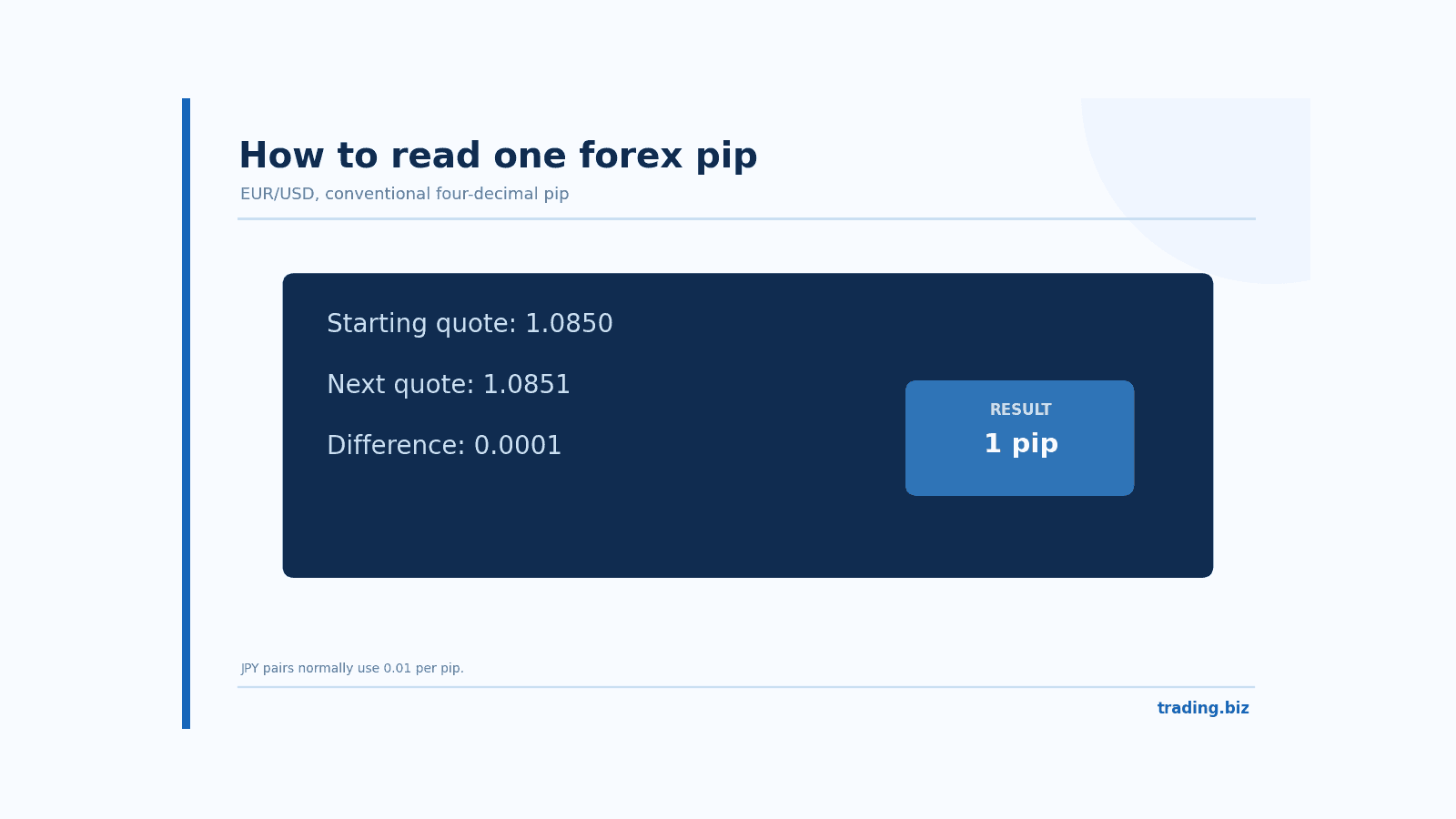
Figure 1. EUR/USD moves one conventional pip from 1.0850 to 1.0851.
Pip value and how to calculate it
For a pair where USD is the quote currency, a standard 100,000-unit lot has a simple relationship: 0.0001 times 100,000 equals $10 per pip. A mini lot of 10,000 units is $1 per pip, and a micro lot of 1,000 units is $0.10 per pip. These values assume a conventional forex contract size and USD-denominated result. Broker specifications can differ for CFDs or fractional contract models.
Pip value on a JPY pair
USD/JPY is quoted in yen per dollar. A standard 100,000 USD lot gains or loses 1,000 yen for a one-pip (0.01) move. To express that result in US dollars, divide 1,000 yen by the current USD/JPY rate. At an illustrative 150.00, one pip is about $6.67 per standard lot. The dollar amount changes as the exchange rate changes, unlike the roughly fixed $10 figure for EUR/USD in a USD account.
If your account is denominated in GBP or INR, you must convert the pip result into that currency too. This is why a broker's pip-value tool can be helpful for cross pairs. The formula is manageable, but multiple exchange rates create room for careless mistakes.
What is the spread on forex, and how is it charged?
The bid is the price at which the market or broker will buy the base currency from you; the ask is the price at which it will sell it to you. The spread is the difference. If EUR/USD shows bid 1.08492 and ask 1.08504, the spread is 0.00012, or 1.2 pips. A market buy usually starts at the ask and could be closed immediately at the bid, so the position starts with a negative spread cost even before commission.
A low advertised minimum spread is not necessarily the average you will experience. Some accounts add a separate commission and offer narrower raw spreads. Others include most of the trading charge in a wider quoted spread. During thin liquidity and major news, spreads can widen sharply. Compare the total round-trip cost under the conditions in which your strategy actually trades.
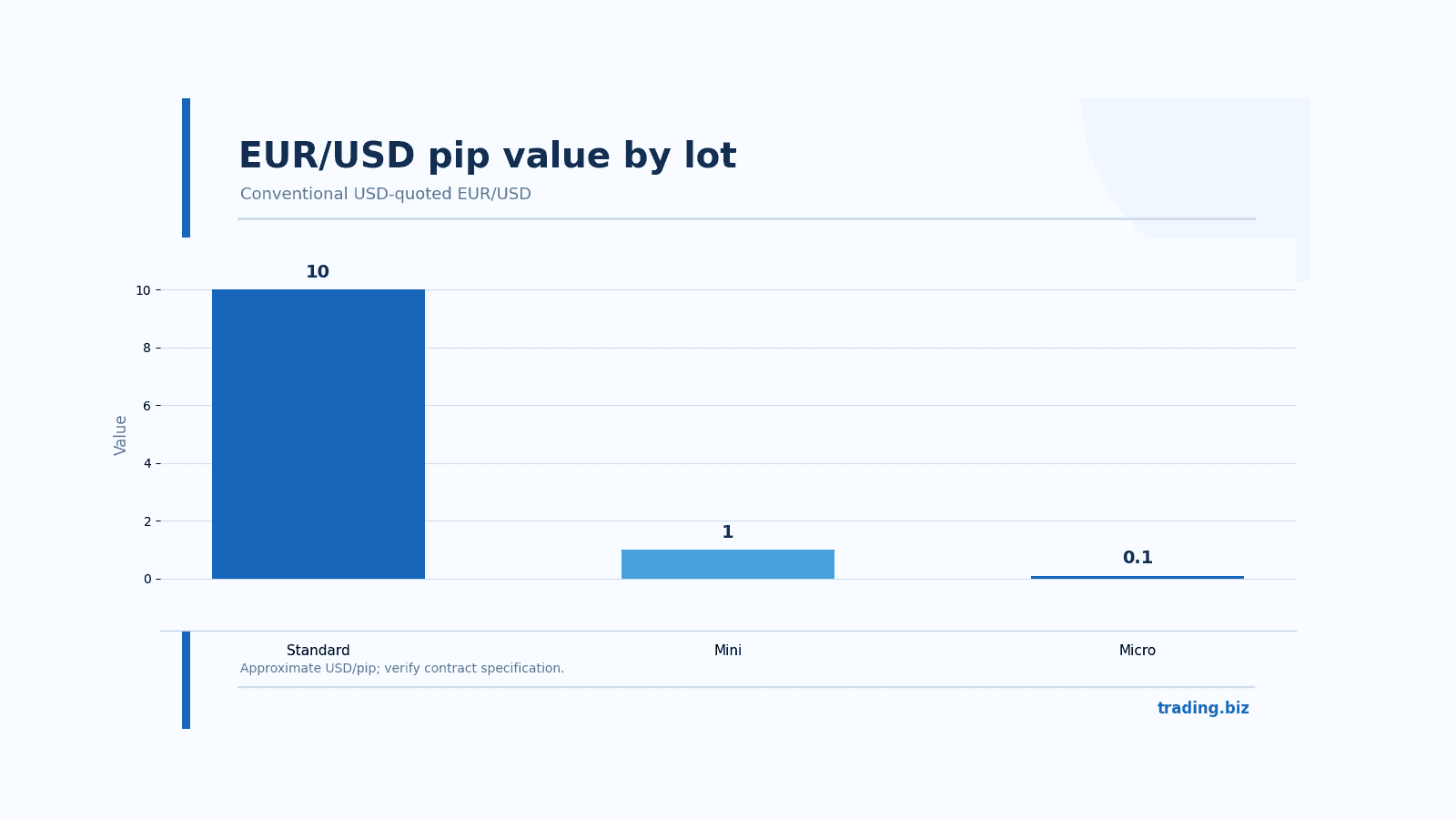
Figure 2. Conventional dollar pip values for standard, mini and micro lots.
Lot sizes: standard, mini and micro
A standard forex lot is commonly 100,000 units of the base currency. A mini lot is 10,000 units and a micro lot is 1,000 units. On a EUR/USD trade, volume of 0.10 standard lot usually means 10,000 euros of base-currency exposure, not a cash deposit of 10,000 euros. The collateral required depends on leverage, while the P&L is driven by the full position size.
Position sizing from planned risk
Suppose a trader has $2,000 and plans to risk 1%, or $20, on a EUR/USD trade with a 25-pip stop. Ignoring costs, allowed pip value is $20 / 25 = $0.80 per pip. Since one standard lot is about $10 per pip, the trade size is 0.08 lot. After adding a spread and possible slippage allowance, the prudent size would be a little smaller. The stop is defined by the trade idea; the volume adjusts to match the risk budget.
Some platforms restrict minimum lot increments, so an exact calculated size might not be available. Round down rather than exceeding the risk limit. Also consider correlated positions: two separate trades can share the same underlying dollar risk.
Putting pip value, spread and lot together in one trade
Take a hypothetical EUR/USD position of 0.20 lot at a 1.2-pip spread. One pip is worth about $2 for that size, so the initial spread cost is roughly $2.40. A 15-pip favorable move would produce about $30 of gross movement value; subtract spread and any commission to estimate the net. A 20-pip adverse move would imply about $40 in movement loss before fees and slippage. No calculator can guarantee the actual closing fill.
The example also shows why spread matters more for very short targets. If a strategy aims for four pips, a 1.2-pip spread consumes 30% of the gross target. If the strategy aims for forty pips, the same spread consumes 3%. This does not mean long-term trading is easier, but it explains why cost sensitivity varies by style.
Pip and lot size calculator you can use
For USD-quoted pairs with a conventional 100,000-unit standard lot, start with pip value in USD = lot size x 10. Then calculate planned loss = stop distance in pips x pip value, adding estimated commission and trading friction. For a JPY-quoted pair, calculate pip value in yen first and convert using the relevant exchange rate. Broker contract details remain the final authority for unusual symbols.
A useful calculator should ask for the pair, account currency, lot size, entry price and stop distance. It should show the result in both money and percent of account equity. A page that only asks "how many pips" without considering position size cannot calculate the cash risk of the trade.
A cross-currency pip value example
Suppose you trade GBP/JPY in an account denominated in USD. For a standard 100,000 GBP lot, a one-pip change of 0.01 JPY is 1,000 yen. If USD/JPY is 150, that equals about $6.67. At a mini lot it is roughly $0.67, and at a micro lot about $0.067. If USD/JPY later moves to 140, the same 1,000 yen becomes about $7.14. The pair's pip has not changed, but its dollar value has.
Do not lock one conversion rate into a spreadsheet forever. The correct calculator should update the relevant quote and show its assumptions. For an account in INR, another conversion is needed. That final translation matters when your risk limit is defined as a percentage of account equity rather than in the pair's quote currency.
FAQ about forex pips
Is one pip always worth $10?
No. Roughly $10 applies to a standard EUR/USD lot in a USD account. Mini and micro lots have smaller pip values, and cross-currency pairs require conversion.
What is a pipette?
A pipette is a fractional pip, usually one-tenth of a conventional pip. Five-decimal EUR/USD quotes often display pipettes as the last digit.
How do I calculate the spread in pips?
Subtract bid from ask, then divide by the pair's conventional pip size. For EUR/USD that is usually 0.0001; for USD/JPY it is usually 0.01.
What is a standard lot in forex?
Commonly 100,000 units of the base currency. It represents market exposure, not the amount you necessarily deposit as margin.
Does the pip calculator include slippage?
Only if the tool explicitly models it. Actual order execution can differ from the quote, particularly during gaps or fast news releases.
Official reference: CME introductory forex material
Find Your Perfect Broker: Explore Our List Now!
Choose the best with our expert-selected options
Find Your Perfect Broker: Explore Our List Now!
Choose the best with our expert-selected options
Discover top binary options brokers tailored to your region. Browse our curated lists by country: