Updated:November 13, 2026

7 min

0
Quotex signal bot: how signals work and why promises fail
A Quotex signal bot usually promises to tell you which direction an asset will move before a fixed-time contract expires. Some bots post arrows on a chart. Others send messages through Telegram, often with an expiry time and a claim about win rate. The sales pitch sounds simple. The evidence is usually much harder to find. Before paying for a Quotex signal service, you need to know how the signals are made, what the payout math demands, and whether the proposed automation is allowed under the platform's rules.

Chris Cartwright
Author

Updated November 13, 2026
What a Quotex signal bot is and how it generates signals
A signal is an instruction or suggestion to consider an entry. It may list an asset, a direction, a trade time and an expiration. Bots produce these messages from indicators, price thresholds, pattern recognition or a proprietary model. Some are merely Telegram posting scripts with a person behind the keyboard. Calling a bot "AI" does not prove it uses machine learning or that it has a statistical edge.
Fixed-time trading creates a demanding test. The trade normally has a fixed potential payout when correct and a loss of the stake when incorrect. Unlike a conventional position, you often cannot repair the decision by moving a stop or waiting a little longer. A signal can identify the direction of a move and still lose because the chosen expiration was wrong.
Why a bot's screenshot is weak evidence
A green arrow placed on a historical candle shows little about real-time performance. It may have been added after the price moved or selected from many failures. A proper record must include every signal as originally issued, with a timestamp available before the trade, the market quote and the stated expiration. The result has to use an executable quote, not a later chart snapshot.
Quotex signal bots on Telegram and paid channels
Search for a Quotex signal bot on Telegram and you will find free rooms, premium channels, automated message feeds and paid "VIP" access. Free channels may earn referral commissions when people register or deposit. Premium channels generally charge a subscription, sell a one-time software package or ask users to open an account through a link.
Ask what the seller is paid for. A provider rewarded for new deposits has a different incentive from someone whose only income comes from a transparent subscription. Neither business model proves dishonesty, but both deserve scrutiny. A channel can post dozens of wins during quiet hours and stop reporting as soon as market conditions change.
Signal latency matters
Imagine a message stamped 10:00:00 telling you to take a one-minute trade. You see it at 10:00:12, open the app and submit at 10:00:19. That is almost a third of the contract gone before your trade starts. The provider may record a win from an earlier price while your actual position loses. Slow notification delivery makes short expiries especially unreliable.
Why promised Quotex signal accuracy is not realistic
Suppose a fixed-time contract pays 80% of the stake on a correct prediction. A $10 winning trade earns $8; a wrong one loses $10. Break-even is 10 divided by 18, or 55.56% wins, before any extra cost. At a 60% hit rate over 100 equal-stake trades, the expected result is $480 from winners minus $400 from losers, or $80. At 50% the same plan loses $100. A claimed 80% accuracy figure is meaningless until you know how many consecutive, independently timestamped signals produced it.
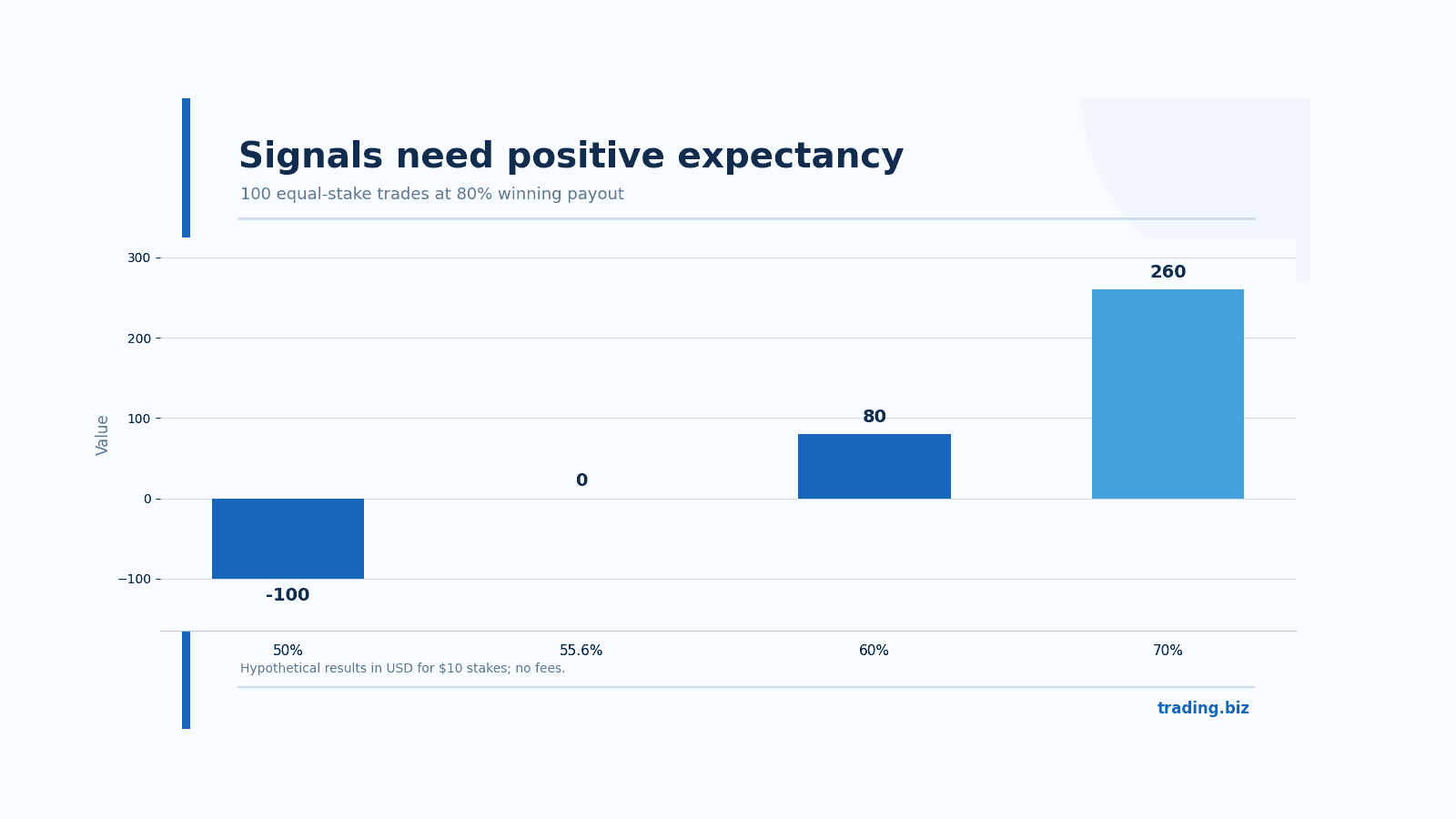
Figure 1. Break-even and example outcomes at an 80% payout on equal stakes.
Even a genuine historical hit rate changes with volatility and liquidity. One thousand signals from one quiet market period do not guarantee similar results the following month. Providers who promise daily fixed income, "100% accurate" calls or a bot that never loses have not solved the probability problem. They have simply removed the losses from their marketing.
Quotex signal scams: fake screenshots and deposit pressure
Common patterns include forged account screenshots, leaderboards containing only winners and requests to send a deposit to an "agent" who will trade for you. Another is an account takeover dressed up as setup assistance. The scammer asks for the Quotex password, email recovery link or one-time code so a bot can be connected. Those credentials give somebody else control over the account.
Quotex's published trading rules prohibit clients from using automated mechanisms to execute operations without their direct participation. That distinction matters. Reading a Telegram signal manually is not the same as connecting an unofficial auto-execution robot. Anyone selling a fully automatic Quotex bot should explain how the product complies with the platform's current rules, and you should verify that explanation directly.
A purported support employee may also send a shortened download link or request remote access to your phone. Stop there. The service does not need control of your device to send a simple market opinion.
How to verify a Quotex signal provider
Ask for a complete export covering a fixed period, including losses, unchanged timestamps and any deleted or edited calls. Record what the provider declared before each outcome. Then calculate win rate by market, expiry and time of day, not just in aggregate. A 62% hit rate on 30 cherry-picked calls is fragile evidence. A transparent record of several hundred consecutive calls is better, although it still cannot predict the future.
A practical verification test
Follow the channel on demo for at least several sessions without changing its signals to make them look better. Write down the message arrival time and the price available when you could actually enter. If the provider posts trades faster than a person can follow them, evaluate only the signals you could reasonably execute. Compare demo performance after realistic timing against the advertised record.
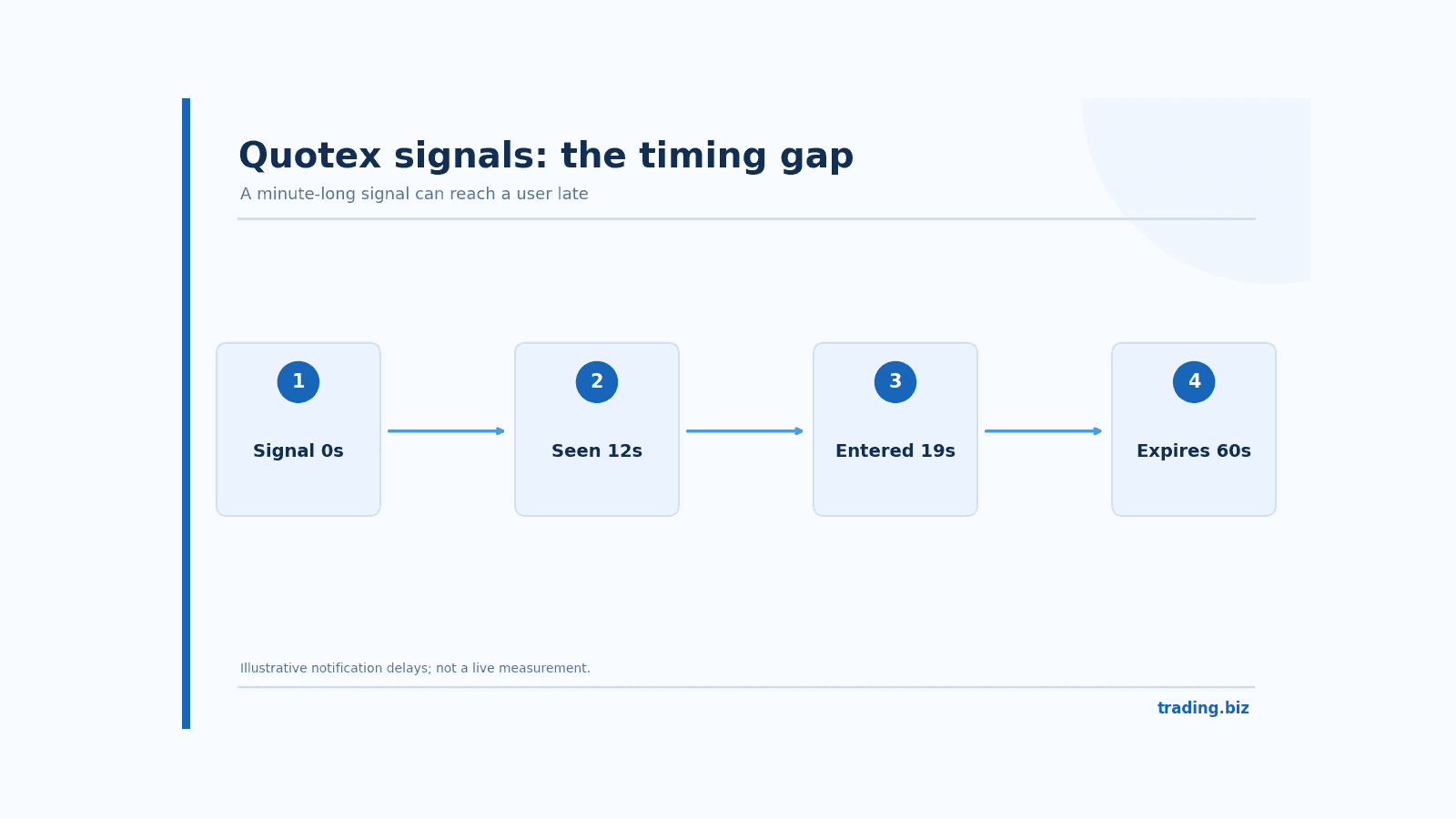
Figure 2. Why signal delivery delays matter on one-minute contracts.
If the provider refuses to explain the methodology, pressures you to deposit that day or tells you not to track the losing trades, the decision becomes easier. Save your money. An attractive subscription fee does not compensate for unverifiable results.
Safer alternatives to a Quotex trading bot
Start with your own written setup and a demo record. A basic trend filter plus clearly defined expiration is more testable than a black-box feed. You can also use indicators to generate alerts without giving software account access. That preserves control over the decision and helps separate analysis quality from execution mistakes.
There is no requirement to trade fixed-time products at all. Their all-or-nothing payoff and short expirations make them particularly unforgiving. If you are still learning market mechanics, conventional spot-market education and longer-horizon paper trading provide more room to understand the result of each decision.
A signal performance record worth keeping
For a two-week audit, make a spreadsheet with one row per signal. Capture provider message time, time you first saw it, market, expiry, available payout, entry quote and outcome. Do not overwrite the original call if the provider edits it later. Keep canceled or unanswered signals in a separate column. The goal is to learn whether the published history resembles what a subscriber could trade.
An alert service that posts a call every thirty seconds may show an impressive number of winners but be unusable by a person trading on a phone. Delivery delay and missed entries belong in the evaluation. After a hundred consecutive calls, compare the usable subset with the vendor's claimed accuracy and the break-even win rate for your actual payout. If the service cannot produce a record this basic, the mystery is a cost, not an advantage.
FAQ about Quotex signal bots
Is there an official Quotex signal bot?
Do not assume a third-party bot is endorsed by the platform. Check official communications and the trading rules. An outside seller using the platform's name or logo does not establish an authorized partnership.
Can a free Telegram Quotex bot be accurate?
It can make some correct predictions. Accuracy needs a complete, timestamped record, a stated expiration and realistic entry prices. Free access does not make a provider reliable or unreliable by itself.
What win rate does an 80% payout need?
Roughly 55.56% to break even on equal stakes before other costs. A 50% win rate loses money at that payout. Different payout percentages change the threshold, so recalculate before judging any claimed result.
Are auto-trading bots allowed on Quotex?
The trading rules available from Quotex prohibit automation that carries out trades without direct client participation. Confirm current terms before connecting any software. A Telegram alert is different from unauthorized automatic order placement.
Should I give a bot my login details?
No. Keep your password, recovery email and verification codes private. A seller asking for them may be trying to control the account. Stop the setup and contact the platform through its official support route.
Official reference: Quotex trading rules
Find Your Perfect Broker: Explore Our List Now!
Choose the best with our expert-selected options

Find Your Perfect Broker: Explore Our List Now!
Choose the best with our expert-selected options
Discover top binary options brokers tailored to your region. Browse our curated lists by country: