Updated:November 18, 2026

9 min

0
Guide to prop firms in India: payouts in INR or USDT and tax
Indian traders can join many offshore prop firms, but that does not mean every payment route or payout method will suit every trader. The practical questions are simple: can you buy the challenge, can you receive the payout cleanly, and how will you report the income?

Oke Taofeek Deji
Author

Updated November 18, 2026
Traders comparing prop firms in India will find plenty of offshore offers, but some of their payment routes and payout methods may not work for Indian residents. The practical questions are simple: can you buy the challenge, can you receive the payout cleanly, and how will you report the income?
Can Indian traders join a prop firm?
Yes, many prop firms accept traders from India. The more useful question is which firms handle onboarding, payments and payouts smoothly for Indian residents. FundedNext is one of the names Indian traders search often. Other global firms may accept Indian clients too, but payment methods and KYC flow can differ a lot.
An offshore company accepting a signup does not establish that the resulting activity is permitted for a resident of India. This is especially important where the evaluation simulates trading leveraged foreign exchange products. India's Reserve Bank has repeatedly warned residents against unauthorized forex trading platforms and impermissible remittances. Its published Alert List even named FundedNext in an October 2024 update. Being named on an alert is not the same as a criminal finding, but it means readers should not treat the brand's global marketing as local regulatory clearance.
The safest way to evaluate the issue is to separate what happens in the simulation from what money is sent abroad and what contract is being purchased. A paid educational service, an employment-like reward arrangement and a foreign-margin trading deposit may raise different questions. The legal classification is not something a social-media promoter can settle. For significant amounts, seek advice from a professional familiar with FEMA and cross-border payments before transferring funds.
Prop firms in India that accept Indian traders
In practice, Indian traders usually end up with offshore firms rather than Indian-regulated prop programs aimed at retail traders. That means the trader should treat the terms as cross-border service terms. Read the help center, check supported regions, and confirm the payout method before paying the fee.
A good shortlist starts with whether the firm has a clean rules page, a known payout record, and clear support. That matters more than a flashy affiliate video.
A firm's supported-country list is a useful first check, followed by the location of the contracting entity and the payment processor. Some firms change country restrictions without updating old affiliates' videos. The applicant should also check whether identity documents must match the country of residence, and whether a local bank statement is accepted as address proof. Failing KYC after paying a challenge fee can make the entire purchase pointless.
Do not confuse acceptance with endorsement. A website that allows an Indian IP address to register has not demonstrated that the RBI has approved its underlying trading business. Keep any claim about Indian legality separate from the question of whether a customer can technically buy an evaluation. This is a particularly important distinction for readers searching for the best prop firms in India.
Paying for a challenge from India: cards, crypto and local options
Many traders use international cards or crypto to pay the challenge fee. Card acceptance can change with processor settings, so it is normal for one method to work while another fails. Some traders prefer crypto because it is simpler on cross-border checkout pages, but it also adds conversion and wallet risk. The broader regulatory picture is covered in our guide to crypto trading in India.
If a local payment route is not available, do not force it through a sketchy intermediary. Use the firm’s supported channels only.
A charge labeled in dollars can arrive on the card statement in rupees after the bank applies its foreign-exchange rate and a markup. If the fee is $100 and the card's effective conversion rate is ₹90 per dollar, the rupee outflow is ₹9,000 before any additional issuer fees. That is an illustration rather than a current exchange quote. A debit card may also decline a transaction because of the merchant's category or cross-border restrictions.
Prop firm payouts in India: INR bank transfer or USDT
Payouts usually come through bank transfer, a payout service, or stablecoins such as USDT, depending on the firm. Bank transfer is easier for traders who want clean fiat records. USDT is popular with traders who want speed or flexibility. The tradeoff is that crypto payouts still need proper recordkeeping when you convert or use them.
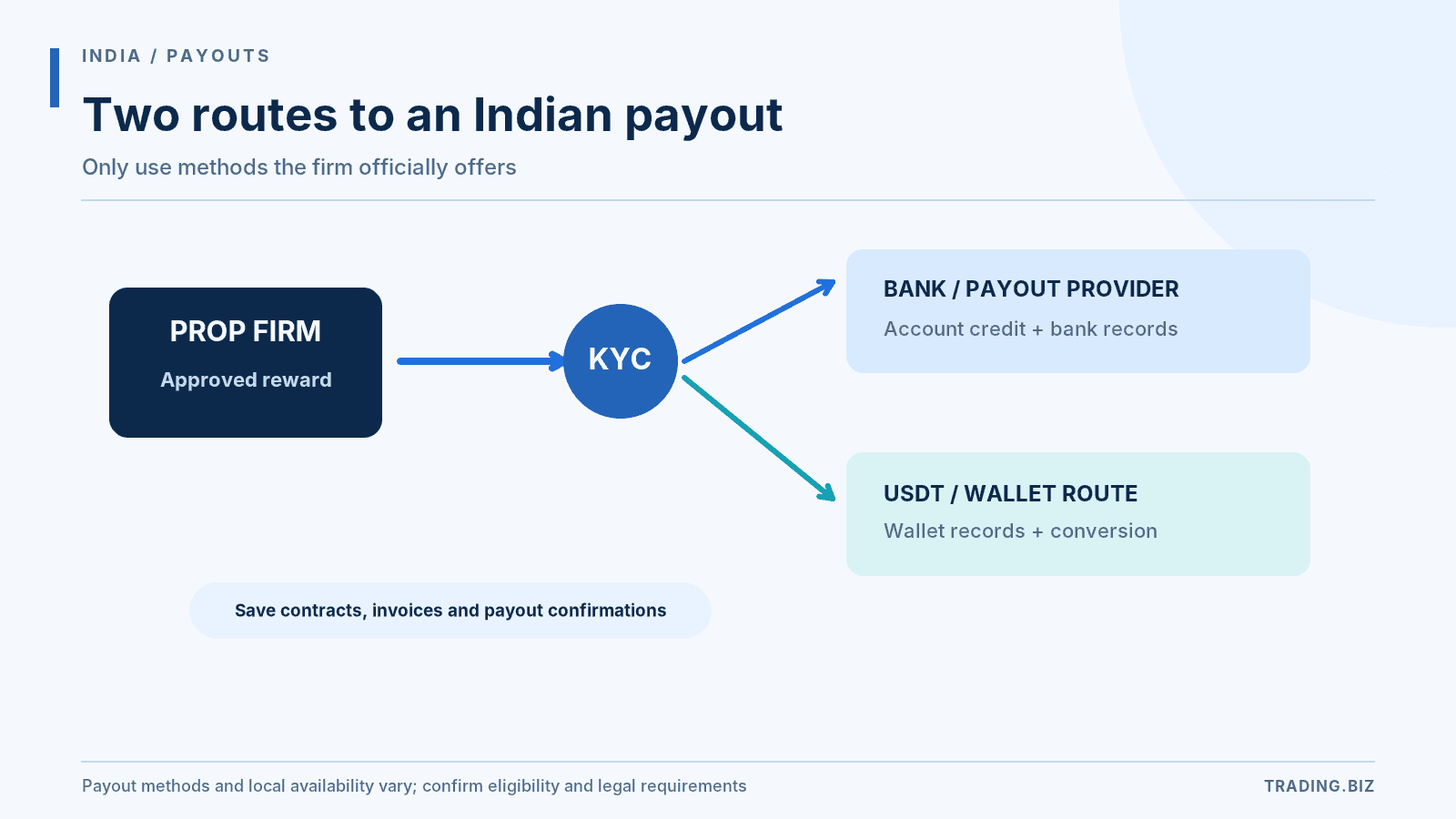
Figure 1. The documentation needed for bank or USDT payout routes.
A company saying it supports international payouts does not necessarily mean it can transfer INR directly to any Indian bank. The payment might be routed through a third-party provider, and the receiving bank may request an invoice or explanation of the funds. Ask which entity sends the payment, which currency it sends and whether intermediary charges are deducted. A payout shown as $1,000 on the trading dashboard may become a smaller amount on the bank statement after conversion.
USDT adds a different kind of exposure. Stablecoins are not equivalent to insured bank balances, and their issuers and networks carry separate risks. An incorrect blockchain network can make a transfer difficult or impossible to recover. Traders who receive USDT must also consider what happens when they convert it into INR. Keep the payout agreement and wallet history; do not rely on screenshots alone.
Taxes on prop firm payouts in India
A foreign prop firm payout is still income. The exact treatment depends on your setup and professional advice, but the safe assumption is that you need records of fees, payouts, dates and currency conversion. Many traders keep screenshots, invoices and bank or wallet records in one folder from day one.
Do not assume the foreign company handles your tax reporting. Usually, that burden sits with the trader.
A prop firm's cash reward should not automatically be classified as a profit from trading securities simply because a chart appears on the screen. The tax treatment may depend on whether the trader provides services under a contract, how the company describes the payment and the trader's wider circumstances. Invoices, bank credits and payout statements provide the starting evidence for an accountant. India's special virtual digital asset rules may also matter for some crypto transactions, but they do not automatically make every dollar-denominated prop reward a VDA trading gain.
Risks and checks before you pay a prop firm from India
Before buying, check the refund policy, the payout route, the KYC list and whether the firm has a history of sudden rule changes. If the firm is vague on any of those points, move on. A prop firm in India guide should save you from avoidable friction, and most friction starts before the first trade, not after it.
Ask the firm one concrete question by email: "Can an Indian resident who pays with an Indian card complete KYC and receive the stated payout under today's terms?" Save the answer. Then review the RBI rules that apply to the transaction rather than accepting a reply about internal account eligibility as legal advice. This two-part check closes a common gap between marketing and compliance.
Practical payment and payout tips for Indian traders
If you are paying a challenge fee from India, take screenshots of the checkout page, the invoice and the exact account terms you accepted. Keep a simple sheet with the payment date, amount, payment method and the exchange rate if the fee was not in INR. That small admin habit saves time later if you need to reconcile costs or explain a transfer.
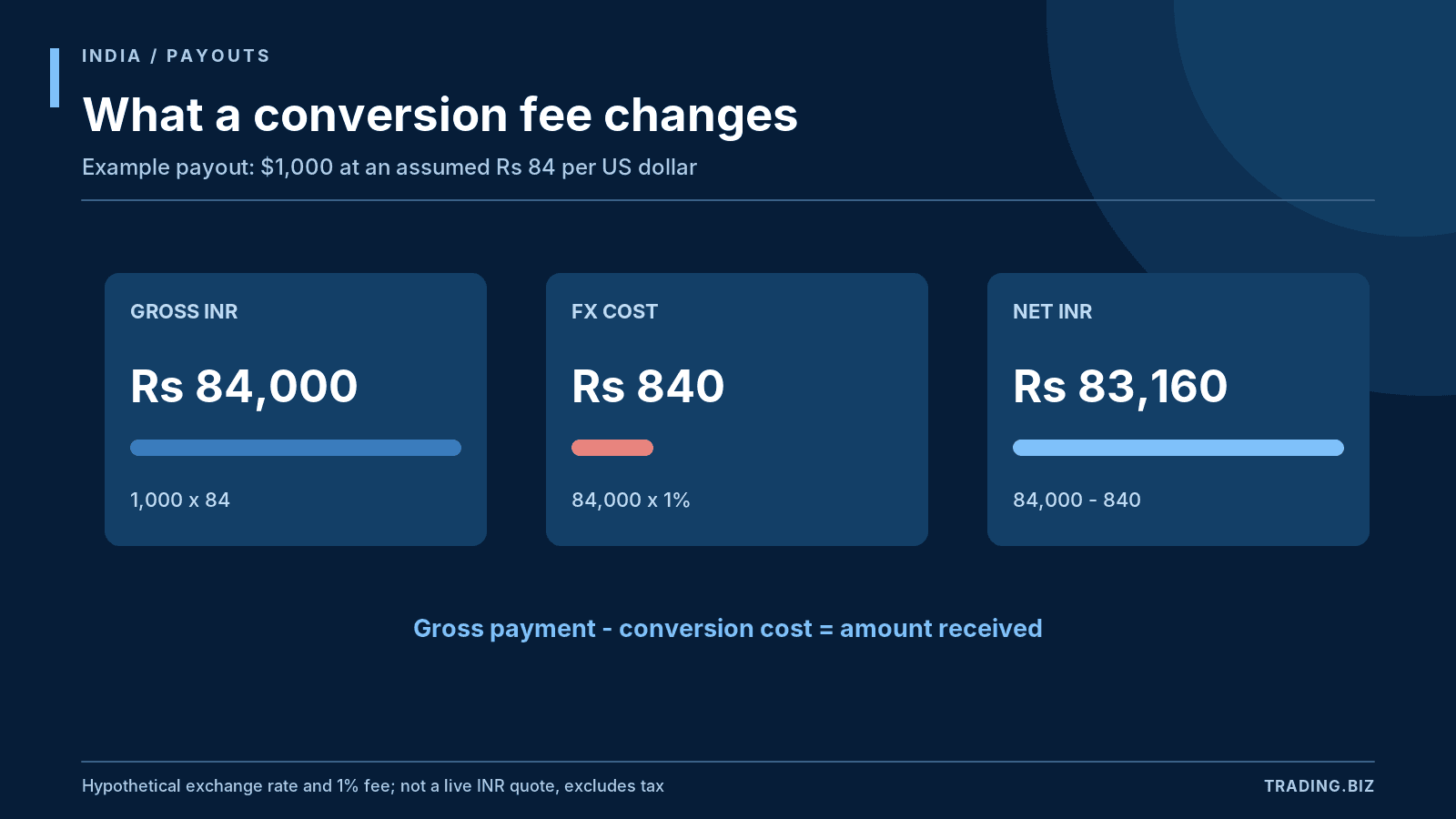
Figure 2. How a hypothetical exchange fee changes an INR payout.
Do the same for payouts. Save the payout confirmation, the receiving transaction and the conversion details if the money lands in INR after moving through a wallet or service provider. Prop firm income can be manageable if the paperwork stays tidy from the start.
How Indian traders usually shortlist prop firms
Many Indian traders start with payout method first. If a firm has a route they trust, it makes the shortlist. The next screen is whether the rules fit their style. A fast intraday trader may care about news and daily drawdown. A slower trader may care more about weekend holds or whether a two-step model gives enough room.
That order makes sense. The most usable programs for Indian residents need a reliable payout route alongside an open registration form.
Where prop firms in India fit and where they do not
A prop firm is not a replacement for a regular Indian investing account. It is a specific tool for a trader who wants outside risk capital under a ruleset. That distinction helps set expectations. You may use a local broker app for long-term investing and a prop firm for an active strategy, but the two accounts serve different jobs.
That is also why payout planning matters. Passing the challenge is one step. The funded program also needs to fit your financial setup in India, including bookkeeping and taxes.
FAQ
Are prop firms legal for traders in India?
Many offshore prop firms accept Indian traders, but they are not the same as Indian-regulated broker accounts. Traders should review local tax and payment implications.
Can prop firm payouts be received in INR?
Sometimes yes, depending on the payout provider and the firm. Many traders also use USDT.
Which prop firm is popular in India?
FundedNext is one of the names Indian traders search often, though other global firms are also used.
Do I need to pay tax on prop firm income in India?
In most cases, yes. Keep records and speak with a tax professional if your volume grows.
What is the safest way to pay the challenge fee?
Use only the payment methods the firm officially supports, usually card or crypto.
Find Your Perfect Broker: Explore Our List Now!
Choose the best with our expert-selected options
Find Your Perfect Broker: Explore Our List Now!
Choose the best with our expert-selected options
Discover top binary options brokers tailored to your region. Browse our curated lists by country: