Updated:November 13, 2026

11 min

0
Capital, PDT rule and first steps: day trading for beginners
Day trading means opening and closing a position during the same trading day, instead of carrying it overnight. The trade may last thirty seconds or most of a session. What matters is that the position is closed before the session ends. Day trading for beginners starts with learning order mechanics, setting a risk limit and practicing a repeatable setup. The capital rules deserve a fresh look too: US pattern-day-trader requirements changed in 2026, and many older articles still describe the previous $25,000 threshold as universal.

Irina Saburova
Author

Updated November 13, 2026
What is day trading and how does a day trade work?
A day trader might buy a stock after a breakout at 10:15 a.m. and sell it at 11:02 a.m. The same person could short a futures contract during a pullback and close it five minutes later. Neither trade requires holding through the night. Trading frequency alone does not define a strategy, and rapid clicking is not evidence of skill. In fact, a few well-prepared entries often produce a cleaner learning record than dozens of impulsive trades.
The mechanics are straightforward. You choose a market and direction, select an order type, define how much you are prepared to lose and place the trade. A market order generally prioritizes getting filled; a limit order controls the price but may remain unfilled. Stops can trigger at different prices during a gap or sudden liquidity shortage. Knowing what each order does matters before any chart pattern.
What does a trading day really mean?
US stocks have a regular cash session and extended hours, while futures often trade nearly around the clock with exchange pauses. Forex follows overlapping sessions across time zones. Crypto operates continuously on many venues. Your broker's day-trade definition and the venue's session schedule can differ from the time displayed on a phone. Set your time zone correctly and learn the contract's trading hours.
How much capital do beginners need, and what happened to the PDT rule?
For years, US retail stock traders using margin accounts encountered the pattern day trader rule. Four or more day trades within five business days could trigger a designation and a $25,000 minimum-equity requirement, subject to the relevant definitions and conditions. FINRA adopted a new intraday margin framework effective June 4, 2026, replacing that trade-count approach with risk-based intraday margin controls. Firms may use a transition period through October 20, 2027. That means the practical rule at your broker may depend on its implementation date.
How the 2026 margin transition affects small accounts
Under the new framework, the universal $25,000 PDT minimum is removed for firms that have implemented the new requirements. The broker still monitors intraday margin and may impose its own minimums and trading restrictions. Existing Regulation T and ordinary margin requirements continue. Never assume the change makes leveraged day trading unrestricted. Check the broker's current margin policy, including how it handles intraday deficits and repeated shortfalls.
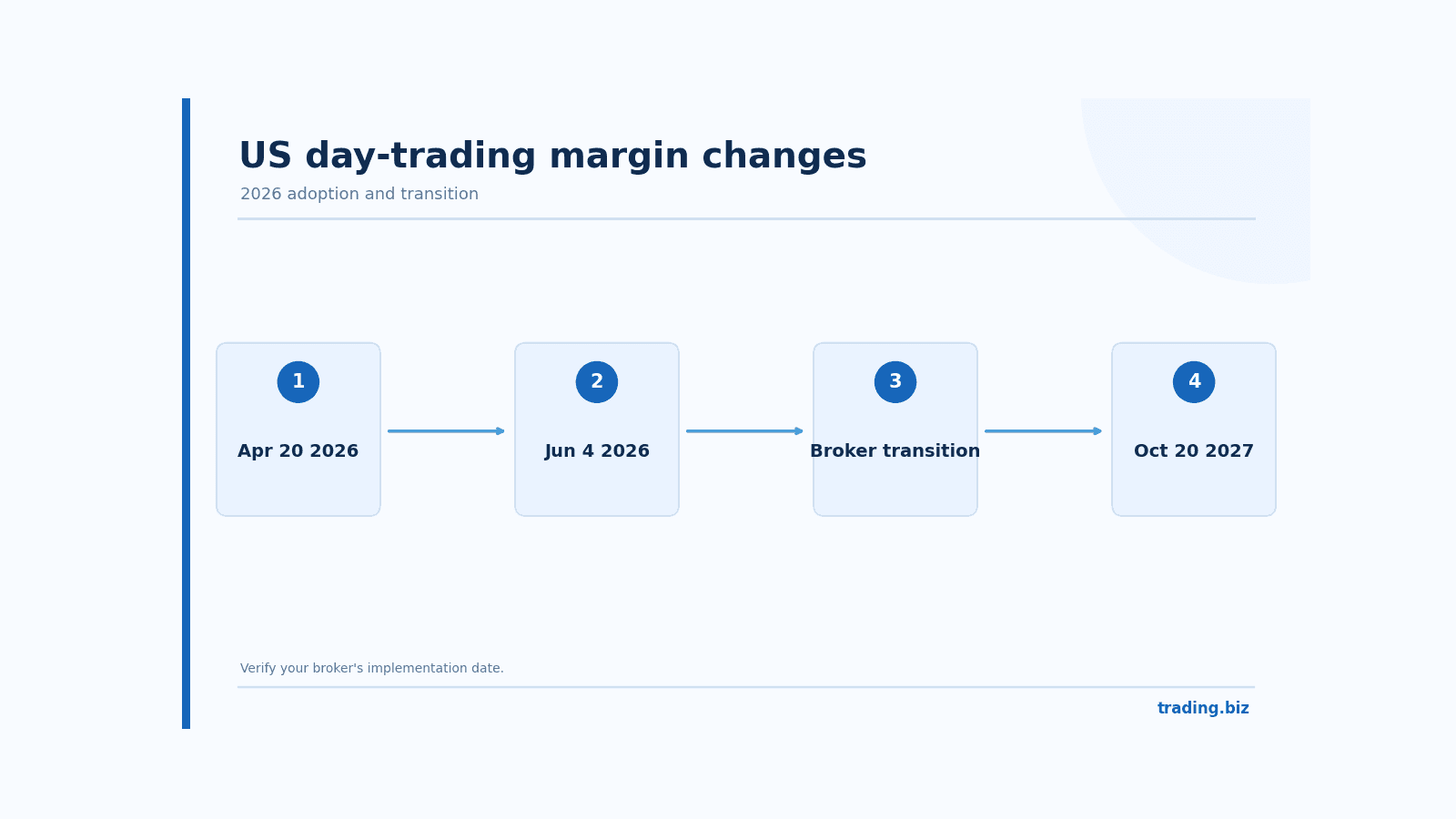
Figure 1. Key dates in the US transition to risk-based intraday margin rules.
Capital needed for trading and capital someone can afford to risk are different questions. A $500 account may let a beginner practice tiny positions in certain products, but frequent trading costs can consume an outsized share of the balance. A $25,000 account does not make a trader profitable. Risk per trade, the cost of execution and the number of quality setups available matter more than reaching a symbolic number.
A realistic starting budget
Keep emergency savings and living expenses outside the trading account. Include platform costs, exchange-data subscriptions, brokerage commissions and possible taxes. If you risk 0.5% per trade, a $2,000 account has a $10 planned risk budget per trade. On an instrument where a sensible stop costs $35 at the smallest available contract, that account may be poorly matched to the product. The answer is to choose another instrument or keep practicing, not to remove the stop.
Markets for day trading: stocks, forex, futures and crypto
US equities offer transparent exchange sessions and deep liquidity in major names, but earnings gaps and opening volatility require care. Futures provide standardized contracts with known tick values; a micro contract can make position sizing more accessible, although leverage still cuts both ways. Forex has long trading hours and liquid major pairs, but spreads, swaps and local regulatory restrictions differ by broker and jurisdiction. Crypto trades on weekends and carries additional exchange and custody risk.
Choose one market to learn first. A beginner switching between Nasdaq futures, EUR/USD and Bitcoin every hour is learning three execution systems at once. The skills overlap, but the tick values, order-book behavior and news drivers do not. A narrow focus makes it easier to explain why a trade worked or failed.
Day trading spreads and transaction costs
A small target creates a demanding cost hurdle. If a scalper aims for six ticks while paying two ticks in total spread and commission equivalent, one-third of the gross target is gone before slippage. A more patient intraday setup with a larger target may be more forgiving. Record net results, not just the number of green trades on the screen.
Basic day trading strategies for beginners
Start with one setup that has an identifiable reason to exist. Opening-range breakouts, pullbacks into a trend and range rejections are common candidates. None has a permanent edge in every market. A strategy becomes testable when entry, invalidation and exit rules can be written without using phrases like "when it looks right."
Opening-range breakout
Mark the high and low of the first 15 minutes after a liquid market opens. Wait for price to trade outside the range with participation, then decide whether the signal requires a close beyond the level. A stop might sit behind the opposite side of the breakout structure, but position size must reflect the distance. Chasing a move after it has already extended is a common beginner error. The opening range is an area to plan around, not an instruction to buy every breakout.
Trend pullback
Identify a higher-timeframe trend and wait for price to retrace toward a previously respected level or a moving-average area. Enter only if a new candle or structure supports the planned direction. Define a clear invalidation level, ideally where the original trend thesis would be wrong. This approach avoids trying to catch every fast candle. It can still lose repeatedly in a choppy session, which is why you need a daily loss limit.
Range rejection
On a quiet day, price may repeatedly reach the edges of a well-defined range. Some day traders look for failed tests at those boundaries and aim toward the center. The setup becomes dangerous as soon as the market shifts into a breakout regime. Do not sell a resistance test without considering whether a scheduled report is about to arrive.
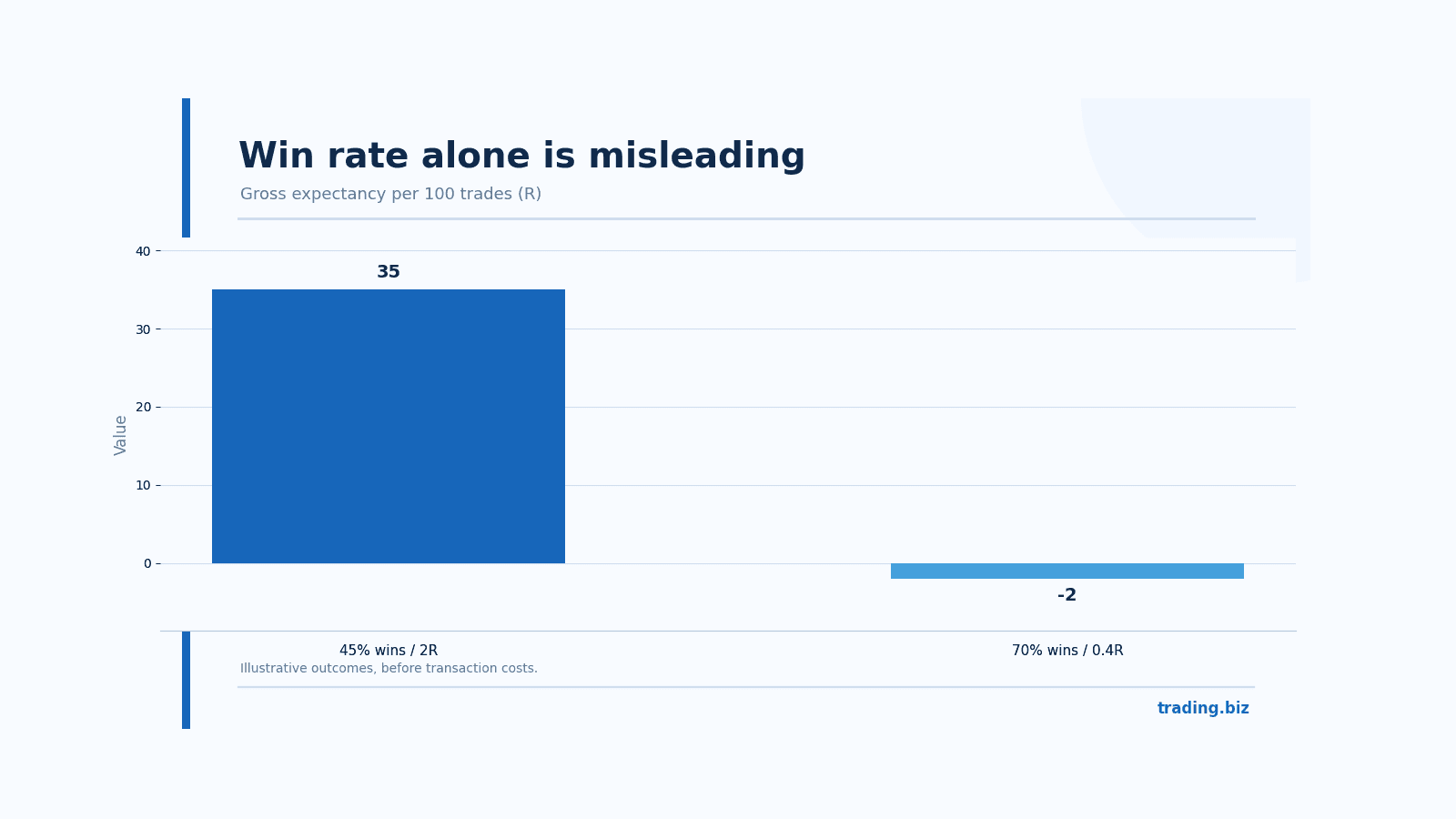
Figure 2. Two strategies can have very different expectancy despite their win rates.
How to become a day trader: a practice plan
Spend the first week learning the order ticket, stop mechanics, tick or pip value and the platform's simulation mode. In the second week, choose one instrument and one daily session. Save screenshots of candidate setups whether you traded them or not. The goal is to stop mistaking random outcomes for rules.
Over the next several weeks, replay or paper-trade the same setup. Track at least the entry trigger, stop location, initial risk, exit reason and realistic costs. Twenty trades can reveal obvious process mistakes; they are not enough to prove a lasting edge. Do not change the parameters after every loss. Make one deliberate adjustment and test it separately.
The first live trading month
If you decide to move beyond simulation, use the smallest appropriate size. Establish a maximum loss for the session and a maximum number of attempts. The position should be small enough that a normal stop does not interfere with your judgment. If your trades suddenly become faster or larger after a loss, stop for the day and review the journal. More capital amplifies bad execution as efficiently as good execution.
Risk management and common day trading mistakes
Risk per trade should be calculated from the distance to the stop and the value of each price increment. Do not choose a position size first and squeeze the stop into the amount you want to risk. That reversal of the calculation is responsible for many premature stop-outs. Factor commissions and slippage into the maximum likely loss rather than pretending the planned stop is guaranteed.
Overtrading usually begins when the trader stops distinguishing a setup from an opportunity to click. Another mistake is averaging down because the initial entry was poorly timed. A losing position does not improve simply because the price is lower. Beginners also ignore the emotional effect of streaks: after three losses, the urge to recover the day can be stronger than the trading plan.
Write a daily stop rule before opening the platform. A practical rule could be to stop after three planned full-risk losses, with a lower limit during unusually volatile conditions. Whatever the limit, follow it for a defined testing period. The purpose is to keep tomorrow's decision-making intact.
Why expectancy matters more than the daily win count
Suppose a setup wins 45% of trades, earns an average of twice the initial risk on winners and loses one unit of risk on losers. Over 100 hypothetical trades, gross gains are 45 x 2R = 90R while gross losses are 55 x 1R = 55R, leaving 35R before costs. By contrast, a system with a 70% win rate that earns 0.4R on winners and loses 1R on losers produces 28R of gains against 30R of losses. The second system wins more often but has negative expectancy before fees.
This is why a beginner should not optimize a strategy for the feeling of being right. Average reward, average loss and trading friction matter together. Drawdowns still happen even when expectancy is positive. Track several market conditions and keep results in R-multiples so trades with different position sizes remain comparable.
Risk rules for a morning with three missed entries
Missing three setups can feel worse than losing a trade because the mind imagines the profit that might have been made. That hypothetical profit is not money you lost. If the planned entry has passed, do not chase at a worse price merely to make the day feel productive. Mark the missed setup and continue scanning. An empty trade log can be a successful session if nothing met the rules.
Avoid using a fixed daily profit goal as an excuse to overtrade. You control the number of qualified entries you take and the size of their risk; you do not control whether the market delivers a predictable daily return. Record process quality separately from the account's dollar change.
Day trading and taxes are part of the operating plan
The tax treatment of frequent trading depends on your residence, instrument and account. Equity day trades, futures, forex and crypto can have different reporting rules. Save trade confirmations and broker statements throughout the year. A clean record of gross proceeds, commissions and realized gains is much easier to reconcile than a pile of screenshots collected at tax time.
Trading also affects lifestyle. A morning strategy may require uninterrupted attention during a specific session. If you cannot watch those minutes consistently, choose a slower approach instead of trying to trade while distracted. A strategy that fits your schedule is more likely to be executed according to its rules.
FAQ about day trading for beginners
Is there still a $25,000 pattern day trader rule in 2026?
FINRA's new intraday margin rules became effective June 4, 2026, with a broker transition period through October 20, 2027. Check the broker's implementation date and house requirements before trading.
Can I learn day trading with a demo account?
Yes. Simulation is useful for learning order entry and testing a written setup. It does not fully reproduce real fills, fees or the emotions that come with risking money.
How many day trades should a beginner take?
There is no required number. One well-documented setup can teach more than twenty rushed entries. Trade frequency should come from the strategy and market conditions, not an income target.
Which market is easiest for a day trading beginner?
The most suitable market is one you can understand, observe during consistent hours and size appropriately. Liquidity and clear contract specifications matter more than online popularity.
Can day trading replace a salary quickly?
There is no reliable shortcut. Most beginners should assume they need a long learning period, expect losses and preserve outside income while developing their process.
Official reference: FINRA 2026 day trading margin update
Find Your Perfect Broker: Explore Our List Now!
Choose the best with our expert-selected options

Find Your Perfect Broker: Explore Our List Now!
Choose the best with our expert-selected options
Discover top binary options brokers tailored to your region. Browse our curated lists by country: