Updated:November 18, 2026

13 min

0
Ranking of the best prop firms for forex, futures and crypto
The best prop firms in 2026 do not all solve the same problem. Some are strong on payout speed, some on futures execution, and some on challenge pricing. This guide ranks prop firms by rules that matter in real trading, not by marketing claims.

Irina Saburova
Author

Updated November 18, 2026
How we compare and score the best prop firms
A prop firm ranking only helps if the scoring model is clear. For this list, the weight goes to rules that affect your odds of keeping an account once you pass. That means drawdown structure, payout access, consistency demands, platform quality, instrument coverage and plain transparency around fees.
The second layer is cost. A cheap challenge is nice, but it loses value fast if the firm locks payouts behind awkward thresholds, forces a tight consistency cap or resets a trailing drawdown in a way that punishes normal trading. We also looked at how easy it is to understand the rules page. If a trader has to dig through five PDFs to figure out whether news trading is allowed, that counts against the firm.
One more point matters in 2026: category. Forex prop firms, futures prop firms and crypto prop firms serve different traders. A futures scalper using micros on Tradovate should not be pushed into the same pick as a swing trader who needs MT5 and weekend holds.
We treat a funded account as a contract before treating it as trading capital. A firm can advertise a large account, yet give the trader only a modest loss allowance. The headline figure therefore gets less weight than the amount that can be lost without ending the program. A $100,000 account with a 5% maximum loss limit has a $5,000 risk cushion, not $100,000 in freely spendable cash. It is the cushion that determines position size and whether a strategy can survive a losing streak.
The third layer is evidence of execution. Traders should separate independent complaints about delayed support from allegations that cannot be checked. Look for a pattern across several months rather than a collection of screenshots from one person. A payout receipt establishes that a particular user was paid once. It does not establish that every account will be paid on the same schedule. The same skepticism should apply to referral reviews that only discuss discount codes.
Comparison table for the best prop firms: price, drawdown, split and payout speed
At a high level, FTMO still stands out for structure and reputation. FundingPips keeps winning attention because its starting prices are aggressive and it offers several challenge models. FundedNext remains a common pick for traders who want flexible payout methods and a familiar two-step path. In futures, Topstep and Apex still dominate search demand, with MyFundedFutures and Lucid in the conversation for traders who want different platform and payout tradeoffs.
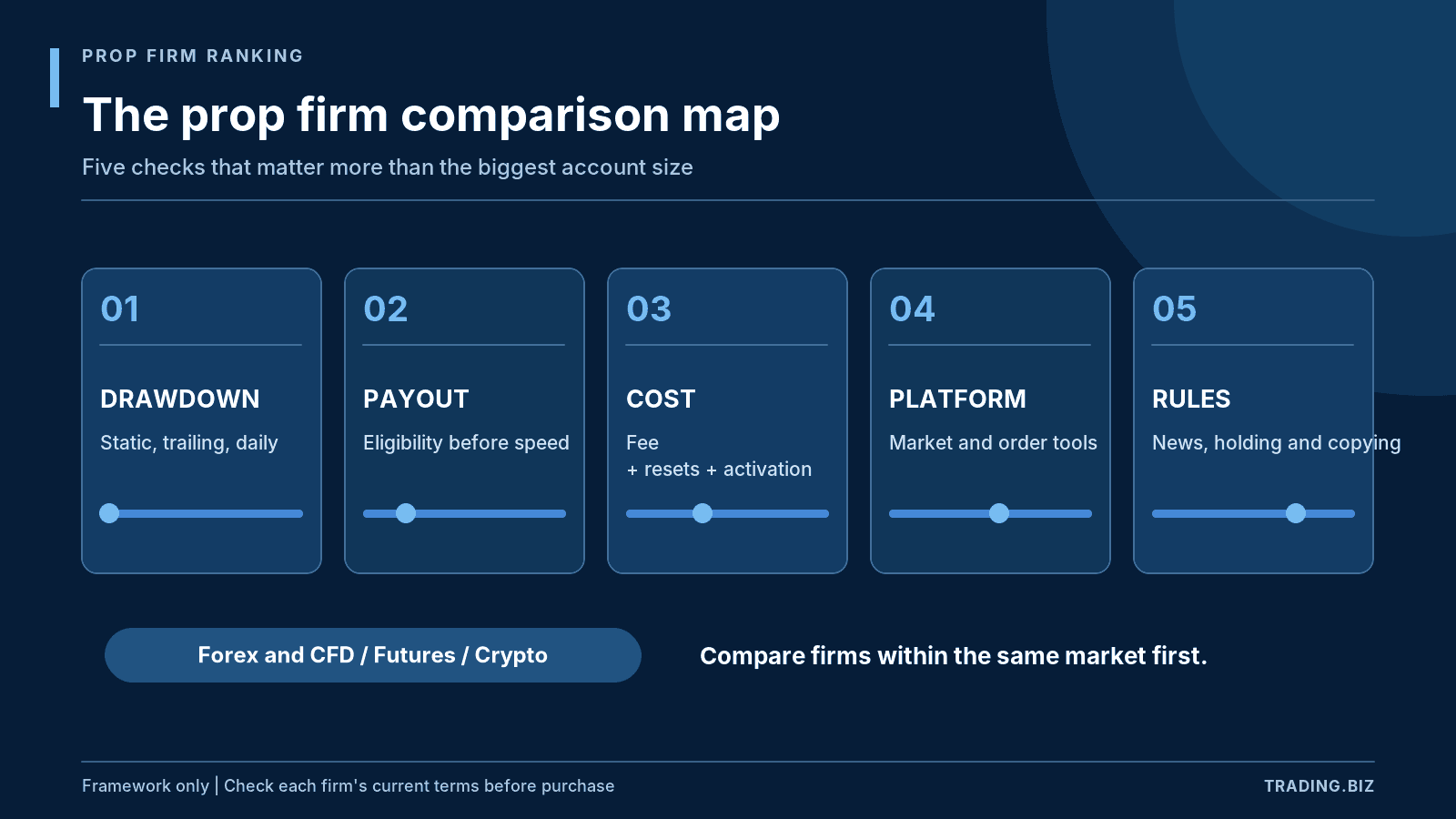
Figure 1. Five checks for a more useful prop firm comparison.
If you care most about straightforward rules, FTMO and Topstep are easier to understand than many discount-first rivals. If your first filter is challenge fee, FundingPips and Apex usually show up early. If you want a balanced middle ground, FundedNext and The5ers are often easier to recommend than the flashy coupon-heavy firms that constantly reshape their models.
Quick ranking snapshot
Best overall forex prop firm: FTMO. Best low-cost forex prop firm: FundingPips. Best for flexible reward options: FundedNext. Best for conservative long-term traders: The5ers. Best overall futures prop firm: Topstep. Best discount-driven futures prop firm: Apex Trader Funding. Best for a growing futures trader watchlist: MyFundedFutures and Lucid. Best-known crypto-focused name in search results: Crypto Fund Trader, though traders still need to read the fine print on pricing, payout method and exchange exposure.
A useful comparison should put each program on one row. For example, FTMO's two-step evaluation publishes a 10% phase-one target followed by 5% verification, with a 5% maximum daily loss and 10% maximum loss. Its one-step program has different rules, including a tighter daily limit and a consistency condition. FundingPips likewise has separate Standard, Pro, Flex and instant-style models. Calling either firm simply a "5% drawdown prop firm" would hide important differences. Read the exact model name next to every figure.
For payout speed, compare the earliest eligible request with the time a payment reaches the trader. Those are separate clocks. A firm may allow a request on a specific date but then take time to approve it, perform compliance checks and process the transfer. A trader paid in a stablecoin may also face conversion costs on the receiving side. In our comparison framework, the advertised maximum profit split stays in the background until the withdrawal conditions are clear.
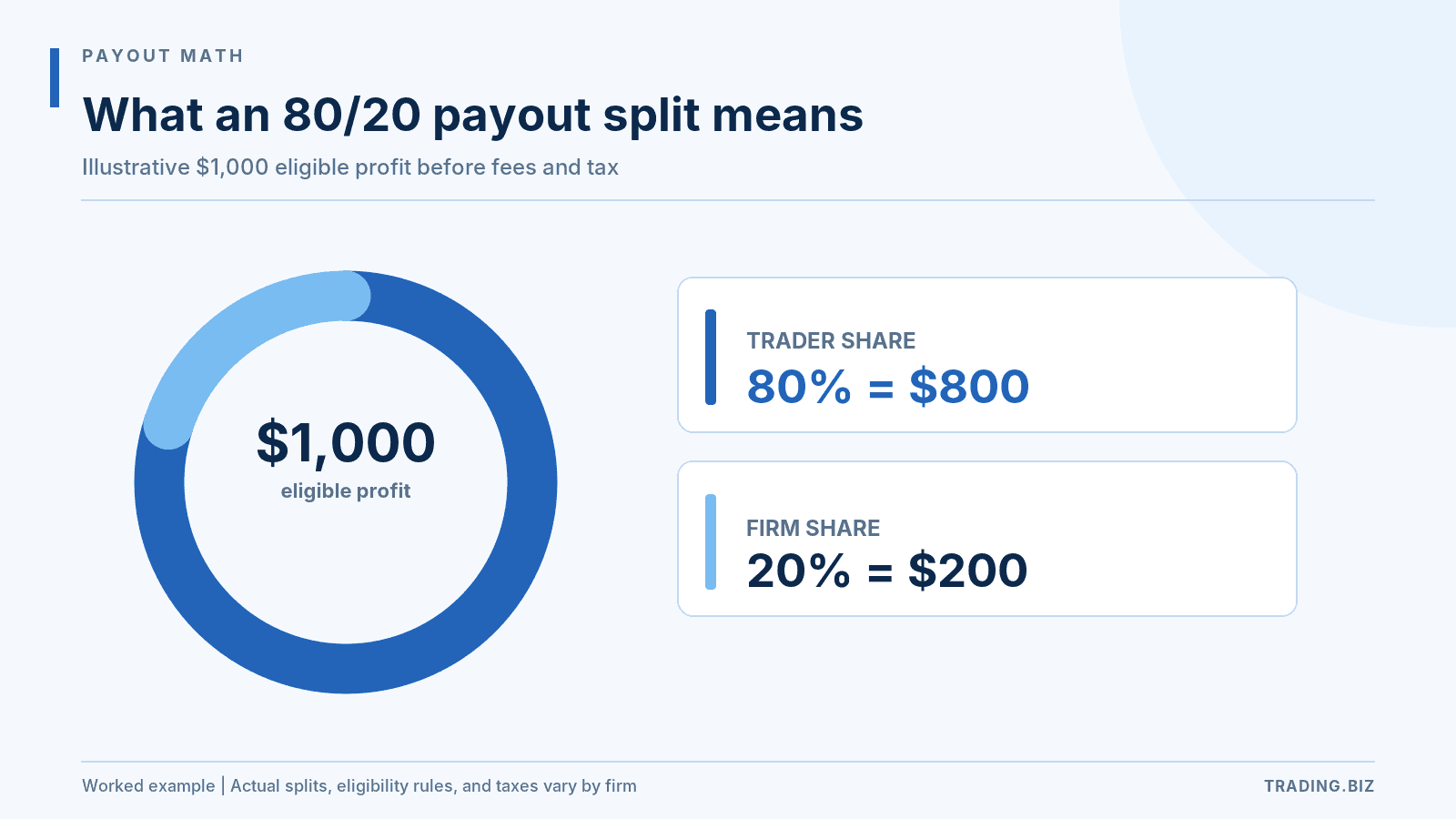
Figure 2. How an 80/20 payout split divides a hypothetical $1,000 reward.
Best forex prop firms: FundingPips, FTMO, FundedNext and The5ers
FTMO still earns a top spot because the whole package feels mature. The dashboard is clean, the rule set is documented well, and the firm has built enough history that traders usually know what they are signing up for. It is not the cheapest entry on the board, but that is not really the point of FTMO. It is usually the benchmark others compare themselves to.
FundingPips is the opposite kind of favorite. It attracts traders who watch cost closely and want more than one path to a funded account. In 2026 the firm keeps several evaluation models in the lineup, and that flexibility is a real advantage. The catch is simple: cheap access only helps if the chosen model fits the trader. A one-step model and a two-step model can feel very different once pressure kicks in.
FundedNext remains popular because it mixes familiar challenge logic with several payout routes and a wide global audience. The5ers belongs on the list for traders who care less about speed-running a challenge and more about a lower-drama path with rules they can live with.
FTMO is most convincing when the trader values predictability over the lowest admission price. Its objectives are documented by account type. The two-step challenge offers a separate verification phase, which can suit traders who prefer a measured pace. That design also means one successful phase is not the finish line. Before buying, simulate a bad week under both the daily limit and the overall loss floor. Position size that looks comfortable at the starting balance might be too aggressive after two losses.
FundingPips invites a different kind of comparison. Its official model chart shows material differences between one-step, two-step and instant programs. A trader who dislikes multi-phase evaluation may be tempted by the shorter route, but should check whether the daily loss is lower and whether any account has open-risk limits. The most flexible brand is not necessarily the most forgiving model. FundedNext and The5ers deserve the same model-by-model treatment. Their appeal depends on the current instrument list, holding rules and payout policy for your region. Avoid treating popular review-site rankings as independent due diligence.
A 50K evaluation is not a 50K loss budget
Suppose an account is labeled $50,000 and its maximum loss is 10%. The trader can lose $5,000 from the specified reference level before the account fails. Risking 2% of nominal capital per trade would mean $1,000 per attempt. Five straight full losses could consume the entire allowance. A trader who instead risks $200 per attempt leaves room to evaluate whether the strategy works. This example ignores changing limits and other expenses, so it is a planning illustration rather than a recommended stake.
Best futures prop firms: Apex, Topstep, MyFundedFutures and Lucid
Futures prop firms need to be judged a little differently. Platform access, contract limits, the shape of the trailing drawdown and payout policy matter more than marketing language about freedom. Topstep keeps a premium place because it has a clear product structure, strong brand recognition and an ecosystem traders already understand. Apex stays relevant because it is almost always in the pricing conversation and is heavily searched by traders looking for low entry cost.
MyFundedFutures appeals to traders who want more product variety in the category. Lucid is one of the names traders keep checking because it tries to offer a cleaner experience without leaning too hard on gimmicks. A futures trader should always read the rules on end-of-day drawdown, daily loss, scaling and payout caps before paying for any challenge.
Futures evaluations deserve their own worksheet. An MES contract changes value by $5 for every full S&P 500 index point. An ES contract changes by $50. With a 12-point stop, a single MES position has $60 of price risk before commissions and slippage, while one ES contract has $600. The difference is large enough to explain why micro contracts are useful for testing an account's drawdown rules. A futures program that permits ten contracts does not mean ten contracts is sensible for your stop distance.
Crypto prop firms and what to check before paying
The crypto prop firm niche is less standardized. Some firms are basically CFD-style prop programs with crypto instruments added. Others try to market themselves as crypto-first. Either way, traders should focus on instrument coverage, funding conditions, allowed holding periods, payout method, and whether the platform is built for perpetual futures or a simplified in-house setup.
A crypto prop firm can look attractive because weekend trading and 24/7 markets fit crypto better than the old forex schedule. The downside is that leverage rules, data feed quality and liquidation-style risk can be easy to gloss over in the sales pitch. If a firm talks more about discount codes than about risk controls, slow down.
The word "crypto" can mean different instruments. A program may quote Bitcoin and Ethereum as cash-settled CFDs, offer a synthetic price feed, or provide exposure closer to perpetual futures. Those markets can have different carrying costs and liquidity conditions. Before buying, ask which venue or reference feed determines the price, whether funding payments apply, and what happens to open positions during scheduled maintenance. A chart that resembles a major exchange is not proof that orders reach that exchange.
Weekend access is another genuine difference. Bitcoin trades throughout Saturday and Sunday, while a firm might still apply limits on holding or news-like volatility. If the strategy relies on the weekend session, the answer has to be in writing. Stablecoin payouts deserve a similar check. Confirm which network is used, who pays network fees, and whether the company can substitute a different withdrawal method. A successful payout should be traceable without an intermediary asking the trader to pay an unexpected "release fee."
How to choose a prop firm for your trading style
A scalper should care about execution, spread or commission structure, and whether news trading or fast entries trigger trouble. A swing trader should care about overnight and weekend holding, trailing drawdown behavior and whether slow, high-R setups are realistic under the minimum day rules. A futures day trader should check contract limits and payout limits before even looking at the price.
The easiest mistake is shopping by challenge fee alone. The better move is to shortlist two or three firms, read the rules page start to finish, and picture one losing week plus one winning week. If the model still looks fair, it may be a fit. If the firm only works on your best days, that is not a real fit.
Start with the past 30 to 50 trades of your actual method, not the performance you hope to achieve after buying more buying power. Calculate the worst single-day drawdown and the largest sequence of losing trades. Then compare those numbers with the firm's limits. If the strategy routinely comes close to a daily cap during ordinary losses, changing the account size will not solve the mismatch. The trader needs a different model or a different position size.
A short-term news trader should ask whether entry and exit windows around scheduled releases are restricted. A position trader needs clarity about overnight financing and weekend gaps. An automated trader should get written confirmation that the specific expert advisor and order frequency are permitted. For a discretionary futures scalper, execution fees and the trailing drawdown definition might decide the winner. One well-matched evaluation gives cleaner feedback than several discounted challenges running simultaneously.
Before checkout, save a PDF of the terms with its date, record the exact model purchased and take a screenshot of the payment summary. Firms update policies. Having the version that applied to your purchase makes later support conversations easier. If the company cannot explain its rules without sending you to several conflicting posts, keep looking.
How to read a prop firm review without getting sold to
A good prop firm review should help you decide whether the product fits your process. A weak review usually does the opposite. It repeats payout split numbers, flashes a coupon and skips the harder questions. Was the rule set changed recently? Are payouts easy to understand? Does support answer direct questions or talk around them? Those details matter more than any star rating.
The most useful comparison habit is to write down your own deal breakers first. If you need news trading, say that upfront. If you hate trailing drawdown, rule out any model that relies on it. If you need a platform outside MT5, remove firms that do not support it. That way you use the ranking as a filter instead of a shopping mood board.
Mistakes traders make when choosing the best prop firms
The first mistake is overbuying. Traders sometimes buy three or four cheap challenges at once because the combined fee still looks reasonable. What they get instead is scattered focus, inconsistent execution and more chances to break a rule. A single well-chosen account is usually the better move.
The second mistake is assuming the most popular name is automatically the best fit. FTMO may be a great benchmark, but a low-frequency swing trader might prefer a different environment. The same goes for futures traders deciding between Topstep and Apex. A ranking is a starting point. The fit still has to be personal.
FAQ
What is the best prop firm overall in 2026?
For many traders, FTMO is still the most balanced overall choice because the rules are clear and the firm has a long track record. That said, the best prop firm depends on the market you trade and how you manage risk.
Which prop firm is cheapest?
Low-cost options change often, but FundingPips and Apex are usually in the conversation. Always check whether the lower fee comes with tighter rules, reset charges or payout limits.
What is the best futures prop firm?
Topstep is still a top pick for futures traders who want a structured, established environment. Apex, MyFundedFutures and Lucid are also widely compared.
Are crypto prop firms safe?
Some are better run than others, but the category is less standardized. Read the rules, payout method and risk limits carefully before paying.
How many prop firms should I test?
Most traders are better off testing one or two strong candidates instead of buying several challenges at once. More accounts can spread your focus thin.
Find Your Perfect Broker: Explore Our List Now!
Choose the best with our expert-selected options
Find Your Perfect Broker: Explore Our List Now!
Choose the best with our expert-selected options
Discover top binary options brokers tailored to your region. Browse our curated lists by country: