

luno
2.3/5


Available in null
About Broker
Luno is a UK-based crypto trading platform founded in 2013 as BitX by Marcus Swanepoel. It was later rebranded as Luno in 2016.
Min. deposit
10
Languages
🇺🇸
🇨🇳
🇲🇾
🇮🇩
🇹🇷
🇵🇹
🇫🇷
Advantages
Available in many countries worldwide
Available on Web, Android, and iOS
Easy deposit and withdrawal process in countries like Malaysia and Nigeria where competitors have no direct link with banks
User-friendly interface
Secure multi-signature wallets that are almost impossible to hack
Lots of important documentation in the help center
Disadvantages
High transaction fees from banks to Luno wallet in some regions
It has few cryptocurrencies, discouraging traders who want to invest in new or smaller coins
Higher than average trading fees
Interest-bearing savings were removed from the platform
You have to enter the specific number of coins you want to sell, which will often have many decimal places
Charges an inactivity fee for users storing local currency for more than three months
About Broker
Luno is a UK-based crypto trading platform founded in 2013 as BitX by Marcus Swanepoel. It was later rebranded as Luno in 2016.
Min. deposit
10
Languages
🇺🇸
🇨🇳
🇲🇾
🇮🇩
🇹🇷
🇵🇹
🇫🇷
Advantages
Available in many countries worldwide
Available on Web, Android, and iOS
Easy deposit and withdrawal process in countries like Malaysia and Nigeria where competitors have no direct link with banks
User-friendly interface
Secure multi-signature wallets that are almost impossible to hack
Lots of important documentation in the help center
Disadvantages
High transaction fees from banks to Luno wallet in some regions
It has few cryptocurrencies, discouraging traders who want to invest in new or smaller coins
Higher than average trading fees
Interest-bearing savings were removed from the platform
You have to enter the specific number of coins you want to sell, which will often have many decimal places
Charges an inactivity fee for users storing local currency for more than three months
Available in 195 countries
* General Risk Warning: Your capital might be at risk
*The amount that will be credited to the account in the case of a successful deal

Joel Lim
Author and Expert at Trading.biz
Updated October 23, 2026
Luno is a UK-based crypto trading platform founded in 2013 as BitX by Marcus Swanepoel. It was later rebranded as Luno in 2016.
Advantages
-
Available in many countries worldwide
-
Available on Web, Android, and iOS
Easy deposit and withdrawal process in countries like Malaysia and Nigeria where competitors have no direct link with banks
User-friendly interface
Secure multi-signature wallets that are almost impossible to hack
Lots of important documentation in the help center
Disadvantages
-
High transaction fees from banks to Luno wallet in some regions
-
It has few cryptocurrencies, discouraging traders who want to invest in new or smaller coins
-
Higher than average trading fees
-
Interest-bearing savings were removed from the platform
-
You have to enter the specific number of coins you want to sell, which will often have many decimal places
-
Charges an inactivity fee for users storing local currency for more than three months
The platform uses complex multisig wallets with multiple security checks and encryption levels.
This Luno review comes out of a month of using the platform with my own money. With the recent collapse of many large crypto trading platforms, I’ve been very skeptical about where I invest, and it took a few Trustpilot reviews before I was tempted to try Luno at all.
So, I dug deep into the history of Luno and how it works. When I was satisfied that it wasn’t a scam, I created an account and used it to trade crypto for a month.
While Luno isn’t the most popular crypto exchange, its user base is growing, especially in Europe, Asia, and Africa. At the time of writing, the platform has a trading volume of 50,557,349 and over 10,000,000 users worldwide.
If you’re looking for a trustworthy crypto exchange, read this unbiased review of Luno. I’ll break down my experience with the platform: what I liked, what frustrated me, and whether it’s worth your time and money.
Luno at a glance
Every figure below comes from the platform data and from my own month on the account. Anything Luno does not state publicly is marked as such rather than guessed at.
Minimum deposit: $10.
Supported cryptocurrencies: 19, with a handful of trading pairs.
Platforms: web, Android and iOS.
Payment methods: online bank transfer, debit card, and mobile services including Google Pay. Availability varies by country.
Trading fees: spot-taker fees scaled to your 30-day volume, plus fixed regional rates. Debit card purchases in Australia run at 3.5%, capped at $3,000 per transaction and $8,000 a month.
Withdrawal fee: nothing from Luno itself, only whatever your bank charges.
Withdrawal time: one business day in the UK, several days in Nigeria.
Inactivity fee: $2 a month once fiat sits in the account for more than three months.
Regulation: no licence details are published in the material available for this review. Confirm what applies in your country on the broker site before depositing.
History: founded in 2013 as BitX, rebranded to Luno in 2016.
Trustpilot rating at the time of writing: 3.7.
This review was updated in 2026.
Evaluating high impact factors
Key Performance Indicators Our Ratings (1-10) User Satisfaction 6 Regulation 5 Educational Content 6 Webinars 4 Spreads and Commissions 5 Customer Support 3
Trade with Luno if:
You’re a new trader with little experience trading crypto
You live in a country with few or no crypto trading platforms like Uganda, Malaysia, and Indonesia
You want a smooth deposit experience regardless of your region’s options
You want an intuitive crypto trading platform
You want to trade on an established crypto platform with over a decade in the market
You value security and privacy
Don’t trade with Luno if:
You want a wide variety of coins to choose from
You value customer care highly
You want below-market-average trading fees
You prefer platforms with advanced charting tools and technical analysis features
You’re an experienced high-frequency trader who needs a platform with many trading pairs
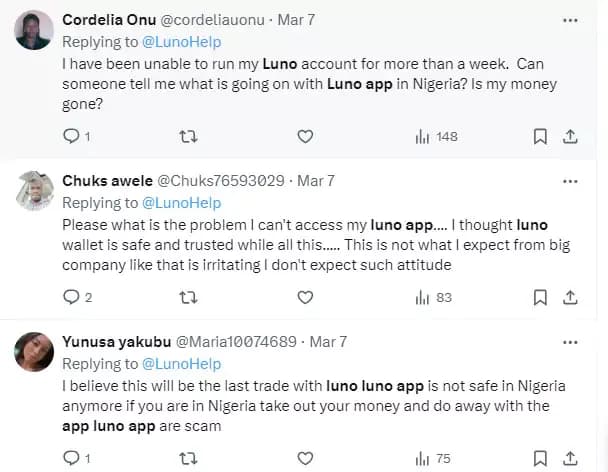
You’re in Nigeria (there seems to be a recent problem with the Nigerian version of Luno locking users out of their accounts)
Verified office address
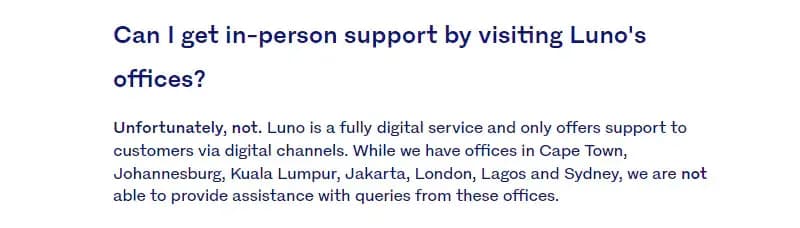
Luno has offices in Jakarta, Johannesburg, Lagos, London, Cape Town, and Sydney.
According to Craft, their headquarters are located at: Greater London, 1 Fore St, United Kingdom.
However, it’s a fully digital service. Therefore, visiting any of those offices won’t get you any in-person support.
Expert opinions on Luno
Luno has been around for over a decade and is a reputable crypto exchange. However, recent reviews have been mixed, dropping its Trustpilot rating to 3.7.
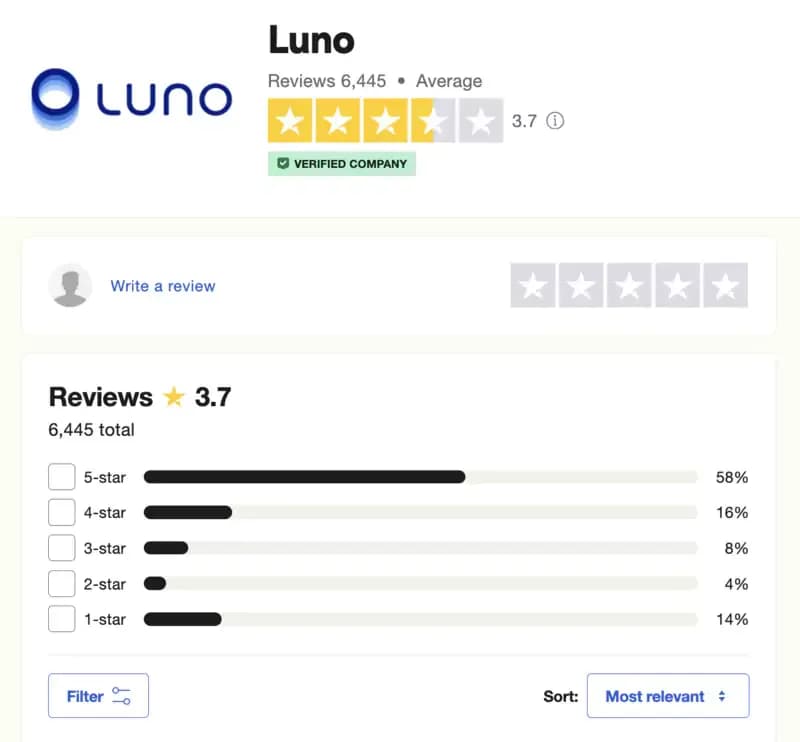
Trustpilot rating to 3.7
I suspect the drop in ratings is related to many Nigerian customers complaining about the app’s connectivity and responsiveness in the last month.
At the time of writing, Luno support says it’s working on the issue but attributes it to new crypto regulations in Nigeria. We’ll have to wait and see how it plays out.
Luno Review
That aside, many trading experts have used and reviewed Luno, and I’d like to highlight some of their experiences.
Grey Jabesi from Crypto Hustle made a video 10 months ago citing his concerns over the state of Luno. He explained that he was receiving complaints from his trading students about the platform.
Specifically, some of them were having problems withdrawing funds and were forced to submit multiple verification documents. This, coupled with that Luno had just closed its Singapore offices, made him suspicious that something bad was happening with the company.
He advised traders to be cautious:
“Based on previous experiences, I think it’s safer to stay away now. If you have funds on there, I think removing the money for now is better before any surprises occur.”
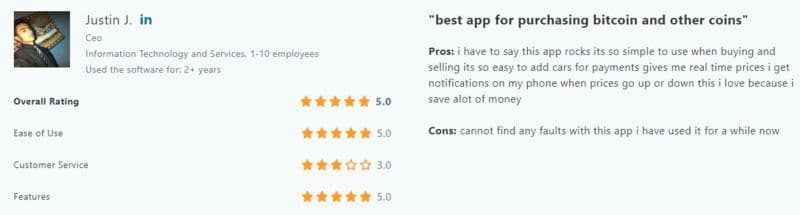
On the other hand, Justin J, an IT CEO who has used Luno for over two years, calls it the best app for purchasing Bitcoin and other popular coins. He likes how it’s easy to add cards for payment and how the app notifies him whenever prices go up or down.
Luno Reviews
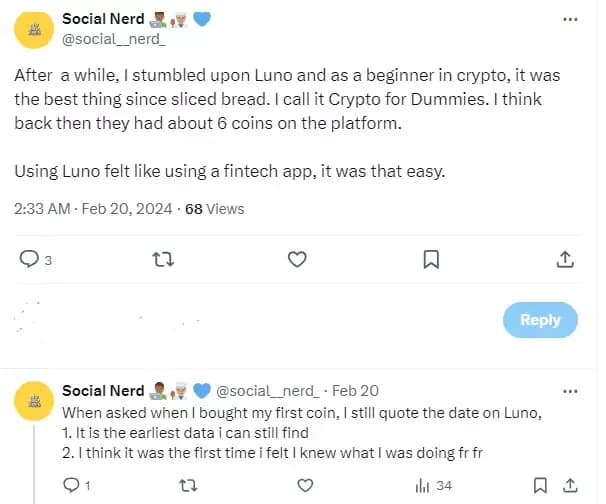
Finally, Social Nerd on X relived his journey as a beginner crypto trader. He praised Luno’s ease of use for beginners. However, as he progressed, he realized that many interesting coins were not on the platform.
Luno Review
Expert review of Luno
My experience with Luno lasted for about a month, and I have some opinions about it.
Interface
First, I was impressed that Luno supports Google Pay and other mobile transfer services. The signup process was easy, and I didn’t need to provide additional documents to deposit money.
I was also pleased with the simple, clean UI on both the Web and Android versions of Luno. Navigation is easy, and everything is where you’d expect it to be.
That’s what makes Luno so appealing for beginners. Anyone can sign up, deposit fiat currency, and start buying and selling crypto with ease.
However, it’s annoying that there’s no dedicated button to sell everything in your wallet like you’d find on Binance. Instead, you have to enter the specific number of coins you’d like to sell, which means tediously entering a long decimal number.
Security
Luno only supports 19 cryptocurrencies and a handful of trading pairs. It does that to avoid listing scam crypto projects, which is commendable. But in doing so, it locks out people who want to invest in emerging cryptocurrencies.
That’s only one part of Luno’s stringent approach to security. The platform uses multi-signature wallets to store most assets in “deep freeze.” These hot wallets require a key from both Bitgo and Luno to release the assets.
Any hacker wanting to access my funds would need to bypass Luno and Bitgo’s multi-layered security encryptions simultaneously to access them.

Expert Review of Luno
The platform adheres to KYC (Know your Customer) and AML (Anti Money Laundering) processes. In practice, that means you need to upload documentation such as bank statements and proof of address before transacting on the platform.
Luno also has 2-factor authentication. Although I signed up with my email, I had to add my phone number, which I must use to confirm transactions.
Overall Impressions
My experience with the platform was good, except for a few problems with connectivity and withdrawals taking longer than usual. While this may not be a clear sign to stay away, it does seem like something unusual is happening at Luno.
Signing up with Luno
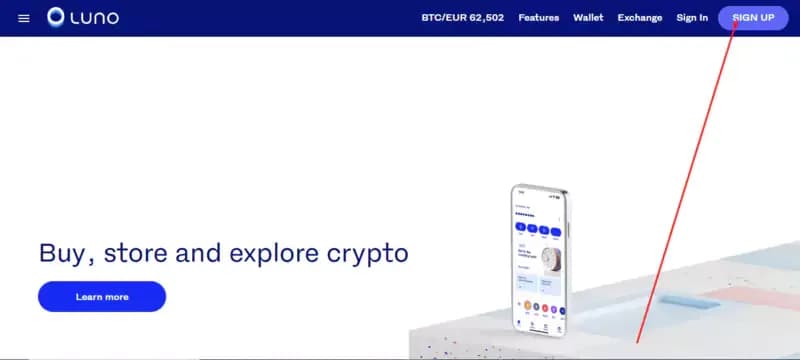
One of Luno’s strongest features is its ease of use. This includes the signup process, which is fast and straightforward. I used the web version, which has a big, bolded “SIGN UP” button on the homepage.
Signing Up with Luno
While you can sign up with your email and address, you also have the option of using an existing Google, Apple, or Facebook account. These methods increase your account’s security and make it more convenient to sign in because you don’t have to remember a new password.
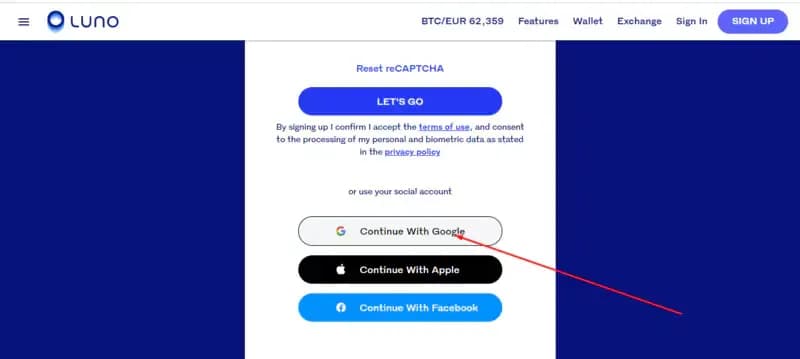
Signing Up with Luno 2
Next, I had to enter my phone number and give Luno access to my location settings. This allows the app to decide which features to offer and which regulations to follow based on your region.
Luno dashboard
Once you’ve signed up, you’ll be able to access Luno’s dashboard.
While it resembles most crypto trading dashboards with charts and loads of information, it’s still aesthetically pleasing and navigable enough for beginners to find their way around.
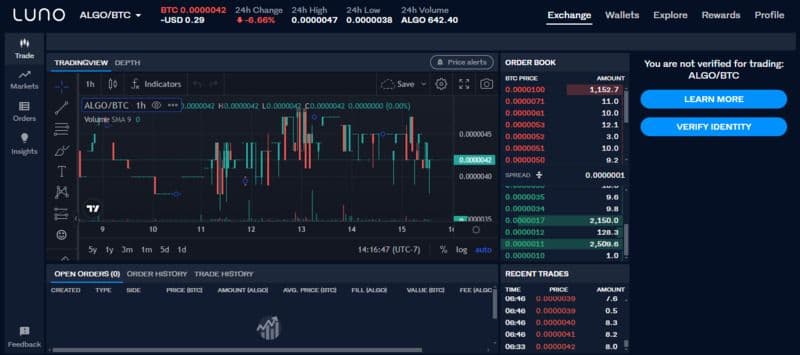
Luno Dashboard
Deposits and withdrawals on Luno
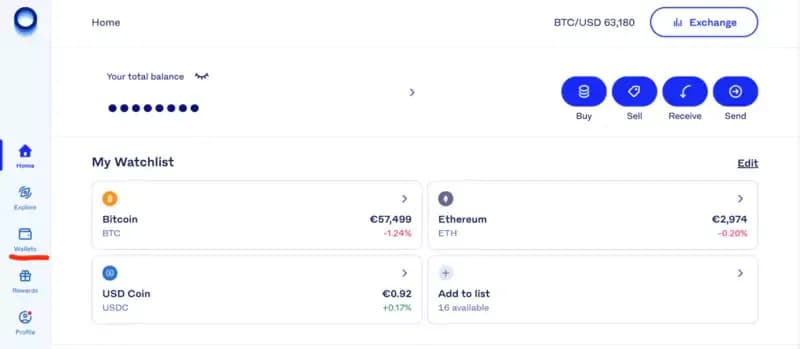
Deposits and Withdrawals on Luno
Now, let’s talk about how you deposit cash into your Luno wallet. How easy this is will depend on your country of residence.
Deposits
Before I could deposit funds into my account, I had to go through the KYC and AML process.
That meant submitting a photo of my government ID along with a recent selfie (no older than 24 hours). I specified my residential address, occupation, and source of income, then waited for approval. Once my profile was verified, I was good to go.
Here’s a breakdown of how I deposited GBP into my Luno wallet in the United Kingdom:
-
I signed into the Luno app
-
I selected wallets from the home menu
-
I chose GBP under local currency (Luno will detect your currency based on your location)
-
I selected deposit
-
I chose my online bank and followed the security prompts
-
The cash was transferred to my Luno GBP account
From the reviews I read, the deposit process is just as easy in other supported countries, with some allowing you to buy crypto directly without transferring your funds to a fiat account first.
Withdrawals
Once you’ve sold your crypto, you can withdraw money in your local currency. Here’s how I did it:
-
I opened my wallet from the menu
-
I selected my GBP wallet and clicked on withdraw
-
I selected my online banking account
-
I entered the withdrawal amount and selected next
-
I followed the security prompts and received confirmation that my bank was processing the withdrawal
-
Luno only charges withdrawal fees if your bank charges them.
From what I saw online, the withdrawal processing time also depends on your region. For instance, withdrawals are processed within one business day in the UK, while they take several in Nigeria.
You can check your region’s withdrawal schedule and wait times in Luno’s help center.
Trading conditions on Luno
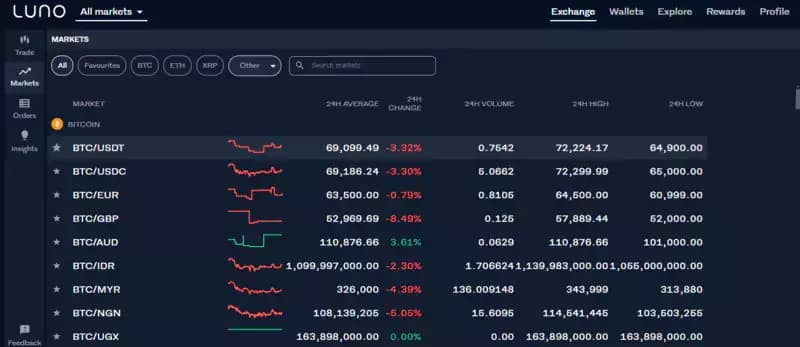
Trading Conditions on Luno
As a seasoned trader, I was particularly interested in seeing what kind of trading experience Luno offers.
My first concern was the $2 monthly inactivity fee you pay if you hold funds in your fiat account for over three months.
However, Luno charges spot-taker fees based on a 30-day trading volume, which can be a pro for high-volume traders. Although, many reviews mention fees being less competitive than some exchanges.
The platform also aims to narrow spreads, which is always a plus. Worth remembering, though, that spreads still move with volatility and liquidity, so the quoted figure is not what you get in every session.
Luno has fixed trading fees and limits that vary between different regions. For instance, it charges 3.5% for trading crypto with your debit card in Australia, with a $3,000 limit per transaction and $8,000 per month.
You can consult Luno’s fees and limits page to find the ones that apply to your region.
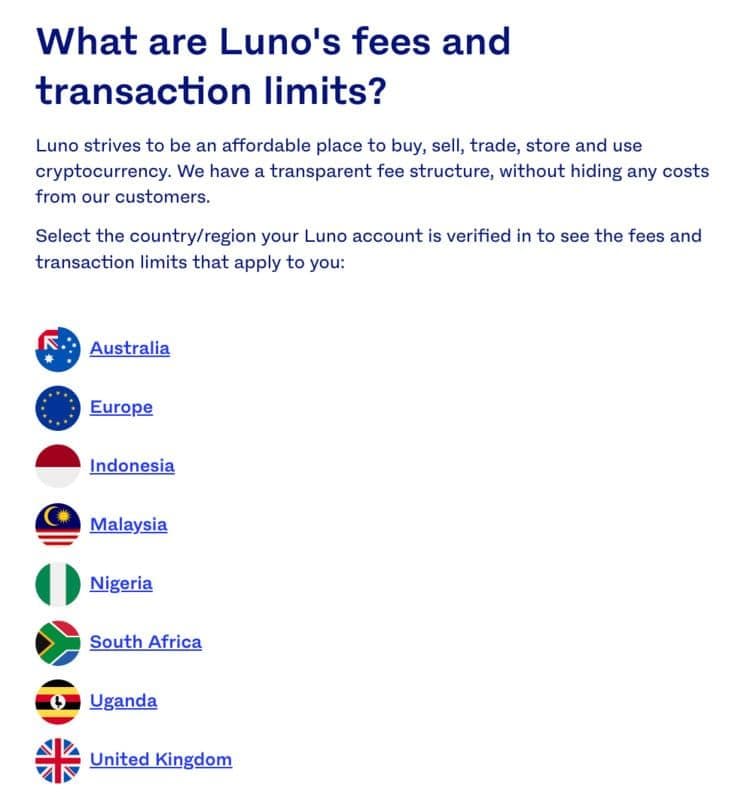
Luno’s fees and limits page
How to start trading with Luno
After verifying your account, it’s time to start trading.
Luno is designed to make crypto trading easy for beginners. Once you’ve deposited funds, these are the steps you can take to get started:
-
Go to the wallets folder and select a wallet for the crypto you want to trade
-
Click Buy near the top of the screen within your chosen crypto wallet
Decide if you want a One-Off or Repeat Buy (automatic recurring purchases)
Choose the currency you want to use to buy the crypto
Enter the amount of crypto you want to buy
Confirm the purchase
Next, if you’d like to sell your crypto:
-
Return to the wallets folder and select the wallet with the crypto you want to trade.
-
Select the sell option.
Choose the currency you want to receive for the crypto (your local currency or another cryptocurrency offered by Luno)
Select the amount of crypto you want to sell
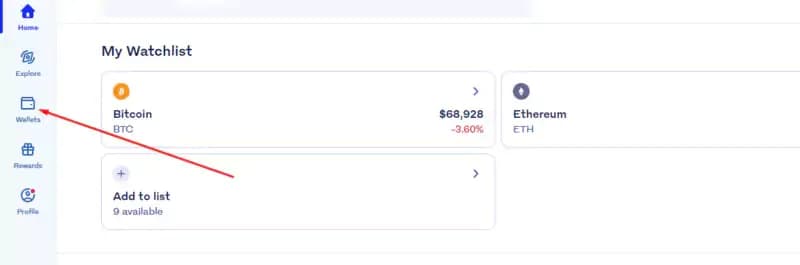
Luno wallets folder
Luno will display the transaction details, including fees and how much of your selected currency you’ll get
Confirm the sale (you might receive security prompts if you’re using the mobile app)
Useful tools for traders on Luno
Luno doesn’t offer as many trading tools as you’ll find on larger trading platforms like Binance. One of the few trading tools it does offer is the option to buy a digital asset on a recurring schedule, whether that be daily, weekly, or monthly.
If you’re in South Africa or Malaysia, you can also benefit from crypto staking, which allows you to earn rewards for holding certain cryptos.
What matters, though, is that it has a few functionalities that can really help new and intermediary traders:
Order Types: Basic order types, such as market orders (buy or sell at the current market price) and limit orders (buy or sell at a specified price)
Live Charts: Live charts for the listed cryptocurrencies, allowing you to monitor their real-time movements and predict potential trends
Margin Trading: Eligible users can borrow funds and amplify their potential returns
Order Book: Shows the buy and sell orders currently placed on the exchange for a particular cryptocurrency, which can help you understand market sentiment and order depth
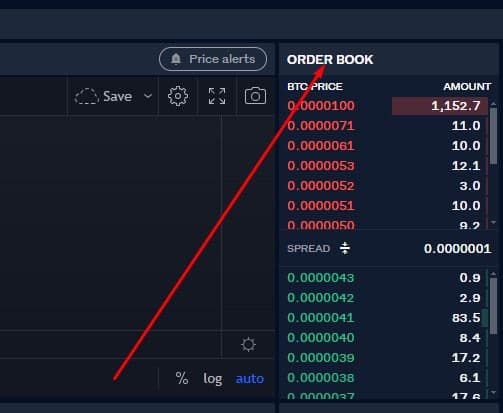
Investing opportunities with Luno
Unfortunately, Luno doesn’t provide for copy trading. So, the best way to know which cryptos are popular on the platform is by looking at the trading volume (a higher trading volume indicates more user interest).
Luno affiliate program
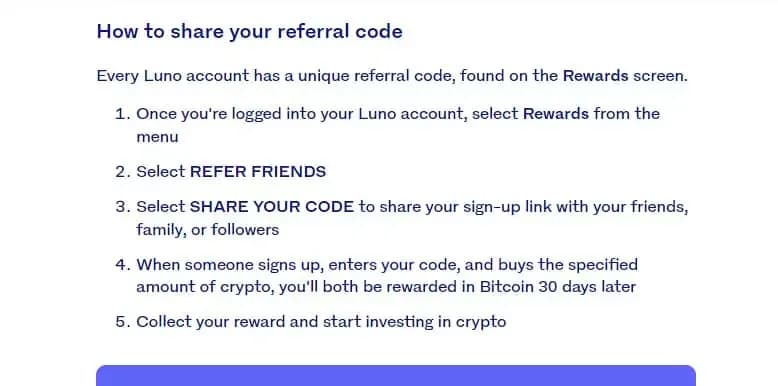
Luno has an affiliate program that allows you to earn BTC when you refer your friends or followers. Whenever someone signs up using your code and deposits the specified amount of crypto, you’ll get BTC rewards in your Bitcoin wallet 30 days later.
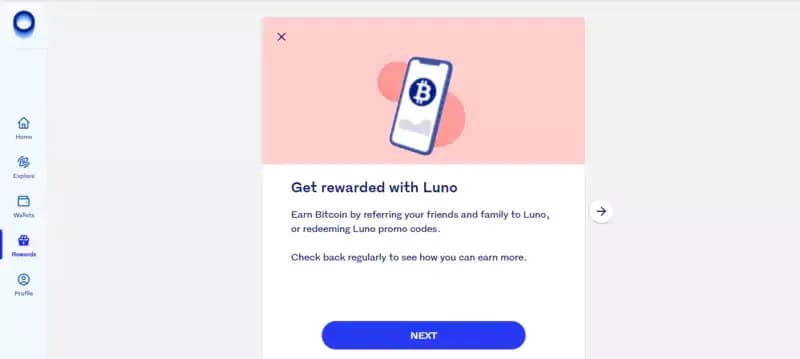
Luno Affiliate Program
The amount required to get rewards varies by region. Unfortunately, the affiliate program isn’t available to Luno users in the United Kingdom, so I couldn’t test it out myself.
Luno Affiliate Program 2
Is Luno worth it in 2026?
After a month on the platform the verdict splits cleanly in two. Luno is a comfortable place to buy your first Bitcoin: signup takes minutes, the interface hides nothing behind jargon, and in markets like Malaysia and Nigeria the direct bank link solves a problem competitors have not solved. The trade-offs are just as visible. Nineteen coins, no copy trading, thin charting, customer support that scored 3 out of 10 in our own rating, and a Trustpilot score that has slipped to 3.7 on the back of Nigerian account complaints.
So treat it as an on-ramp rather than a home. Keep on the platform only what you are actively trading, move long-term holdings into a wallet you control, and clear fiat out of the account before the three-month mark so the $2 inactivity fee never fires. If you need deeper charts, margin or a wider coin selection, compare alternatives in our crypto broker list before you deposit, and check the regulation column in the broker hub for whichever platform you shortlist.
FAQ
What does this Luno review cover?
It covers a month of hands-on use of the platform: signup and verification, the dashboard, depositing and withdrawing in local currency, trading fees and limits, security setup, and the tools available to traders. Ratings for support, regulation and spreads come from our own scoring table.
How does Luno work in 2026?
You register with an email or a Google, Apple or Facebook account, pass KYC and AML checks with an ID photo and a recent selfie, then fund a local currency wallet from your bank. From there you buy or sell any of the 19 supported coins as a one-off or on a recurring schedule.
Is the platform safe and regulated?
Luno stores most assets in multi-signature deep freeze wallets held with Bitgo, enforces KYC and AML, and requires two-factor authentication tied to a phone number. Licence details are not stated in the material behind this review, and our regulation score is 5 out of 10, so verify the position for your country first.
What is the minimum deposit on the platform?
The minimum deposit is $10. Deposits go through your online bank, a debit card or a mobile service such as Google Pay, and the exact options depend on your country. Hold fiat in the account for more than three months and a $2 monthly inactivity fee starts.
How long does withdrawal take on the platform?
It depends on the region. In the UK withdrawals were processed within one business day during testing, while in Nigeria they take several. Luno adds no withdrawal fee of its own and passes through only what your bank charges. Regional wait times are listed in the help center.
Start Trading Today – Maximize Your Profits!
Unlock powerful tools and insights to boost your trading success
* General Risk Warning: Your capital might be at risk
Discover top binary options brokers tailored to your region. Browse our curated lists by country: