Updated:November 11, 2026

5 min

YouTube Options Trading Tutorials
YouTube has become a primary route into options trading education. Some of it is genuinely good, and the format itself creates problems that no amount of quality solves. Here is how to tell the difference. Updated September 2026.

Tobi Opeyemi Amure
Author

Updated October 23, 2026
YouTube has become a primary route into options trading education. Some of it is genuinely good, and the format itself creates problems that no amount of quality solves. Here is how to tell the difference. Updated September 2026.
How to evaluate a channel
-
Does the creator show losing trades, or only winners? A channel with no losses is curating, not teaching
-
Is there a disclosed business model? Most channels sell something, and knowing what tells you what the videos are for
-
Are strategies explained with their failure conditions, or only their best case?
-
Does the content distinguish between what is educational and what is a trade recommendation?
-
Is risk management covered as a topic in its own right, or mentioned in passing?
-
Does the creator disclose broker affiliations and sponsorships?
What these channels do well
Options are conceptually difficult, and video suits them better than text. Watching a strategy constructed on a live platform, with the payoff diagram changing as parameters change, conveys mechanics that a written description struggles with.
Accessibility is the other genuine benefit. Structured options education was historically expensive and gated, and a large body of competent explanation is now free.
The format also allows repeated viewing at your own pace, which suits a subject where the same concept has to be revisited several times before it settles.
The structural problems
These are not about any particular channel. They follow from how the platform works.
Engagement drives distribution. A video showing a large winning trade reaches more people than one explaining position sizing, which means the incentive favours exciting content over useful content, regardless of the creator's intentions.
Context is missing. A strategy explained in a ten minute video arrives without the market conditions it suits, the account size it assumes, or the experience level it requires. Viewers apply it to circumstances it was never described for.
There is no personalisation. A video cannot know your capital, your risk tolerance, your tax position or your jurisdiction, all of which change whether a strategy is appropriate.
And there is no accountability. Anyone can publish trading education, there is no qualification requirement, and a channel presenting confident opinions is indistinguishable from one presenting tested methods unless you already know enough to tell.
The results problem
This deserves separating out, because it is the most common way viewers are misled.
Screenshots of profitable trades prove nothing. They can be selected from a losing record, taken from a demo account, or simply fabricated. Verified track records exist, and channels that have them tend to say so explicitly.
The useful signal runs the other way: a creator who walks through a losing trade and what they got wrong is demonstrating something a winning screenshot cannot.
What the good channels cover
The stronger options channels focus on mechanics rather than predictions: how options are priced, what the greeks measure, how time decay affects a position, and how multi-leg strategies change the risk profile.
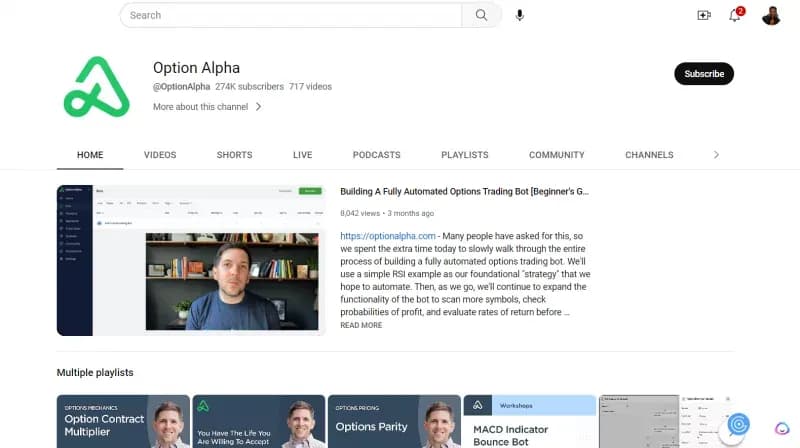
Option Alpha
They tend to explain when a strategy fails as thoroughly as when it works, and they treat risk management as a subject rather than a disclaimer.
Alternatives and complements
Self-study through books and broker documentation is slower and considerably more thorough. Options pricing is a mathematical subject, and the foundational texts cover it in a depth that video cannot.
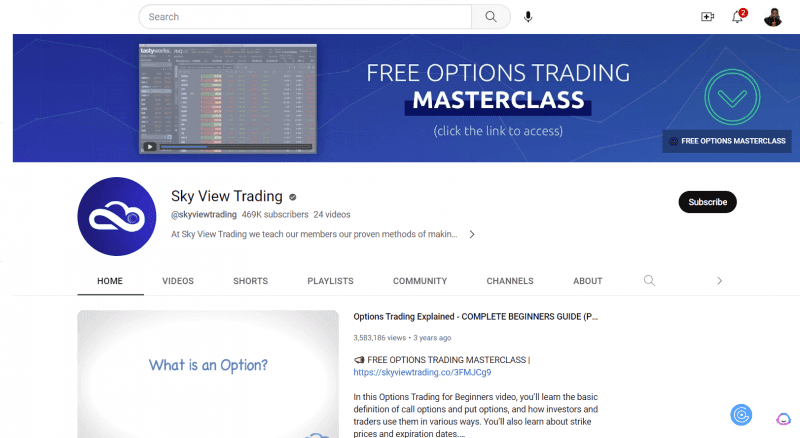
Sky View Trading
Mentorship provides the personalisation that video lacks, with feedback on your actual trades. It is also where the largest scams in trading education operate, so verify any mentor's track record independently before paying.
Paper trading is the component that turns any education into skill. Watching a strategy explained and executing it are different activities, and the gap between them only closes through repetition.
Using YouTube well
-
Use it to understand mechanics, not to source trade ideas
-
Prefer creators who show losses and explain what went wrong
-
Check what the channel sells, it tells you what the free content is for
-
Never apply a strategy without knowing its failure conditions and the conditions it suits
-
Test everything on a demo account before committing capital
-
Treat an unverified track record as no track record
See related trading guides and compare platforms in our stock brokers section.
YouTube trading education: frequently asked questions
Are YouTube trading tutorials reliable?
Quality varies and there is no qualification requirement to publish. Evaluate whether the creator shows losses, discloses their business model and explains failure conditions.
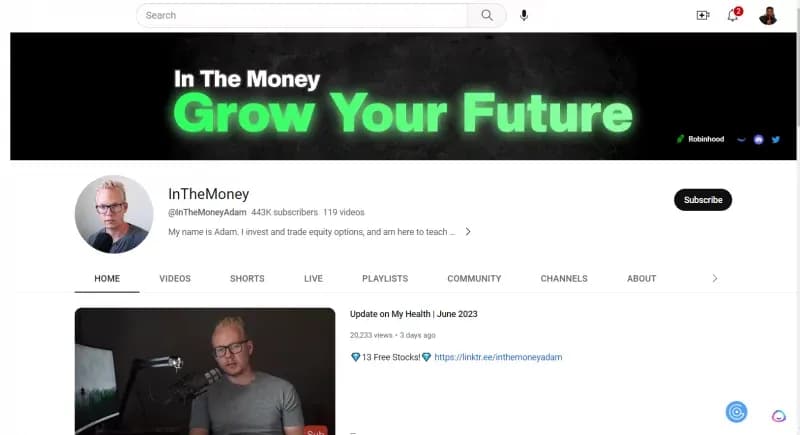
InTheMoney
What is the main structural problem?
Engagement drives distribution, so exciting content reaches more people than useful content, regardless of the creator's intentions.
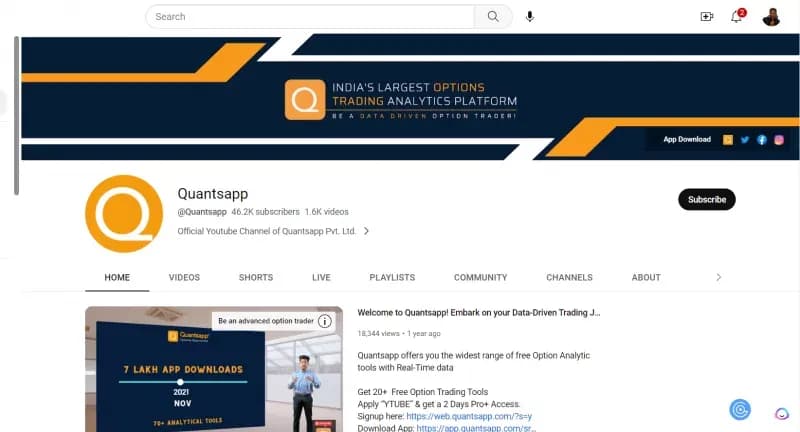
Quantsapp
Do profitable trade screenshots prove anything?
No. They can be selected from a losing record, taken from a demo account, or fabricated. A creator explaining a losing trade demonstrates more.
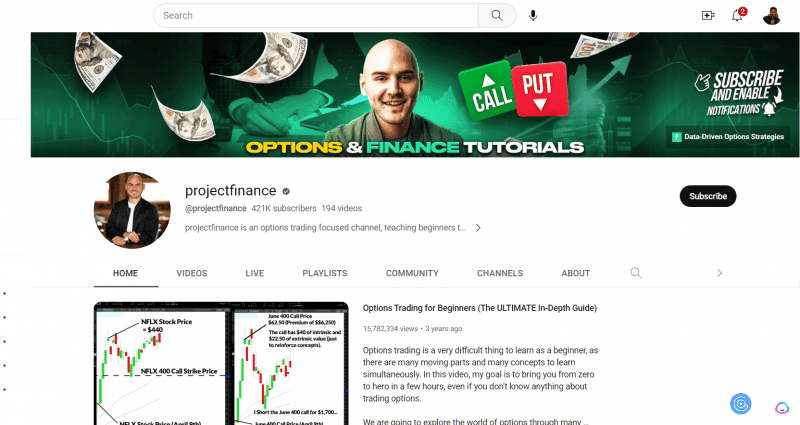
Project Finance
What do good options channels focus on?
Mechanics rather than predictions: pricing, the greeks, time decay, and how multi-leg strategies change risk. They explain when strategies fail.
Is mentorship better than video?
It provides personalisation video cannot, but it is also where the largest education scams operate. Verify any track record independently before paying.
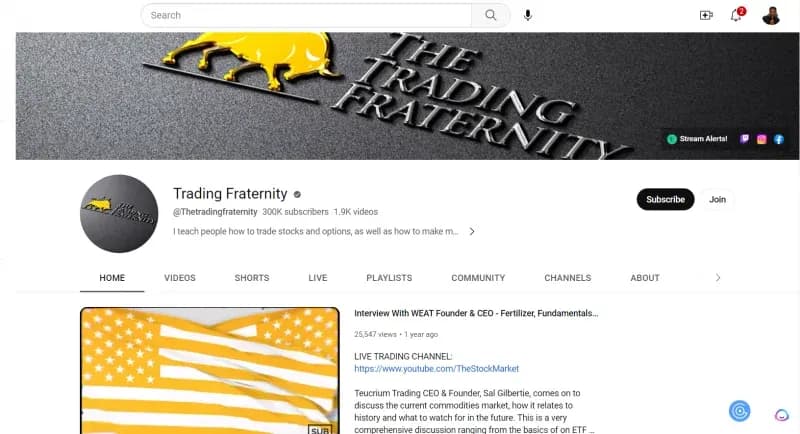
Trading Fraternity
How should I use these videos?
To understand mechanics, not to source trade ideas, and always followed by testing on a demo account before risking capital.
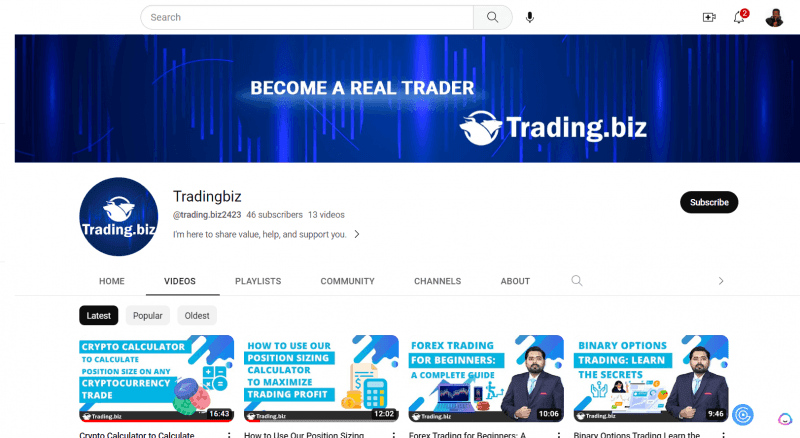
Tradingbiz
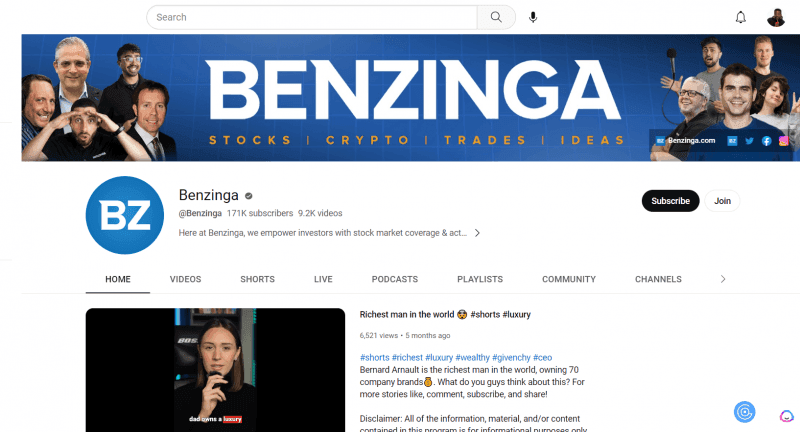
Benzinga
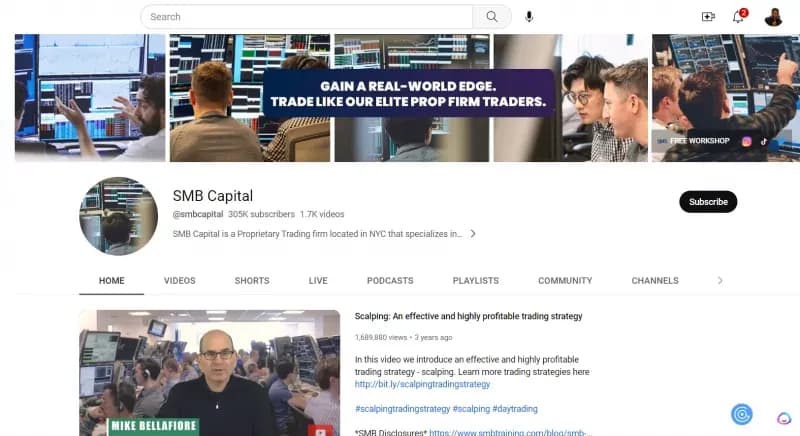
SMB Capital
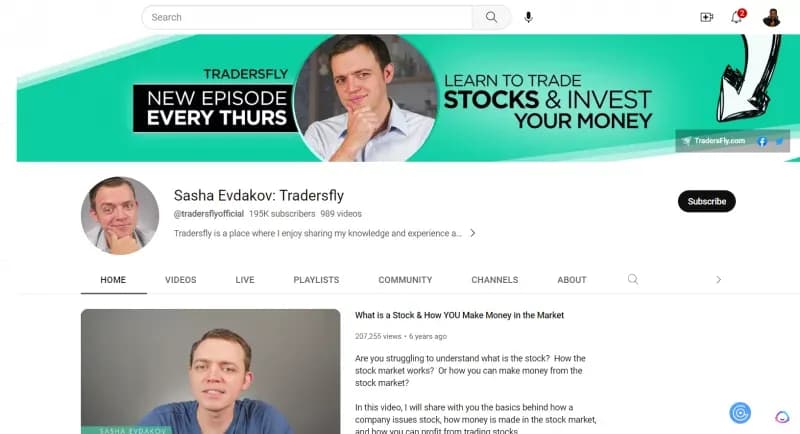
Tradersfly
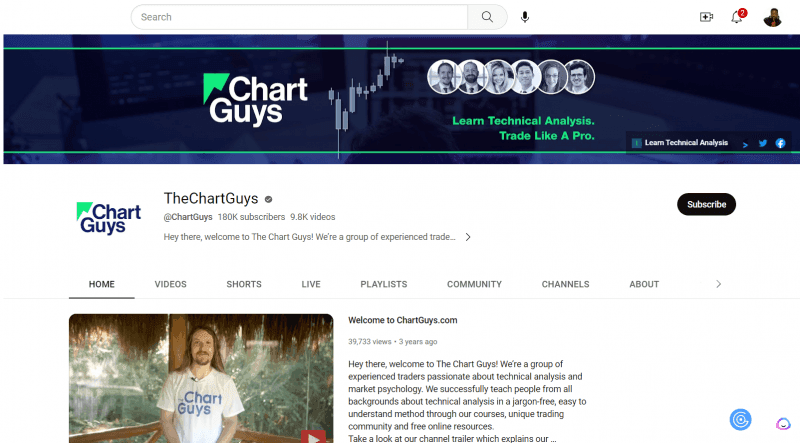
TheChartGuys
Find Your Perfect Broker: Explore Our List Now!
Choose the best with our expert-selected options

Find Your Perfect Broker: Explore Our List Now!
Choose the best with our expert-selected options
Discover top binary options brokers tailored to your region. Browse our curated lists by country: