Updated:November 11, 2026

5 min

What Is a Pip in Forex?
A pip is the standard unit of price movement in forex. Knowing what one is worth in your account currency is what converts a chart reading into a risk figure, which is why the calculation matters more than the definition. Updated September 2026.

Saqib Iqbal
Author
Updated October 23, 2026
A pip is the standard unit of price movement in forex. Knowing what one is worth in your account currency is what converts a chart reading into a risk figure, which is why the calculation matters more than the definition. Updated September 2026.
What a pip is
A pip is the smallest standard increment by which a currency pair's price changes. On most pairs it is the fourth decimal place, equal to one hundredth of one percent.
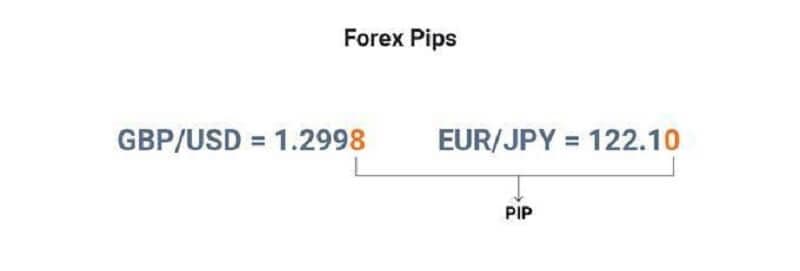
Pips in Forex
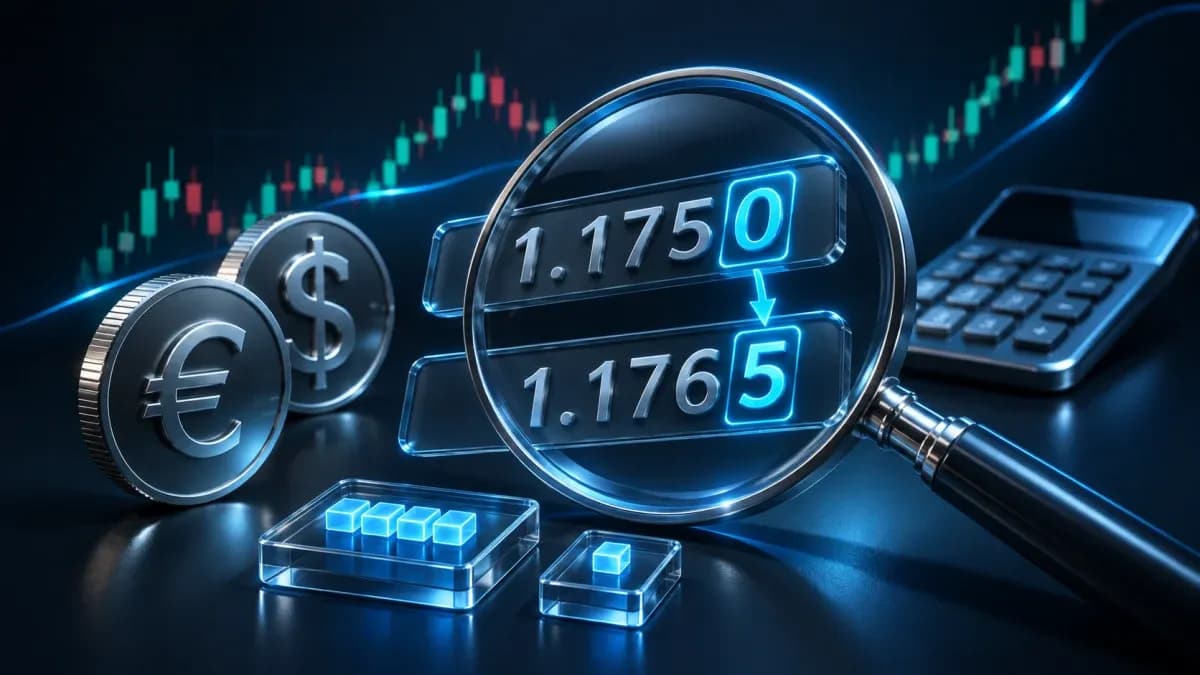
If EUR/USD moves from 1.1750 to 1.1765, that is a 15 pip move.
Pairs quoted against the Japanese yen are the exception. They carry two decimal places, so a move from 110.25 to 110.40 is 15 pips, not 1,500.
Pips and spreads
The spread is the difference between the bid and ask price, measured in pips, and it is how most brokers are paid.
Take EUR/GBP with a bid of 0.8581 and an ask of 0.8583: the spread is 2 pips. You buy at the ask and sell at the bid, which means every position starts at a small loss equal to the spread and must cover it before showing profit.
This is why spread size matters disproportionately for short-term strategies. A trader targeting 10 pips per trade on a 2 pip spread gives away 20% of the target before the position moves at all.
Calculating pip value
Pip value depends on the pair, the trade size and your account currency. The basic formula is straightforward:
(0.0001 multiplied by trade amount) divided by the spot price equals the pip value.
Worked through on USD/CAD with a 300,000 dollar position, the steps are: determine the quoted currency units per pip, convert that into base currency by dividing by the exchange rate, then multiply the pips gained or lost by the per-pip value.
For yen pairs, substitute 0.01 for 0.0001, since the pip sits at the second decimal place.
Five worked examples
-
Basic major pair calculation. EUR/USD moves from 1.1600 to 1.1601, a single pip. From 1.1600 to 1.1650 is 50 pips.
-
Converting pips into money. With AUD/USD trading near 0.6550 and a 10,000 unit position, each pip is worth a fixed amount in the quote currency, which then converts to your account currency at the prevailing rate.
-
The yen rule. On USD/JPY the pip is the second decimal, so a move from 149.20 to 149.45 is 25 pips.
-
Profit against loss on identical moves. A 30 pip gain and a 30 pip loss are equal in pips but not necessarily in money, because pip value shifts with the exchange rate when your account currency differs from the quote currency.
-
A larger run. Compounding pip value across a sustained move shows why position size, not pip count, determines the result.
Point four is the one most traders miss. On pairs where your account currency is not the quote currency, the value of a pip drifts as the market moves, which means the loss on a stop may differ slightly from the figure you calculated at entry.
Pipettes
Many brokers quote one decimal place beyond the pip. That fifth decimal, or third on yen pairs, is a pipette, equal to one tenth of a pip.
Pipettes allow tighter spreads and more precise pricing. A spread quoted as 1.3 pips is using pipettes, and the practical effect is finer granularity rather than a different unit of measurement.
Pips against ticks
A pip is specific to forex and always represents the same decimal position. A tick is the minimum price movement of any instrument, and its size varies by market: a futures contract, a stock and a currency pair all have different tick sizes.
In other words, a pip is a forex-specific fixed unit, while a tick is a general concept defined by each market's rules.
Pips against basis points
A basis point is one hundredth of one percent, used to describe interest rate and yield movements. A central bank raising rates by 25 basis points has moved them 0.25%.
The numerical definition is the same as a pip, but the application differs. Basis points describe rate changes, pips describe currency price movement. They appear together during central bank announcements, which is the moment the connection becomes practical: a rate decision expressed in basis points moves currency pairs measured in pips.
Using this in practice
-
Calculate pip value for your account currency before opening a position, not after
-
Convert your stop loss distance into money, that figure is your actual risk
-
Remember the yen exception: pip at the second decimal, not the fourth
-
Compare broker spreads in pips relative to your typical target, not in isolation
-
Use a pip calculator for speed, but understand the formula so you can sanity check it
Compare spreads across regulated platforms in our forex brokers section and see related trading guides.
Pips: frequently asked questions
What is a pip?
The smallest standard price increment in forex, normally the fourth decimal place, equal to one hundredth of one percent.
Why are yen pairs different?
They quote to two decimal places, so the pip sits at the second decimal rather than the fourth.
How do I calculate pip value?
Multiply 0.0001 by the trade amount and divide by the spot price. Use 0.01 instead of 0.0001 for yen pairs.

What is a Pip in Forex Trading? Definition, Examples
How to calculate forex pips
What is a pipette?
One tenth of a pip, the fifth decimal place on most pairs. It allows brokers to quote tighter, more precise spreads.

What is a pipette
What is the difference between a pip and a tick?
A pip is a fixed forex-specific unit. A tick is the minimum price movement of any instrument and varies by market.
The difference between a tick and a pip
How do pips relate to basis points?
Both equal one hundredth of one percent, but basis points describe interest rate changes while pips describe currency price movement.
Try online trading right now.
null
Your capital might be at risk. The financial services provided by this website carry a high level of risk and can result in the loss of all your funds. You should never invest money that you cannot afford to lose.
Find Your Perfect Broker: Explore Our List Now!
Choose the best with our expert-selected options

Find Your Perfect Broker: Explore Our List Now!
Choose the best with our expert-selected options
Discover top binary options brokers tailored to your region. Browse our curated lists by country: