Updated:November 11, 2026

14 min

Top 5 richest and most influential traders in 2026
Trading is an exciting way of making money, and the people at the very top of it get famous doing it. This list covers the top 5 richest and most influential traders in the business, how each of them actually made the money, and what a small account can borrow from them. Large fortunes look like luck from the outside. Up close they look like one method repeated for forty years. The real question is whether you have the patience for that.

Saqib Iqbal
Author

Updated October 23, 2026
Trading is an exciting way of making money, and the people at the very top of it get famous doing it. This list covers the top 5 richest and most influential traders in the business, how each of them actually made the money, and what a small account can borrow from them. Large fortunes look like luck from the outside. Up close they look like one method repeated for forty years. The real question is whether you have the patience for that.
People like Warren Buffet and Peter Lynch have lived long, prosperous lives thanks to their talented approach to trading. You can learn a lot about their skills by looking at how they live and how they work, and the gap between the five men below is wider than most beginners expect.
We will look at five of the wealthiest and most inspiring traders we know, and at what they can teach us about trading. Take notes as you go. None of them did anything a private trader cannot copy in principle, though the differences between them matter more than the similarities.
Warren Buffett
You can't talk about successful traders without mentioning Warren Buffett, one of the most famous businessmen in history. He is worth well over 100 billion dollars, yet he began with nothing but a few dollars and raw talent.
Early life
His story began in 1930, during one of the biggest financial crises in American history. As fate would have it, he was the son of a stockbroker.

Warren Buffett
Young Warren had no trouble with math. He was very good at it, and some believe his success traces straight back to those mathematical abilities.
Of course, he did not start trading stocks right away. Warren Buffett took advantage of his math skills during his early childhood, realizing he could wholesale buy packs of Coca Cola then sell the cans at a recycling plant. That was the first of many good ideas, and it says a lot about how valuable an entrepreneurial spirit is.
His first stock trade
Although Buffett made very little money by recycling cans, that didn’t stop him from reinvesting and making a profit. At eleven years old, he took his Coca-Cola recycling profit and invested shares in a utility company.
Both the investment and profits were minimal: he only had enough to buy two shares. Nevertheless, Warren Buffett claims he learned a lot by doing that, and money cannot buy that kind of lesson. Learning about trading early on is a must. Warren developed his business philosophy through his early trading experiences. It boils down to this: patience is a virtue.
How did he find out about the importance of being patient? By losing money, of course. He bought shares at $38, but they quickly plummeted to $27 per share.
That devastating first blow made him very nervous, but he was wise enough to hold on. He waited until the same shares reached $40 before selling. (If he held out for longer, he actually would have sold those same shares for $200, but hindsight is 20/20.)
You have to be patient when trading stocks, no matter how stressful it is. Warren Buffett made billions by being more patient than his competition.
What is Warren Buffett doing now?
This incredibly successful trader owns a portion of Berkshire Hathaway, an investment fund. This firm has a diverse portfolio, including Amazon, Apple, and Google stock.
Many call Buffett something of a modern-day oracle, but he often maintains that he’s just an ordinary man who has had his fair share of losses early on. He also made a few bad decisions later in his career.
Nevertheless, after a long life dedicated to trading stocks and bonds, he has made billions, which proves he has had more wins than losses. The foundation of his fortune is two-fold: patience and calculation. Together they produce a cold approach that leaves emotion outside of his investment firm.
Warren Buffett is well past retirement age, but continues to live modestly and work on various projects. He has signed The Giving Pledge, meaning he’ll donate half his fortune to charity after passing away.
George Soros
Everyone in the forex trading world knows about George Soros, and you probably do, too. There are many reasons why Soros is famous, both financial and otherwise, including his charity work.
Let's find out how he made close to 9 billion dollars and became one of the most famous financial traders in the world. The route he took has almost nothing in common with the one Buffett took.
George Soros was born in 1936 to a middle-class family living in Budapest. Since his early years were spent on the brink of World War II, George changed his last name from Schwarz to Soros to evade Nazi persecution.
Unlike Warren Buffett, nobody in his family had any ties to the financial world. What shaped Soros was closer to the opposite of a finance background. He argues against market fundamentalism and treats financial markets as a social phenomenon: something that reacts to events in society and feeds straight back into them.
Because of that, Soros is against government intervention and influence when it favors wealthy people over the rest of society. Despite his moral beliefs, he’s well known for his aggression and almost carelessness regarding finances and transaction legality.
First job
George Soros didn’t start as a stockbroker, but as a traveling salesman. After working in sales for a while, he moved to New York and began what would then become a long and successful trading career. His first job was at FM Mager, an investment firm.
In 1967, he founded a hedge fund called Eagle. Investors arrived fast, drawn by the fame and fortune that came from international arbitrage deals. Six years later Soros went double or nothing and founded a second fund, the Double Eagle Foundation, another raging success.
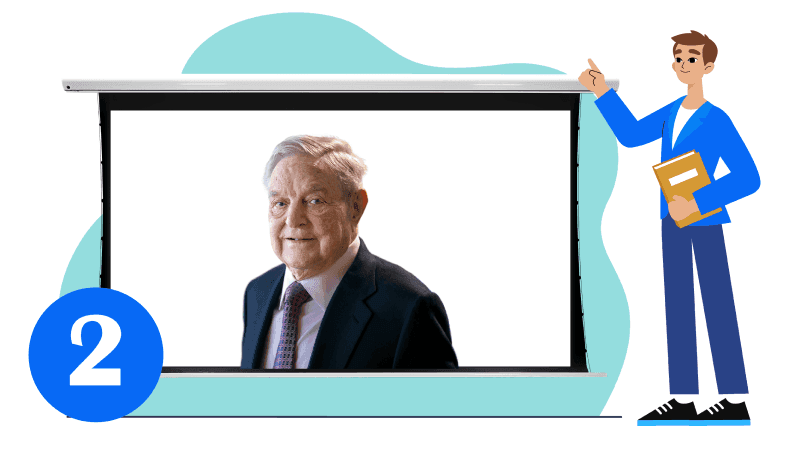
George Soros
By 1980, 13 years after Eagle’s inception, Soros had $100 million to his name and directed a hedge fund called Quantum.
Later years
Something is fascinating about Soros's trading career: he never had any significant losses. He gave back small amounts in fluctuating markets, naturally. But he always came out on top, and almost nobody in this business can say the same.
And some would agree why: Soros has a very aggressive financial strategy using somewhat unethical methods. Other investors call Soros an extremist: someone who, out of sheer aggression and strong positions, wreaks havoc in the market.
There are many black episodes in George Soros's trading history. His radical methodology almost destroyed the Bank of England after shorting the British pound in 1992 during a 10-billion pound contract. The profit was one billion pounds, taken in a single day.
Financial historians coined the term “black Wednesday” for that moment in history. That one-day transaction forced the British central bank to abandon several rules and regulations and to rebuild its policy framework, and markets still carry the consequences more than three decades later. Nowadays, Soros works as an investor and dedicates himself to charitable work and philanthropy.
Sir John Marks Templeton
The third spot on our list goes to an American-born legend called John Marks Templeton. He died years ago, yet several of his trades and returns still stand unmatched.
Early life
Templeton went to Yale and Oxford, then started a career in investment law after graduating. It quickly became apparent that law was not his calling, and he spent only a few years in it before switching.
After working as a lawyer for a while, he founded Dobbrow and Vance, an investment firm, in 1940. He switched his focus from law to finance and dedicated himself to investing and trading full-time.
Fourteen years later, in 1954, Templeton decided to start his second project: the Templeton Growth Fund. Many believe that moment cemented Templeton as the forefather of international stock trading.
The secret to Templeton’s success
Sir John Marks Templeton had one strategy: finding low-valued securities and investing in them. Most of these financial instruments cost as little as $1, but their price then grew to hundreds, thousands, and more.
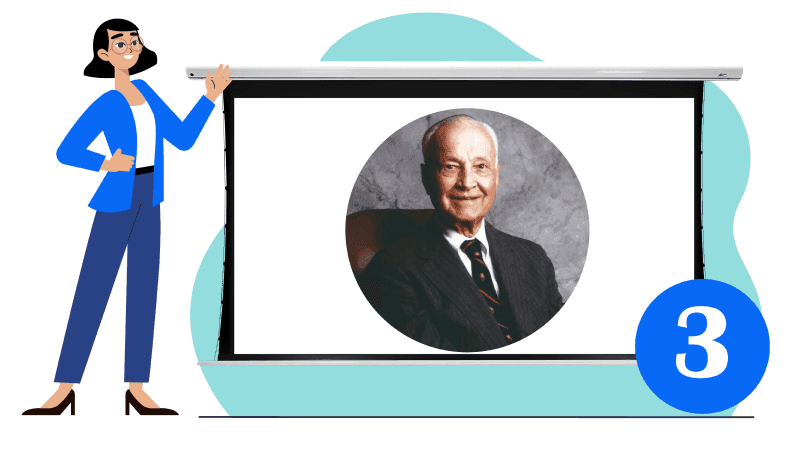
John Marks Templeton
Simply put, this trader went for undervalued securities that had potential. He didn’t buy cheap stuff for no reason. Because of this strategy, Templeton always made a profit and rarely had any losses, similar to Soros. You can do the same if you follow the right signals.
At a certain point in time, anyone who invested $10,000 in his firm would eventually get $2 million, benefiting from an ongoing annual 14.5% investment return. That figure is very high for the stock market.
Lessons from Templeton
Beginner and veteran traders can learn a lot from Sir John Marks Templeton. Similarly to Buffett, he developed a work philosophy from his long career, which is useful to any trader:
Templeton advises not to follow the crowd. Chase what you believe produces real income, not what happens to be popular this month.
It’s fundamental to note markets are volatile, and you can make a profit with almost any asset if you time it right.
But remember that you will lose from time to time, and you should take a loss as a learning opportunity.
It is impossible to know everything. Being a market pessimist, though, tends to bring a profit more often than optimism does.
Steven Cohen
You will find a more recent trading example in Steven Cohen. He’s a new investor who stays away from classic strategies and prefers more aggressive, short-term plays over medium- or long-term investments.
Most of his work takes a day to complete. You can do the same after learning the basics. Cohen made more than 9 billion dollars thanks to his trading strategy. Some consider him one of the most influential traders today.
Steven Cohen was born in 1957 in the US. He graduated from the University of Pennsylvania with a degree in finance. After college, he became a trader at a brokerage company. That gave him a certain degree of liberty and allowed him to learn more about the financial markets in real-time.
Cohen himself claims that working at a brokerage company was a necessary stepping stone to becoming a successful trader. He also explains how important it is to work by yourself after a while. That’s why he became an independent trader after 14 years there.
He founded SAC Capital Partners, his investment firm, in 1992. His work as CEO gave him an extra edge and even more experience.
Recent years
Nowadays, he’s the CEO of Point72 Asset Management, as his previous firm is now defunct. He manages close to $24 billion and leads one of the most stable and profitable firms.
Steve Cohen’s trading strategy is truly unorthodox. He shies away from long-term investments and goes for short-term gain, which may seem counterintuitive. He also doesn’t care about the company he chooses. Instead of doing that, he looks at daily charts and develops a strategy. Some believe he’s more of an aggressive scalper than an investor.
Peter Lynch
The final investor in this list is the King of Mutual Funds. The name is deserved: across his years running money, Lynch averaged close to 30% annual returns, almost double the S&P500.
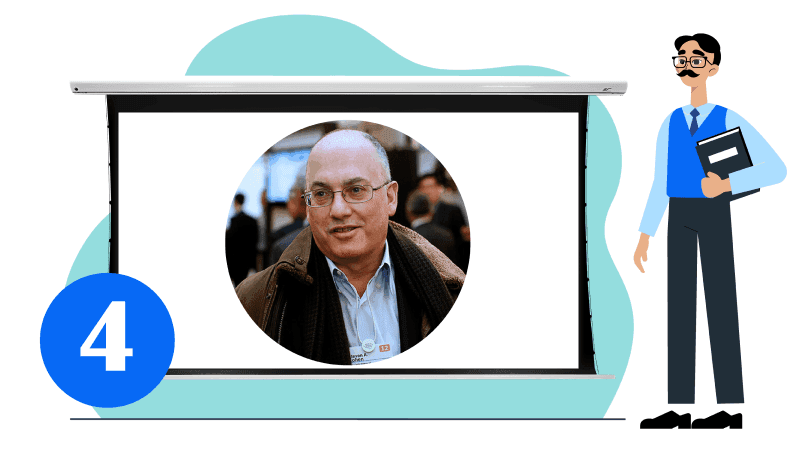
Steven Cohen
Peter Lynch was born in 1944. Although he’s a billionaire now, he had a rough start during his childhood. He started to work at ten years old after his father passed away. His first job was at a golf course.
Lynch often explains that early experience gave him the strength to become a billionaire. Spending time with successful and wealthy people helped him become a talented trader. He learned a lot about the financial world from his work at the golf club.
First trade
Once he made $1,000, he decided to buy a small stake in an airline company. That small sum turned into $10,000 almost overnight, and that was his first taste of what the rest of his life would look like. He became a financial analyst in 1969 and spent more than a decade there before going independent.
Trading principles from Peter Lynch
Lynch believes in the following principles to become a successful trader:
Create a clear strategy and work according to it
Emotions are the enemy of an investor. You can only earn with a cool, clear head
Individual investors are more efficient than the big funds, because nobody has to approve their decisions
These principles helped Lynch accumulate a lot of capital and become one of the most influential personalities in financial history.
What the five have in common
Put the five careers side by side and the overlap is thinner than you would expect. Buffett held two utility shares through a drop from $38 to $27 and sold at $40. Templeton bought securities at a dollar and let them run into the hundreds, and an investor who put $10,000 into his firm eventually held $2 million on a 14.5% annual return. Soros took one day in 1992 and a billion pounds out of it. Cohen closes most of his positions inside a single session.
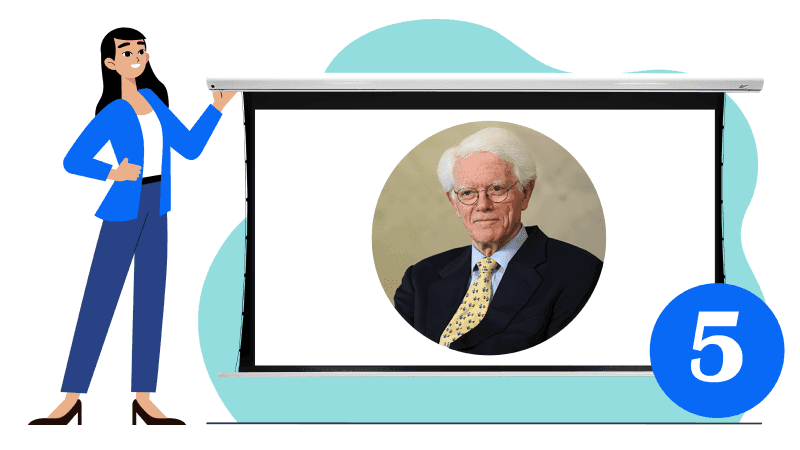
Peter Lynch
So the shared thread is not a time horizon, and it is not an instrument either. Each man picked a method that suited his own temperament, then refused to drift from it for the next thirty years. Buffett could not have traded Cohen's book. Cohen would have gone quietly mad holding Buffett's.
That is the usable lesson here. Before copying anyone's positions, work out which of these five you actually resemble, because the wrong method in the right hands still loses money.
Conclusion
Most of these traders started with little money and worked for decades to reach the top. Each of them used whatever edge he already had. Buffett had arithmetic, Lynch had a golf course full of wealthy members, Cohen had a trading desk to learn on. Your own edge is probably duller than any of those, and it still counts.
The practical next step is smaller than picking a philosophy. Decide what you will trade, how long you intend to hold it, and where the account will live. Our broker comparison lays the platforms out side by side, and the shortlist of regulated brokers narrows things further when the choice feels too wide. Compare brokers before you commit capital, then open with a position small enough to be boring.
FAQ
Who are the top 5 richest and most influential traders?
This list covers Warren Buffett, George Soros, Sir John Marks Templeton, Steven Cohen and Peter Lynch. Rankings of living billionaires shift constantly, so treat the order as a guide to influence rather than a live leaderboard of net worth.
What do these traders have in common in 2026?
Not much on the surface. Holding periods range from decades to a single session. What repeats is consistency: each one settled on a method that matched his temperament early, then stayed with it. None of them switched styles when a different approach was in fashion.
Which of these approaches suits a beginner best?
Templeton and Buffett, in practice. Both bought undervalued assets and waited, which forgives slow reactions and bad timing. Cohen's intraday style demands screen time, tight costs and a tolerance for being wrong several times a day, none of which a new account has.
What are the common mistakes when copying famous traders?
Copying the positions instead of the method. Buffett's holdings are public and still useless without his time horizon. The second mistake is size: these men ran capital that could absorb a 30% drawdown, and most private accounts cannot survive one.
How do I start applying these lessons?
Pick one horizon and stick to it for a quarter. Write your rule for entry, exit and maximum loss before the first trade, then log every deviation. That log teaches more in three months than any biography, because it is about your behaviour rather than someone else's.
Find Your Perfect Broker: Explore Our List Now!
Choose the best with our expert-selected options

Find Your Perfect Broker: Explore Our List Now!
Choose the best with our expert-selected options
Discover top binary options brokers tailored to your region. Browse our curated lists by country: